
Last updated 18 August 2026 by Sammie O, owner of Bud Car Wash in Ras Al Khor Industrial Area 2, Dubai.
Dirty wheels affect the appearance of the whole vehicle, but the wrong cleaner can leave permanent stains, scratches, or corrosion. Learning how to clean alloy wheels safely starts with identifying the finish and choosing products that won’t attack the surface.
Brake dust, road grit, and heat build up quickly around the spokes and inner barrel. A careful wash removes this contamination without forcing you to replace a damaged finish. Start with the right preparation, then use gentle tools and controlled cleaning methods.
Want us to do it instead?
We do tyre and wheel services at our Ras Al Khor bay, 24 hours a day. Fill this in and we reply with a price and a time. The message writes itself, so you only tap send.
Would rather talk? Call +971 55 168 5050. Someone answers 24 hours.
Why finish-safe wheel cleaning matters
Alloy wheels aren’t made to handle every chemical or cleaning tool. Their visible surface may have paint, powder coating, clear coat, polished aluminum, or chrome plating. Each finish reacts differently to heat, acids, strong alkaline chemicals, and abrasion.
Brake dust also contains hard particles that may scratch a wheel when they’re rubbed across the surface. A dry towel, rough sponge, or stiff brush can turn a simple wash into a costly repair.
Wheels should always be cool before you apply water or cleaner. American Racing’s wheel care guidance warns against cleaning hot wheels and spraying cold water onto extremely hot surfaces.

A shaded driveway or cool detailing bay is safer than a hot parking area. In Dubai’s climate, allow extra time for the wheel to cool, even when the car has been parked for a short period.
Identify your wheel finish first
Before you clean alloy wheels, inspect the surface in good light. Look for peeling, cloudy patches, fine scratches, exposed metal, or bubbling around the edges. These signs affect which products and methods are safe.

Painted and clear-coated wheels
Painted wheels usually have a clear protective layer over the color. They need a mild, pH-balanced wheel cleaner or a good-quality car shampoo. The clear coat may look durable, but harsh chemicals can dull it, stain it, or cause it to fail over time.
Don’t use metal polish on a painted or clear-coated face unless the wheel manufacturer specifically allows it. Avoid letting cleaner dry on the surface, especially in direct sunlight.
Powder-coated wheels
Powder coating is a baked finish that is often strong and durable. It still needs careful treatment. Chips, worn edges, and exposed areas may allow moisture to reach the metal below.
Use water, car shampoo, or a wheel cleaner that clearly states it is suitable for powder-coated surfaces. Don’t assume that a product is safe because it is popular or marketed as professional. Read the label, check the dilution instructions, and follow the wheel maker’s guidance.
Polished aluminum and chrome wheels
Polished aluminum may be bare metal or covered with a clear coat. Bare polished aluminum needs a cleaner made for polished metal. Aggressive chemicals and abrasive polishing pads can remove the shine or leave uneven marks.
Chrome wheels have a plated surface that can pit when damaged. Use mild soap and soft microfiber towels. Never use steel wool, wire brushes, scouring pads, or a rough polishing compound on chrome.
Machined or brushed faces need extra care. If the surface has visible lines, don’t rub across the grain with an abrasive product. If you’re unsure whether the wheel is polished, machined, or clear-coated, check the manufacturer’s care instructions before applying any polish.
Choose safe supplies before washing
The right equipment makes the work easier and reduces the amount of pressure needed. Keep wheel-cleaning tools separate from the cloths and sponges used on the paintwork.
You only need a few basic items:
- A hose or pressure washer used at a sensible distance
- A pH-neutral car shampoo or finish-compatible wheel cleaner
- Two buckets, one for the cleaning solution and one for rinsing
- A soft microfiber wash mitt
- A soft wheel brush with protected or flexible bristles
- A small soft brush for lug nuts and tight spaces
- Several clean, plush microfiber drying towels
A dedicated wheel brush should reach between the spokes without scraping the face. Inspect it first. A brush with trapped grit, exposed metal, or hardened bristles should not touch the wheel.
Avoid household acids, including vinegar, lemon-based cleaners, and acidic bathroom products. Oven cleaner, toilet cleaner, strong degreasers, and harsh alkaline cleaners are also unsuitable for most wheel finishes. Calchrome’s aftermarket wheel care advice recommends avoiding harsh and acidic cleaners unless the wheel manufacturer directs their use.
How to clean alloy wheels safely
Work on one wheel at a time. This keeps the cleaner from drying and lets you rinse each area before contamination moves back across the finish.
Cool the wheel and remove loose dirt
Park the vehicle in shade and touch the wheel carefully to confirm it isn’t hot. If it feels warm, wait longer. Don’t use cold water to force a quick temperature change.
Rinse the wheel thoroughly with clean water. Begin at the top and work downward. Use the water to remove loose sand, dust, and grit before bringing a brush or mitt near the surface.
A pressure washer may help with the inner barrel, but keep the nozzle away from the wheel face, tire valve, wheel weights, and damaged areas. High pressure doesn’t replace proper cleaning, and excessive pressure may push dirt into delicate gaps.
Apply cleaner and agitate gently
Spray a small area first, or test the product on an inconspicuous section. Follow the label for dilution, dwell time, and rinsing. A cleaner should remain wet for the stated time, but it must not dry on the wheel.
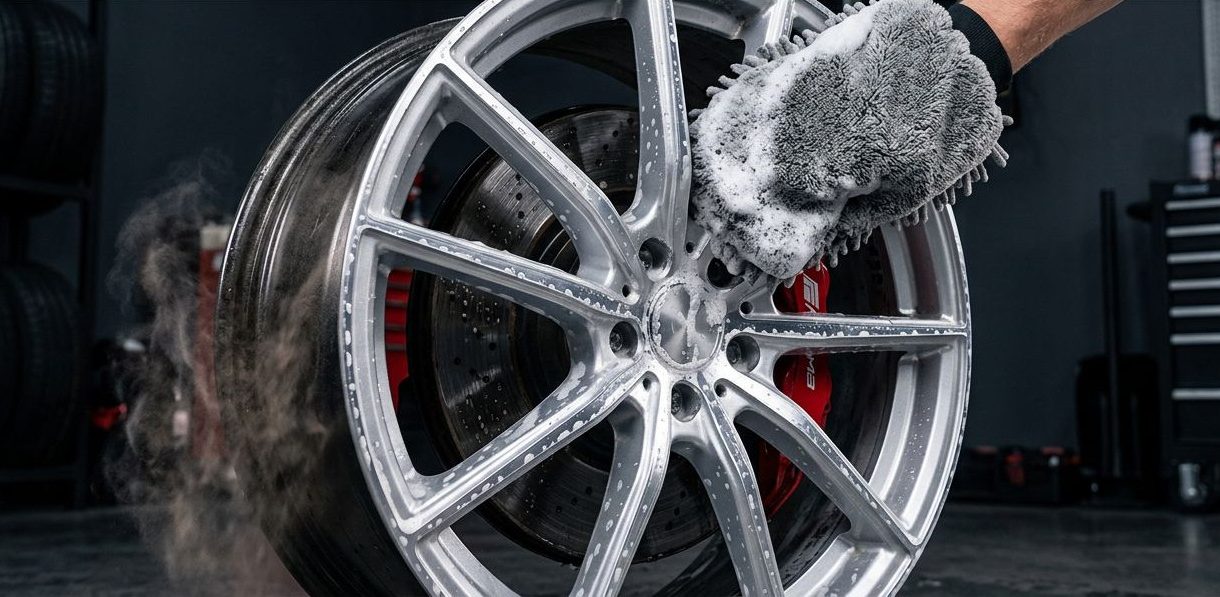
Use a soft brush to clean the inner barrel, then move to the back of the spokes and the front face. Keep your movements light. Let the cleaner and brush loosen the contamination instead of pressing harder.
Use a separate soft brush around lug nuts and valve areas. Rinse the brush often in the clean-water bucket so it doesn’t carry grit back onto the wheel.
For heavy brake dust, repeat the wash after rinsing. Several gentle passes are safer than one aggressive scrub. Chemical Guys’ aluminum wheel cleaning guide also advises against harsh chemicals, acids, and abrasive brushes.
Rinse, inspect, and dry
Rinse the wheel from top to bottom until no cleaner remains. Check behind the spokes, around the lug nuts, and inside the barrel. If you see a remaining mark, apply more cleaner to that area and repeat the gentle wash.
Dry with a clean microfiber towel. Use a second towel for the barrel and a separate one for the wheel face. Water trapped around lug nuts and spokes may leave spots, so a short burst of clean air can help remove it.
Don’t allow dirty water to dry on the surface. Water spots may be difficult to remove from polished aluminum and damaged clear coat.
Cleaning mistakes that damage wheel finishes
Most wheel damage comes from heat, chemicals, or friction. A product may remove brake dust quickly and still be unsuitable for your wheels.
Don’t clean hot or warm wheels
Hot wheels dry cleaner quickly and create uneven marks. Heat also increases the chance of chemical staining. Mothers’ wheel maintenance guidance states that hot or warm wheels shouldn’t be cleaned because the finish may become dull.
Don’t pour cold water over a wheel that has just come off a long drive. Wait until the metal is cool to the touch, then wash it in the shade.
Don’t use abrasive tools or aggressive chemistry
Wire brushes, scouring pads, old sponges, and stiff household brushes may leave fine scratches. Those marks collect dirt and become more visible with every wash.
Avoid strong wheel acids and highly alkaline cleaners unless the wheel manufacturer specifically approves them. Never mix cleaning chemicals. A product label should explain the surface types it suits, the dilution needed, and the required rinse time.
If a cleaner dries on the wheel, don’t scrub harder. Rinse the surface, cool it if needed, and repeat with a safer product.
Add protection after the wheels are clean
A clean, dry wheel is easier to protect. A wheel sealant or manufacturer-approved ceramic product may reduce the amount of brake dust that bonds to the surface. Choose protection based on the actual finish, not on a general claim that it works on every wheel.
Apply the product to a cool, dry surface with a clean applicator. Keep it off brake components, tire tread, and valve openings. Follow the stated cure time before driving or washing the vehicle.
Protection doesn’t remove the need for regular cleaning. Light, frequent washing prevents contamination from building into a thick layer that requires stronger chemicals or more pressure.
When professional wheel cleaning is the safer choice
Home cleaning is suitable for routine dirt and brake dust. Professional help is better when the wheel has peeling clear coat, white corrosion, bubbling paint, deep pitting, curb damage, or chrome flaking.
Cleaning won’t repair damaged metal or restore a failed coating. Scrubbing these areas may spread the damage and expose more of the wheel to moisture. A detailing professional can assess the finish, clean it with suitable products, and advise whether refinishing is needed.
Professional service is also useful when the wheel has intricate spokes, a delicate polished face, or heavy contamination behind the barrel. Careful workmanship protects the wheel and gives you a more consistent result without unnecessary risk.
Conclusion
Clean alloy wheels safely by starting with a cool surface, removing loose grit, and using a cleaner approved for the specific finish. Soft brushes, clean microfiber towels, and gentle pressure protect painted, powder-coated, polished, and chrome surfaces.
Household acids, harsh alkaline products, abrasive tools, and hot-water shortcuts create avoidable damage. When corrosion, peeling, or pitting is already present, professional inspection is the right next step. A careful cleaning routine keeps the wheels bright, protected, and easier to maintain.
Get a price on tyre and wheel services
Shop #7, 44, 22nd Street, Ras Al Khor Industrial Area 2, open 24 hours. Tell us the car and we reply with a price and a time.
Would rather talk? Call +971 55 168 5050. Someone answers 24 hours.
See us first on Google
Google lets you choose the sites you want to see more of. Add Bud Car Wash as a preferred source and our car care guides show up more often in Top Stories and in Google’s AI answers.
Opens Google in a new tab. You can remove us again at any time.

Sammie O is the owner of Bud Car Wash, a 24 hour hand car wash and detailing shop at Shop #7, 44, 22nd Street, Ras Al Khor Industrial Area 2, Dubai. He writes the car care guides on this site based on work done in his own bay.
View All Articles