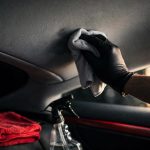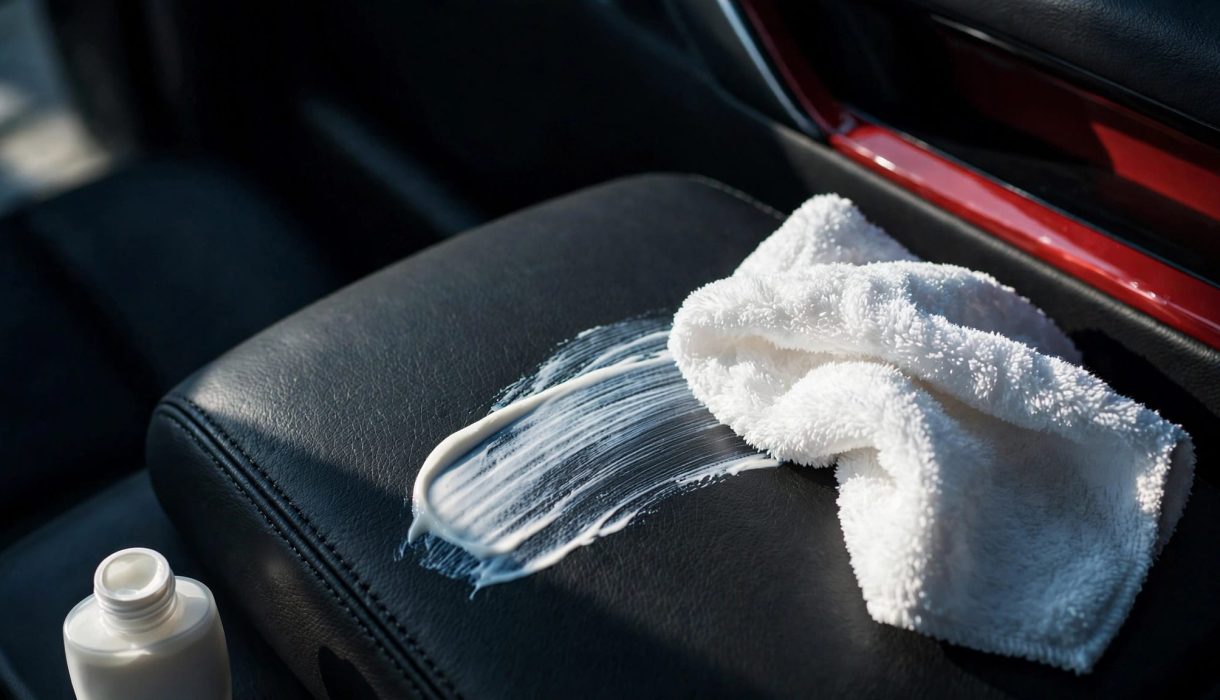

Last updated 25 September 2026 by Sammie O, owner of Bud Car Wash in Ras Al Khor Industrial Area 2, Dubai.
A sunscreen mark on a seat or door panel can make a clean car look neglected. If sunscreen stains the car’s interior seats or trim, use a method suited to that material, and follow the vehicle maker’s care instructions before applying any cleaner.
The safest approach is simple: remove loose residue, test a compatible product in a hidden spot, then clean gently with a soft cloth. Leather, vinyl, plastic and fabric need different care, especially in a warm car where interior surfaces may already be hot.
Want us to do it instead?
We do interior detailing at our Ras Al Khor bay, 24 hours a day. Fill this in and we reply with a price and a time. The message writes itself, so you only tap send.
Would rather talk? Call +971 55 168 5050. Someone answers 24 hours.
Key Takeaways
Check your owner’s manual and the cleaner label before you start. Test the cleaner somewhere inconspicuous, use a soft microfiber cloth and avoid abrasive tools or harsh solvents. Work on a cool surface, apply cleaner to the cloth rather than directly to the interior, and stop if the finish changes or colour transfers.
Prepare the Surface Before Cleaning
Check the vehicle and cleaner instructions
Interior finishes vary, even within the same material category. A coated leather seat, perforated seat panel and vinyl trim may each need different care. Check your owner’s manual for instructions on the affected surface, then check the cleaner label to confirm it’s suitable.
Toyota’s general car-interior cleaning guidance recommends removing loose dirt before cleaning seats and following the leather-cleaner manufacturer’s instructions. Treat those directions as a starting point, not permission to use the same cleaner on every surface.
Remove loose residue and test first
Park in the shade and let hot surfaces cool. Wipe loose sunscreen away with a clean, dry microfiber cloth, using light pressure so grit doesn’t scratch the finish. Don’t scrub a dry, chalky mark across a broad area.
Test your selected cleaner on a hidden spot, such as the back or underside of a seat panel. Follow the product directions, wipe the test area clean and let it dry. If you see colour on the cloth, a change in sheen or a sticky finish, stop and choose a different method.
Clean Sunscreen From Leather Seats and Trim
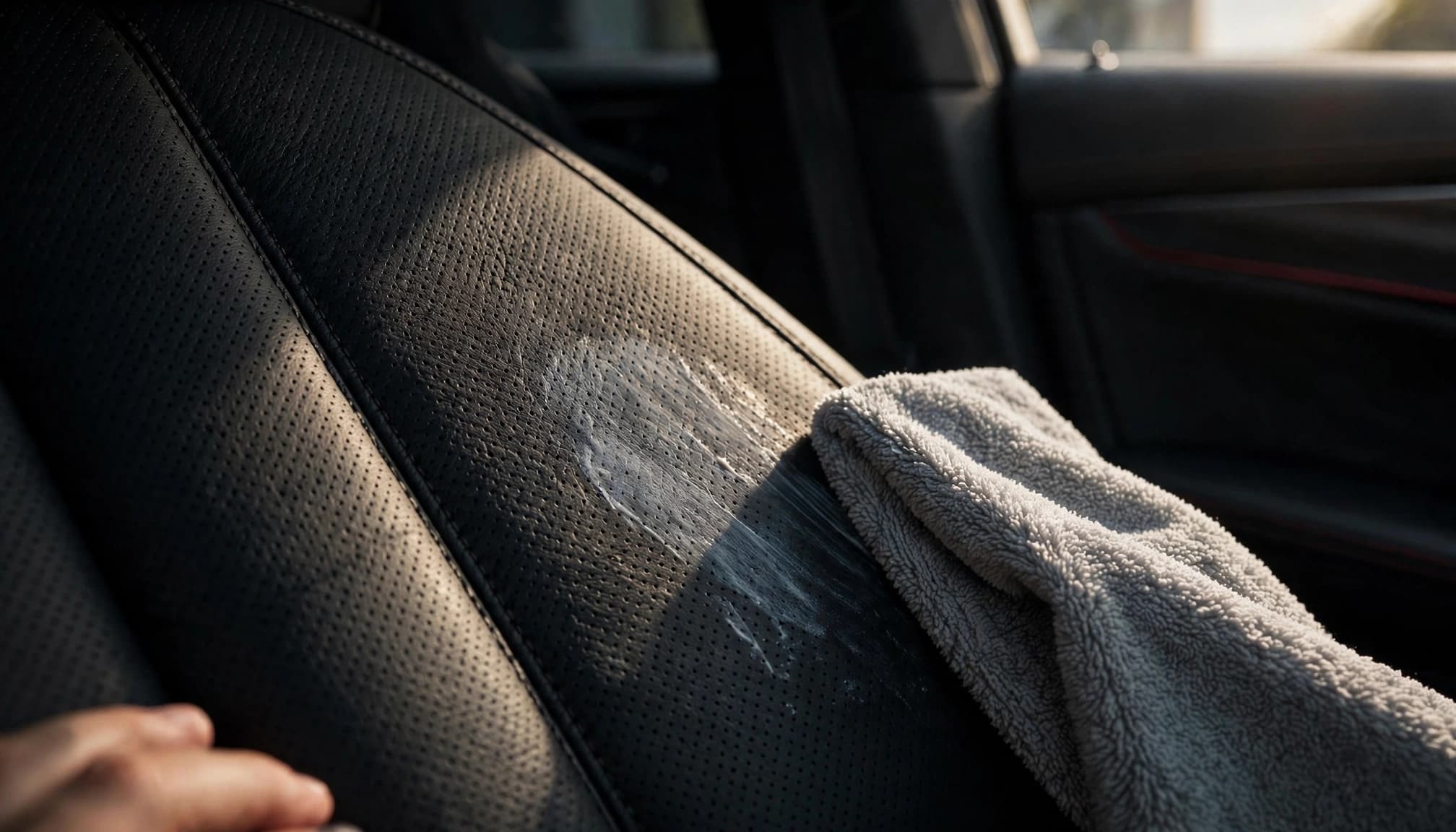
Use a leather-care method approved for your vehicle
Leather can lose its finish or colour if you use a product that’s too strong. Keep household cleaners, abrasive pads and general-purpose solvents away from it. Use a cleaner labelled for automotive leather only when the vehicle guidance allows it.
Hyundai’s interior-care instructions for cosmetic products include sunscreen. They direct owners to apply cleansing cream to a cloth and wipe. Follow that method only if it matches the instructions for your own vehicle and product.
Work gently in small areas
- Apply a small amount of approved leather cleaner to a microfiber cloth, following its label.
- Dab and wipe the mark with light pressure. Work in a small area rather than spreading the residue across the panel.
- Use a clean part of the cloth as the sunscreen lifts. Don’t push cleaner into perforations, seams or stitching.
- Wipe away any cleaner residue as directed, then let the area dry naturally.
If the mark remains, don’t increase pressure or switch to a stronger household product. Repeat only if the cleaner label allows it. A persistent stain, colour change or tacky surface is a reason to stop and ask a professional detailer to assess the leather.
Remove Sunscreen From Vinyl and Plastic
Confirm which surface you’re cleaning
Vinyl and plastic are common on door panels, dashboards, centre consoles and seat trim. They can look similar but have different textures and coatings. Check the vehicle manual and cleaner label for both materials before using a product.
Avoid spraying directly onto a panel. Cleaner can run into seams, buttons or electrical controls. Instead, put a small amount on a cloth, then work carefully around switches and edges. Don’t use the same cloth for several surfaces if it has picked up sunscreen or grit.
Wipe without damaging the finish
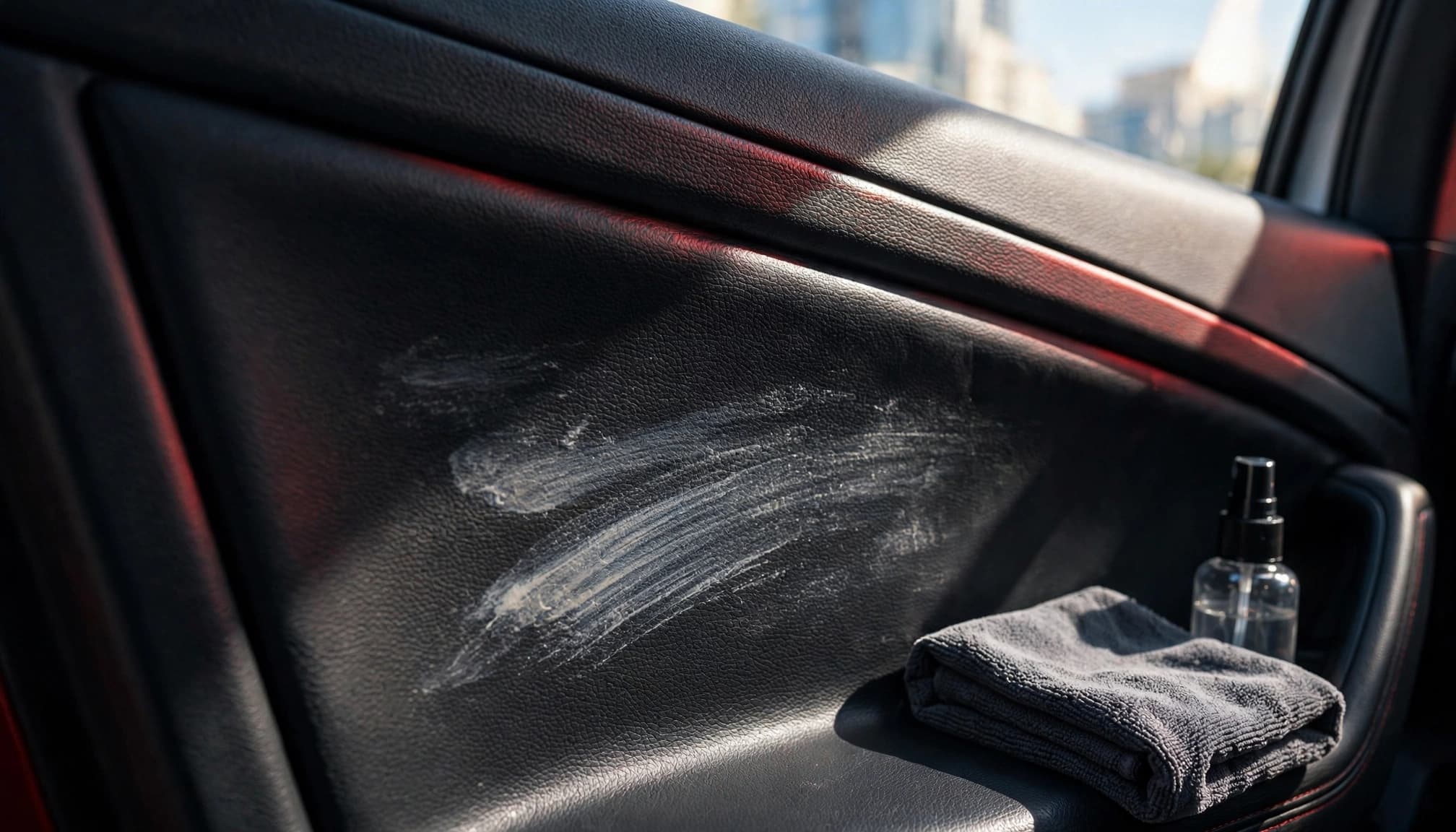
- Test a vehicle-approved interior cleaner on a hidden section of the vinyl or plastic.
- Dampen a clean microfiber cloth with the approved product. For a cleaner that calls for dilution, follow its label exactly.
- Wipe the affected area gently, turning the cloth to a clean section as it collects residue.
- Use a second cloth as directed to remove product residue, then allow the panel to dry.
A mild soap-and-water mix may be suitable for some surfaces, but it isn’t universal. Redondo Car Wash’s sunscreen-cleaning guide mentions this approach. Check your own vehicle and cleaner instructions before using it, and don’t leave moisture around controls or panel seams.
Treat Sunscreen on Fabric Seats and Carpet
Lift the residue instead of rubbing it in
Fabric can absorb sunscreen, and vigorous rubbing may push it deeper into the fibres. Start by blotting the spot with a clean, dry cloth. Press gently and lift straight up, using a fresh area of cloth as residue transfers.
Check whether the seat fabric or carpet has a specific care label in the owner’s manual. Choose an upholstery cleaner approved for that material, and test it in a hidden spot before treating the visible stain. Don’t assume a product designed for leather or hard trim is safe on cloth upholstery.
Clean in controlled passes
- Apply the approved upholstery cleaner to a cloth or use it as directed on the label. Avoid soaking the fabric.
- Blot the stained area, working from its outer edge toward the centre to limit spreading.
- Use a clean cloth, dampened only as directed, to remove cleaner residue.
- Press a dry towel onto the area to absorb moisture. Let the fabric dry fully before using the seat.
If the mark spreads, the fabric develops a ring or the stain remains after careful cleaning, stop. Repeated wetting can leave more residue behind, and aggressive brushing may damage the fibres.
Avoid Damage and Know When to Call a Detailer
Keep harsh products and abrasive tools away
Scouring pads, stiff brushes and abrasive powders can scratch plastic, roughen vinyl and damage leather finishes. Avoid bleach, strong solvents and household products unless the vehicle maker specifically approves them for that surface. A cleaner that removes sunscreen can still harm a coating or discolour upholstery.
Don’t mix cleaning products or apply more than the label directs. Keep liquids away from seat controls, airbags, screens, speakers and electrical switches. If a product causes colour transfer, dullness, swelling or a sticky feel, stop using it and follow the vehicle manufacturer’s guidance.
Choose professional detailing for stubborn marks
Professional interior detailing may be appropriate if the stain is large, old or deep in fabric, or if careful cleaning hasn’t lifted it. It’s also the safer option when you’re unsure whether the surface is coated leather, delicate trim or a specialty finish.
A detailer can identify the material and select a suitable process. Ask what products will be used and whether the service is appropriate for your vehicle’s interior. In Dubai, where parked cars can heat up quickly, arrange cleaning when the cabin has cooled and share any previous cleaning attempts with the technician.
Prevent Sunscreen Marks on Your Next Drive
Keep lotion off interior surfaces
Apply sunscreen before getting into the car and allow it to settle on your skin before touching seats or trim. Keep the bottle upright in a bag or storage compartment, and wipe any fresh spill promptly with a clean cloth. Don’t leave an open tube on a seat or dashboard.
For long drives, keep a spare microfiber cloth in the glovebox. It’s useful for lifting fresh smudges before they spread, but use a separate clean cloth for each affected area. A washable seat cover can also help protect upholstery when passengers are likely to get in with sunscreen on their skin.
Clean small marks before they build up
Check door pulls, seat bolsters, armrests and the centre console after beach trips or outdoor stops. These are common contact points when passengers enter the vehicle or adjust belongings. Addressing a small mark with the right cleaner is usually easier than treating a larger area later.
Don’t turn a quick wipe into repeated scrubbing. If a mark doesn’t lift with a gentle, approved method, stop and reassess the material and care instructions.
Frequently Asked Questions
Can I use the same cleaner on leather, vinyl and fabric?
No. Cleaner compatibility depends on the product and the vehicle’s interior finish. Use a product approved for the exact material, test it on a hidden spot and follow the label. A multi-surface claim doesn’t replace your owner’s manual.
What if sunscreen has dried on the surface?
Remove loose residue with a dry microfiber cloth, then use an approved cleaner according to its directions. Work gently and avoid scraping or soaking the area. If the mark remains, don’t escalate to a stronger solvent without checking the vehicle guidance.
Will sunscreen permanently stain a car seat?
Some marks may come off with careful cleaning, while others can leave discolouration or affect the finish. The result depends on the material, the product and how the surface has been treated. Stop if the colour or texture changes, and have a detailer assess the area.
Keep Interior Cleaning Gentle and Material-Specific
A clean microfiber cloth and the right approved product are a better starting point than force. Check the vehicle instructions, test first and use gentle, controlled passes on leather, vinyl, plastic or fabric.
Prompt care can help prevent a small sunscreen mark from spreading across a seat or trim panel. When the stain persists or the finish looks different, professional detailing can provide a careful next step.
Get a price on interior detailing
Shop #7, 44, 22nd Street, Ras Al Khor Industrial Area 2, open 24 hours. Tell us the car and we reply with a price and a time.
Would rather talk? Call +971 55 168 5050. Someone answers 24 hours.
See us first on Google
Google lets you choose the sites you want to see more of. Add Bud Car Wash as a preferred source and our car care guides show up more often in Top Stories and in Google’s AI answers.
Opens Google in a new tab. You can remove us again at any time.

Sammie O is the owner of Bud Car Wash, a 24 hour hand car wash and detailing shop at Shop #7, 44, 22nd Street, Ras Al Khor Industrial Area 2, Dubai. He writes the car care guides on this site based on work done in his own bay.
View All Articles