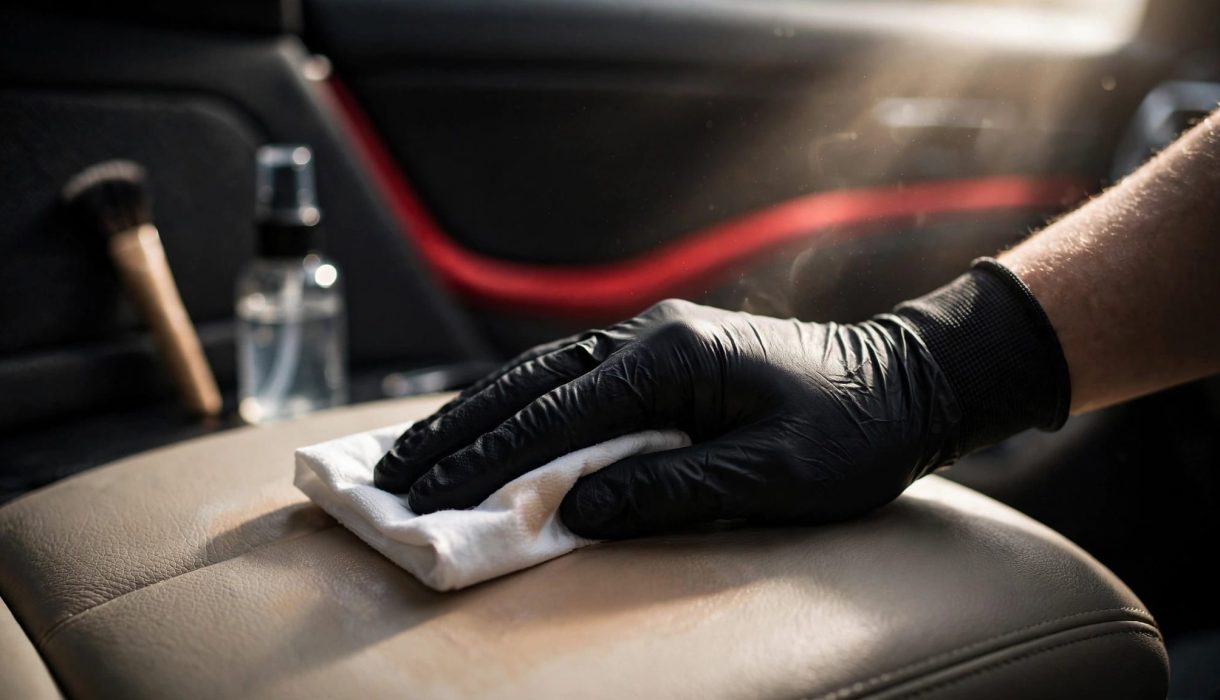

Last updated 28 September 2026 by Sammie O, owner of Bud Car Wash in Ras Al Khor Industrial Area 2, Dubai.
Makeup stains on car seats can make a clean interior look untidy, especially after long drives. Foundation, concealer, lipstick, and powder each leave different marks, so use a cleaning method that suits the surface instead of reaching for one product for the whole cabin.
A clean car also makes time on the road more comfortable, whether you’re driving yourself or arranging a Qantas Chauffeur Drive experience. Before treating a stain, check the vehicle’s care instructions, identify the material, and test the cleaner in a hidden area.
Want us to do it instead?
We do interior detailing at our Ras Al Khor bay, 24 hours a day. Fill this in and we reply with a price and a time. The message writes itself, so you only tap send.
Would rather talk? Call +971 55 168 5050. Someone answers 24 hours.
Key Takeaways
- Check the owner’s manual, seat label, and cleaner directions before you start.
- Blot makeup with a clean cloth. Rubbing can spread the stain and work it into the surface.
- Use a cleaner approved for the material, whether it’s fabric, leather, or vinyl.
- Apply cleaner to a cloth, not directly to the seat, and avoid soaking upholstery.
- Skip harsh solvents, bleach, and other products that may damage color or finish.
Identify the Material Before You Clean
Car interiors can combine several materials. A seat may have fabric panels, leather bolsters, and vinyl trim nearby. Check the care label or owner’s manual before applying a cleaner. The instructions can vary even between surfaces that look similar.
Bissell also recommends checking the vehicle manual or seat label before cleaning upholstery. Its car seat upholstery guidance separates care by material, a useful reminder that there isn’t one safe method for every interior.
Look closely at the stained area. Fabric has a woven or fuzzy texture, leather has a smooth natural grain, and vinyl often feels smoother and more uniform. If you aren’t sure what the surface is, don’t test it with an unapproved product. Confirm the material first or ask a professional detailer.
Prepare the Area and Cleaner
A few careful steps before cleaning help prevent a small mark from becoming a larger one. Work in a well-ventilated place, keep clean microfiber cloths nearby, and follow both the car-care and product instructions.
Lift loose makeup first
If the makeup is fresh, use a clean, dry cloth to blot the excess. Press gently and lift the cloth straight up. Use a clean part of the cloth each time so you don’t transfer makeup back onto the seat.
For dry powder or a crumbly product, lift loose material gently with a soft brush or vacuum attachment. Keep the nozzle from pressing into the upholstery. Avoid wiping powder across the surface, where it can spread into the weave or textured trim.
Test before treating the stain
Apply a small amount of the approved cleaner to a hidden spot, such as an area beneath the seat or on the back of a trim panel. Follow the label’s directions and check for color transfer, fading, or a change in texture before cleaning the visible stain.
Toyota recommends vacuuming loose dirt and following the leather-cleaner manufacturer’s instructions. Its car interior cleaning advice is a helpful starting point, but your vehicle’s care instructions take priority.
Remove Makeup Stains Car Seats Pick Up on Fabric
Fabric can hold onto pigments and oils, so use a fabric-safe upholstery cleaner and keep moisture controlled. Never soak a cushion. Excess liquid can reach the padding beneath the fabric and make drying more difficult.
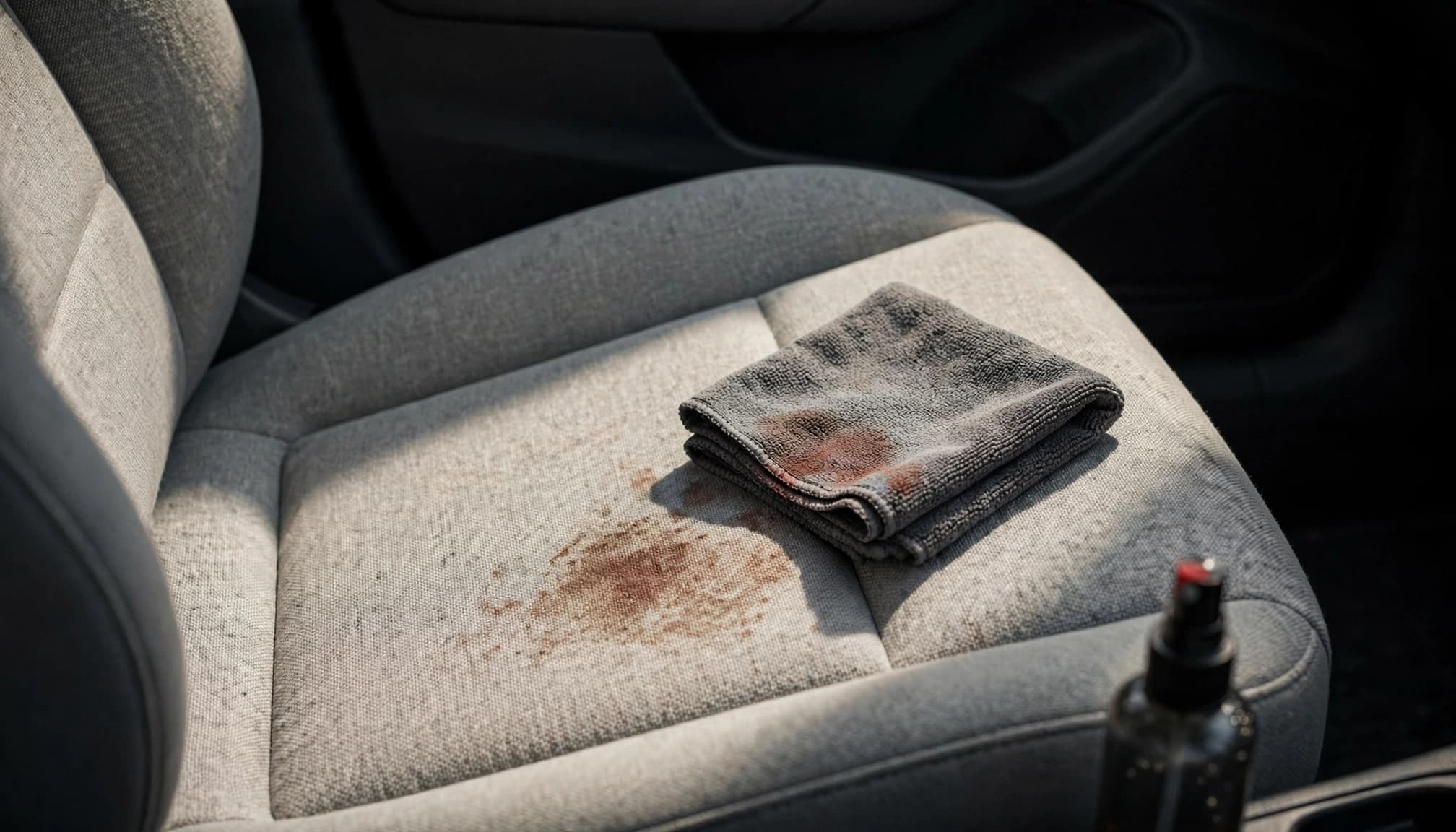
Blot with a fabric-safe cleaner
Dampen a clean microfiber cloth with the cleaner according to its label. Work from the outside edge of the stain toward the center, using light blotting motions. This helps keep the mark from spreading across a larger area.
Check the cloth as you go. If makeup transfers, switch to a clean section rather than wiping with the stained part. For stubborn marks, repeat the same small-area process instead of scrubbing harder. Stop if the fabric color transfers or its texture changes.
Remove cleaner without soaking the seat
Use a separate cloth dampened with a small amount of clean water if the product instructions call for rinsing. Blot the treated area to lift residue, then press with a dry towel to absorb remaining moisture. Keep water away from seams and avoid flooding the cushion.
Let the area dry with the vehicle doors open when it’s safe to do so. Follow the cleaner’s instructions before using the seat again. If a visible mark remains after careful treatment, professional interior cleaning is safer than repeated scrubbing.
Clean Leather and Vinyl With Material-Safe Products
Leather and vinyl may look easy to wipe, but the wrong product can affect their finish. Choose a cleaner labeled for the specific surface and use a soft cloth. Test it in a hidden spot before treating the visible stain.
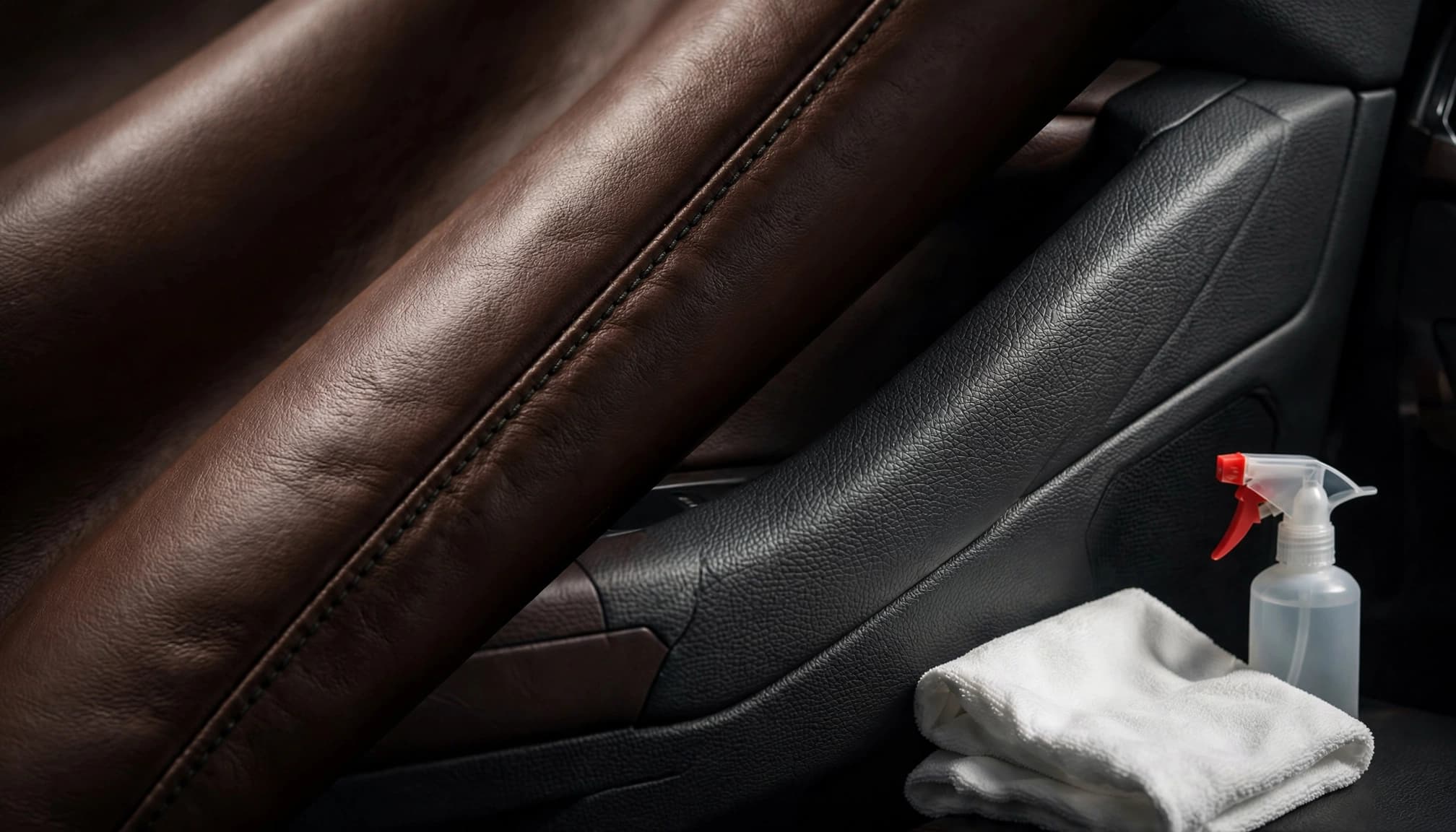
Use a leather cleaner on leather
Blot excess makeup without rubbing it into the grain. Apply a small amount of leather cleaner to a microfiber cloth, following the product directions. Wipe the mark gently, then use a clean cloth to remove residue if the label recommends it.
Avoid all-purpose cleaners on leather. Armor All advises using saddle soap or another product made for leather and cautions against all-purpose cleaner. Its leather and upholstery cleaning guidance reinforces the need to match the product to the surface.
Don’t scrub seams, perforations, or worn areas. If the stain sits in stitching or the leather has cracks, stop and seek professional advice.
Wipe vinyl without damaging its finish
For vinyl seats or trim, choose a product labeled safe for automotive vinyl. Put a small amount on a cloth and wipe gently, working in short passes. Use a dry cloth to remove remaining moisture and cleaner residue.
Avoid saturating textured areas, seams, and joints. If the stain remains, repeat only as the cleaner label permits. Don’t substitute a leather conditioner or a household degreaser unless the vehicle and product instructions explicitly allow it.
Clean Makeup From Door Panels and Other Trim
Makeup often transfers to door pulls, armrests, center consoles, and seat-side trim. These areas may use vinyl, coated plastic, leather, or a mix of finishes. Identify the material before cleaning and test a hidden section first.
For hard, nonporous trim, use a cleaner approved for that surface on a microfiber cloth. Wipe gently and use a second clean cloth to remove residue. Avoid spraying cleaner near switches, speaker grilles, screens, or electrical controls. Apply it to the cloth instead.
Take extra care around seams and controls
Use a lightly damp cloth around stitching and panel joins, not a wet one. Don’t push liquid into gaps or directly onto buttons. A soft detailing brush can help lift loose powder from textured trim, but use light pressure to avoid scratching or spreading the stain.
If makeup has collected in a narrow seam, don’t dig at it with a sharp tool. Repeated scraping can damage the trim. Ask a detailer to remove marks that sit deep in seams or remain after material-safe cleaning.
Mistakes That Can Damage Seats or Trim
Rubbing hard is a common mistake. It can spread makeup, push pigment deeper into fabric, and leave friction marks on delicate surfaces. Blot instead, use light pressure, and change to a clean cloth section as makeup lifts.
Using too much cleaner is another risk. A wet seat can hold moisture in its padding, while liquid around trim controls can reach areas that shouldn’t get wet. Apply cleaner sparingly to a cloth, not directly to the surface.
Avoid bleach, acetone, nail polish remover, paint thinner, and other harsh solvents. These products may affect the surface color or finish. Don’t mix cleaners or use household products unless the vehicle and cleaner instructions say they’re suitable.
Stop if the surface changes color, feels tacky, or begins to look dull. A professional detailer can assess the material and use equipment suited to interior cleaning without repeated home treatments.
Frequently Asked Questions
Can I use makeup remover on a car seat?
Use a cleaner labeled safe for the seat material instead. A cosmetic makeup remover isn’t necessarily suitable for automotive fabric, leather, or vinyl. Check the vehicle care instructions and test any approved product on a hidden area first.
Should I scrub a dried foundation stain?
No. Blotting and gentle, repeated treatment are safer than scrubbing. Remove loose residue first, then follow the cleaner directions for the surface. If the mark stays, stop before friction changes the fabric or finish.
Can the same cleaner work on fabric, leather, and vinyl?
Only if its label specifically approves it for each material and the vehicle’s instructions allow it. Many products are made for one surface type. Use separate cleaners when needed rather than assuming an interior product suits every part of the cabin.
What if the stain doesn’t come out?
Don’t keep adding cleaner or moisture. Repeated attempts can spread the mark or affect the surface. Let the area dry as directed, then contact a professional detailer for material-specific cleaning.
Keep the Interior Clean Without Risking the Finish
Makeup stains are easier to manage when you identify the surface and use a controlled, material-safe method. Blot instead of rubbing, test the cleaner first, and keep fabric and trim as dry as possible.
If a stain persists or the material begins to change, stop cleaning and get professional help. A careful treatment protects the cabin’s appearance and keeps your seats and trim in good condition.
Get a price on interior detailing
Shop #7, 44, 22nd Street, Ras Al Khor Industrial Area 2, open 24 hours. Tell us the car and we reply with a price and a time.
Would rather talk? Call +971 55 168 5050. Someone answers 24 hours.
See us first on Google
Google lets you choose the sites you want to see more of. Add Bud Car Wash as a preferred source and our car care guides show up more often in Top Stories and in Google’s AI answers.
Opens Google in a new tab. You can remove us again at any time.

Sammie O is the owner of Bud Car Wash, a 24 hour hand car wash and detailing shop at Shop #7, 44, 22nd Street, Ras Al Khor Industrial Area 2, Dubai. He writes the car care guides on this site based on work done in his own bay.
View All Articles