


Milk can soak through a seat or carpet before you notice the spill, especially during a long drive. The smell of milk in car upholstery can linger when residue reaches the padding or stays hidden beneath a removable mat.
Start by blotting up what you can, then clean according to the surface. Careful drying and a check for hidden residue help prevent the smell from returning.
Handle the spill before it spreads
Move the car to a safe place and remove any containers, bags, or floor mats with milk on them. If the spill is fresh, use a clean, absorbent cloth to press down on the wet area. Lift the cloth, use a dry section, and repeat.
Blot instead of rubbing
Rubbing pushes milk deeper into fabric and can spread the spill across a larger area. Press gently, working from the outside edge toward the center. Replace the cloth when it becomes wet or milky so you don’t transfer residue back onto the seat or carpet.
If the spill is on a long drive, blotting is still a useful first step. Avoid covering the area with another item or leaving a damp cloth on it. Finish the cleaning when you can work safely with the right products.
Remove items that can hold residue
Lift removable floor mats and check their undersides. Take out any loose objects near the spill, such as a seat organizer or child-seat cover, if the manufacturer allows removal. Check the edges of the seat, seams, and the gap beside the center console.
Keep the car ventilated while you clean. If you use a product, follow its directions and check that it is suitable for that surface.
Clean fabric upholstery and carpet
Fabric seats and carpeting absorb liquid. Clean the affected area without flooding it, and give extra attention to seams and the carpet padding if milk has soaked through.
Use a small amount of suitable cleaner
After blotting, apply an upholstery cleaner that is labeled for the specific material. Follow the product directions, including any instructions for testing a hidden area first. Work with a clean cloth and use only enough cleaner to address the affected spot.
Blot the treated area with a separate cloth to lift loosened residue. Avoid aggressive scrubbing, which can roughen the fabric or spread the stain. If a product calls for rinsing, use the amount and method on its label, then remove as much moisture as possible with a dry cloth.
Check the carpet beneath removable mats
A mat can hide a spill rather than stop it. Clean the mat separately according to its material, and inspect the carpet below it. If the carpet feels wet beyond the surface, repeated spraying may drive moisture deeper.

Vacuum loose debris before cleaning when the material is dry enough for vacuuming. Toyota also recommends vacuuming seats to remove loose dirt and debris as part of interior cleaning. See Toyota’s car interior cleaning guidance.
Clean leather carefully
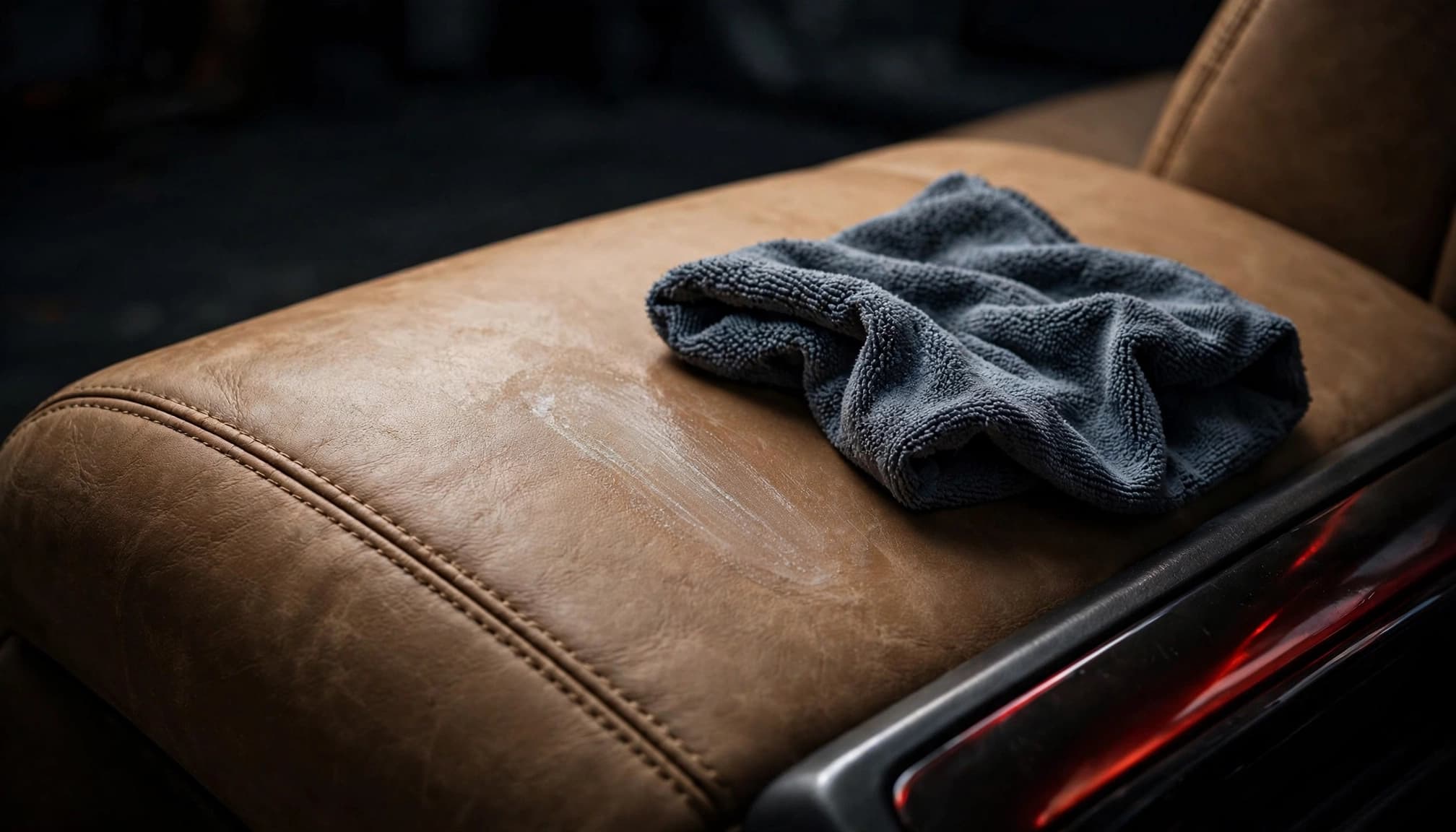
Leather needs a lighter touch than carpet or cloth. First blot fresh milk with a dry, soft cloth. Avoid soaking the leather or scrubbing the grain, stitching, and perforations.
Use a leather cleaner that is approved for your vehicle’s seat material. Test it on a discreet area and follow the label. Nissan recommends mild soap and water for leather spots and warns that harsh chemicals can remove the protective coating. Check your vehicle manual as well, since leather finishes and care requirements can differ.
Wipe away any remaining product as directed, then dry the surface with a clean cloth. Don’t use a fabric enzyme cleaner on leather unless its label explicitly says it is safe for leather. If milk has entered seat perforations or seams, avoid pushing liquid into them. A detailer can clean those areas with suitable equipment.
Look for residue below the surface
The sour odor can return when milk remains in a place you haven’t cleaned. Check the full path the liquid may have taken, not only the visible spot.
Inspect seams, creases, and seat gaps
Use a light to check seat seams, the gap between the seat and console, and the lower edge of the seat. Look for dried residue, damp fabric, or a sticky feel. If the seat cushion can be adjusted, move it carefully to see whether liquid reached the side or underside.
Check under the floor mats and along carpet edges. If a spill landed near a child seat, follow the seat maker’s instructions before removing or washing any components.
Don’t over-wet the padding
Applying more liquid isn’t always helpful. Excess moisture can move milk farther into the cushion or carpet backing, where it is harder to reach. Use a controlled amount of cleaner and blot between applications, following the product label.
If the padding is saturated, the odor keeps returning, or you can’t reach the contaminated area, stop adding cleaner. Professional equipment may be needed to remove residue without leaving the interior damp.
Use an enzyme cleaner according to its label
An enzyme cleaner labeled for automotive upholstery can be an option for organic spills on compatible fabrics. Check the label for the permitted surfaces, test a hidden area, and follow the application and removal directions. Don’t assume that every enzyme product is safe for every fabric, carpet backing, or seat finish.
Apply only as directed, then blot or remove the product as the label specifies. Avoid combining it with another cleaner or adding a deodorizer before the first product has been removed. Different formulas have different instructions, so there is no safe universal dilution, dwell time, or rinse method.
For leather, use an enzyme product only if it clearly lists leather as a compatible surface. If the label is unclear, choose a leather-specific product or consult a detailer. Consumer Reports advises avoiding bleach, hydrogen peroxide, and ammonia-based cleaners on car interiors because they can damage upholstery or interior coatings. Read Consumer Reports’ interior cleaning advice before choosing a household cleaner.
Dry the interior and ventilate the car
Drying is part of the cleanup. After treating the spill, blot away as much moisture as possible with clean, dry towels. Leave the doors or windows open only in a safe, dry location, and allow airflow through the cabin.
Don’t leave a wet floor mat in the car. Dry it separately according to its material and return it only when both the mat and carpet are dry. Avoid using strong heat on upholstery or leather, since high temperatures may affect the material.
When the area is dry, check it again for odor. A fragrance spray can cover a smell temporarily, but it won’t remove milk residue. If the smell remains, inspect for a missed area before applying more product.
Avoid common cleaning mistakes
Don’t rub the spill, soak the seat, or use several products one after another without checking their instructions. These steps can spread residue, damage the surface, or leave cleaner behind.
Never mix cleaning chemicals. In particular, don’t combine bleach with ammonia or acidic products. Use one cleaner at a time, keep products in their original containers, and follow label warnings. If a product causes irritation or you accidentally mix cleaners, leave the area and seek appropriate local medical or emergency guidance.
Avoid bleach, ammonia-based products, and hydrogen peroxide on car upholstery unless the vehicle or product manufacturer specifically approves their use. Consumer Reports warns these products can damage interior materials and coatings. Don’t use a cleaner simply because it works on household carpet; automotive fabrics, trim, and finishes may need different care.
Know when professional detailing is needed
A home cleanup may be enough for a small surface spill. Professional interior detailing is a better option when milk has soaked into seat foam, reached carpet backing, entered seat perforations, or left a strong odor after careful cleaning and complete drying.
A detailer can inspect areas that are hard to reach and select methods for the material. Tell them where the spill occurred, when it happened, and which products you’ve already used. This helps avoid repeating treatments or applying incompatible products.
If the spill is near electrical components, seat controls, or wiring, don’t pour cleaner into the area. Arrange an inspection rather than risking damage by trying to flush it yourself.
Key takeaways
- Blot milk promptly and work from the edge of the spill toward its center.
- Clean fabric, carpet, and leather with products labeled for those materials.
- Check seams, seat gaps, mat undersides, and carpet edges for hidden residue.
- Use as little moisture as practical, then dry the area fully.
- Don’t mix cleaners. Call a detailer if the odor returns or the padding is saturated.
Frequently asked questions
Why does the milk smell in car interiors keep coming back?
Odor can return if milk remains in a seam, beneath a mat, or inside seat or carpet padding. Check beyond the visible spot. If the surface is clean and dry but the smell persists, a detailer may need to inspect deeper layers.
Can I use an enzyme cleaner on every seat?
No. Check the product label and your vehicle’s care instructions. Some enzyme cleaners are intended for fabric or carpet and may not be suitable for leather. Test a hidden area first and follow the directions for use and removal.
Should I use an air freshener after cleaning?
An air freshener may mask an odor, but it won’t remove residue. Clean the affected surface, remove hidden milk, and dry the area before deciding whether an air freshener is needed.
Restore a clean, fresh interior
A lasting result depends on reaching the residue, not covering the smell. Blot carefully, use a surface-appropriate cleaner, and avoid excess moisture.
If the spill has soaked into padding or the sour odor returns after cleaning, professional detailing can help restore the interior without unnecessary scrubbing or product use.

Sammie O is the owner of Bud Car Wash, a 24 hour hand car wash and detailing shop at Shop #7, 44, 22nd Street, Ras Al Khor Industrial Area 2, Dubai. He writes the car care guides on this site based on work done in his own bay.
View All Articles
