How to Remove Road Tar From Car Paint Without Scratching It
Posted in :

Last updated 28 September 2026 by Sammie O, owner of Bud Car Wash in Ras Al Khor Industrial Area 2, Dubai.
A few black specks after a long drive can turn a routine wash into a paint-care problem. If you need to remove road tar from car paint, pressure is the wrong tool. Soften the tar first, then lift it gently with clean microfiber.
The process is straightforward, but the details matter. Work on cool paint, choose a remover made for automotive finishes, and give it time to work before touching the panel. Start by checking what you’re cleaning and gathering the right supplies.
Want us to do it instead?
We do detailing and surface protection at our Ras Al Khor bay, 24 hours a day. Fill this in and we reply with a price and a time. The message writes itself, so you only tap send.
Would rather talk? Call +971 55 168 5050. Someone answers 24 hours.
Why road tar needs a gentle approach
Road tar often collects behind the wheels, along lower doors, and around the rear bumper. It can look like ordinary dirt until washing leaves dark, sticky spots behind. On a light-coloured car, even a small deposit is easy to see.
The scratch risk comes from trying to force those spots off. Dry tar can hold road grit against the surface. Hard rubbing then drags that grit across the clear coat, leaving fine marks that become more visible in strong sunlight.

Fresh deposits are usually easier to treat than spots left through repeated washes and heat. Even so, there’s no reason to hurry. A clean panel, the right product, and light contact give you more control than scrubbing.
Choose supplies that protect the finish
You don’t need a large detailing kit for a few tar spots. You do need products intended for car paint and enough clean cloths to avoid spreading loosened dirt.
Use an automotive tar remover
Choose a dedicated tar remover whose label confirms that it’s suitable for the surface you’re cleaning. Nanolex Tar Remover is one example formulated for tar, asphalt, and other oily residues on vehicle surfaces. Gtechniq W7 Tar & Glue Remover is another product in this category.
Check the instructions before use. Products differ in where they can be applied, how long they should remain on the surface, and whether they should be sprayed directly or applied with a cloth. Don’t assume a method that worked with one bottle applies to another.
Keep clean microfiber and wash supplies nearby
Set out several soft microfiber towels, car shampoo, clean water, and a drying towel. Fold a microfiber cloth into quarters so you can switch to a fresh face when it picks up tar. A contaminated towel shouldn’t go back onto clean paint.
Keep tar-removal towels separate from your regular drying towels. Residue can stay in the fibres even after the cloth looks clean. If a towel feels rough or retains sticky material, don’t use it on paint again.
Prepare the panel before applying remover
Preparation takes a few minutes and reduces the amount of grit your towel could drag across the finish.
Let the paint cool and remove loose dirt
Park in shade and wait until the panel is cool to the touch. Hot paint can cause a cleaner to evaporate too quickly. Wash the affected area with car shampoo, rinse it well, and use a clean towel to dry it if the remover’s directions call for a dry surface.
Look closely at the spot after washing. A deposit sitting on top of the finish needs different care from a chip, stain, or mark beneath damaged clear coat. If the surface already looks broken or peeling, stop before applying a solvent.
Test a small, inconspicuous area
Apply the remover to a less visible painted area first, following its label. Check for unwanted changes after wiping and rinsing. This matters if the car has a resprayed panel, a wrap, paint protection film, or an aftermarket coating.
Don’t assume that approval for factory paint means approval for every nearby material. Keep the product off surfaces the label excludes, and take care around trim, rubber, and decals.
How to remove road tar from car paint
Once the panel is clean and the test area looks sound, treat a small section at a time. That makes it easier to watch the cleaner and prevents product from sitting on the car longer than directed.
Apply the product as its label directs
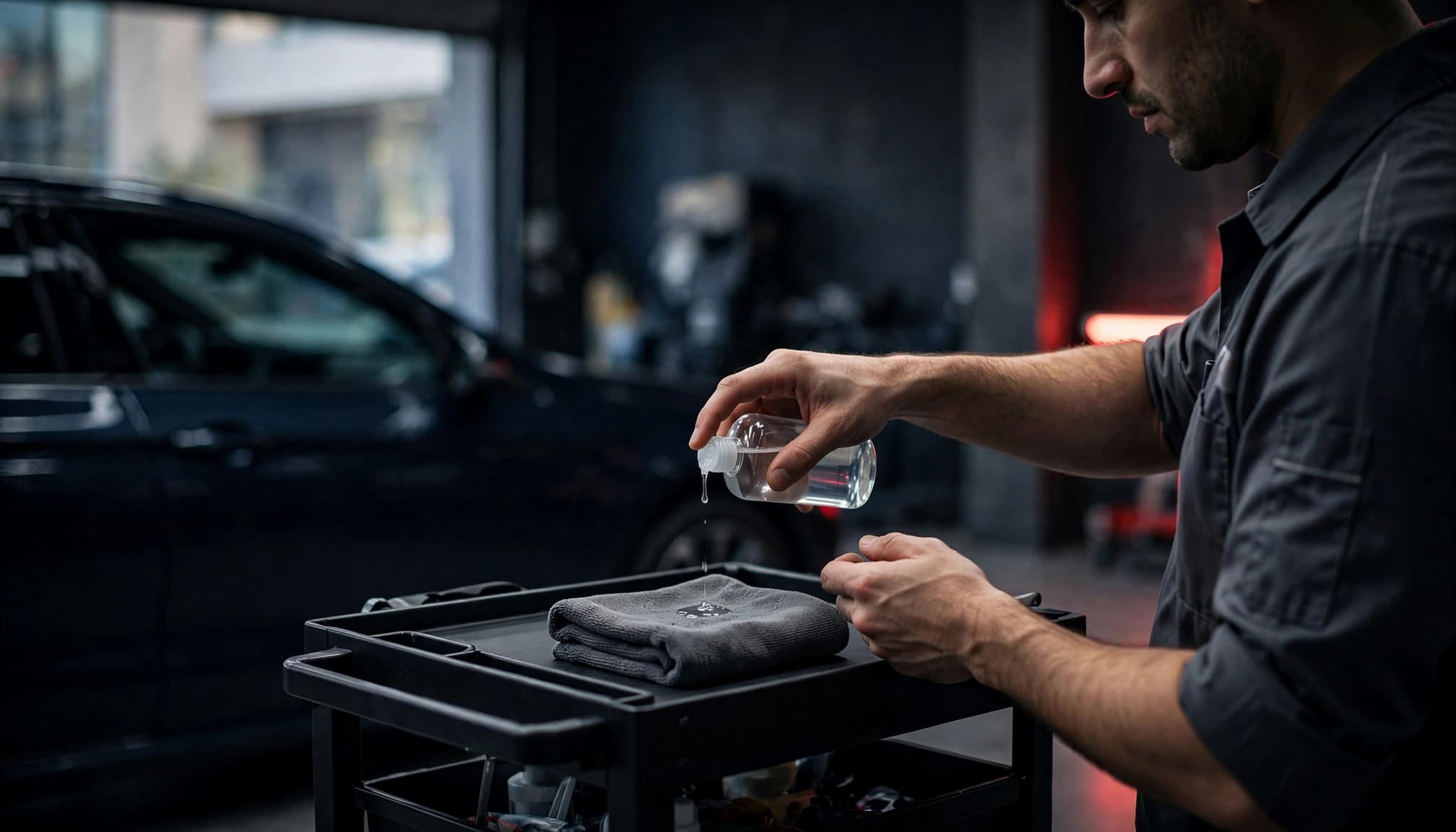
Some removers are applied to the affected panel; others can be placed on a microfiber towel. Use the method and dwell time printed on your product. Never let a cleaner dry on the paint, and don’t extend the waiting time in the hope that it will fix a stubborn spot.
Gtechniq’s paint-cleaning guidance describes applying a specialised cleaner with microfiber, allowing 1 to 2 minutes in its example, then rinsing and drying. That’s an example, not a dwell time for every tar remover. The directions on your bottle come first.
Lift softened tar with light contact
Use a clean section of microfiber to lift the softened residue. Make one gentle pass and check the cloth. If tar transfers onto it, fold to a clean face before continuing.
A stubborn spot needs another label-approved application, not more force. Work patiently and stop if the deposit doesn’t soften. Pushing hard can turn a removable mark into clear-coat damage.
If the tar isn’t moving with light contact, give the product another chance to work within its instructions. Don’t increase pressure on the towel.
Wash away residue and check the protection
Removing the visible spot isn’t the end of the job. Cleaner and dissolved tar can remain on the panel, particularly around lower trim and seams.
Wash and dry the treated area
Rinse or remove the product as its label directs. Then wash the treated area with car shampoo and a clean wash mitt, working over the full section rather than only the former spot. Rinse thoroughly and dry with a fresh microfiber towel.
Check the panel in good light. If you see another raised tar speck, repeat the removal process only where needed. A faint mark that doesn’t feel raised may need a different assessment; don’t keep applying solvent without knowing what remains.
Restore wax or sealant where needed
Solvent use may affect wax or sealant, even when the paint itself is suitable for the product. After washing and drying, check whether the treated area still appears and behaves like the surrounding paint.
If you’ve removed a protective layer, reapply a compatible wax or sealant according to its directions. For ceramic coatings, paint protection film, or wraps, follow the protection manufacturer’s care guidance before adding another product. Avoid promising yourself that one remover is safe for every finish.
Avoid tools and solvents that add risk
A razor blade, hard plastic scraper, kitchen scouring pad, or stiff brush may take off tar. Each can also mark paint. The same applies to aggressive rubbing with an old towel that has collected grit.
Don’t use gasoline, diesel, paint thinner, or other household solvents as shortcuts. They’re not a substitute for a labelled automotive tar remover, and they introduce avoidable surface and handling risks. A car-care product gives you instructions for its intended use.
Read safety information before opening the bottle. The W7 product safety information identifies its liquid and vapour as flammable. Work with suitable ventilation and keep ignition sources away when using products with that warning. Follow the label’s directions for gloves, storage, and disposal.
Know when to leave the job to a professional
A few isolated spots on sound paint are usually manageable with careful preparation. A panel covered in tar, however, can require repeated applications and a lot of towel contact. Professional detailing is a sensible option when the affected area is large or the finish is valuable.
Get help if the paint is peeling, freshly repaired, unusually delicate, or covered by a film or coating whose care instructions you can’t confirm. The same applies if a mark remains after gentle treatment and you can’t tell whether it’s tar, staining, or damage.
In Dubai, lower panels can pick up deposits during long drives and roadworks. A professional car wash or detailing service can assess the finish, clean the affected area, and advise on protection afterward. The aim is a clean result without creating another problem to repair.
Check lower panels after long drives
Tar is easier to notice when you inspect the car before the next wash. After a long drive, look behind the wheels and along the lower doors while the vehicle is parked and cool. If you find spots, clean them when you have proper supplies and enough time. Avoid a rushed attempt at a fuel stop.
A planned overnight stop also gives you time to check the car before another day on the road. For an Alaska Highway trip, Watson Lake hotels along the Alaska Highway can help you plan parking and arrival. Inspecting the panels at your stop tells you whether a normal wash will be enough when you reach a suitable cleaning location.
Key takeaways
- Wash away loose grit before treating tar, and work only on cool paint.
- Test a dedicated automotive tar remover in an inconspicuous spot and follow its label.
- Lift softened residue with clean microfiber and light contact. Repeat the treatment rather than scrubbing.
- Wash and dry the area afterward, then check whether its wax or sealant needs attention.
- Stop if the finish looks damaged or the deposit won’t release gently.
Frequently asked questions
Can I remove tar during a normal car wash?
A normal wash may remove loose surface dirt, but sticky tar often remains. Wash first to clear grit, then treat any remaining spots with a suitable automotive tar remover. Finish by washing the treated area again.
Will a tar remover scratch clear coat?
The cleaner isn’t a guarantee against scratches. Grit on the panel, a dirty towel, or too much pressure can mark clear coat during removal. Clean the area first, use fresh microfiber, and let the product soften the tar before you touch it.
Can I use a clay bar instead?
A clay bar makes contact with the paint and can pick up grit. For visible tar deposits, start with a dedicated remover rather than dragging a clay bar over them. If contamination remains after chemical cleaning, a detailer can assess the next step.
What if tar remover doesn’t work the first time?
Check the label, then repeat the application only if its directions allow it. Keep the cloth clean and your pressure light. If the mark doesn’t respond, don’t scrape it or switch to gasoline. Have the spot assessed before trying stronger treatment. AutoZone’s guide to removing tar offers additional car-care context.
Conclusion
Those black specks after a drive don’t call for harder scrubbing. Safe tar removal depends on softening before lifting, with cool paint, a suitable product, and a clean microfiber towel.
Wash away the residue, check the panel’s protection, and stop if the finish or deposit raises any doubt. A patient approach protects the shine you wanted to restore.
Get a price on detailing and surface protection
Shop #7, 44, 22nd Street, Ras Al Khor Industrial Area 2, open 24 hours. Tell us the car and we reply with a price and a time.
Would rather talk? Call +971 55 168 5050. Someone answers 24 hours.
See us first on Google
Google lets you choose the sites you want to see more of. Add Bud Car Wash as a preferred source and our car care guides show up more often in Top Stories and in Google’s AI answers.
Opens Google in a new tab. You can remove us again at any time.

Sammie O is the owner of Bud Car Wash, a 24 hour hand car wash and detailing shop at Shop #7, 44, 22nd Street, Ras Al Khor Industrial Area 2, Dubai. He writes the car care guides on this site based on work done in his own bay.
View All Articles