

Last updated 29 September 2026 by Sammie O, owner of Bud Car Wash in Ras Al Khor Industrial Area 2, Dubai.
A safe way to clean car grille surfaces starts with patience, not force. Dust, insects and road grime can collect in the openings, but aggressive scrubbing may damage the grille or reach delicate radiator and condenser fins behind it.
Let the vehicle cool, use gentle water flow and soft tools, and keep cleaning to the surfaces you can reach safely. When you clean car grille openings by hand, the goal is to lift dirt away without pushing it deeper into the cooling stack.
Want us to do it instead?
We do manual car wash at our Ras Al Khor bay, 24 hours a day. Fill this in and we reply with a price and a time. The message writes itself, so you only tap send.
Would rather talk? Call +971 55 168 5050. Someone answers 24 hours.
Key Takeaways
- Let the vehicle cool before washing, especially after a long drive.
- Use a low-flow hose, car-safe shampoo and soft microfiber or detailing tools.
- Avoid pressure washers, stiff brushes and tools pushed through grille openings.
- Check your owner’s manual before using products, accessing hidden areas or removing grille parts.
- Stop if debris is lodged behind the grille or you can’t clean it without touching the fins.
Why a Car Grille Needs a Light Touch
The grille is the visible front barrier, but the radiator and air-conditioning condenser may sit directly behind it. Their thin fins can bend when pressed with a tool or struck with a forceful stream of water. A bent section can also trap more dirt than a clean, open surface.
Grilles vary by vehicle. Some have wide openings, while others use fine mesh, chrome, painted plastic or active shutters. The cooling components behind them also differ in position and access. A method that works on one car may not suit another.
For exterior care, keep the job simple: soften surface dirt, wash gently and leave trapped debris alone if it can’t be removed safely. A clean front grille should look fresh without requiring you to reach into the cooling system.
Check the Vehicle Before You Start
Let the front end cool
Park in a shaded area and wait until the hood, bumper and grille area feel cool to the touch. A hot vehicle can make water and cleaning products dry too quickly, leaving marks or residue. Cooling down also makes it easier to work without touching hot components.
If you’ve just finished a long drive, give the vehicle more time before cleaning. Don’t open the hood or reach behind the grille as part of a routine exterior wash.
Confirm materials and access
Check the owner’s manual for vehicle-specific washing advice. Grille finishes and access points differ, and some vehicles have shutters or trim that can be damaged by force. The Polaris owner manual’s radiator and condenser guidance is a reminder to follow the manual for the specific vehicle, rather than assuming one procedure suits every car.
Don’t remove grille parts unless you understand the correct procedure and have the required tools. If the manual doesn’t describe a safe way to reach a blocked area, leave that work to a qualified technician.
Gather Soft, Car-Safe Cleaning Tools
Use a low-flow garden hose or a container of clean water, a pH-neutral car shampoo suitable for your vehicle’s finish, and a clean microfiber cloth or soft detailing brush. Keep a second cloth ready for drying. Follow product labels, and test an unfamiliar cleaner on a small, inconspicuous area first.
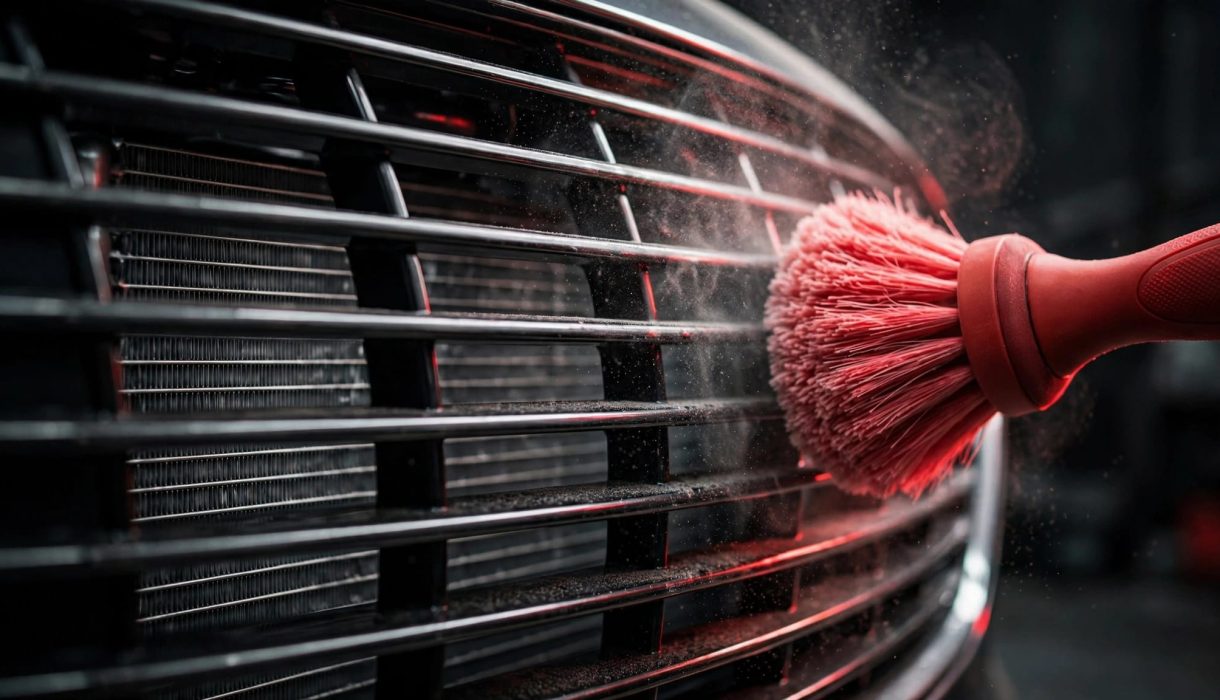
A soft brush is useful for surface dirt around openings, but it shouldn’t be pushed through them. Choose bristles that bend easily under light pressure. Avoid stiff household brushes, metal picks, abrasive pads and anything that could scratch trim or touch the cooling fins.
The car condenser cleaning guidance from WellWhisk also describes a garden hose and soft brush. Treat that as general cleaning information, not a substitute for your vehicle’s manual.

How to Clean Car Grille Surfaces Safely
Rinse gently before wiping
Use a light stream of water to loosen loose dust and grit on the grille face. Keep the nozzle back from the surface and aim across the outer grille, not sharply into the openings. A hard, direct spray can force debris deeper toward the radiator or condenser.
If you’re using a bucket, wet the grille with a clean microfiber cloth instead. Don’t start by rubbing a dry, dusty surface, since grit can scratch paint or glossy trim.
Wash the openings from the outside
Mix car shampoo according to its label. Apply it with a soft cloth or flexible detailing brush, moving lightly across the grille face. Work in small areas, and rinse the tool often so it doesn’t carry grit from one section to another.
For narrow openings, use only the soft tip of the brush at the surface. Don’t poke it into the grille or sweep debris inward. If insects or dirt are stuck, let the shampoo solution soften them before wiping again. A step-by-step overview from CleaningBro’s radiator-fin cleaning guide also emphasizes gentle pre-cleaning and a careful rinse.
Rinse and dry without force
Rinse away shampoo with low-flow water, still keeping the stream on the grille’s front surface. Check for leftover soap and wipe nearby trim with a clean microfiber cloth. Drying helps prevent water spots, especially on glossy or chrome finishes.
Don’t use compressed air or a forceful spray to clear water from deep inside the grille. If you see a leaf or insect trapped behind the openings, avoid pushing it farther into the cooling stack.
Protect the Radiator and Condenser Fins

Keep tools on the grille face
The thin fins behind the grille are easy to bend. Keep brushes, cloths and fingers on the exterior trim. Don’t reach through an opening to scrub the radiator or condenser, even if the dirt looks close.
If debris is visible but trapped behind the grille, pause. Pulling it forward may seem easy, but a tool can catch a fin or push material farther inside. A professional can assess access and clean the area with suitable equipment.
Avoid pressure washers and angled blasts
Don’t use a pressure washer on the grille or cooling fins. The force can bend delicate fins, and spraying at an angle may drive dirt deeper rather than lift it away. MROilGuy’s radiator-fin cleaning advice warns about both risks.
A pressure washer’s general car-washing instructions don’t establish that it is safe for a vehicle’s fins. For grille cleaning, a gentle hose flow gives you more control and reduces the chance of damage.
Common Grille-Cleaning Mistakes to Avoid
Scrubbing harder when dirt won’t lift
More pressure isn’t a reliable solution for stuck grime. It can scratch the grille finish, break delicate trim or push dirt behind the openings. Wet the area again and give the shampoo more time to loosen surface deposits.
Avoid stiff brushes, scouring pads and sharp tools. Even if a tool fits between the grille bars, that doesn’t mean it’s safe to use there.
Using unsuitable cleaners or removing parts
Household cleaners, solvents and strong degreasers may not suit a painted, chrome or plastic grille. Use a product labeled for automotive exterior surfaces, and follow the vehicle and product instructions. If a stain remains, don’t escalate to a harsher chemical without checking compatibility.
Removing the grille can expose hidden fasteners, sensors or delicate components. Don’t take it apart based on guesswork. Check the service information or ask a qualified technician if deeper access is needed.
When to Stop and Get Professional Help
Stop cleaning if a tool would need to pass through the grille, if debris is lodged behind it, or if the finish starts to look scratched or discolored. Also stop if you notice a loose grille, damaged trim or bent fins. Continuing can turn a small cleaning task into a repair.
A professional car-care service can inspect the area and choose a safe method for the vehicle’s design. This is especially useful after a long trip, when dried insects or road debris are hard to remove from narrow openings. Share what you’ve already tried so the technician can avoid repeating steps or using a product that may not suit the finish.
Frequently Asked Questions
Can I use a pressure washer on my car grille?
Avoid it around the grille and cooling fins. High-pressure water can bend fins or force debris into the radiator or condenser. Use a gentle hose stream on the outer grille instead.
Can I use a toothbrush to clean the openings?
A soft toothbrush may work on broad, sturdy exterior surfaces, but it can be too stiff for delicate mesh or trim. A soft automotive detailing brush is a better choice. Keep it on the grille face and don’t push it through an opening.
Should I remove the grille to clean behind it?
Only remove it if the owner’s manual or service instructions explain the procedure and you understand it. Grille attachments and access vary by vehicle. When in doubt, leave removal and cleaning behind the grille to a technician.
How often should I clean the grille?
Clean it when dirt or insects are visible, or as part of your regular exterior wash. After long drives, check for buildup, but don’t force out debris that is stuck behind the grille.
Keep Grille Cleaning Gentle
A clean grille improves the appearance of the vehicle, but careful technique matters more than aggressive scrubbing. Let the car cool, rinse with low water flow and use soft tools only on the outer surfaces.
If dirt is beyond safe reach, stop and check the owner’s manual or arrange professional cleaning. Protecting the fins keeps a routine wash from becoming an avoidable repair.
Get a price on manual car wash
Shop #7, 44, 22nd Street, Ras Al Khor Industrial Area 2, open 24 hours. Tell us the car and we reply with a price and a time.
Would rather talk? Call +971 55 168 5050. Someone answers 24 hours.
See us first on Google
Google lets you choose the sites you want to see more of. Add Bud Car Wash as a preferred source and our car care guides show up more often in Top Stories and in Google’s AI answers.
Opens Google in a new tab. You can remove us again at any time.

Sammie O is the owner of Bud Car Wash, a 24 hour hand car wash and detailing shop at Shop #7, 44, 22nd Street, Ras Al Khor Industrial Area 2, Dubai. He writes the car care guides on this site based on work done in his own bay.
View All Articles
