
How to Remove Cement Dust From a Car After Construction Work
Posted in :

Last updated 28 September 2026 by Sammie O, owner of Bud Car Wash in Ras Al Khor Industrial Area 2, Dubai.
Construction dust can cover your car in a few hours, and a dry cloth can turn a simple clean into paint damage. The safest way to remove cement dust from car paint starts with a thorough water rinse, not a wipe.
Fine dust, stuck-on residue and hardened cement need different care. Use the right process for each, protect delicate surfaces and stop if the residue won’t release easily.
Want us to do it instead?
We do detailing and surface protection at our Ras Al Khor bay, 24 hours a day. Fill this in and we reply with a price and a time. The message writes itself, so you only tap send.
Would rather talk? Call +971 55 168 5050. Someone answers 24 hours.
Key Takeaways
- Rinse loose cement dust away before using a mitt or cloth.
- Keep the car and cleaning materials wet while washing.
- Treat bonded residue with a product labeled safe for automotive surfaces, following its instructions.
- Don’t scrape hardened cement or experiment with strong acids.
- Stop if removal requires force, or if paint, glass or trim looks damaged.
Identify What’s on the Car
A light coating of pale powder is usually loose dust. It may cover the hood, roof, windshield, door seams and rear glass. If you can see it sitting on the surface, rinse it away before any contact wash.
Stuck-on deposits need more caution. They may look like small white dots, rough patches or dried splashes that remain after rinsing. Cement that has hardened is different again: it forms a firm spot or crust that won’t move with gentle washing.
Check the car in good light before cleaning. Note where the residue sits and whether it’s on paint, glass, plastic trim or rubber. If you’re unsure whether a mark is cement or existing paint damage, don’t test it with a fingernail or tool.
Prepare Before You Wash
A careful setup limits scratching and keeps cement residue away from the cabin. Work in a shaded area, with the vehicle cool to the touch. Direct sun can dry water and cleaner before you’ve finished rinsing.
Gather suitable supplies
Use a clean water source, automotive shampoo, a soft wash mitt, clean microfiber towels and a separate bucket for the mitt. Wear gloves and eye protection, especially if you’re handling dry dust or a cleaning product.
Keep a product’s label close if you plan to use a cement or mineral deposit remover. Check that it’s approved for the affected surface, including paint, glass, trim and any coating. Follow the label exactly.
Protect yourself and the vehicle
Cement dust can irritate the eyes and respiratory system, as OSHA’s guidance on concrete manufacturing explains. Avoid creating airborne dust. If the car is heavily coated, keep the windows shut and don’t use compressed air or a dry brush.
Wet Portland cement can also irritate skin. OSHA notes that cement burns can worsen after contact ends, so avoid prolonged contact and wash exposed skin promptly. Read OSHA’s cement skin-safety guidance before handling cement residue.
Rinse Off Loose Cement Dust
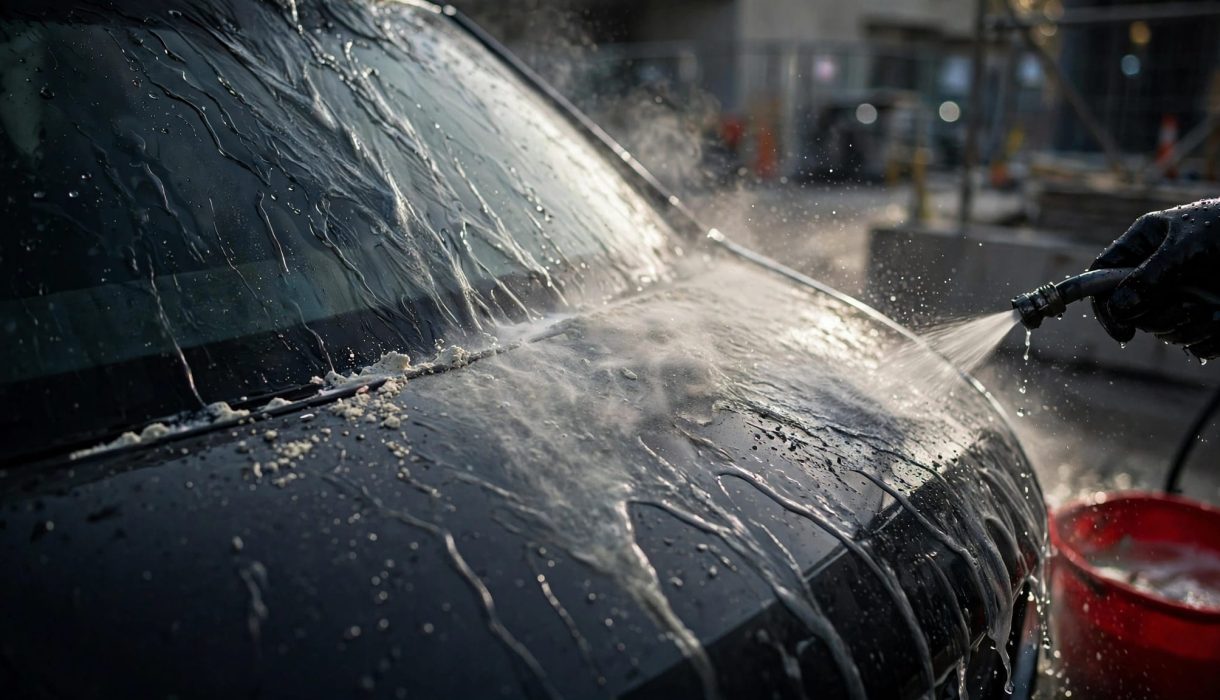
Begin with a generous rinse of clean water. Let the water carry away as much loose material as possible before a mitt touches the car. A gentle, broad spray is preferable to holding a strong jet close to the paint, trim or seals.

Once the runoff looks clear, wash the car with automotive shampoo and a clean, soft mitt. Work a small area at a time, rinsing the mitt often. If you feel grit dragging beneath it, stop and rinse again rather than pushing the residue across the paint.
Wash from the upper surfaces down, leaving the dirtiest lower panels until last. Rinse each section before it dries. A car-cleaning guide from Way.com also recommends rinsing loose material before gentle contact cleaning.
Don’t wipe visible dust with a dry towel, brush or sleeve. Don’t run the windshield wipers until the glass and blades have been rinsed clean. Trapped particles can scratch glass or smear across the windshield.
How to Remove Cement Dust From Car Paint Safely
If a white mark remains after washing, don’t assume it’s loose dust. It may be mineral residue or cement that has bonded to the surface. Start by rinsing the area again and checking whether the mark softens or releases without pressure.
Use a compatible product, not a guess
Choose a remover specifically labeled for cement or mineral deposits on automotive surfaces. Check the product directions for approved materials, application method and any cautions. Test it on a small, inconspicuous area first, provided the label allows that use.
Some specialist advice recommends acid-based cleaners for dried concrete. That doesn’t make an acid safe for every vehicle: paint, glass, trim and coatings can react differently. New Again’s dried-concrete guidance discusses acid-based cleaners, but use one only when its label confirms compatibility and you can follow the instructions precisely.
Keep the surface wet and use light contact

Apply an approved product only as directed. Keep the surface wet for the label’s stated process, then rinse it thoroughly. If the instructions allow gentle wiping, use a clean microfiber cloth with minimal pressure. Don’t scrub repeatedly to force a result.
Avoid vinegar mixtures, household descalers, strong acids and other untested chemicals. A product mentioned in a detailing article, such as iGL Coatings’ cement-splatter guidance, is not automatically suitable for every finish. Always check the specific product label and your vehicle’s surface requirements.
Protect Paint, Glass and Trim
Different materials need different care. Use a small test area and stop if a cleaner changes the surface, leaves a mark or affects its finish.
Paint and protective coatings
Use automotive shampoo for the contact wash and a soft, clean mitt. Don’t use scouring pads, abrasive powders, blades or stiff brushes. They can scratch clear coat and may leave marks that need polishing or repair.
If the car has ceramic coating, paint protection film or a vinyl wrap, check compatibility before using a cement remover. Follow the coating or film maker’s care directions where available. Don’t assume a product safe for clear coat is also safe for every wrap or film.
Glass, plastic and rubber
Rinse glass thoroughly before wiping. Use an automotive glass cleaner that’s suitable for the surface, and avoid scraping cement spots with a razor or other tool. If the windshield has a coating or tint film, check its care instructions first.
Plastic trim, rubber seals and textured pieces can hold residue in small grooves. Flush them with water and clean gently with a soft microfiber cloth. Keep strong cleaners off these materials unless the product label specifically approves them.
Clean Dust From the Interior
If construction dust entered the cabin, switch off the ventilation system before cleaning. Don’t blow dust out of vents with compressed air or brush it across the dashboard.
Use a vacuum with a soft brush attachment on carpets and seats, working slowly so dust is collected instead of stirred up. For hard surfaces, use a slightly damp microfiber cloth and an interior cleaner approved for that material. Avoid soaking fabric, leather, screens or buttons.
If dust has settled in air vents or the cabin filter area, arrange an inspection rather than pushing it deeper into the system. Replace or clean the cabin filter only according to the vehicle’s service instructions.
Know When to Stop and Call a Professional
Stop if a mark remains after a careful rinse and wash, or if removing it would require scraping, heavy rubbing or an unapproved chemical. A hard cement spot can damage the finish when forced off.
Look for signs of damage
Pause the job if paint looks dull, scratched or discolored, or if glass has a persistent haze after cleaning. Stop if trim changes color, a coating appears patchy, or a cleaner causes softening or staining. Don’t apply another chemical over a product that hasn’t been fully rinsed away.
Arrange a professional assessment
A detailer can inspect the surface and choose a suitable removal method for the affected materials. This is the safer option for hardened splatter, widespread contamination, residue on film or coated surfaces, and cement near sensitive trim.
For drivers in Dubai, Bud Car Wash in Ras Al Khor is open 24/7 and offers exterior cleaning and detailing. A professional assessment is a practical next step when a careful home wash hasn’t cleared the residue.
Frequently Asked Questions
Can I remove cement dust with a dry microfiber towel?
No. Dry wiping can drag grit over the finish and scratch paint or glass. Rinse the surface first, then use a clean mitt or cloth only after loose dust is gone.
Is vinegar safe for cement marks on car paint?
Don’t assume it’s safe. Advice varies, and a homemade mixture may affect paint, coatings, glass or trim. Use a product labeled for the surface, or ask a professional to assess stubborn residue.
What if cement has already hardened?
Don’t chip or scrape it off. Rinse the area and seek professional help if a compatible labeled remover doesn’t release it easily. Force can damage the finish underneath.
Keep the Finish Protected
The safest way to clean construction dust is to remove loose particles with water before any contact wash. Treat stuck-on residue as a separate problem, use only compatible products and stop before careful cleaning turns into scraping or force. If the cement has hardened, professional removal can protect the paint, glass and trim.
Get a price on detailing and surface protection
Shop #7, 44, 22nd Street, Ras Al Khor Industrial Area 2, open 24 hours. Tell us the car and we reply with a price and a time.
Would rather talk? Call +971 55 168 5050. Someone answers 24 hours.
See us first on Google
Google lets you choose the sites you want to see more of. Add Bud Car Wash as a preferred source and our car care guides show up more often in Top Stories and in Google’s AI answers.
Opens Google in a new tab. You can remove us again at any time.

Sammie O is the owner of Bud Car Wash, a 24 hour hand car wash and detailing shop at Shop #7, 44, 22nd Street, Ras Al Khor Industrial Area 2, Dubai. He writes the car care guides on this site based on work done in his own bay.
View All Articles
