
Last updated 21 September 2026 by Sammie O, owner of Bud Car Wash in Ras Al Khor Industrial Area 2, Dubai.
The right exterior car wash does more than improve your vehicle’s appearance. It removes grit and residue without adding scratches, water spots, or avoidable wear. With the right tools and method, you can clean your car safely at home, at a self-service bay, or through a professional service.
The best choice depends on the type of dirt, the weather, your available equipment, and the condition of the paint. Road salt, bird droppings, dust, and dried water marks each need a slightly different approach. Start with the basics of paint-safe cleaning.
Want us to do it instead?
We do automated car wash at our Ras Al Khor bay, 24 hours a day. Fill this in and we reply with a price and a time. The message writes itself, so you only tap send.
Would rather talk? Call +971 55 168 5050. Someone answers 24 hours.
Why Paint-Safe Washing Matters
Your car’s clear coat is durable, but it isn’t scratch-proof. Fine sand and road grit can sit on the surface, and rubbing them with a dry cloth can create light marks. A careful wash lifts this contamination before you dry or polish the vehicle.
Wash water can also carry soap, oil, brake dust, and other contaminants into storm drains. The EPA source water protection bulletin explains that vehicle wash water and overspray can reach source water untreated through surface runoff.
Dirt can scratch the clear coat
Loose dust is usually easy to remove with a thorough rinse. Problems begin when dirt bonds to the paint and you wipe it with pressure. The particles can move across the surface like fine sandpaper.
Use plenty of water before touching the paint. A clean microfiber mitt and lubricating car shampoo reduce friction. Keep separate tools for the wheels, tires, and painted panels because brake dust is abrasive.
A dry towel can turn harmless dust into paint damage when it drags grit across the clear coat.
Salt, bird droppings, and water spots need attention
Road salt should be rinsed off promptly. It can contribute to corrosion on exposed metal and underbody areas when residue remains in place. During colder months, pay attention to wheel arches, lower doors, and the underside of the vehicle.
Bird droppings can also mark the clear coat, especially when they dry under direct sunlight. Place a damp microfiber towel over the area for a few minutes, then lift the softened residue. Don’t scrape it with a card, fingernail, or dry cloth.
Water spots form when water dries and leaves minerals behind. They are easier to prevent than remove. Dry the vehicle soon after rinsing, particularly in hot weather, and use a dedicated water-spot product when ordinary washing no longer removes the marks.
Which Exterior Car Wash Method Fits Your Vehicle?
Each washing method has a practical use. Your decision should balance paint condition, available time, equipment, and the amount of contamination on the vehicle.
| Method | Best for | Main paint-safety point |
|---|---|---|
| Home wash | Routine cleaning and careful maintenance | Use clean tools, car shampoo, and shade |
| Self-service bay | More control without home equipment | Rinse the wand and keep it away from the paint |
| Automatic wash | Quick cleaning when time is limited | Check whether it uses touchless or soft-cloth equipment |
A self-service bay gives you control over the rinse and wash stages. Automatic systems offer convenience, but the cleaning method and equipment condition vary. Touchless systems avoid direct brush contact, while soft-cloth systems depend on clean, well-maintained washing material.
Responsible washing also includes runoff control. The car washing and stormwater guidance recommends keeping wash water out of storm drains whenever possible. Local rules differ, so check the requirements where you live.
How to Complete an Exterior Car Wash at Home
A home wash can produce an excellent finish when the process is controlled. Choose a shaded area, avoid washing a hot panel, and keep your equipment clean throughout the job.
Prepare the car and equipment
Before applying shampoo, remove loose dirt with a gentle hose rinse or a pressure washer on a broad spray setting. Keep the nozzle at a safe distance, and don’t aim directly at damaged paint, loose trim, seals, or sensors.
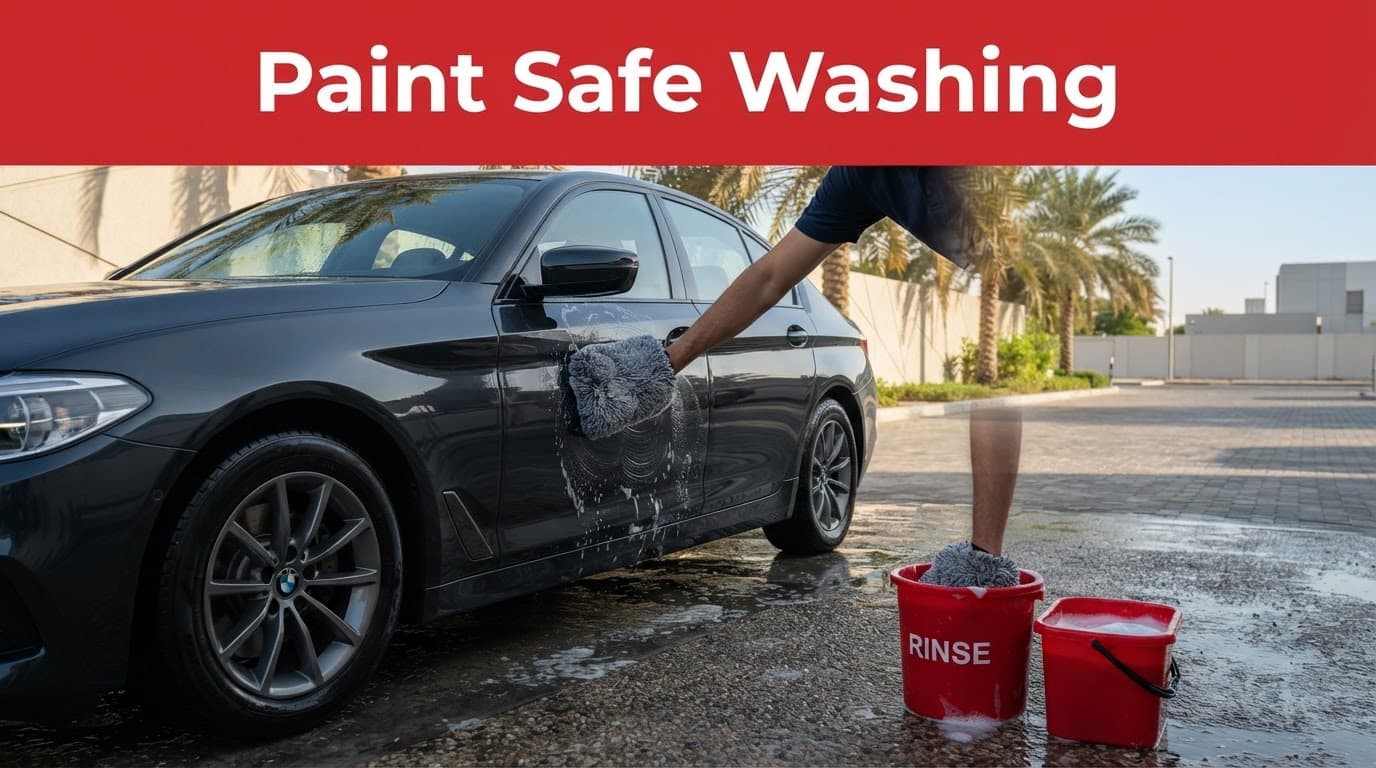
Prepare a bucket with automotive shampoo and clean water. A second bucket for rinsing the mitt is useful because it keeps collected grit away from the wash solution. Use a separate brush or mitt for the wheels.
If the vehicle has dried bird droppings, insect residue, or thick mud, pre-soak those areas. Allowing water and shampoo to soften the contamination is safer than increasing pressure with a sponge.
Wash from the roof down
Work in small sections, starting with the roof and glass before moving to the hood, upper doors, lower panels, and rear surfaces. Rinse the mitt often. Use light, straight passes instead of pressing hard or scrubbing in circles.
Rinse each section before the shampoo dries. Lower panels usually contain more road grime, so leave them until the end. The wheels and tires should be cleaned with dedicated tools and a separate product.
Never use household dish soap as your regular car shampoo. It can remove protective products faster than a purpose-made automotive wash solution. It also provides less control for a paint-care routine.
Dry the surface without creating spots
After the final rinse, use a clean, plush microfiber drying towel. Blot large areas or glide the towel lightly across the surface. Turn the towel when it becomes damp or picks up residue.
Dry mirrors, door handles, trim, and panel gaps before they drip onto clean paint. These areas often hold water and can leave fresh marks after the rest of the vehicle appears dry.
Inspect the finish in good light. If you see a stubborn mark, don’t rub it repeatedly with a dry towel. Use a suitable cleaner according to its instructions, or arrange a professional treatment when the spot has etched into the surface.
When a Professional Exterior Car Wash Makes Sense
Professional washing is preferable when the vehicle has heavy contamination, the paint needs more care, or you don’t have a suitable place to wash it. It is also practical when the car needs a consistent finish without using your own equipment.
Choose professional care for difficult contamination
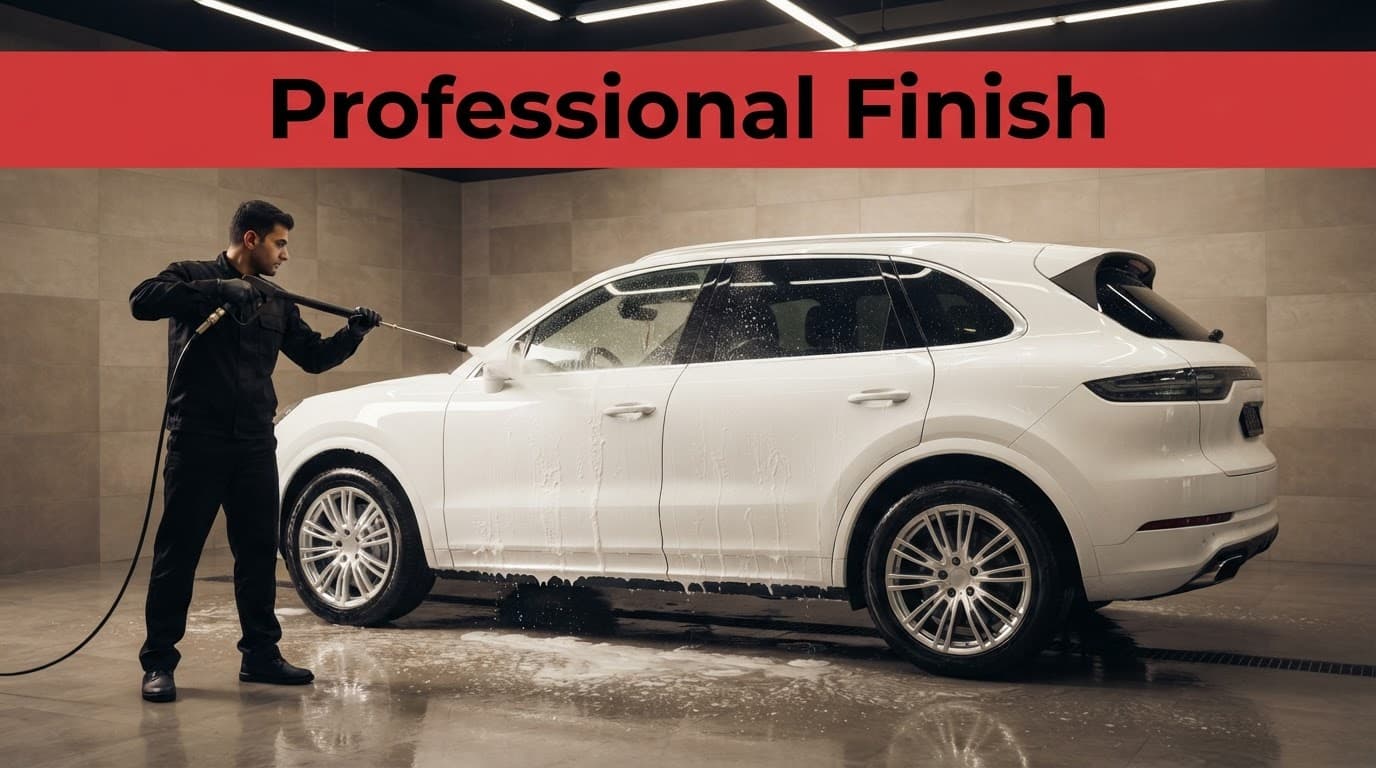
A professional exterior car wash can help when dust has built up across the body, mud has dried around the lower panels, or road salt has settled into hard-to-reach areas. Experienced staff can pre-rinse, clean, and dry the vehicle with tools suited to each surface.
Professional care is also useful after long road trips, outdoor parking, or exposure to construction dust. Tell the team about bird droppings, water spots, matte paint, wraps, ceramic coatings, or recently repaired panels before work begins.
For Dubai vehicle owners, frequent dust and strong sunlight make regular exterior maintenance especially practical. Washing sooner keeps contamination from sitting on the paint and makes each later wash easier.
Consider drainage and finish quality
A professional facility may have designated drainage and wash-water controls that are not available in a home driveway. The vehicle washing fact sheet from Minnesota’s Pollution Control Agency explains that wash water is treated as a non-stormwater discharge and should be directed to a sanitary system under the guidance described there.
Ask what the service includes. A basic wash may cover the body, windows, wheels, and drying. A more comprehensive service may add tire dressing, wax, polish, or paint-protection care. At Bud Car Wash, customers can choose an exterior wash or combine it with wax-and-polish services when the finish needs extra attention.
Professional washing can also save time when your schedule is full. A quality-focused service should leave the body clean, the wheels free of visible residue, and the trim properly dried.
Common Exterior Car Wash Mistakes to Avoid
Small shortcuts often create the finish problems owners are trying to prevent. Keep the process simple and avoid putting contaminated tools back on clean panels.
Don’t wash in direct heat
Direct sunlight and hot panels cause water and shampoo to dry quickly. This increases the chance of mineral spots and soap residue. Wash during a cooler part of the day or work in shade.
If shade isn’t available, clean one small section at a time and rinse it before moving on. Avoid leaving a wet car unattended after the final rinse.
Don’t apply wax or polish to a dusty surface. These products should go onto clean, dry paint. Otherwise, the towel can spread grit across the finish.
Don’t reuse dirty towels and brushes
A towel used on the wheels shouldn’t be used on the hood. Brake dust and road grime can remain in the fibers even after a quick rinse. Mark separate towels for paint, glass, wheels, and interior surfaces.
Inspect microfiber materials before use. Remove loose debris, wash them separately when possible, and don’t keep using a towel that has fallen onto the ground.
Avoid aggressive brushes on glossy paint. A soft mitt is better for body panels, while firmer tools can be reserved for tires and heavily soiled wheel areas.
Conclusion
A paint-safe exterior car wash starts with a thorough rinse, clean tools, suitable car shampoo, and light pressure. Deal with bird droppings, road salt, and heavy dirt promptly, then dry the vehicle before water spots form.
Home washing gives you control, self-service bays provide useful equipment, and professional care is a practical choice for heavy contamination or a more refined finish. When the right method matches the condition of the vehicle, clean paint is easier to maintain and safer to protect.
Bud Car Wash runs a automated car wash service at Shop #7, 44, 22nd Street, Ras Al Khor Industrial Area 2, open 24 hours. See the automated car wash service.
Get a price on automated car wash
Shop #7, 44, 22nd Street, Ras Al Khor Industrial Area 2, open 24 hours. Tell us the car and we reply with a price and a time.
Would rather talk? Call +971 55 168 5050. Someone answers 24 hours.
See us first on Google
Google lets you choose the sites you want to see more of. Add Bud Car Wash as a preferred source and our car care guides show up more often in Top Stories and in Google’s AI answers.
Opens Google in a new tab. You can remove us again at any time.

Sammie O is the owner of Bud Car Wash, a 24 hour hand car wash and detailing shop at Shop #7, 44, 22nd Street, Ras Al Khor Industrial Area 2, Dubai. He writes the car care guides on this site based on work done in his own bay.
View All Articles