A clean exhaust tip gives your car a cared-for look, but the wrong cleaner or scrubber can leave permanent marks. Before you clean exhaust tips, identify their material and finish so you can choose a method that removes soot without dulling or scratching the surface.
The safest approach is simple: work only on cool tips, start with pH-neutral car shampoo and soft microfiber, and test any product in a hidden area. A few careful steps can restore a neat finish without risking costly damage.
Key Takeaways
- Check the tip’s material, coating and care instructions before selecting a cleaner.
- Let the exhaust cool completely, then start with car shampoo, water and clean microfiber.
- Test unfamiliar products in an inconspicuous spot before applying them across the visible surface.
- Avoid steel wool, scouring pads, harsh chemicals and abrasive metal polish unless the manufacturer confirms they’re safe for that exact finish.
Identify the Exhaust Tip Material and Finish
A tip that looks like chrome may be plated, polished stainless steel or another surface with a protective coating. These finishes can look similar but respond differently to cleaners and polishing products. Check your owner’s manual, the exhaust manufacturer’s care instructions or product information before you begin.

Look for coatings and plating
Chrome plating, ceramic black finishes and other coated surfaces need extra care. A scratch or chemical mark can break the uniform appearance, and polishing may wear through a thin surface layer. BORLA advises against abrasive metal polish on chrome plating, recommending warm soapy water or a car-care product made for the finish instead. Its chrome exhaust care guidance is a useful reminder to confirm the surface before polishing.
Don’t guess based on appearance
If you can’t confirm the finish, treat it as delicate. Avoid metal polish and stronger cleaners until you’ve checked the manufacturer’s instructions. A small, inconspicuous test spot can reveal an immediate reaction, but it doesn’t replace care guidance for an unknown or coated surface.
Let the Exhaust Tip Cool and Prepare Your Supplies
Exhaust components can remain hot after a drive, even when the rest of the car feels cool. Cleaning a hot tip can burn your hands, dry product too quickly and make it harder to see how well the cleaner is working. Park safely and wait until the tips are fully cool to the touch before starting.
Set up a clean work area
Use separate, clean microfiber cloths for washing and drying. A cloth that has picked up grit can drag particles across the finish and leave fine scratches. Keep the supplies off the ground, and don’t reuse a cloth that has already been used on wheels or other dirty parts of the car.
Gather cool water, pH-neutral car shampoo and a soft microfiber wash mitt or cloth. A soft detailing brush can help reach the inner lip, but use it only if its bristles are gentle and clean. Avoid starting with polish, degreaser or a strong wheel cleaner.
Test products before wider use
Apply a small amount of the chosen cleaner to a hidden part of the tip, following the product directions. Wipe gently, rinse and inspect the spot in good light. Stop if you notice a change in color, gloss or texture. When the finish is coated or plated and its care instructions aren’t available, stick to mild soap and water.
Clean Exhaust Tips With a Gentle Wash
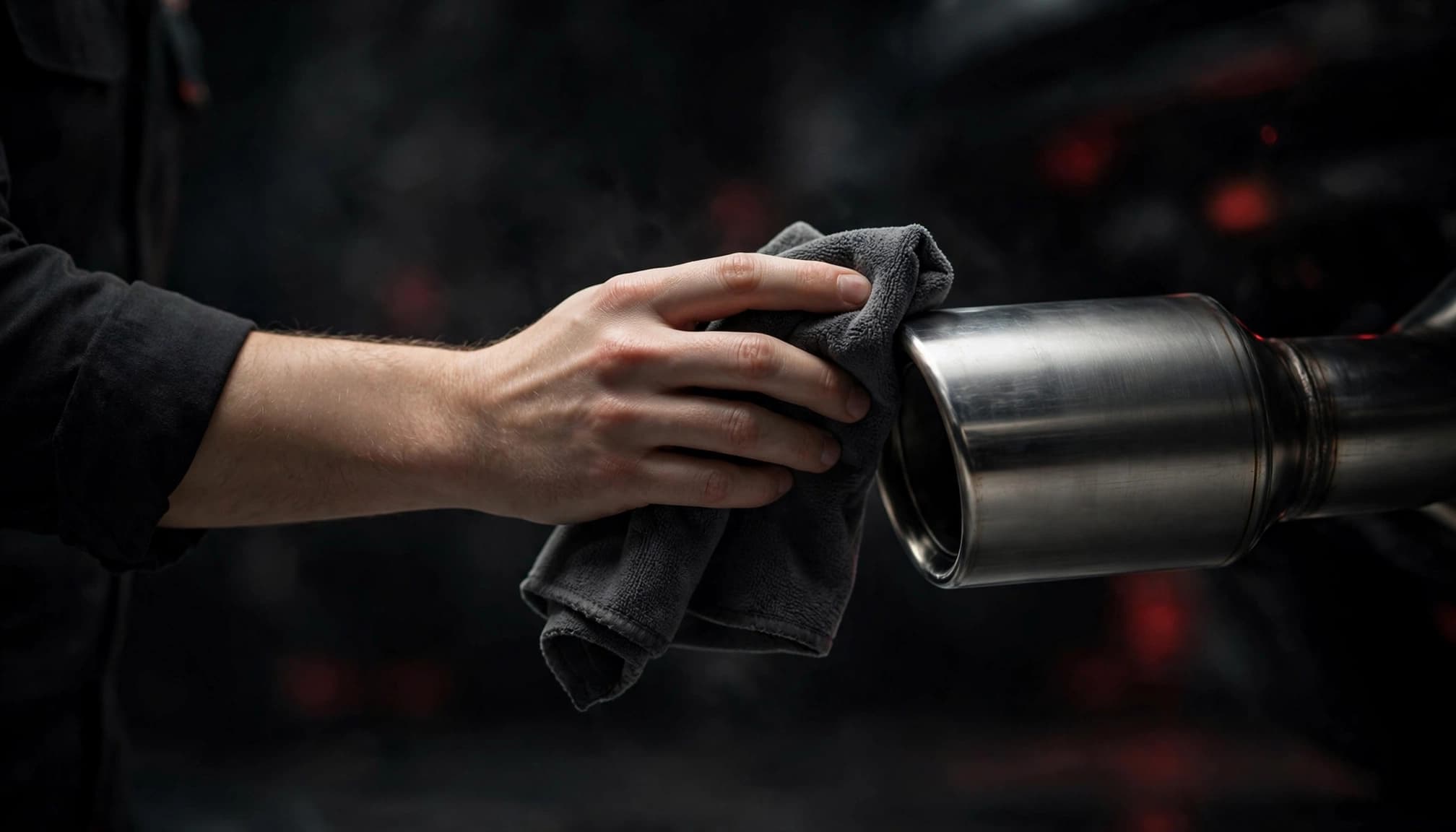
Begin with a thorough rinse to loosen dust and grit. This reduces the chance of rubbing abrasive particles into the metal as you wash. Add pH-neutral car shampoo to your clean mitt or cloth, then wipe the outer surface with light pressure.
Work a small area at a time
Clean the outer face first, then move to the lip and accessible inner edge. Turn or fold the cloth to a fresh section when it picks up dark residue. Don’t press harder to make a stubborn mark disappear. Reapply soapy water and let the softened grime wipe away with a clean part of the cloth.
For a soft brush, use short, gentle strokes around seams and edges. Don’t push the bristles into the surface or scrub back and forth with force. Spelab’s exhaust-tip cleaning instructions also recommend cool water, pH-neutral shampoo and microfiber before stronger methods.
Match the cleaner to the material
For stainless steel, start with the same car-wash soap you use on the vehicle’s exterior. Thermal R&D recommends a dedicated microfiber wash mitt or a soft cleaning tool for stainless tips. Its stainless steel cleaning advice supports a mild wash as the first step. If the tip has a coating or plating, follow that finish’s instructions instead.
Treat Stubborn Soot and Road Grime With Care
Soot can build up inside the outlet and around the lower lip, especially after regular driving or a long trip. Start by rinsing and washing again. Fresh shampoo and a soft cloth often remove routine residue without any polishing.
Repeat the wash before reaching for polish
If dark deposits remain, soak the area with soapy water and give the cleaner time to loosen the residue according to its label. Wipe gently, rinse, then inspect. Repeat the mild wash before moving to a stronger product. If a deposit doesn’t lift, avoid scraping it with a fingernail, blade or hard tool.
Metal polish is not a universal solution. It may be suitable for certain bare, polished metals, but it can scratch or dull plated, painted or coated tips. Check the manufacturer’s instructions and product label, then test the polish on a hidden area before using it on the visible face.
Stop if the finish changes
A cloudy patch, uneven gloss or color transfer onto the cloth is a reason to stop. More rubbing may worsen the damage. Rinse away the cleaner with water and let the surface dry so you can inspect it. For a finish you can’t identify, a professional detailer can assess it before using a stronger treatment.
Avoid Abrasive Tools and Harsh Chemicals
The quickest way to damage a bright finish is to use a tool that’s too aggressive. Steel wool, scouring pads, green scrub pads and sandpaper can leave scratches. Even a softer pad can trap grit and drag it across polished metal.
Keep abrasives away from delicate finishes
Don’t assume steel wool is safe because it’s recommended for some polishing jobs. Advice that applies to bare metal may not apply to chrome plating or a protective coating. Use only tools approved for your tip’s specific finish. For ordinary cleaning, a clean microfiber cloth and soft brush are a safer starting point.
Abrasive metal polish can also leave a plated surface dull or marked. BORLA’s warning about chrome is especially important when a product is sold simply as “metal polish.” Check the label for finish compatibility rather than relying on the product name.
Skip strong solvents and acidic cleaners
Avoid brake cleaner, bleach, oven cleaner, aggressive degreasers and acidic wheel cleaners unless the exhaust manufacturer specifically approves them. These products can discolor metal or weaken a protective layer. The risk is higher when you don’t know whether a tip is bare, plated or coated.
Ceramic-coated surfaces also need compatible products. Chemical Guys advises using pH-neutral car soap because acidic or alkaline cleaners can weaken a ceramic coating’s protective layer. Its ceramic-coated car wash guidance is relevant when the tip or surrounding finish has a coating.
Rinse, Dry and Check the Finish
Once the grime is gone, rinse the tip thoroughly so no shampoo or loosened dirt remains. Use a gentle flow of water, especially around edges and seams. Residue can leave spots or a dull film when it dries.
Dry with a fresh microfiber cloth
Pat or wipe the surface with a clean, soft microfiber towel. Don’t use a cloth that has been on the ground or used for wheels. Check the outer face and inner lip in good light. If you see streaks, rinse and dry again rather than polishing immediately.
Keep up with gentle washes
Regular washing prevents soot and road grime from building into stubborn layers. Add the tips to your normal exterior wash and use the same gentle approach each time. If the finish needs protection, choose a product specifically approved for its material and coating. Skip waxes or sealants if the manufacturer doesn’t recommend them.
Frequently Asked Questions
Can I clean exhaust tips while they’re warm?
Wait until the tips are fully cool. Hot metal can burn you, and heat can cause cleaning products to dry quickly or leave residue. Cooling also makes it easier to inspect the finish as you work.
Can I use metal polish on every exhaust tip?
No. Metal polish may be abrasive, and it isn’t suitable for every plated or coated finish. Check the manufacturer’s care instructions and test a compatible product in a hidden area before applying it more widely.
What should I do if soot won’t come off?
Repeat the mild wash with fresh shampoo and microfiber. Don’t scrape or scrub harder. If the residue remains, confirm the material and finish before trying a stronger cleaner or polish.
Keep the Finish Looking Its Best
Cleaning exhaust tips safely starts with knowing what you’re cleaning. Confirm the finish, let the metal cool, and use a gentle wash before considering any stronger product.
Soft microfiber and pH-neutral shampoo are reliable starting points for routine care. When the surface is plated, coated or uncertain, restraint protects its shine better than aggressive scrubbing.

Sammie O is the owner of Bud Car Wash, a 24 hour hand car wash and detailing shop at Shop #7, 44, 22nd Street, Ras Al Khor Industrial Area 2, Dubai. He writes the car care guides on this site based on work done in his own bay.
View All Articles