Dirty wheel wells can send muddy water straight onto clean paint if you spray without a plan. To clean wheel wells neatly, control the water direction, shield nearby body panels and work in small sections.
The process is straightforward with a hose, suitable cleaner and a soft brush. A pressure washer can save time, but it needs more distance and care, especially around sensitive finishes and trim.
Key Takeaways
- Rinse loose dirt downward before applying cleaner or brushing.
- Cover the fender and nearby body panels with a clean splash guard or wash mitt.
- Use an automotive cleaner and a soft, long-handled brush. Keep wheel-well tools separate from paintwork tools.
- Work one wheel at a time, directing water into the wheel arch rather than toward the body.
- Keep pressure low around liners, seals, wiring and painted edges. Follow the vehicle maker’s cleaning instructions.
Why Wheel-Well Cleaning Causes Splatter
Dirt and water travel outward
Wheel wells collect sand, road grime and small debris. A strong stream can loosen that material quickly, but it can also throw dirty water onto the fender, door or sill. Spraying upward or across the opening increases the chance of splatter.
A brush can cause the same problem when it flicks dirty water outward. Use slow strokes and rinse the brush often. Keeping the work contained is as important as removing the grime.
Clean surroundings make splatter visible
A recently washed body makes every speck easy to see. Dusty conditions and long drives can leave a heavy layer of grit inside the arches, so rinsing too quickly often spreads residue instead of removing it.
The goal is to loosen and move the dirt down and out. Start with a gentle rinse, then clean in sections and check nearby paint before moving to the next wheel.
Prepare the Car and Protect the Body Panels
Choose a safe wash area
Park on level ground in a shaded, well-ventilated area. Let hot panels and brakes cool before cleaning. Make sure the vehicle is secure, the parking brake is on and you have room to move around each wheel.
Gather a hose or washer, a wheel-well cleaner, a soft brush, clean microfiber towels and a panel guard. A large wash mitt or clean plastic shield can help block splash. Avoid leaning dirty tools against the paint.

Cover the paint before spraying
Place the guard along the fender edge and any nearby panel that could catch runoff. Keep it clean and reposition it as needed. A dirty guard can transfer grit to the paint, so rinse it before moving between wheels.
If you don’t have a guard, angle the first rinse away from the body and use a clean towel to shield the edge. Keep the towel outside the wheel well, where it won’t pick up grit from the liner.
Choose Tools and Cleaners for the Job
Keep brushes and cloths separate
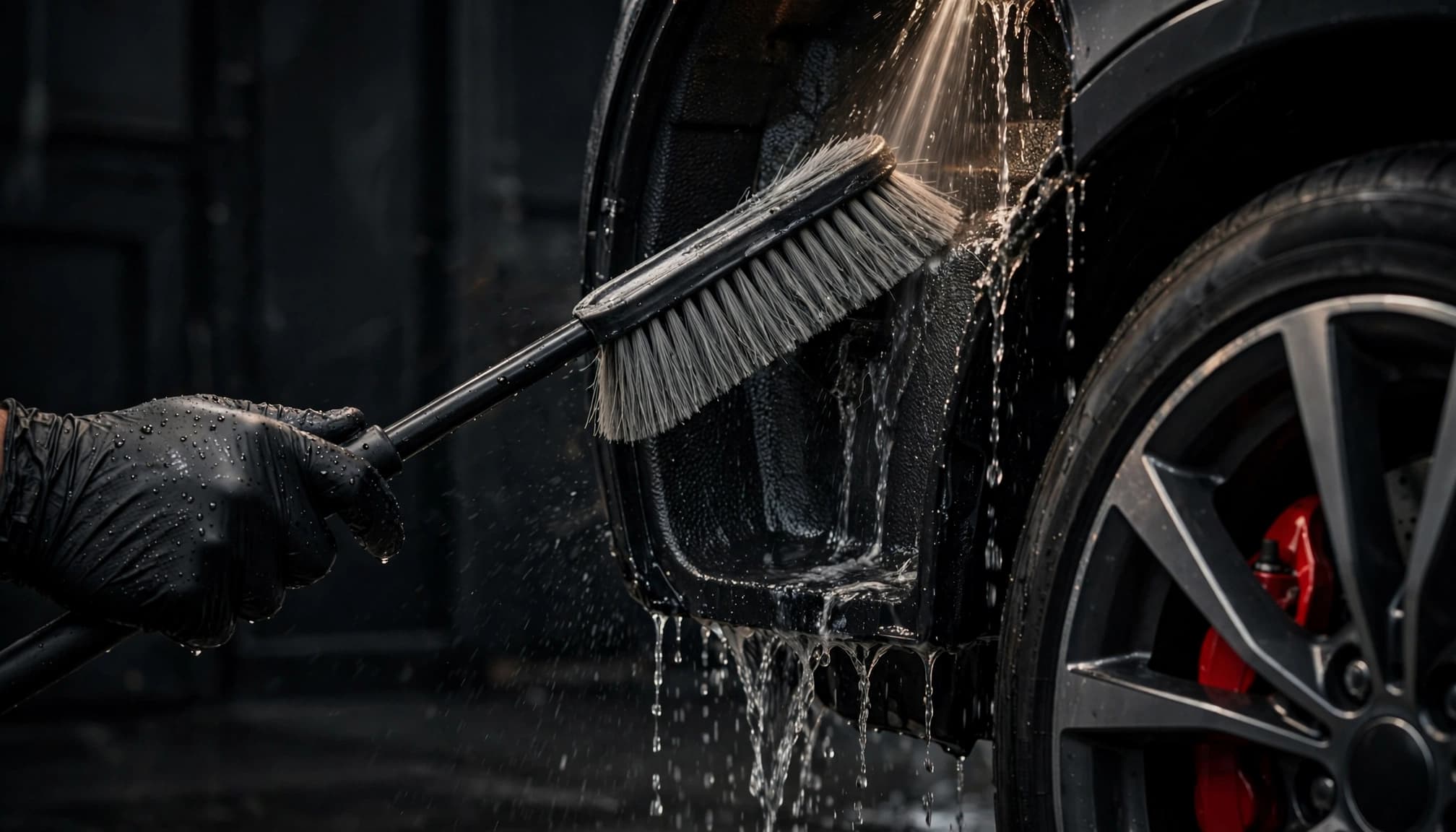
A soft, long-handled brush reaches behind the tire and into corners without requiring aggressive pressure. Use a brush that won’t scratch plastic liners or painted surfaces, and reserve it for wheel wells only.
Keep a separate set of towels for the body panels. Dirt from the arch can scratch paint if transferred by a shared cloth or mitt. Rinse the brush frequently so loosened grit doesn’t build up in its bristles.
Use a cleaner made for automotive surfaces
Choose an automotive all-purpose cleaner or wheel-well product that is suitable for the materials in your vehicle’s arches. Follow the label for dilution and dwell time. Don’t let cleaner dry on the surface, especially in direct sun.
Avoid household degreasers or strong solvents unless the product label and vehicle guidance confirm they’re appropriate. They may affect protective coatings, nearby paint or plastic. When unsure, test a small, hidden area first.
Clean Wheel Wells in a Controlled Order
Work on one wheel at a time
A section-by-section routine limits overspray and helps you see where dirty runoff is going. Follow this order for each wheel:
- Lightly rinse loose sand and surface dirt downward, keeping the stream inside the arch.
- Apply cleaner to the liner and let it sit only for the time stated on its label.
- Brush from the upper inner area down toward the bottom edge. Use short, controlled strokes.
- Rinse the brush often, and keep it pointed inward so it doesn’t flick grime onto the fender.
- Rinse the wheel well from top to bottom, then check the body panel before moving on.
The first rinse should remove loose particles, not blast every stain away. If dirt remains, reapply cleaner and brush gently rather than increasing force.
Reach behind the tire with care
Turn the steering wheel to expose more of the front wheel arch, if the vehicle is parked safely and the manufacturer allows it. Never place your hands or tools near moving parts, and don’t crawl beneath a vehicle supported only by a jack.
Clean the exposed areas in sections. For rear arches or tight spaces, use a longer brush instead of forcing the nozzle close to the liner.
Control Spray Angle and Pressure
Aim into the arch and down
Keep the spray directed into the wheel well, not across the opening toward painted panels. Start at the upper interior and work downward so dirty water drains out instead of spreading along the fender edge.
A wide spray pattern is easier to control than a narrow, concentrated jet. Use short passes and pause when runoff starts to cross the body-panel edge. STIHL advises checking the vehicle manufacturer’s cleaning instructions and keeping distance when using a pressure washer. Its vehicle pressure-washing guidance also recommends hand washing or lightly rinsing sensitive areas.
Take extra care with a pressure washer
Start with a broad, low-pressure spray and keep the nozzle well back. Greenworks recommends starting about 2 to 3 feet away and moving closer to about 10 inches only as needed. Treat this as general guidance, not a universal safe distance for every vehicle or liner. Check the maker’s instructions before using a washer.
Avoid concentrated jets near plastic edges, rubber seals, electrical connections, sensors or loose trim. If a liner flexes, a clip appears loose or the surface reacts to the spray, stop and switch to a hose and brush.
Rinse, Inspect and Finish the Panels
Rinse until runoff is clear
Rinse from the top of the arch down, with the nozzle angled inward. Watch where the water exits. If it runs over painted panels, stop and reposition the guard before continuing.
Check the inner lip, behind the tire and the lower edge of the liner. Cleaner left behind can attract dirt, so rinse each area thoroughly without directing runoff onto the body.
Wipe away any stray spots
Remove the panel guard carefully so collected dirt doesn’t touch the paint. If you see splashes, rinse them off promptly with clean water. Use a separate, clean microfiber towel to dry the body panel.
Before moving to the next wheel, rinse the brush and guard. This keeps old grime from becoming fresh splatter on another clean section.
Common Mistakes That Spread Dirt
Working too fast is a common cause of dirty streaks. A rushed rinse can leave cleaner behind, while forceful brushing sends water and grit outside the arch. Slow down and keep each action aimed into the wheel well.
Avoid these habits:
- Spraying from below toward the fender or across the wheel opening.
- Using a narrow pressure-washer jet close to liners, seals or trim.
- Reusing a wheel-well brush or towel on the body panels.
- Letting cleaner dry before rinsing.
- Washing a hot vehicle or working in direct sun, where products can dry quickly.
- Directing runoff across a panel you have already cleaned.
If the wheel well remains dirty after a gentle pass, repeat the cleaner-and-brush step. More pressure isn’t the right fix for every surface.
Frequently Asked Questions
Can I clean wheel wells with a garden hose?
Yes. A hose is easy to control and works well for loosening dirt and rinsing cleaner. Pair it with an automotive cleaner and a soft brush for grime that needs more attention.
Do I need a pressure washer?
No. A pressure washer can speed up rinsing, but it also makes it easier to force water and dirt onto body panels or sensitive components. A hose is a good choice when you’re unsure about pressure or the vehicle’s materials.
Should I clean wheel wells before or after washing the body?
Clean them before the final body wash. Some splatter may still happen, even with careful technique, so washing the body afterward removes any remaining residue.
Can I use the same brush on tires and wheel wells?
It’s better to use separate tools. Both areas collect grit, and a brush used in the wheel well can carry debris onto the tire or painted surfaces. Rinse each tool well and keep it dedicated to its cleaning area.
Keep the Cleaning Controlled
A clean wheel well starts with a gentle rinse and ends with a careful check of the surrounding paint. Shield the panels, use tools made for automotive surfaces and keep water moving down and out.
For regular cleaning or stubborn grime, a controlled process protects the finish and leaves the vehicle ready for the next drive.

Sammie O is the owner of Bud Car Wash, a 24 hour hand car wash and detailing shop at Shop #7, 44, 22nd Street, Ras Al Khor Industrial Area 2, Dubai. He writes the car care guides on this site based on work done in his own bay.
View All Articles