
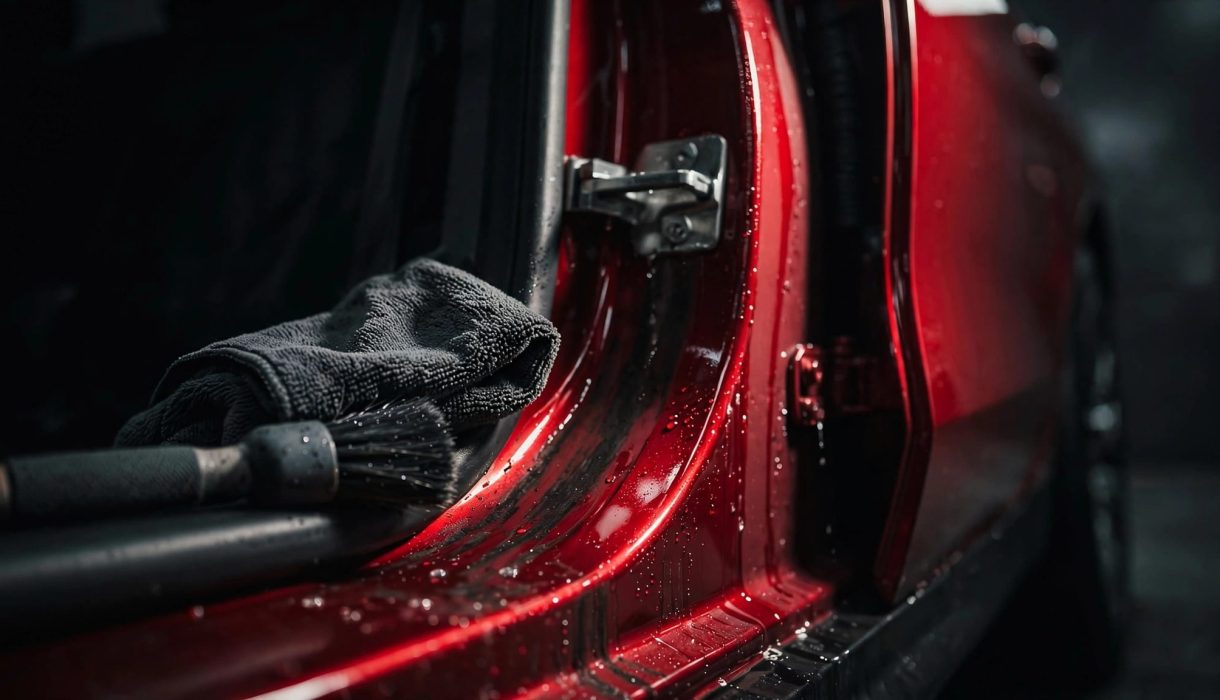

A clean car can still look neglected when dust and grime collect around the doors. To clean car door jambs and hinges properly, use gentle products, control the water, and dry every area before closing the doors.
These painted edges and moving parts need different care. A careful process removes road film without scratching paint, soaking electrical components, or washing lubricant from the hinges.
Tools and products for cleaning door jambs
A few soft, suitable tools are enough for most routine cleaning. Use products made for automotive surfaces, and check their labels before applying them.
What to have ready
Gather two or three clean microfiber towels, a soft detailing brush, a bucket of water, and automotive shampoo or an interior-safe all-purpose cleaner labeled for painted surfaces. A small bottle for controlled rinsing can help you limit water near the hinge and wiring.
Avoid abrasive pads, stiff household brushes, and strong household cleaners. They can scratch paint or affect nearby rubber and plastic. For the same reason, don’t use a dry towel to rub grit across the paint.
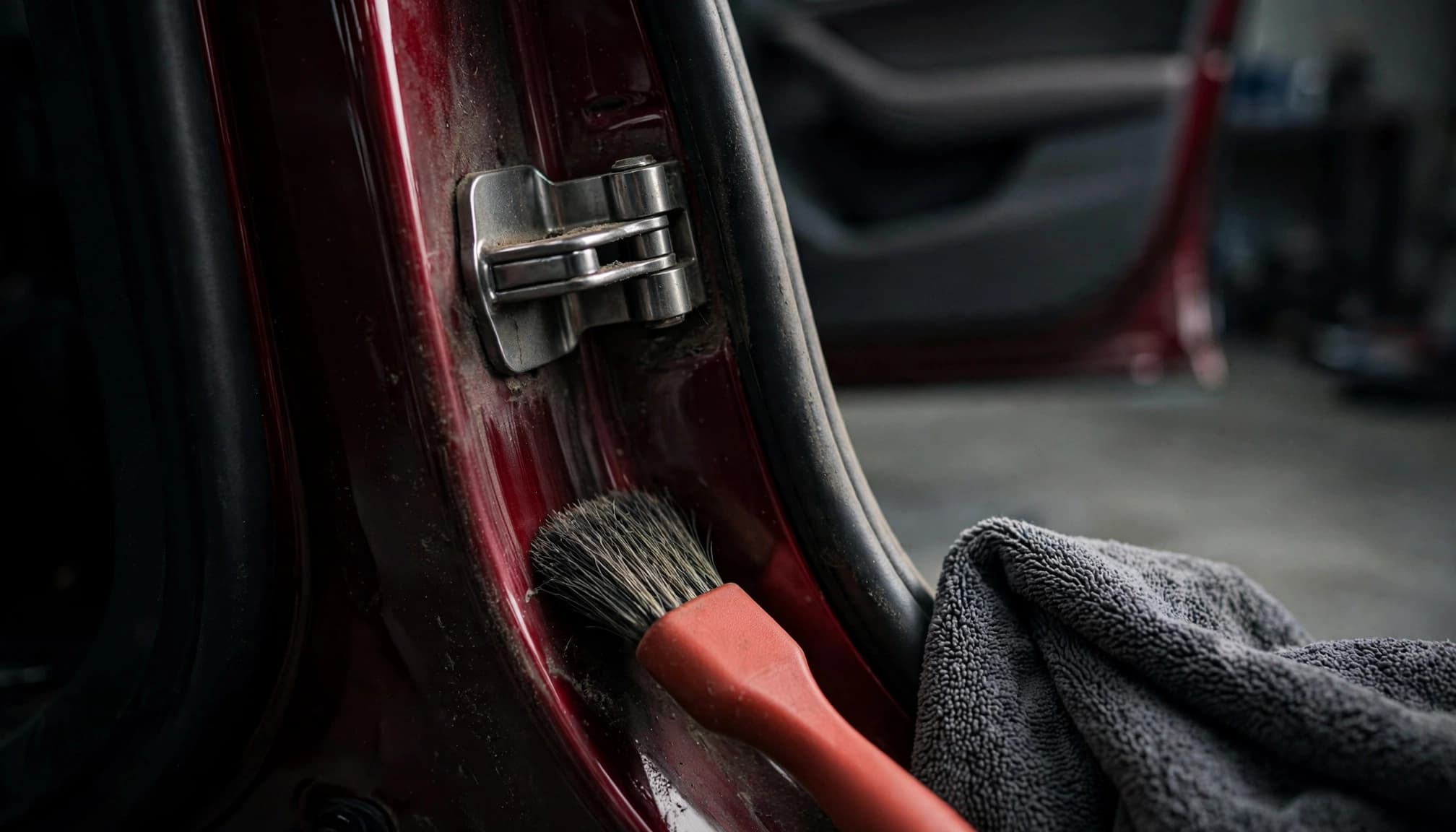
A detailing brush can loosen dirt from narrow areas. An automotive detailing guide to jamb debris also describes using cleaner and a detailing brush, but always check the cleaner’s label for surface compatibility.
Keep clean and dirty towels separate
Use one towel to pick up grime and another to dry the surface. Fold each towel into clean sections as you work. If a towel becomes visibly dirty, replace it rather than spreading grit onto the paint.
Prepare the car before cleaning
Work in shade on a cool surface. Direct sun can dry cleaner and water before you wipe them away, leaving streaks. Open one door at a time so the other doors stay closed and the interior remains protected.
Check the door area
Look for painted surfaces, rubber weather seals, wiring boots, connectors, and the door check strap. If you see exposed or damaged wiring, avoid wet cleaning near it and have the area checked. Brush or lift away loose leaves and grit before using liquid.
Read your owner’s manual if you’re unsure about the recommended washing method. The 2002 Civic owner’s manual’s general washing guidance calls for a water-and-detergent solution, a sponge or soft cloth, and frequent rinsing. It does not provide a specific door-jamb or hinge procedure.
Set up for controlled cleaning
Keep a dry towel within reach, and use a small amount of water at a time. Don’t point a hose or pressure washer into the door opening. A damp microfiber towel or a lightly misted towel gives you better control around seams and components.
Step-by-step: clean car door jambs
Clean each door opening from the upper painted area down toward the sill. This helps keep loosened dirt from running across a section you’ve already wiped.
- Remove loose debris. Use a soft brush to lift dust and grit from the sill, corners, and edges. Work gently around the weather seal and hinge.
- Apply cleaner to a towel. Dampen a microfiber towel with automotive shampoo solution or a suitable automotive cleaner. Avoid soaking the jamb or spraying product into the door opening.
- Wipe the painted surfaces. Use light strokes and turn the towel often. For corners and narrow seams, guide a soft brush over the surface with a small amount of cleaner.
- Remove cleaner residue. Wipe with a second towel dampened with clean water. Rinse or change the towel as it picks up grime.
- Dry the jamb. Use a clean, dry microfiber towel on the painted surfaces, sill, and edges before moving to the next door.
If a patch remains dirty, repeat the gentle cleaning rather than scrubbing harder. Avoid pushing a brush tip or towel deep into openings where debris may be difficult to remove.
Clean hinges without forcing in water or debris
Hinges collect dust around their joints, but they don’t need a heavy rinse. Use a soft brush to loosen surface dirt, then wipe the accessible metal and surrounding painted area with a lightly damp microfiber towel.
Work around the hinge in small areas
Brush outward from the hinge rather than pushing grit into the pivot or narrow gaps. Keep the towel damp, not dripping, and don’t spray cleaner directly at the hinge. If dirt remains, use a small amount of cleaner on the cloth or brush, then follow with a clean damp cloth.
The hinge should not be treated like an open panel that can be flushed with water. Avoid aiming liquid at wiring boots, connectors, the door check strap, or gaps that lead inside the door. If the hinge has heavy buildup or visible corrosion, stop before scraping or using a strong chemical. A professional can inspect the area and choose a suitable cleaning method.
Protect paint, weather seals, and electrical parts
Paint can be scratched when loose grit is wiped across it. Brush away dry particles first, use clean towels, and avoid abrasive tools. Test an unfamiliar cleaner on a small, inconspicuous area and follow the product label.
Wipe rubber seals gently
Clean weather stripping with a damp microfiber towel. Don’t scrub it with a stiff brush or coat it with a product unless its label says it is suitable for automotive rubber. Some products may affect nearby paint or materials, so apply with a cloth and keep them off surfaces the label doesn’t approve.
For example, 3M describes its silicone lubricant as suitable for some rubber and weather-stripping uses on its regional product page. That description applies to that product, not every silicone spray or every seal.
Keep liquids away from electrical components
Don’t spray water or cleaner toward wiring, connectors, switches, or openings in the door. Use a damp cloth around those areas, and stop if you cannot tell where a seam leads. Controlled wiping limits the chance of leaving moisture in a place you cannot dry.
Drying and lubricating door hinges
Drying comes before lubrication. Wipe the hinge and nearby surfaces with a clean microfiber towel, then check for pooled water, cleaner residue, or loose debris. Don’t apply lubricant over dirt, since it can hold grit against the moving parts.
Apply lubricant only where needed
If the hinge squeaks or feels stiff after cleaning, check the vehicle manual for guidance and use a lubricant labeled for the application. CarParts.com describes white lithium grease as a common hinge option and silicone spray as a lighter-duty alternative in its overview of car door hinge lubricant options. Product suitability can vary, so follow both the vehicle and lubricant instructions.
Apply a small amount to the hinge’s moving contact point, not across the surrounding paint or weather seal. If using an aerosol, spray onto a cloth or use its applicator straw for precise placement. Keep lubricant away from wiring and wipe off any excess.

Move the door and check the result
Open and close the door slowly a few times to distribute lubricant through the hinge movement. Wipe away any residue that reaches the painted jamb. The 3M Silicone Lubricant product information describes lubrication for moving parts and friction-related squeaks, but check its label before using it on a specific vehicle component.
Common mistakes to avoid
A quick clean can cause damage when too much pressure or liquid is involved. Avoid these common problems:
- Using a pressure washer in the door opening. The force can push water and debris into gaps and components.
- Scrubbing dry dirt. Grit can mark the paint. Loosen it with a soft brush before wiping.
- Spraying cleaner everywhere. Product can land on seals, paint, or electrical parts that aren’t approved for it.
- Adding lubricant before cleaning and drying. Dirt can stick to the lubricant, and moisture can remain around the hinge.
- Using one dirty towel on every surface. A loaded towel can transfer grit and grime from the sill to clean paint.
If the hinge remains stiff or noisy after appropriate cleaning and lubrication, don’t keep adding product. Check the owner’s manual or arrange an inspection, especially if you notice looseness, corrosion, or damaged wiring.
Key takeaways
- Use automotive-safe cleaner, a soft detailing brush, and clean microfiber towels.
- Remove loose grit before wiping painted surfaces.
- Clean hinges with controlled, minimal moisture. Don’t flush the hinge or door opening.
- Protect weather seals, paint, and nearby electrical components by applying products carefully.
- Dry the area fully before applying a suitable lubricant, and follow product and vehicle guidance.
Frequently asked questions
Can I use car shampoo to clean door jambs?
Yes, if the product is suitable for the painted surfaces and you use it as directed. Apply the solution with a damp cloth, then wipe away residue with a clean cloth dampened with water. Avoid leaving cleaner pooled in seams or near electrical components.
Should I lubricate the hinges every time I clean them?
No. Clean the hinges as needed, then lubricate only if the vehicle guidance calls for it or a hinge needs attention. Applying lubricant each time can leave excess product that collects grime. Check the manual and product label for the right method.
Can silicone spray go on the weather seal and hinge?
Don’t assume one product is suitable for both. Some silicone lubricants are described for weather stripping or moving parts, but formulations and approved uses vary. Check the product label, keep it off surfaces it doesn’t list, and follow your vehicle manual.
Keep the door area clean and protected
Door jambs and hinges need a gentle clean, controlled moisture, and careful drying. Use the right product for each surface, keep liquid away from electrical components, and lubricate only when needed. This simple routine keeps the door area tidy without adding unnecessary wear.

Sammie O is the owner of Bud Car Wash, a 24 hour hand car wash and detailing shop at Shop #7, 44, 22nd Street, Ras Al Khor Industrial Area 2, Dubai. He writes the car care guides on this site based on work done in his own bay.
View All Articles
