
Last updated 18 October 2026 by Sammie O, owner of Bud Car Wash in Ras Al Khor Industrial Area 2, Dubai.
A rising temperature gauge or steam from under the hood means you should act promptly. If your car is overheating in Dubai traffic, focus first on reaching a safe place without making a sudden or risky move.
Dubai heat and congestion can make a breakdown stressful, especially if you’re visiting or driving an unfamiliar route. Switch off the engine once you’re safely stopped, keep away from hot engine parts, and arrange help if the temperature stays high.
Want us to do it instead?
We do manual car wash at our Ras Al Khor bay, 24 hours a day. Fill this in and we reply with a price and a time. The message writes itself, so you only tap send.
Would rather talk? Call +971 55 168 5050. Someone answers 24 hours.
Key Takeaways
- Move out of moving traffic only when it’s safe. Don’t make a sudden lane change or stop in a live lane if you can safely reach a safer spot.
- Switch off the engine once you’re safely stopped.
- Never remove a hot radiator or coolant cap. Pressurized coolant can cause serious burns.
- If the vehicle continues to overheat, arrange roadside assistance or a tow instead of driving on.
What to Do When the Temperature Rises
Reduce heat while you find a safe place
If the temperature gauge starts climbing while you’re in traffic, turn off the air conditioning. If you can’t safely pull over right away, switching on the cabin heater may help draw some heat away from the engine. This is only a temporary measure, and the cabin may become uncomfortable in Dubai’s heat.
Keep watching the road and look for a safe place to stop. Don’t rush across lanes or brake suddenly to reach a shoulder or exit. AAA also advises drivers to stop as soon as they can do so safely, rather than continuing to drive with an overheating engine. Its car overheating guidance explains the warning signs and the risk of continuing.
Treat steam as a warning
Steam or smoke from under the hood is a reason to stop as soon as it’s safe. Don’t open the hood while driving, and don’t lean over the engine to investigate.
If you’re in a live lane or another unsafe position, avoid stepping into moving traffic. Call for help from a safe position, and contact emergency services if there’s an immediate danger, a collision, or someone needs medical attention.
Move to a Safe Location Before Stopping
Avoid risky lane changes
Use your mirrors, signal, and move only when there’s a clear gap. If traffic is too dense to change lanes safely, stay in control of the vehicle and wait for a safe opportunity. A few extra moments are better than a sudden move that puts you or another driver at risk.
If the car loses power or can’t move safely, don’t try to push it through traffic. If you can, turn on the hazard lights and call for assistance. Keep your seat belt on if you’re in a position where getting out would put you close to moving vehicles.
Stop only when it’s safe
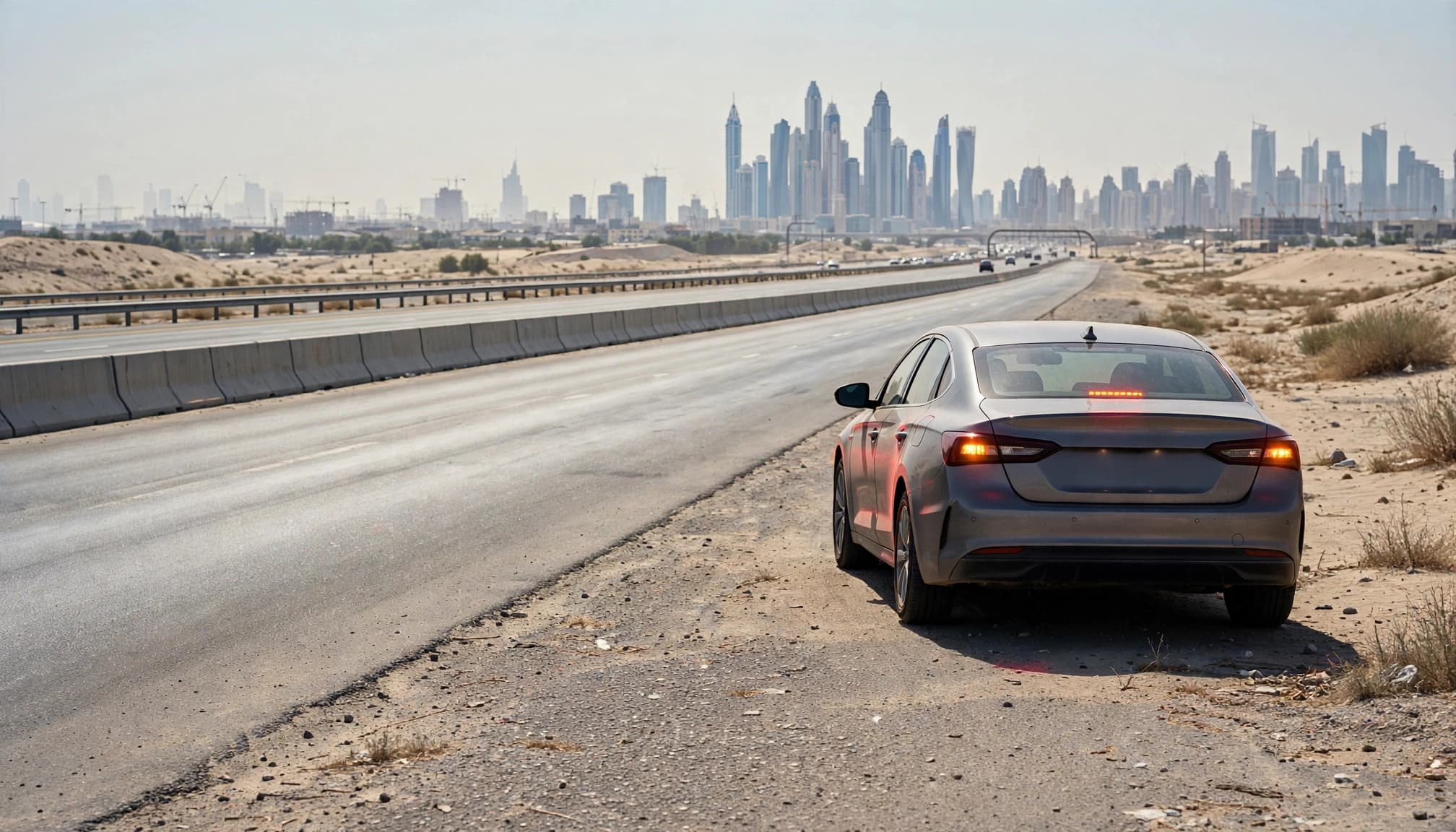
Once you’ve reached a safe stopping place, park securely and switch off the engine. Don’t leave the engine running to see if the temperature drops. The cooling system needs time to cool, and continued operation may cause more damage.
If the car is safely away from traffic, exit only when you can do so without stepping into a dangerous area. Move yourself and any passengers to a safe location away from the vehicle and passing traffic. If the car is in an exposed or unsafe spot, stay clear of the roadway and call for help.
What to Do Once You’re Stopped
Keep clear of hot parts
The hood, engine bay and cooling system can remain hot after the engine is switched off. Don’t touch engine components, and don’t open the hood while steam is escaping. Wait until the vehicle has had time to cool before any inspection.
AAA advises waiting at least 30 minutes before opening the hood. The time it takes to cool can vary, so don’t treat a fixed wait as proof that the engine is safe to handle. If you’re unsure, leave the hood closed and let roadside assistance or a qualified mechanic inspect the vehicle.
Never open a hot coolant cap
Never remove the radiator cap or coolant reservoir cap while the engine is hot. Hot coolant may be under pressure and can spray out, causing serious burns. Don’t pour water into the system or attempt a quick fix while the engine is hot.
Keep children and passengers away from the front of the vehicle while it cools. If there’s a strong smell, visible fluid leaking, or steam that doesn’t stop, keep your distance and call for professional help.
What to Check After the Engine Cools
Look for visible signs, not a definite diagnosis
After the car has cooled, you may be able to check the coolant level through the reservoir, without opening a cap that’s still hot. Look for visible fluid beneath the vehicle or signs of a leak, but don’t assume you’ve found the cause. A leak, low coolant or a damaged component can’t be confirmed from a quick roadside look.
Coolant requirements differ by vehicle. Use the type and procedure stated in your owner’s manual, rather than choosing a fluid or mixture based on guesswork. Ford’s owner manual guidance on coolant is one example of vehicle-specific instructions.
Don’t restart if there’s a clear warning sign
A visible leak, persistent steam, a warning light that stays on, or a gauge that rises again means the car needs professional attention. Don’t keep restarting the engine to test it. Continuing to drive while the car is overheating can cause severe damage.
When to Call Roadside Assistance
Arrange help if the temperature rises again
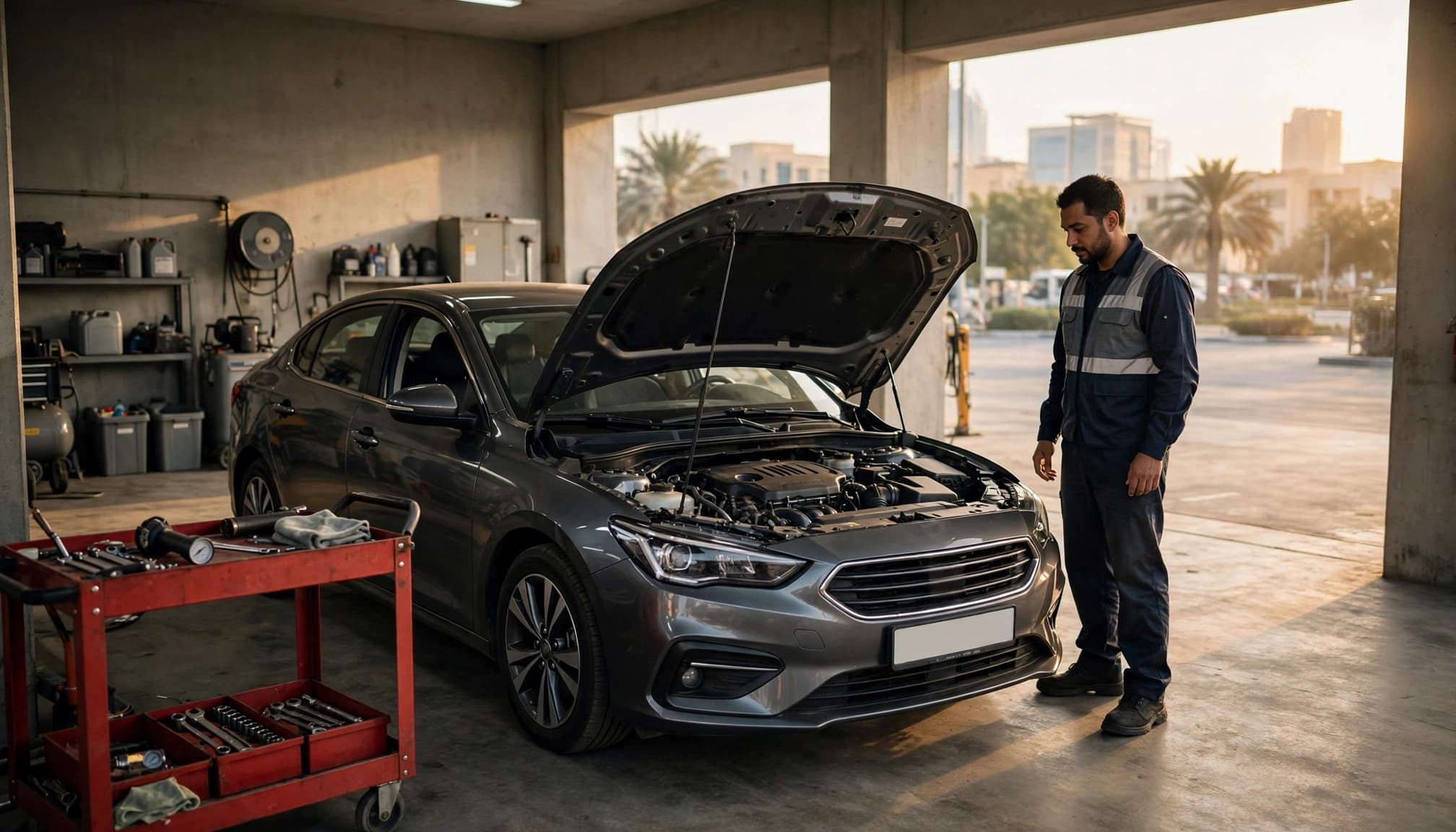
Call roadside assistance if the engine continues to overheat after cooling, the vehicle won’t restart safely, or you can see fluid leaking. A tow is safer than driving to a workshop with the temperature gauge rising. Tell the provider where the car is and describe what you saw, such as steam, a warning light or a visible leak.
If you’re driving a rental car, contact the rental company’s breakdown service as well. They can explain the next steps for that vehicle and arrange support under the rental agreement. Don’t attempt roadside repairs unless you’re trained and can work away from traffic and hot components.
Plan a safe onward journey
If you’re traveling with luggage or have a flight, train or hotel check-in to reach, arrange your onward transport after the car is in safe hands. Avoid leaving passengers beside a busy road while you make plans. If a private transfer suits your needs, see these Dubai chauffeur options.
Dubai Emergency and Non-Emergency Contacts
Use emergency numbers for immediate danger
The UAE Government lists 999 for police, 998 for ambulance, and 997 for Civil Defence. Call 999 for a road accident or immediate police assistance, and follow the operator’s instructions. Use 998 if someone needs medical attention, and 997 for a fire or smoke emergency. The UAE emergency contacts provide these numbers.
A mechanical problem without immediate danger doesn’t automatically require an emergency call. If the vehicle is creating a hazard or there’s been a collision, explain your location and situation clearly when you call.
Use 901 for non-urgent Dubai Police requests
Dubai Police lists 901 for non-emergency inquiries and support. The Dubai Police contact page provides the contact details. Use emergency services instead when there’s an immediate threat to safety.
When calling for roadside assistance, share a clear location, direction of travel and nearby landmark if you know one. If you’re on a major road, describe which side or direction you’re on. Clear details help the provider locate you without requiring you to approach the vehicle in unsafe traffic.
Frequently Asked Questions
Should I keep driving if the temperature gauge is high?
No. Move to a safe stopping place as soon as you can do so without taking risks, then switch off the engine. Driving on with an overheating engine can cause severe damage.
Can I open the radiator cap after switching off the engine?
Not while the engine or coolant is hot. The system may still be pressurized. Never remove the radiator or coolant cap until the vehicle has cooled, and ask a qualified mechanic for help if you’re unsure.
Is steam from under the hood always a coolant leak?
Steam can be a warning sign, but it doesn’t confirm the cause. Stop safely, switch off the engine and keep away from hot components. A mechanic can inspect the vehicle and identify the problem.
Should I add water or coolant at the roadside?
Don’t add anything while the engine is hot. After it cools, follow the vehicle’s owner manual for the correct coolant and procedure. If the car keeps overheating or you see a leak, arrange roadside assistance rather than driving on.
Keep Safety Ahead of the Journey
When your car overheats in Dubai traffic, the safest response is clear: move out of traffic only when it’s safe, switch off the engine after stopping, and keep away from hot coolant and engine parts.
A warning light or a rising gauge is enough reason to stop and arrange help. Protecting yourself and your passengers matters more than reaching the next appointment on time.
Get a price on manual car wash
Shop #7, 44, 22nd Street, Ras Al Khor Industrial Area 2, open 24 hours. Tell us the car and we reply with a price and a time.
Would rather talk? Call +971 55 168 5050. Someone answers 24 hours.
See us first on Google
Google lets you choose the sites you want to see more of. Add Bud Car Wash as a preferred source and our car care guides show up more often in Top Stories and in Google’s AI answers.
Opens Google in a new tab. You can remove us again at any time.

Sammie O is the owner of Bud Car Wash, a 24 hour hand car wash and detailing shop at Shop #7, 44, 22nd Street, Ras Al Khor Industrial Area 2, Dubai. He writes the car care guides on this site based on work done in his own bay.
View All Articles