
Last updated 18 October 2026 by Sammie O, owner of Bud Car Wash in Ras Al Khor Industrial Area 2, Dubai.
If your car shakes when braking, the cause may be in the brakes, wheels, tires, or suspension. The shaking alone can’t confirm which part is at fault, so treat it as a warning to pay attention rather than a diagnosis.
Braking problems can be safety-critical, especially if the vibration is severe or comes with poor stopping, pulling, or unusual sounds. Here are common explanations, what the sensations can suggest, and when to arrange a professional inspection.
Want us to do it instead?
We do manual car wash at our Ras Al Khor bay, 24 hours a day. Fill this in and we reply with a price and a time. The message writes itself, so you only tap send.
Would rather talk? Call +971 55 168 5050. Someone answers 24 hours.
Key Takeaways
- Vibration during braking can come from brake-disc variation or fitment, uneven pad contact, or problems elsewhere in the wheel and suspension system.
- A shaking steering wheel, pulsing pedal, or vibration through the body can help describe the symptom, but none confirms the cause.
- ABS may pulse the brake pedal during hard braking. Persistent or unusual shaking still deserves attention.
- Arrange prompt professional inspection if the shaking is severe, worsening, or accompanied by noise, pulling, or reduced braking performance.
- If the vehicle feels unsafe to control or stop, pull over somewhere safe and arrange assistance.
Why a Car Shakes When Braking
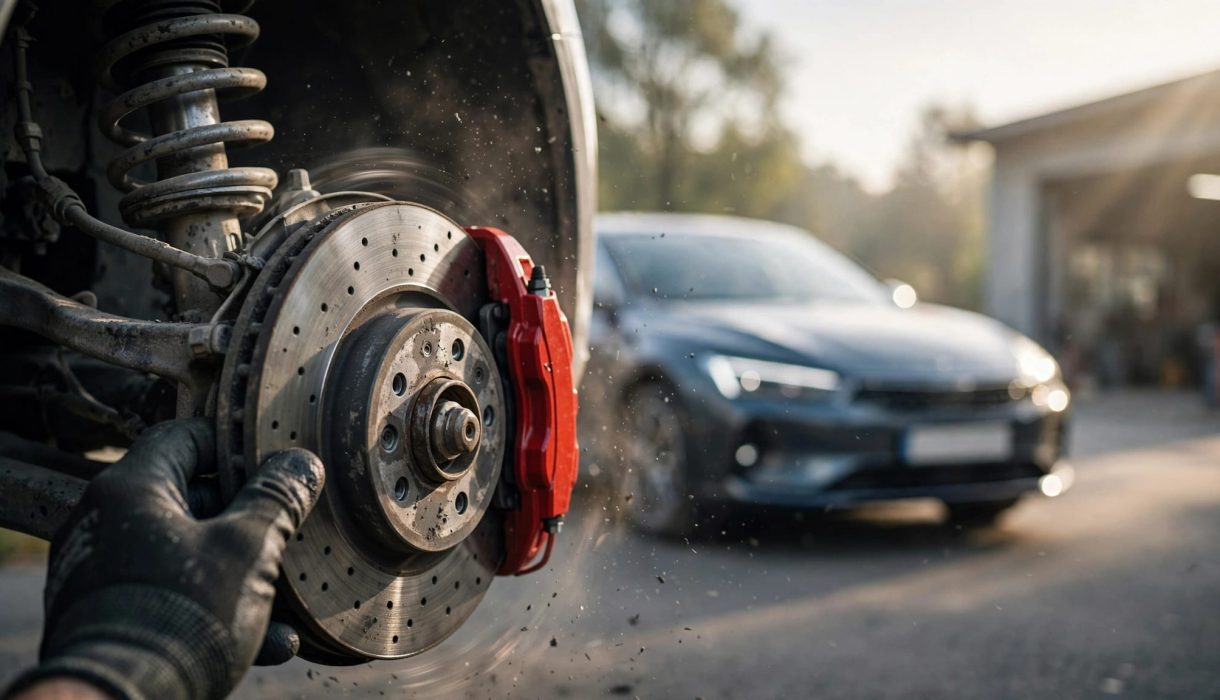
A vibration that appears when you apply the brakes often points attention toward the braking system. The brake discs rotate with the wheels, and uneven contact between the pads and discs can create a pulsing or shuddering sensation.
The feeling may vary with speed and braking pressure. That pattern is useful information for a technician, but it doesn’t prove that a disc is damaged. A proper inspection needs to consider the full brake and wheel assembly.
Disc fitment and contact
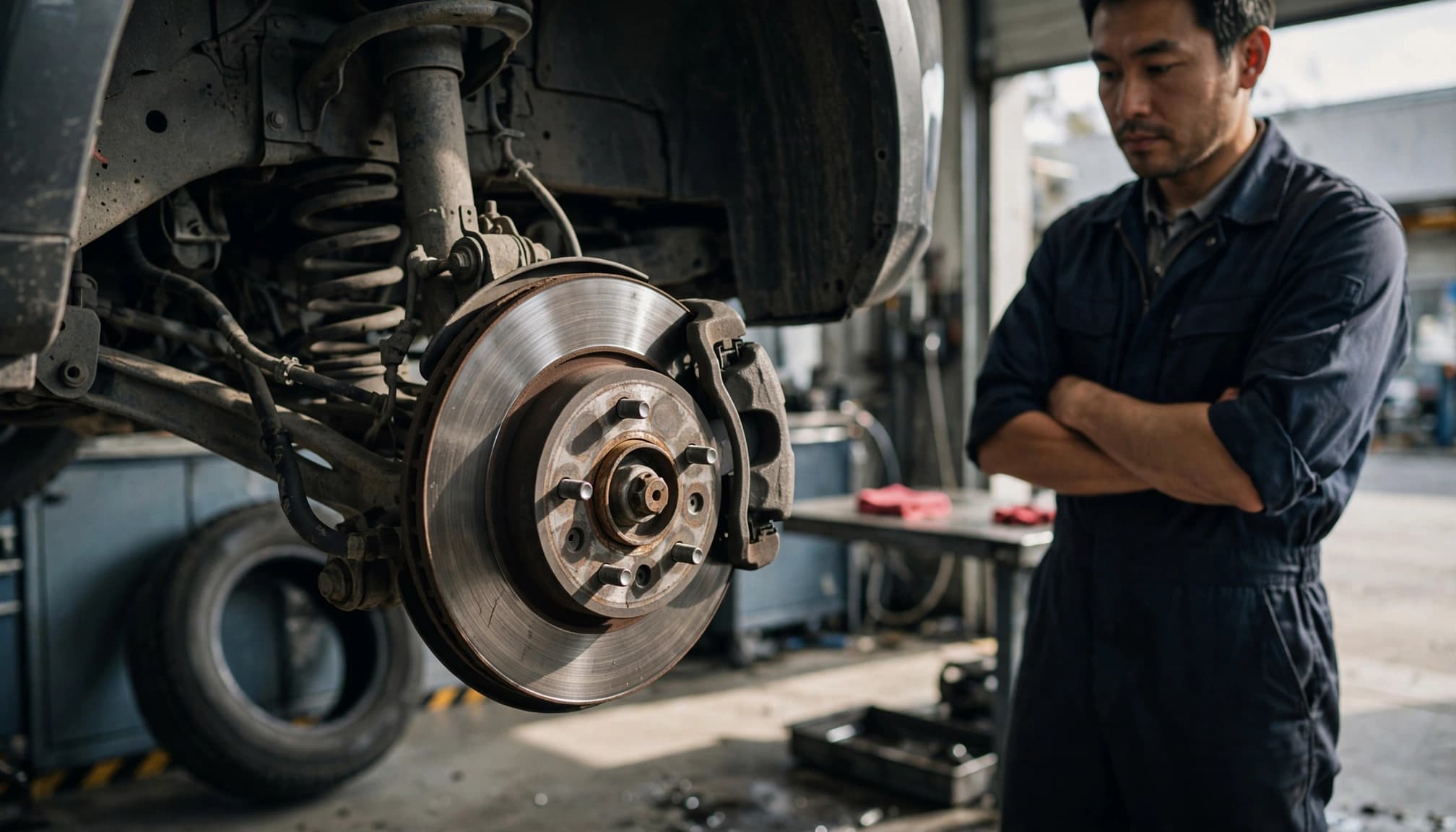
Brake discs need to sit correctly against the hub and align with the caliper. Ferodo notes that a badly fitted disc can be pulled out of alignment with the hub or caliper, a condition associated with brake judder. Its technical tips on brake judder also include rust or dirt on the wheel-hub surface among points to consider.
Disc surface or thickness variation can also affect how evenly the pads meet the disc. A driver may feel that uneven contact as vibration while slowing down, but a similar sensation can have other causes.
Pads, calipers, and wheel hardware
Brake pads need to press evenly against the disc. Uneven pad wear or a caliper that doesn’t move as intended may change the braking force at a wheel. Those faults can contribute to vibration, heat, noise, or pulling, but symptoms can overlap.
Fitment details matter, too. Champion Auto Parts’ brake-judder guidance also describes disc misalignment with the hub or caliper and notes excessively tightened positioning screws as a possible issue. The specific cause needs to be identified during inspection.
Other Vehicle Problems Can Feel Similar
Braking loads the wheels and suspension. As a result, worn or loose components outside the brakes may become more noticeable when you slow down. A wheel bearing, steering part, or suspension component can affect how stable the vehicle feels, though vibration alone can’t identify one as the culprit.
Tires and wheels are worth considering as well. An imbalance commonly causes vibration at certain road speeds, including when you’re not braking. If the shaking is present while cruising and changes when you apply the brakes, share both details with the technician.
When vibration happens at other times
Notice whether the vehicle shakes only during braking or also while accelerating, turning, or driving at a steady speed. A vibration that occurs in several situations may point beyond the brakes. A problem that appears mainly under braking narrows the conditions to investigate, but it still doesn’t establish a diagnosis.
Changes in tires or wheels, recent brake work, and whether the vibration began suddenly are also useful details. You don’t need to inspect parts yourself. Record what you feel and describe it clearly.
Why recent repairs are relevant
If the shaking started soon after new brake parts or wheel work, mention the timing when arranging an inspection. Incorrect disc fitment is one possibility described in the brake-judder guidance from Champion Auto Parts. It is not the only explanation, so a technician should assess the complete setup rather than replace parts based on one symptom.
What the Shaking Can Tell You
The location and feel of the vibration can help explain the problem to a professional. They are clues, not a way to diagnose the vehicle yourself.
Steering wheel, brake pedal, or whole vehicle
A shaking steering wheel can make a driver suspect a fault at the front wheels, while a pulsing brake pedal may draw attention to the braking system. Vibration through the seat or body can feel different again. These sensations can guide an inspection, but they don’t reliably identify a single component.
Describe exactly where you feel the shaking and whether it is steady, rhythmic, or stronger at a particular speed. Mention any change in how firmly the brake pedal responds.
Speed and braking pressure
Note whether the vibration starts during light braking, only during a firm stop, or at a particular road speed. Also report whether it disappears when you release the pedal. Avoid repeated hard braking to test the car, especially if it already feels difficult to control.
A clear description helps a technician reproduce the concern safely. Don’t use the pattern alone to decide that the vehicle is safe for a long drive.
ABS Pulsation Is Different From Persistent Shaking
Anti-lock braking systems help prevent the wheels from locking during hard braking. The Georgia Department of Driver Services explains that ABS is a computerized system and an addition to normal brakes in its overview of ABS.
During a hard stop, ABS may cause a rapid pulse or vibration at the pedal as the system works. That situation differs from a shake that repeatedly occurs during ordinary braking or continues after the hard stop. If you’re unsure whether the sensation is normal for your vehicle, have it assessed.
Don’t assume that every pedal pulse means an ABS fault, or that every shake is normal ABS operation. The driving conditions and the vehicle’s response matter. A warning light, unusual noises, pulling, or reduced stopping performance makes professional attention more urgent.
How a Technician Can Narrow Down the Cause
An inspection can assess the parts that work together during braking, including discs, pads, calipers, wheel fitment, tires, and suspension components. The technician can also consider whether the issue started after recent service or appears only at certain speeds.
Because symptoms overlap, replacing one part based on vibration alone can miss the underlying issue. A professional inspection is the reliable way to determine whether the cause is in the brakes or another part of the vehicle.
Details to share at the appointment
Before you describe the issue, note when the shaking happens and where you feel it. Include whether the vehicle pulls to one side, whether you hear squealing or grinding, and whether braking feels weaker than usual. If the symptom is getting worse, say so.
Mention recent tire, wheel, or brake work. These details help the technician assess fitment and wear as well as the parts that may be causing the vibration.
Don’t delay if performance changes
A light vibration still needs attention, but reduced braking performance raises the concern. If the pedal feels unusually soft or hard, the vehicle takes longer to slow, or the car pulls when you brake, arrange a professional inspection promptly.
Avoid a long drive while the vehicle’s braking response is uncertain. For a trip to an unfamiliar place, plan the vehicle and route with care. Our guide to driving around Anniston, Alabama offers travel context for visitors preparing to get around by car.
When Shaking Means You Should Stop Driving
Braking problems can affect your ability to control the vehicle and stop safely. Arrange prompt professional inspection if the shaking is severe, worsening, or accompanied by unusual noises, pulling, or reduced braking performance.
If the brakes feel unreliable, don’t continue a journey just to reach your destination. Pull over in a safe place away from moving traffic and arrange roadside assistance or recovery. Avoid testing the brakes repeatedly or driving at speed to see whether the symptom returns.

Frequently Asked Questions
Can I drive if my car shakes when braking?
It depends on the severity and the vehicle’s braking response. If the vibration is mild and braking feels normal, arrange an inspection soon and avoid unnecessary long journeys. If shaking is severe or worsening, or the car pulls, makes unusual noises, or stops less effectively, stop driving when safe and arrange assistance.
Does a shaking steering wheel mean the front brake discs are bad?
No. A steering wheel vibration can help describe where you feel the issue, but it doesn’t confirm a faulty disc. Brake fitment, wheel or tire concerns, and steering or suspension components may also need inspection.
Can new brakes cause vibration?
Vibration after brake work can have several explanations, including disc fitment concerns. Since symptoms overlap, a professional should inspect the installation and related components instead of assuming the new parts are defective.
Is brake pedal pulsation always caused by ABS?
No. ABS can pulse the pedal during hard braking, but other braking issues can produce a pulsing sensation. Persistent vibration during normal stops should be assessed by a professional.
Get the Braking System Checked
A car that shakes when braking needs an accurate assessment, not a guess based on one sensation. Disc fitment, pad contact, wheels, and suspension can all be relevant, and a professional inspection can distinguish between them.
If the shaking is severe or getting worse, or comes with noise, pulling, or reduced braking, treat it as a safety concern. A reliable braking response matters on every drive, especially when the road ahead is unfamiliar.
Get a price on manual car wash
Shop #7, 44, 22nd Street, Ras Al Khor Industrial Area 2, open 24 hours. Tell us the car and we reply with a price and a time.
Would rather talk? Call +971 55 168 5050. Someone answers 24 hours.
See us first on Google
Google lets you choose the sites you want to see more of. Add Bud Car Wash as a preferred source and our car care guides show up more often in Top Stories and in Google’s AI answers.
Opens Google in a new tab. You can remove us again at any time.

Sammie O is the owner of Bud Car Wash, a 24 hour hand car wash and detailing shop at Shop #7, 44, 22nd Street, Ras Al Khor Industrial Area 2, Dubai. He writes the car care guides on this site based on work done in his own bay.
View All Articles