
Last updated 19 October 2026 by Sammie O, owner of Bud Car Wash in Ras Al Khor Industrial Area 2, Dubai.
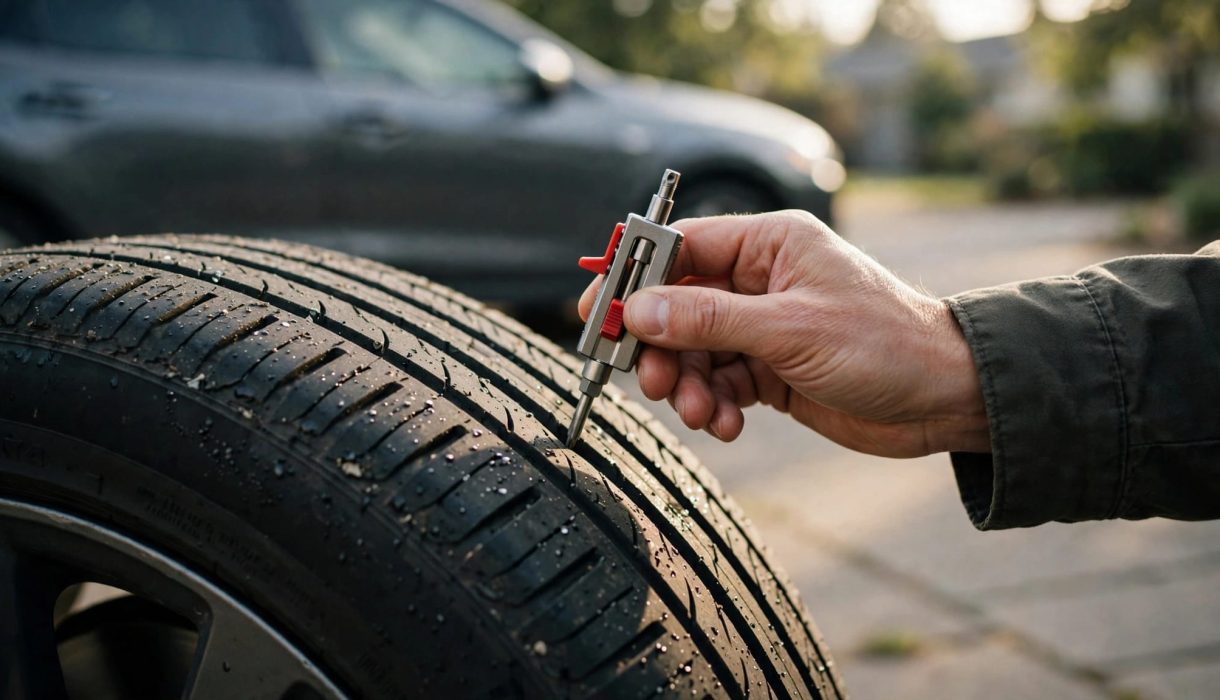
A quick tire tread depth check can help you spot worn tires before a long drive. You can measure the grooves with a tread-depth gauge or use a U.S. penny for a basic screening.
Check several grooves across each tire and take readings at multiple points around its circumference. This gives you a clearer picture of overall wear, not just the condition of one spot. Start with a safe setup, then choose the test that suits you.
Want us to do it instead?
We do tyre and wheel services at our Ras Al Khor bay, 24 hours a day. Fill this in and we reply with a price and a time. The message writes itself, so you only tap send.
Would rather talk? Call +971 55 168 5050. Someone answers 24 hours.
What you need before checking tire tread depth
Gather a tread-depth gauge or a U.S. penny, plus a flashlight if the grooves are hard to see. Park on level ground, switch off the engine and apply the parking brake. The vehicle must be stationary before you inspect the tires.
Set up for a safe check
Check the tires when the car is parked in a safe place away from traffic. Keep your hands clear of moving parts, and never reach under the vehicle. If you need to inspect another section of a tire, move the vehicle a short distance, park again and apply the brake before taking another reading.
A flashlight can help you see the grooves, wear bars and any visible damage. Check all four tires, since the front and rear tires may not wear at the same rate.
Look across the full tread
The main grooves run around the tire and channel water away from the contact area. Check across the inner, middle and outer tread sections. A single reading can miss wear concentrated along one edge or in one groove.
For a longer drive, make the inspection part of your vehicle preparation. Planning practical stops along the route can also help if you need to address a concern before setting out.
How to use a tread-depth gauge
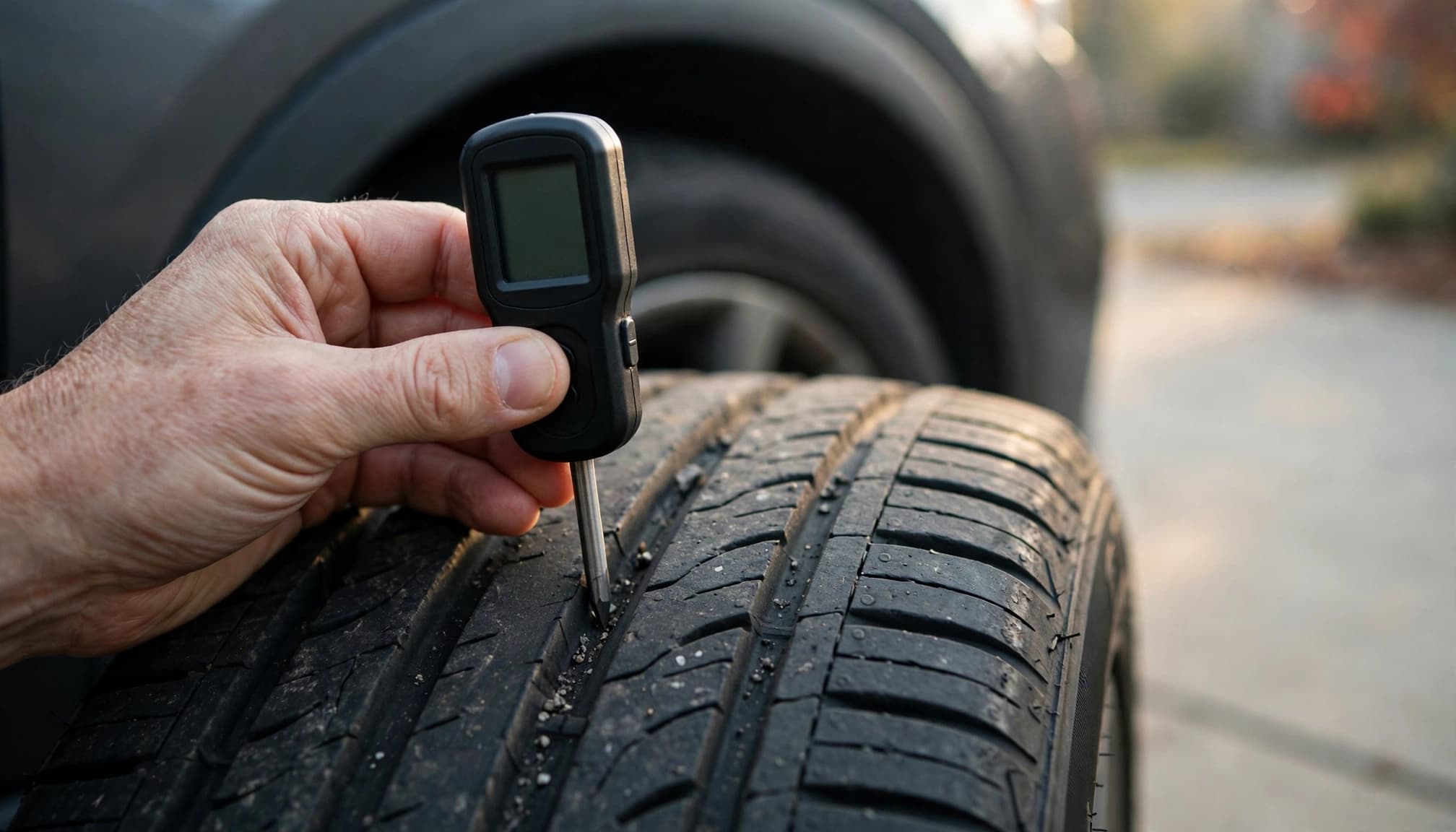
A tread-depth gauge gives a numerical reading, making it the better choice when you want to compare measurements across a tire. Many gauges have a base that rests on the tread and a probe that extends into a groove.
Take a reading
Place the gauge base flat across the raised tread blocks, then position the probe in a major groove. Keep the probe straight and avoid placing it on a tread-wear indicator, the small raised bar built into the groove. Read the gauge according to its markings, which may show inches, millimeters or both.
If the tire has grooves of different shapes, use a main circumferential groove rather than a small cut or narrow channel. Record the result if you want to compare tire readings or track changes over time.
Repeat in several places
Measure the inner, middle and outer grooves at each check point. Then repeat at multiple points around the tire. To reach another section, move the vehicle a short distance and park it again before placing the gauge.
Compare the readings. Consistent numbers give a more useful picture than one measurement alone. If one part of the tread is much shallower than the rest, note its position and have the tire assessed.
How to do the penny test
The penny test is a quick way to screen tread depth when you don’t have a gauge. It does not give an exact measurement, so use a gauge when you need a number.
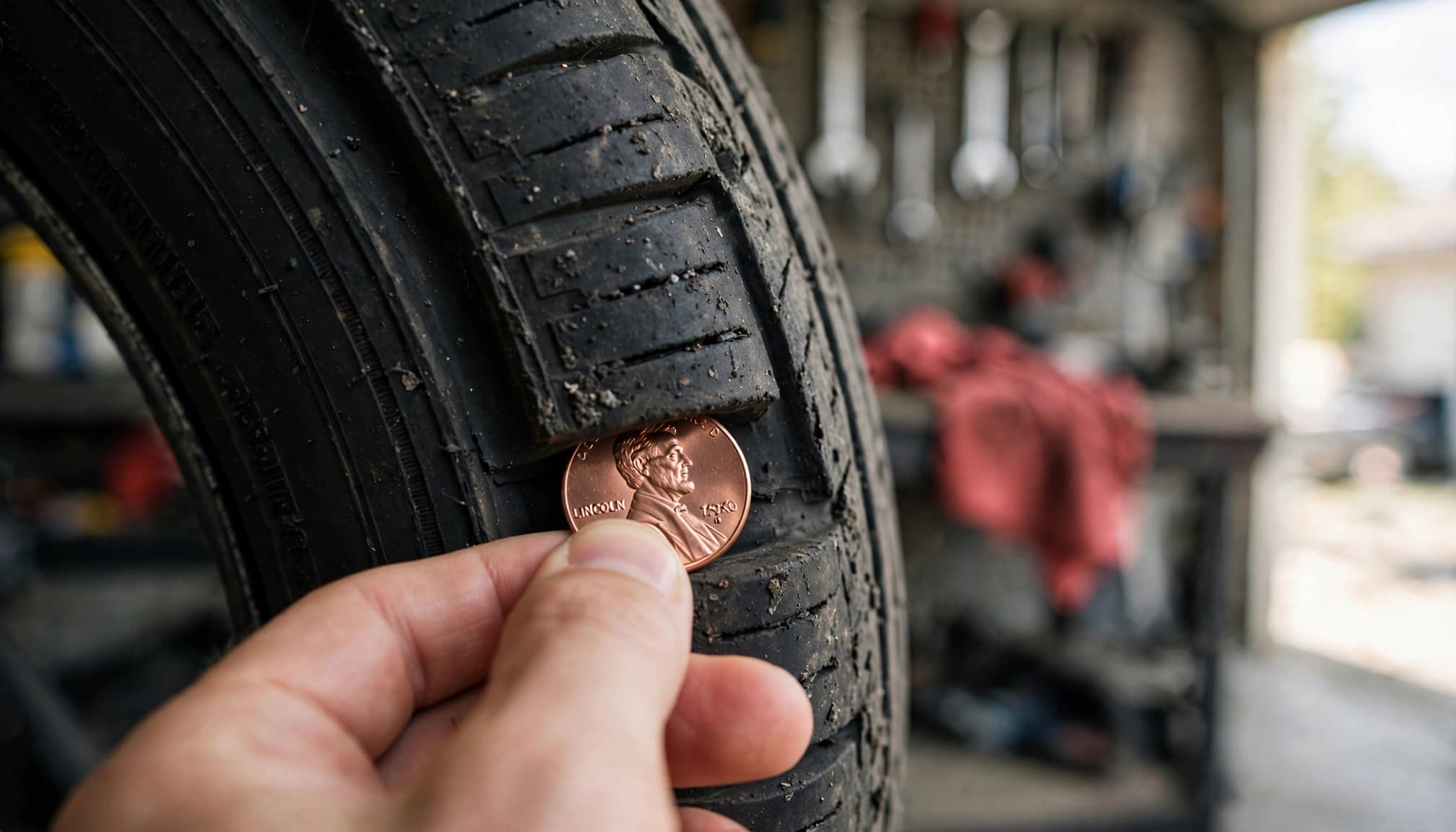
Insert a U.S. penny into a main groove with Lincoln’s head facing down. If the tread reaches the top of his head or covers part of it, the groove has more than the basic 2/32-inch screening threshold. If the top of his head remains fully visible, the tread is at or near that threshold, and the tire should be inspected for replacement.
Repeat the test in several grooves across the tire, including inner, middle and outer areas. Check multiple points around the circumference as well. The NHTSA’s road-trip guidance describes the penny test as a way to help determine when tires need replacement.
What uneven tire wear can tell you
Tread wear should be checked across the full width of the tire and at more than one point around it. A difference between readings can reveal that a tire is not wearing evenly.
Compare the inner, middle and outer areas
If one edge is noticeably more worn than the other, or the middle differs from both edges, record where the shallow areas appear. A single penny test in the center groove won’t show this pattern. Multiple gauge readings provide a clearer comparison.
Also look for isolated bald patches, cracks, bulges or objects lodged in the tread. These are separate from tread depth, but they can still affect tire safety. Don’t remove an embedded object during a routine tread check.
Compare points around the circumference
Readings can vary at different points around the same tire. Check several positions and compare them rather than relying on the deepest-looking section. A tire with a worn patch may need attention even if other areas appear to have adequate tread.
If one tire or one area differs sharply from the others, ask a tire professional to inspect it. A tread check helps you identify a concern, but it can’t diagnose the cause of uneven wear.
What 2/32 inch means for tire replacement
2/32 inch is a common U.S. replacement threshold for passenger tires. At or below this depth, NHTSA says tires are worn down and should be replaced. Its TireWise tire safety guidance also recommends checking tread regularly.
Treat the threshold as a limit, not a travel target
If your gauge reads 2/32 inch or less in a major groove, arrange tire replacement before relying on the vehicle for a long drive. The penny test can help identify tread near this threshold, but a gauge provides a numerical reading.
A tire can also have a concern that calls for professional attention before it reaches 2/32 inch. Uneven wear, visible damage or a worn area in one part of the tread should not be ignored just because another part measures deeper.
Check the rules and manufacturer guidance
Legal requirements vary by location. A 2006 study on state tire tread requirements describes differences among U.S. states, so the common 2/32-inch threshold is not a substitute for local rules. Follow the requirements where you drive, along with guidance from your vehicle or tire manufacturer.
Key takeaways for a quick home check
- Park on level ground, switch off the engine and apply the parking brake.
- Use a tread-depth gauge for a numerical reading, or a penny for a basic screen.
- Check several grooves across each tire and measure at multiple points around it.
- Treat 2/32 inch as a common U.S. replacement threshold, and follow local and manufacturer guidance.
- Ask a tire professional to inspect uneven wear or visible damage.
When to consult a tire professional
A home check can help you spot wear, but it doesn’t cover every tire concern. Arrange a professional inspection if readings vary sharply, a section appears bald or you see damage such as a bulge or crack.
Don’t rely on a quick test when the tread looks uneven
If the penny test gives different results across one tire, take gauge readings in those areas. A professional can inspect the tire and assess whether it is safe to continue driving. The same applies when tread-wear indicators appear level with the tread. BFGoodrich’s information on tread-wear indicators notes that level indicators mean only 2/32 inch of tread remains.
Check before a long drive
Inspect your tires before a trip if they are close to the replacement threshold or show uneven wear. If you can’t get a clear reading, or you notice visible damage, have the tire checked before setting out. A professional assessment is the right next step when a home inspection leaves a safety concern unresolved.
Frequently asked questions
How often should I check tire tread depth?
NHTSA recommends checking tire tread at least once a month. Check again before a long drive, especially if a previous reading showed uneven wear or tread close to the replacement threshold.
Can I use a penny test instead of a tread-depth gauge?
Yes, for a quick screen. The penny test helps identify tread near the 2/32-inch threshold, but it does not provide an exact measurement. A gauge is the better option when you need to compare readings across grooves and around the tire.
Should I replace a tire as soon as it reaches 2/32 inch?
NHTSA says a tire worn down to 2/32 inch should be replaced. Local rules and manufacturer guidance also matter, and visible damage or uneven wear may call for an inspection sooner.
Make the check part of trip preparation
A penny offers a quick screen, while a tread-depth gauge gives you a clear measurement. Either way, check across each tire and at multiple points around it so uneven wear doesn’t escape notice.
If a tire measures at or below 2/32 inch, shows damage or has uneven tread, arrange a professional inspection before a long drive.
Get a price on tyre and wheel services
Shop #7, 44, 22nd Street, Ras Al Khor Industrial Area 2, open 24 hours. Tell us the car and we reply with a price and a time.
Would rather talk? Call +971 55 168 5050. Someone answers 24 hours.
See us first on Google
Google lets you choose the sites you want to see more of. Add Bud Car Wash as a preferred source and our car care guides show up more often in Top Stories and in Google’s AI answers.
Opens Google in a new tab. You can remove us again at any time.

Sammie O is the owner of Bud Car Wash, a 24 hour hand car wash and detailing shop at Shop #7, 44, 22nd Street, Ras Al Khor Industrial Area 2, Dubai. He writes the car care guides on this site based on work done in his own bay.
View All Articles