
Last updated 20 October 2026 by Sammie O, owner of Bud Car Wash in Ras Al Khor Industrial Area 2, Dubai.
Brake pads can give clear warning signs before braking becomes unsafe. The most useful brake pad replacement signs include a continuous metallic scraping sound, a change in braking performance, or a warning light, but no single symptom confirms the cause.
If you notice a change, arrange a professional inspection promptly. Grinding or a sudden loss of braking ability calls for immediate action, especially before a long drive or a trip through unfamiliar areas.
Want us to do it instead?
We do brake services at our Ras Al Khor bay, 24 hours a day. Fill this in and we reply with a price and a time. The message writes itself, so you only tap send.
Would rather talk? Call +971 55 168 5050. Someone answers 24 hours.
Key Takeaways
- A continuous metallic friction sound while braking can mean a brake-wear indicator is contacting the rotor.
- Squealing, vibration, reduced braking performance, and dashboard lights can have causes other than worn pads.
- Grinding or any clear change in how the vehicle brakes needs prompt professional attention.
- If the brakes feel weak, the pedal sinks, or a warning light stays on with poor braking, stop safely and get help.
Brake symptoms can overlap, so a qualified technician should identify the cause. Avoid attempting repairs or safety-critical diagnosis unless you have the right training and equipment.
Brake pad replacement signs you can hear
Sound is often the first change a driver notices. Pay attention to whether it happens once, repeatedly, or every time you apply the brakes.
Squealing or squeaking
A high-pitched squeal can come from the brake pads, but it doesn’t always mean they’re worn out. Dust or moisture may cause a brief noise, and other brake components can also squeak. A sound that returns regularly, grows louder, or occurs each time you brake deserves an inspection.
Don’t rely on sound alone to judge how much pad material remains. Some brake systems make little noise as pads wear, while other sources can cause a squeal even when the pads aren’t the problem. If it persists, ask a qualified technician to check the complete braking system.
Grinding or continuous metallic scraping
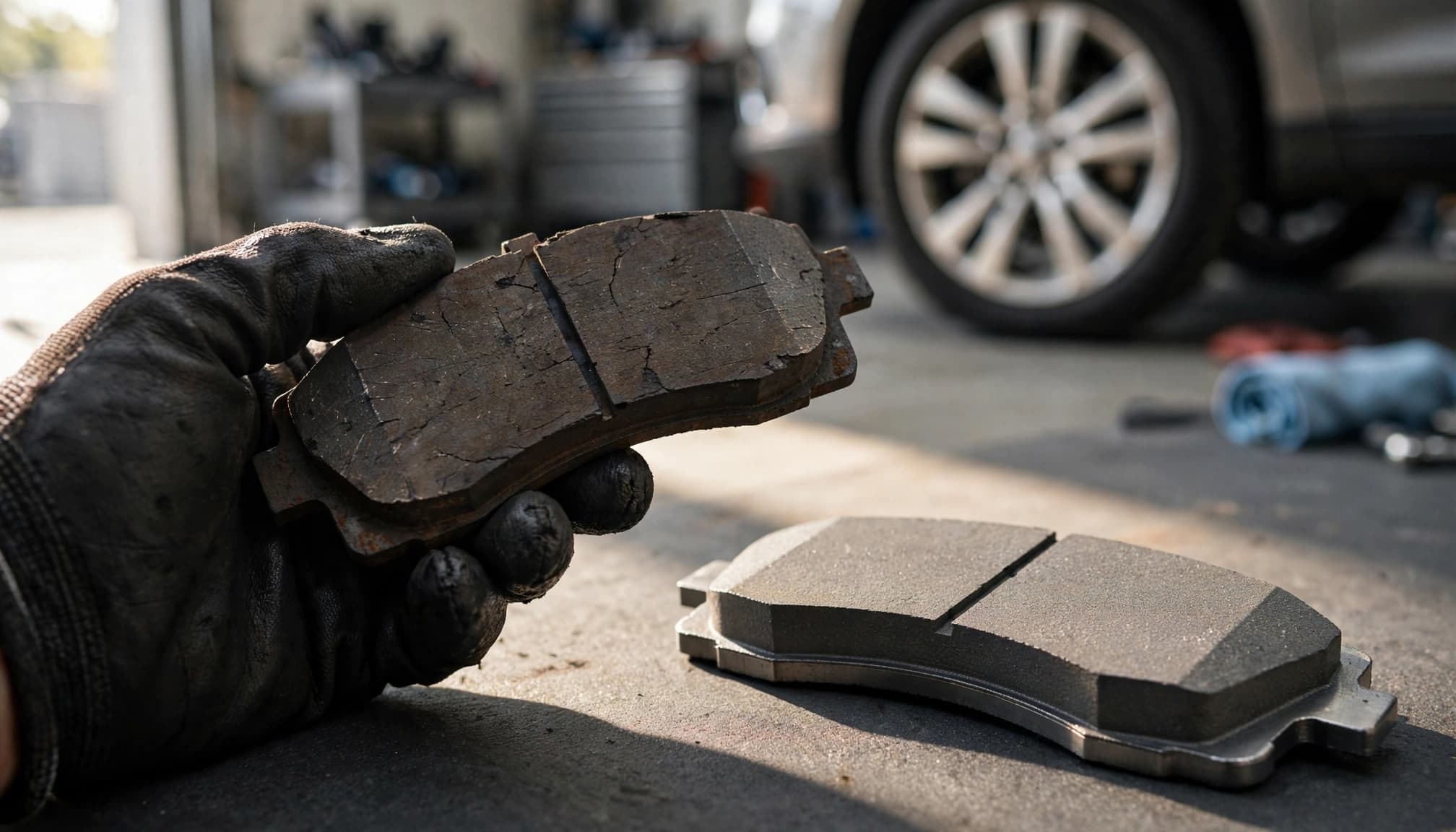
Grinding is more serious than a brief squeak. A continuous metallic friction sound while braking can mean the wear indicator is rubbing against the rotor. The 2021 Honda Odyssey braking manual describes this sound as contact between the brake-wear indicator and rotor.
Grinding can also have other causes, so it shouldn’t be treated as a home diagnosis. Arrange prompt professional inspection. If braking feels weak or unpredictable as well, stop driving as soon as you can do so safely and arrange assistance.
Braking changes need an inspection
A vehicle that takes longer to stop or feels different under the pedal needs attention. These symptoms may point to pad wear, but they can also involve other parts of the braking system.
Reduced braking performance
If the vehicle takes longer than usual to slow down, the pedal feels different, or braking seems less responsive, book an inspection promptly. Don’t wait for a warning sound. A change in stopping performance can come from several brake-system issues, not only worn pads.
Allow extra distance from other vehicles while you arrange service, and avoid high-speed driving. If the brakes feel unreliable or the change is sudden, don’t continue the trip. A technician can inspect the pads, rotors, and related components to determine what needs attention.
Vibration when braking
A pulsing pedal or vibration through the steering wheel may occur when braking. Worn pads are one possible cause, but vibration can also relate to rotor condition, wheel components, or other faults. The sensation alone can’t identify which part needs service.
Note when it happens, such as whether it appears only during braking or also while driving. Share that detail with the technician, but don’t attempt to diagnose or repair the system yourself. A prompt inspection is appropriate whenever the vibration is new, repeated, or getting stronger.
What a dashboard brake warning light can mean
A brake-related warning light may indicate a problem that needs attention, but it doesn’t automatically mean the pads are worn. Vehicle symbols and warning systems vary, and some cars have a dedicated pad-wear indicator while others use a broader brake-system warning.
Read the warning in context
A brake-system light may relate to the parking brake, brake fluid, or another fault. An ABS warning light concerns the anti-lock braking system and does not, by itself, confirm pad wear. The owner’s manual explains what each light means for your vehicle.
If a warning appears while driving, take it seriously. If the brake pedal also feels abnormal or the vehicle doesn’t slow as expected, pull over safely and arrange help. A warning light that appears without a change in braking still deserves a prompt inspection rather than being ignored.
Don’t wait for a second warning
Some cars display a specific brake-pad warning before performance changes. Others may not provide a pad-specific alert at all. A dashboard light is one piece of information, not a substitute for a professional assessment.
If the light stays on after you’ve safely stopped, follow the vehicle’s manual for immediate guidance. Don’t assume the issue has cleared because the light goes out later. When a warning comes with grinding, vibration, or reduced braking, stop using the vehicle and request assistance.
When to stop driving and get urgent help
Some brake symptoms mean it isn’t safe to continue toward your destination. A sudden drop in braking performance, a pedal that sinks toward the floor, or a vehicle that pulls sharply while braking can point to a serious fault.
Stop safely if braking feels unreliable
Ease off the accelerator, increase your distance from other traffic, and move to a safe stopping place without abrupt maneuvers. Once stopped, don’t continue driving if the pedal feels soft or sinks, the vehicle struggles to slow, or a brake warning appears with poor braking.
Call roadside assistance or arrange a tow to a qualified repair facility. Avoid trying to reach a workshop under your own power when the brakes may not respond reliably. If there is smoke or a strong burning smell, move to a safe location and seek assistance.
Grinding also needs prompt attention
A grinding sound is a reason to arrange an inspection promptly, even if the vehicle still seems to stop. Continuing to drive can worsen the damage or leave you with less reliable braking. If grinding is accompanied by a warning light, vibration, or a change in stopping power, don’t continue your journey.

Prepare the brakes before a long drive
Long drives, steep routes, heavy traffic, and unfamiliar roads can put more demands on your attention and your vehicle. If you’ve heard persistent brake noise or noticed a change in braking, have the vehicle inspected before setting out.
Build in time for service
Don’t plan to deal with a brake concern midway through a holiday or long-distance drive. If a sound or change has appeared, schedule an inspection before departure. Tell the technician when the symptom occurs and whether it has changed. This helps them assess the concern without relying on a guess based on one noise.
For general route and transport planning in an unfamiliar destination, our Muscle Shoals travel and road conditions guide offers useful local travel context. Plan your stops with enough time to address vehicle concerns before they interrupt the trip.
Keep symptoms in your travel plans
If a brake concern starts while you’re away, don’t treat reaching the next town as more important than safe braking. Reduce speed only where it’s safe, leave extra space, and stop at a safe location if the brakes feel different. Contact roadside assistance or a repair facility for next steps.
For broader vehicle safety information, the NHTSA vehicle safety resources include recall and safety-problem information. A recall check doesn’t replace an inspection when the brakes are making noise or their performance has changed.
Frequently Asked Questions
Do squealing brakes always mean the pads need replacing?
No. Squealing can come from worn pads, but dust, moisture, or another brake component may cause noise too. A repeated or persistent squeal should be inspected, especially if it occurs alongside vibration or reduced braking performance.
Can I keep driving if the brakes are grinding?
Grinding needs prompt professional attention because it may indicate contact between brake components. If braking is weak, the pedal feels abnormal, or a warning light appears, stop safely and arrange assistance rather than continuing the journey.
Does a brake warning light mean the pads are worn?
Not always. Some vehicles have a specific pad-wear warning, while a general brake-system light can relate to another issue. Check the owner’s manual for the meaning of the symbol, and arrange an inspection when the light appears or braking changes.
Keep braking concerns from becoming travel problems
A persistent squeal, grinding, vibration, warning light, or change in stopping performance deserves attention. The symptom can point to worn pads, but a professional inspection is needed to identify the cause and assess the full braking system.
If the brakes feel unreliable, stop safely and get help before continuing. Addressing a concern early is the safer choice for everyday driving and long trips alike.
Get a price on brake services
Shop #7, 44, 22nd Street, Ras Al Khor Industrial Area 2, open 24 hours. Tell us the car and we reply with a price and a time.
Would rather talk? Call +971 55 168 5050. Someone answers 24 hours.
See us first on Google
Google lets you choose the sites you want to see more of. Add Bud Car Wash as a preferred source and our car care guides show up more often in Top Stories and in Google’s AI answers.
Opens Google in a new tab. You can remove us again at any time.

Sammie O is the owner of Bud Car Wash, a 24 hour hand car wash and detailing shop at Shop #7, 44, 22nd Street, Ras Al Khor Industrial Area 2, Dubai. He writes the car care guides on this site based on work done in his own bay.
View All Articles