
Last updated 23 November 2026 by Sammie O, owner of Bud Car Wash in Ras Al Khor Industrial Area 2, Dubai.
When your car loses power as you accelerate, the cause may be in the fuel, air, ignition, exhaust, or transmission system. The same symptom can come from several different faults, so a single sign rarely confirms which part has failed.
You may notice delayed response, engine shuddering, or a car that struggles to climb a hill. These problems can be especially concerning on a long drive or when merging into fast traffic. Start by noting exactly what happens, then arrange an inspection if the loss continues.
Want us to do it instead?
We do computer diagnostics at our Ras Al Khor bay, 24 hours a day. Fill this in and we reply with a price and a time. The message writes itself, so you only tap send.
Would rather talk? Call +971 55 168 5050. Someone answers 24 hours.
Key Takeaways
- Acceleration problems can involve fuel delivery, air intake, ignition, exhaust flow, or the transmission.
- Hesitation, shaking, unusual smells, warning lights, and changes in engine RPM are useful clues, but they do not confirm a cause.
- A flashing check-engine light, severe power loss, smoke, overheating, or an oil-pressure warning calls for a safe stop.
- A diagnostic scan and inspection can identify the fault more reliably than replacing parts based on symptoms alone.
What power loss feels like while driving
Power loss can happen gradually or arrive suddenly. The car may respond slowly when you press the accelerator, struggle to maintain speed, or jerk as the engine hesitates. Some drivers notice the issue most on hills, during overtaking, or when the vehicle is carrying passengers and luggage.

Pay attention to what the engine does at the same time. Shaking or a rough idle may point toward an engine misfire. If engine speed rises but the car does not gain speed as expected, the transmission or clutch may be slipping.
A warning light, new noise, burning smell, or change in fuel use can also help narrow the possibilities. Make a note of when the symptom occurs, including whether the engine is cold or warm and whether it happens at a particular speed. These details help a technician assess the problem.
Engine causes: fuel, air, and ignition
Several engine systems must work together to provide steady power. A fault in one area can cause similar hesitation, so symptoms need to be considered alongside inspection and diagnostic results.
Fuel delivery problems
The engine needs a consistent supply of fuel as demand increases. A restricted fuel filter, weak pump, or problem with an injector can reduce delivery and make the car stumble or lose power under acceleration. A nearly empty tank can also cause fuel starvation, especially when driving on an incline.
Fuel-related symptoms can overlap with ignition or air-intake problems. Innova describes fuel, ignition, and air-intake faults as possible causes of engine hesitation, rather than one symptom pointing to one failed part.
Air intake restrictions or leaks
The engine needs a measured flow of air. A dirty air filter can restrict that flow, while an intake leak can allow air into the system where it is not properly measured. A faulty mass airflow sensor or buildup around the throttle body can also affect the engine’s response.
These problems may cause hesitation, uneven acceleration, or a warning light. Common causes of hesitation include air-filter, throttle-body, intake-leak, and mass-airflow-sensor issues.
Ignition faults
Spark plugs and ignition coils help ignite the air-fuel mixture. Worn plugs or a weak coil can lead to a misfire, which may feel like shaking, stumbling, or a sudden drop in power. Worn spark plugs and weak ignition coils are among the possible causes of hesitation.
Exhaust and transmission problems
Not every acceleration problem starts in the engine’s fuel or ignition systems. Restricted exhaust flow and faults in the transmission can also make a vehicle feel slow or unresponsive.
A restricted exhaust
The exhaust system carries combustion gases away from the engine. If a catalytic converter or another exhaust component becomes restricted, the engine may struggle to produce power, particularly when you accelerate. This may be accompanied by poor performance or a warning light, but those signs alone do not confirm an exhaust fault.
A technician can assess exhaust performance and check related engine data. AAA lists the catalytic converter among several possible reasons for a check-engine light, alongside components such as the oxygen and mass airflow sensors. A warning light needs diagnosis, not guesswork.
Transmission or clutch trouble
A slipping transmission can cause the engine to rev without a matching increase in road speed. Some vehicles may also shift roughly, hesitate between gears, or fail to select a gear normally. In a manual car, a worn clutch can slip under acceleration and produce a similar gap between engine speed and vehicle speed.
These symptoms differ from an engine that struggles to rev, but drivers can find them difficult to distinguish while moving. A technician can inspect the transmission and compare engine speed with vehicle response.
How mechanics diagnose acceleration problems
An inspection should start with the conditions around the symptom, then move to tests that can identify the source. Replacing a sensor or other part based only on a warning light can miss the underlying fault.
Record the symptoms
Note whether the loss happens at low speed, on hills, during gear changes, or after the engine warms up. Record any shaking, unusual noise, warning lights, smoke, or smell. If the issue comes and goes, note how long it lasts and whether restarting the car changes it.
Also observe the engine’s response. A car that struggles to rev may have a different issue from one whose engine revs freely while road speed barely increases. These observations are useful clues, not a diagnosis.
Scan and inspect the vehicle
A technician can read stored diagnostic trouble codes with a scan tool and inspect the systems linked to the symptoms. The codes help direct testing, but they do not always identify a failed part by themselves. A warning light may relate to a fuel cap, oxygen sensor, catalytic converter, mass airflow sensor, or ignition component, among other possibilities. AAA’s check-engine-light guide outlines several of these causes.
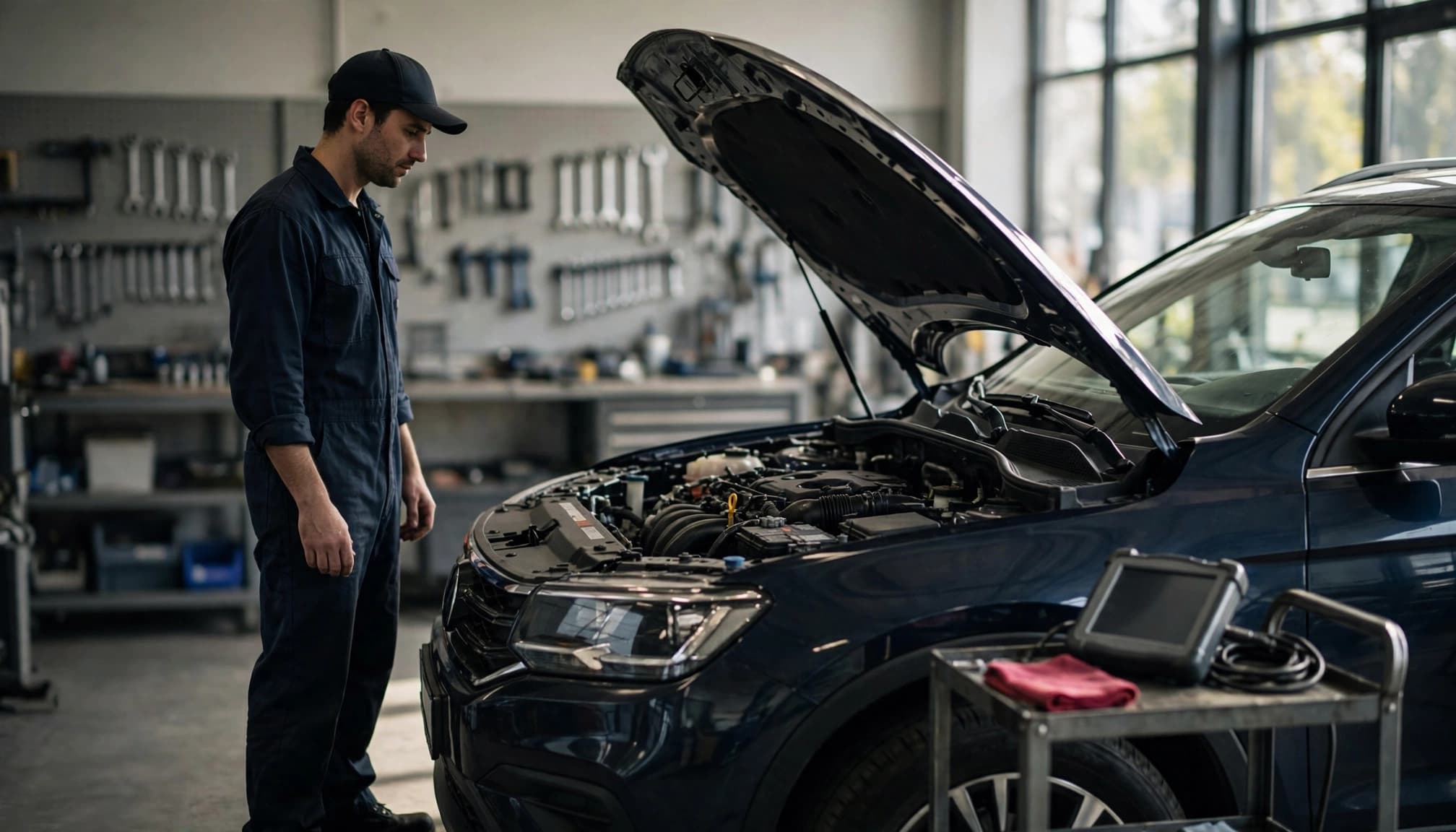
An inspection may include checking the air filter and intake, testing ignition and fuel delivery, and assessing transmission behavior. The right tests depend on the vehicle and its symptoms. If the car is losing power repeatedly, professional diagnosis is safer than continuing to drive while the fault worsens.
When is it unsafe to continue driving?
A mild hesitation that happens once is different from a sudden or severe loss of power. If the vehicle cannot keep pace with traffic, struggles to move safely, or loses power while merging, move out of traffic when possible and stop in a safe location. Turn on the hazard lights if you need to alert other drivers.
Stop driving and arrange assistance if you notice smoke, a burning smell, overheating, a loud new mechanical noise, or an oil-pressure warning. A flashing check-engine light can indicate an active misfire and may lead to catalytic-converter damage. A flashing check-engine-light warning should be treated seriously, especially when the engine is also shaking or losing power.
Do not try to diagnose the problem at the roadside if the location is unsafe. Pull over as far from moving traffic as possible, stay clear of the roadway, and call for roadside assistance when needed.
What to do before a long drive
Power loss is more disruptive on an unfamiliar road, far from your usual repair shop, or with a tight travel schedule. If the car has already hesitated or lost speed, have it inspected before setting out on a long trip. Pack essential contact details and allow time for a stop if a warning appears.
If the problem begins during the drive, avoid hard acceleration and do not attempt an overtake that the car cannot complete safely. Pull over at a suitable place and assess the warning lights and symptoms. For an unfamiliar route, plan the journey so you have room to stop safely, but treat that planning as no substitute for a vehicle inspection.
Drivers in Dubai can also arrange help through our mechanical services when acceleration problems need attention.
Frequently asked questions
Can a dirty air filter make a car lose power?
Yes. A restricted air filter can reduce airflow and contribute to weak acceleration. Other issues, including fuel delivery, ignition, or transmission problems, can produce similar symptoms, so an air filter should not be assumed to be the cause without inspection.
Why does the car lose power only when accelerating?
Acceleration places greater demand on the engine and transmission. A fuel-delivery restriction, ignition misfire, intake problem, exhaust restriction, or slipping transmission may become more noticeable under that demand. The exact cause depends on the vehicle’s other symptoms and test results.
Get the cause checked before the next drive
When a car loses power, the symptom is a warning to investigate, not proof of one specific fault. Note when it happens, watch for warning lights and other changes, and stop driving if the vehicle becomes unsafe.
A clear diagnosis helps target the repair and reduces the risk of continued driving with a worsening problem. For a long journey, steady acceleration and dependable response are part of getting there safely.
Need it scanned? Bud Car Wash reads your car’s stored fault codes and live sensor data with an OBD-II scanner, and you leave with a printed health report. We are at Shop #7, 44, 22nd Street, Ras Al Khor Industrial Area 2, open 24 hours. See our computer diagnostics.
Get a price on computer diagnostics
Shop #7, 44, 22nd Street, Ras Al Khor Industrial Area 2, open 24 hours. Tell us the car and we reply with a price and a time.
Would rather talk? Call +971 55 168 5050. Someone answers 24 hours.
See us first on Google
Google lets you choose the sites you want to see more of. Add Bud Car Wash as a preferred source and our car care guides show up more often in Top Stories and in Google’s AI answers.
Opens Google in a new tab. You can remove us again at any time.

Sammie O is the owner of Bud Car Wash, a 24 hour hand car wash and detailing shop at Shop #7, 44, 22nd Street, Ras Al Khor Industrial Area 2, Dubai. He writes the car care guides on this site based on work done in his own bay.
View All Articles