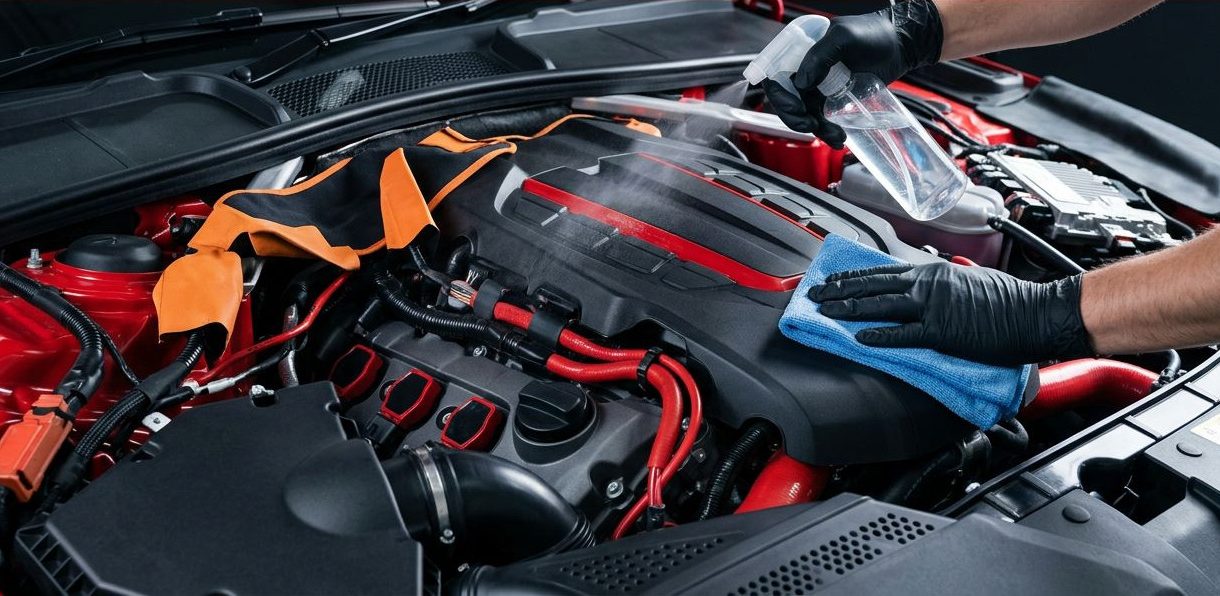

Last updated 17 September 2026 by Sammie O, owner of Bud Car Wash in Ras Al Khor Industrial Area 2, Dubai.
A clean engine bay can make routine checks easier, improve the vehicle’s appearance, and help you spot leaks sooner. Water in the wrong place, however, can create expensive electrical and mechanical problems.
The safest approach is controlled cleaning, not flooding. Work with a cool engine, protect vulnerable components, use gentle products, and dry everything completely before starting the vehicle. Begin by checking your owner’s manual because engine-bay layouts and cleaning instructions vary between vehicles.
Want us to do it instead?
We do engine wash at our Ras Al Khor bay, 24 hours a day. Fill this in and we reply with a price and a time. The message writes itself, so you only tap send.
Would rather talk? Call +971 55 168 5050. Someone answers 24 hours.
Why Engine Bay Cleaning Needs Care
Modern engine compartments contain exposed wiring, sensors, electronic modules, belts, hoses, and air-intake parts. Many components can tolerate normal moisture, but direct water pressure or trapped water can still cause trouble.
A clean engine bay should never come at the cost of a misfire, damaged connector, slipping belt, or water-filled air filter. Take time to identify the parts that need protection before applying any cleaner.
Components that need protection
Keep water and degreaser away from the alternator, fuse box, power distribution box, exposed connectors, sensors, ignition coils, spark plug wells, and open wiring. Protect the air intake and filter assembly as well.
The battery also needs care. Cover it if your vehicle manual allows engine-bay cleaning, and never direct a strong spray toward battery terminals or nearby electrical connections.
Belts and pulleys should stay as dry as possible. Cleaner can remove useful lubrication from nearby parts, while dressing products can make belts slippery. Don’t apply shine products to drive belts.
Check the owner’s manual first
Some manufacturers provide detailed engine-compartment cleaning instructions. Others advise against washing certain areas altogether. If you can’t identify the electrical and intake components, don’t guess.
The engine-bay cleaning guidance from Credit Acceptance also recommends protecting parts such as the battery, alternator, air intake, and engine control unit before cleaning.
A vehicle’s engine bay isn’t one universal layout. Treat the owner’s manual as the final reference for your car.
How to Clean Engine Bay Areas Safely
Good preparation keeps the job controlled and reduces the amount of water needed. You don’t need a large collection of detailing equipment. A few suitable supplies are enough for most light and moderate buildup.
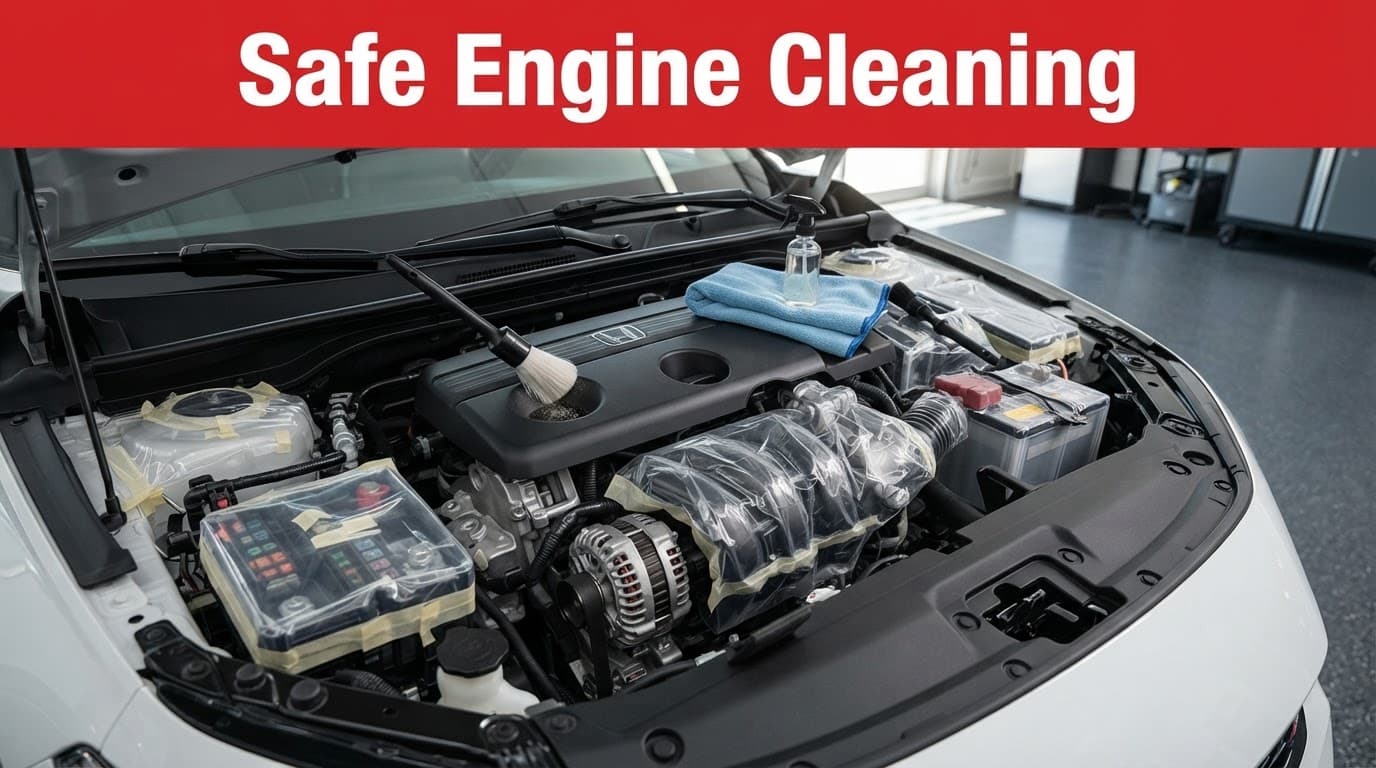
Keep these items ready before opening the hood:
- Several clean microfiber towels are useful for wiping plastic, painted surfaces, and metal parts.
- A soft detailing brush or old soft toothbrush can loosen dust without scratching finishes.
- An approved engine shampoo or mild automotive degreaser can break down oil and road grime.
- A spray bottle filled with clean water gives you better control than a running hose.
- Plastic bags or waterproof covers can protect the alternator, fuse box, intake, and battery.
- Nitrile gloves and eye protection help protect your skin from dirty cleaner and loosened grease.
- A blower, compressed air, or a second set of dry towels helps remove water from tight spaces.
Avoid household cleaners, strong solvents, abrasive brushes, and products that leave a heavy oily film. Follow the degreaser label, including its dilution and dwell-time instructions. Never allow the product to dry on the engine or surrounding paint.
A Safe Step-by-Step Engine Bay Cleaning Process
A careful clean engine bay routine starts with inspection and ends with a full drying check. Work in a shaded, well-ventilated area, away from direct sunlight and hot surfaces.
1. Let the engine cool completely
Turn the vehicle off and wait until the engine is cool to the touch. Don’t clean immediately after driving, even if the hood feels cooler than the engine.
Hot metal can burn your skin, and cold water can cause rapid temperature changes on hot components. The vehicle should also be parked securely with the ignition off and the key away from the car.
2. Remove loose dirt before using water
Open the hood and inspect the compartment. Remove leaves, sand, and loose dust with a soft brush, vacuum, blower, or compressed air.
Use light pressure around wiring and plastic clips. If compressed air is used, keep the nozzle back from connectors and seals. Strong airflow can push dirt deeper into openings or loosen small covers.
3. Protect vulnerable components
Cover the alternator, fuse box, battery, exposed connectors, air intake opening, and filter housing with waterproof covers or plastic bags. Secure covers so they don’t fall into belts or fans.
If the manual gives a battery-disconnection procedure and you understand the effects, disconnecting the negative terminal may be appropriate for your vehicle. It can reset settings or affect electronic systems, so don’t make it a universal step.
Remove a plastic engine cover only if the manual permits it. Keep every clip and fastener together, and never pull hard on a cover that feels stuck.
4. Apply cleaner in small sections
Spray the approved degreaser onto a brush or microfiber towel when possible. This gives you more control and reduces overspray around sensitive parts.
For heavy grease, apply the product only to the dirty surface and allow it to sit for the time stated on the label. CRC Industries recommends a 10 to 15-minute dwell time for its engine degreaser, followed by gentle scrubbing and careful rinsing. Don’t copy that timing for another product unless its label gives the same direction.
Work from the cleaner areas toward the dirtiest sections. Agitate plastic covers, brackets, and accessible painted surfaces with a soft brush. Avoid scrubbing labels, electrical connectors, belts, and delicate finishes.
5. Rinse with very little water
The safest option is a damp microfiber towel or a spray bottle. Wipe the loosened grime away, rinse the towel often, and repeat in small areas.
If your manual permits water rinsing, use a gentle hose spray from a distance. Never use a pressure washer on the engine bay. High pressure can force water through seals and into electrical connectors, fuse boxes, sensors, and intake openings.
Chemical Guys’ engine-bay cleaning instructions also warns that strong water pressure can push moisture into electrical connections. Gentle control is more important than speed.
6. Dry before starting the vehicle
Wipe every accessible surface with clean microfiber towels. Use a blower or compressed air around crevices, but keep the airflow gentle around connectors, seals, and clips.
Leave the hood open so trapped moisture can evaporate. Check around the alternator, fuse box, air intake, spark plug wells, belt areas, and battery before removing the protective covers.
How to Remove Grease Without Soaking Electrical Parts
Heavy oil and grease need patience, not more water. Repeatedly spraying a dirty engine bay only spreads contamination and increases the chance of moisture reaching sensitive components.
Spot-clean stubborn buildup
Place a towel beneath the section you are cleaning to catch dirty liquid. Apply a small amount of diluted degreaser to a brush, then work the grease loose with short, controlled movements.
Wipe the area before applying more product. For thick deposits, repeat the process rather than flooding the surface. A plastic scraper can help with hardened grime on broad, non-painted surfaces, but keep it away from hoses, wiring, labels, and delicate coatings.
If oil is coming from a leak, cleaning alone won’t solve the problem. A dry, clean engine bay makes fresh leaks easier to identify, so inspect the area again after driving.
Protect belts, hoses, and finishes
Rubber hoses can be wiped with a damp towel and mild cleaner. Don’t leave degreaser sitting on rubber, painted surfaces, or plastic trim. Rinse the towel frequently so loosened grit doesn’t scratch the finish.
Keep water away from belt grooves and pulley bearings. If a belt becomes wet, allow it to dry completely before starting the vehicle. Avoid engine dressings that create a glossy, slippery surface.
Use a separate towel for greasy metal parts and another for cleaner plastic covers. This prevents oil and grit from spreading across areas that are already clean.
Final Checks Before You Start the Car
Drying is part of the cleaning process, not an optional finishing step. Moisture trapped inside connectors or intake components may not be visible from above.
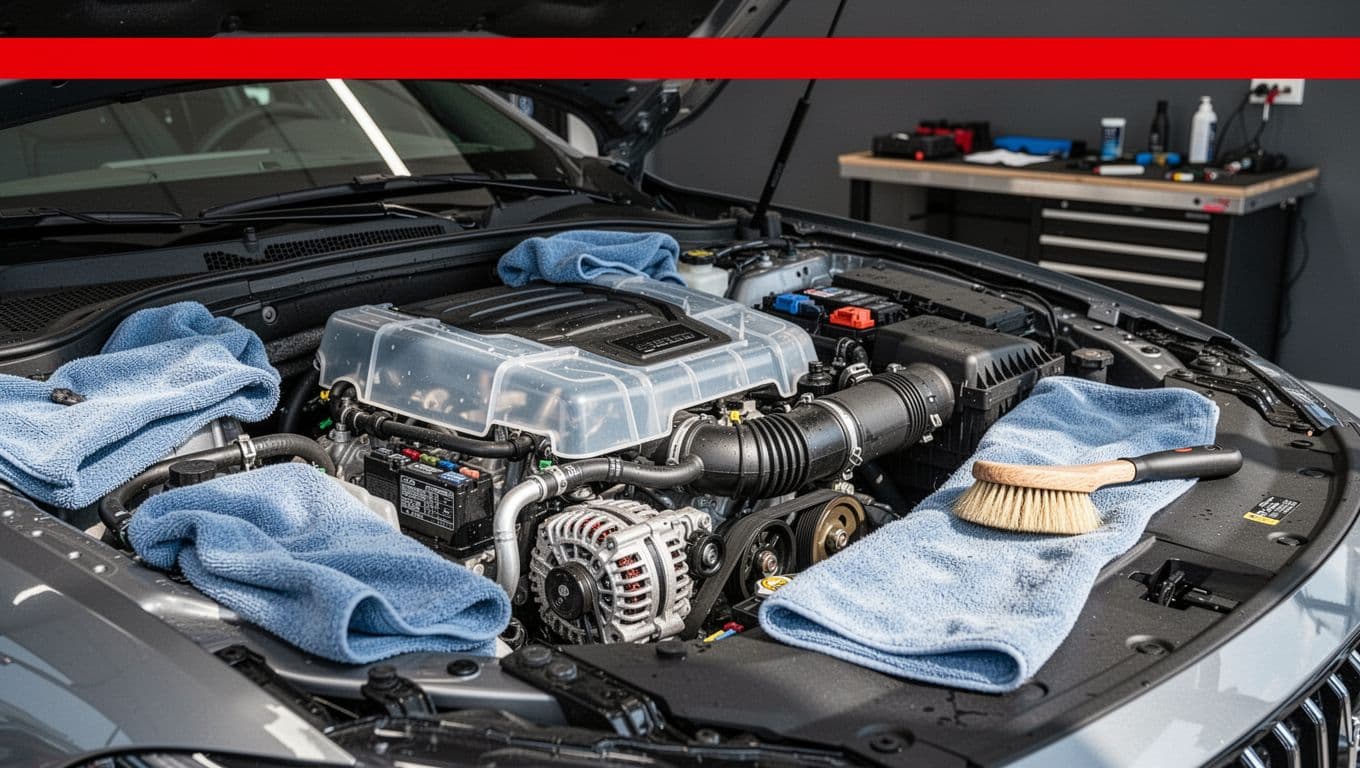
Inspect the bay carefully
Remove all plastic bags, towels, and covers before starting the vehicle. Check that no cloth, brush, tape, or loose debris remains near belts, pulleys, fans, or hot surfaces.
Make sure the air intake is open and dry. Confirm that engine covers, filter housings, battery connections, and any removed clips are correctly refitted.
Look for standing water around connectors, coil areas, the fuse box, and deep recesses. Use a dry towel or gentle airflow to remove it. If water entered an intake or electrical housing, stop and follow the manual’s instructions before operating the vehicle.
Start carefully and monitor the result
Start the vehicle only when the engine bay is fully dry. Let it idle while listening for unusual belt noise and watching for warning lights.
A rough idle, misfire, flickering warning light, or unusual electrical behavior means you should switch the engine off. Don’t keep running the car in the hope that the problem will disappear. Allow it to dry further, inspect the affected area, and seek professional help if the issue remains.
Common Mistakes That Cause Engine-Bay Damage
Avoid these shortcuts when cleaning your engine compartment:
- Cleaning a hot or running engine can cause burns and rapid temperature changes.
- Spraying directly into the alternator, fuse box, intake, or exposed connectors increases water-intrusion risk.
- Using a pressure washer can force moisture past seals that a gentle rinse would leave undisturbed.
- Applying harsh degreaser across the entire bay can damage finishes, rubber, labels, and protective coatings.
- Letting cleaner dry on the surface can leave stains or make residue harder to remove.
- Using a stiff brush can scratch painted brackets and damage wiring insulation.
- Starting the vehicle before drying can turn a simple cleaning job into a difficult diagnostic problem.
- Leaving plastic covers in place can create a serious hazard if they fall near moving or hot parts.
The goal isn’t to make every engine bay look soaked and glossy. The goal is a clean engine bay with dry electrical components, intact finishes, and no new mechanical problems.
Keep the Engine Bay Clean With Light Maintenance
A full wash shouldn’t be necessary every time dust appears. Wipe accessible surfaces with a damp microfiber towel during routine detailing, and remove leaves or debris before they collect around drains and air-intake areas.
Clean small spills soon after they happen, using an approved product and limited moisture. Regular light maintenance keeps grease from becoming a thick layer that requires aggressive scrubbing.
For vehicles with complex hybrid systems, turbochargers, exposed electronics, or unclear component layouts, professional detailing is the safer choice. A trained technician can identify sensitive areas and use controlled products that match the vehicle’s condition.
How Often Should You Clean the Engine Bay?
For most drivers, a light wipe-down every few months plus one careful clean a year is enough. Dusty conditions change that. In a city such as Dubai, fine sand settles around panel edges, cowl areas, and cooling intakes between washes, so a quick monthly look under the hood is worth the time.
Use this simple rhythm: check the bay monthly and remove leaves, sand, and debris by hand; wipe down plastics during routine detailing; and book a full clean only when dust or grease is visibly building up. If the bay stays dry and tidy between services, skip the deep clean rather than adding water for its own sake.
A Safer Way to Finish the Job
Cleaning an engine bay safely depends on restraint. Use the owner’s manual, work only on a cool engine, protect sensitive parts, apply cleaner in small areas, and rinse with minimal pressure.
Dry the compartment fully before starting the car, then check for warning lights, belt noise, or rough running. A careful process gives you the refreshed appearance you want while protecting the electrical components, hoses, belts, and finishes that keep the vehicle working properly.
Get a price on engine wash
Shop #7, 44, 22nd Street, Ras Al Khor Industrial Area 2, open 24 hours. Tell us the car and we reply with a price and a time.
Would rather talk? Call +971 55 168 5050. Someone answers 24 hours.
See us first on Google
Google lets you choose the sites you want to see more of. Add Bud Car Wash as a preferred source and our car care guides show up more often in Top Stories and in Google’s AI answers.
Opens Google in a new tab. You can remove us again at any time.

Sammie O is the owner of Bud Car Wash, a 24 hour hand car wash and detailing shop at Shop #7, 44, 22nd Street, Ras Al Khor Industrial Area 2, Dubai. He writes the car care guides on this site based on work done in his own bay.
View All Articles