
Last updated 13 September 2026 by Sammie O, owner of Bud Car Wash in Ras Al Khor Industrial Area 2, Dubai.
Streaks become most visible when sunlight hits the glass, especially while driving at night. Learning how to clean car windows properly removes oily film, dust, fingerprints, and product residue without creating more haze.
The right way to clean car windows starts with cool glass, a tint-safe cleaner, and separate clean microfiber towels for the interior and exterior. Follow the correct order, use light pressure, and finish with a dry towel for a clear result.
Want us to do it instead?
We do window and glass protection at our Ras Al Khor bay, 24 hours a day. Fill this in and we reply with a price and a time. The message writes itself, so you only tap send.
Would rather talk? Call +971 55 168 5050. Someone answers 24 hours.
What You Need for Clear, Streak-Free Glass
A streak-free finish depends as much on your tools as your technique. Dirty towels spread oils across the glass, while the wrong cleaner can leave residue or affect window tint.
Choose a glass-safe cleaner
Use an automotive glass cleaner made for vehicle windows. For tinted glass, select an ammonia-free, tint-safe formula and read the product label before applying it. Household cleaners can contain ingredients that aren’t suitable for window film, rubber seals, plastic trim, or dashboard surfaces.
If your tint was recently installed, follow the installer’s cleaning instructions and waiting period. The film may need time to settle before it can be cleaned normally. For additional care guidance, review 3M’s vehicle care recommendations, especially if your car has window film or other protective materials.
A small amount of cleaner is enough. More product doesn’t create cleaner glass. It usually creates more residue that needs to be removed.
Keep interior and exterior towels separate
Prepare at least two clean, lint-free microfiber towels:
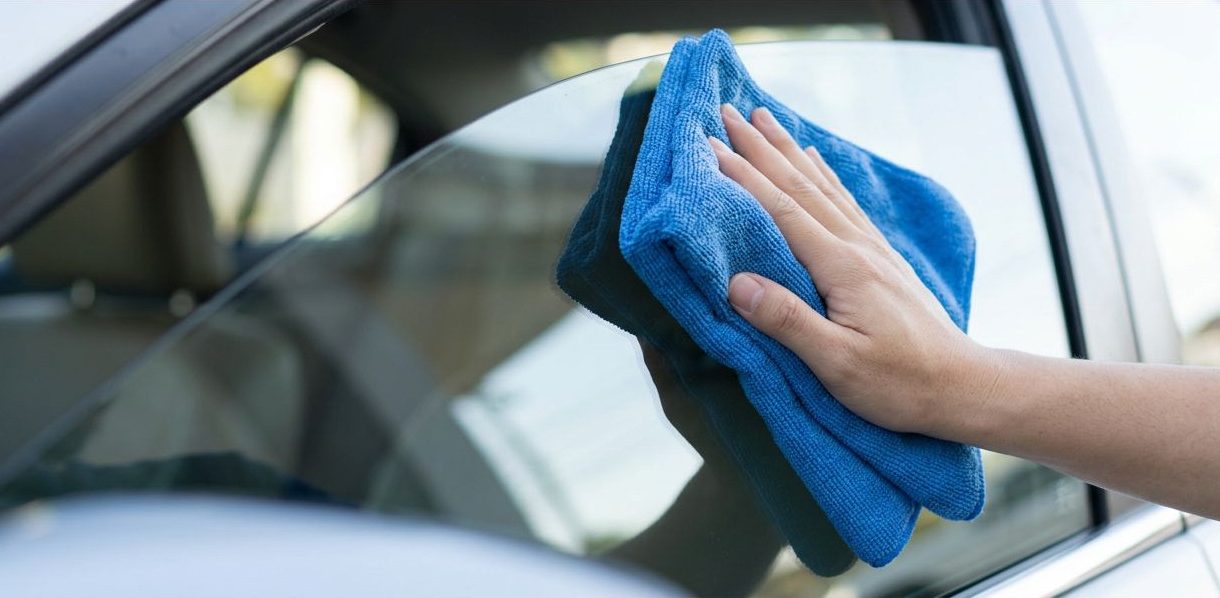
- Use one towel for exterior glass, where it will pick up dust, road film, and insects.
- Keep another towel for the interior, where it will remove oily dashboard vapors, fingerprints, and fingerprints from passengers.
- Reserve a third, dry towel for final buffing if possible.
Don’t use a towel that has touched wax, tire dressing, polish, or greasy trim. Those products can transfer straight onto the glass. Wash microfiber towels separately, avoid fabric softener, and check that no grit is trapped in the fibers before use.
Paper towels can leave lint and small fibers behind. Rough cloths, abrasive pads, brushes, and blades can scratch glass or damage tint, so keep them away from the windows.
Why Shade Matters When Cleaning Car Glass
Cleaning in direct sun is one of the most common causes of streaks. Heat makes the cleaner evaporate before you can wipe it evenly. It can also leave water spots when minerals dry on the surface.
Let the glass cool first
Park the car in a shaded area or a covered garage. Open the doors for a few minutes if the interior is hot, then touch the glass before you begin. It should feel cool or close to room temperature.
This matters even more in hot climates such as Dubai, where a windshield can become hot within minutes. If shade isn’t available, clean one window at a time and work on the side receiving less sun.
Remove loose dust before wiping
Rinse or gently wipe away loose dust before using a microfiber towel. Sand and grit can drag across the surface and create fine marks. Use clean water and a soft towel when the glass is heavily dusty.
Don’t press hard to remove dry dirt. Let the cleaner or water loosen it first. A clean surface gives the towel room to lift contamination instead of pushing it around.
How to clean car windows on the outside
Exterior glass collects road film, exhaust residue, insects, water spots, and dust. Washing the surface first makes the glass cleaner more effective and protects it from unnecessary rubbing.
Wash away dirt before applying cleaner
Clean the exterior windows after rinsing the vehicle or washing the surrounding panels. This removes loose grit before the final glass treatment.
If the car is already clean, dampen a fresh microfiber towel with clean water and wipe each window gently. Fold the towel into quarters so you can turn to a clean side as it becomes dirty.
Pay attention to the lower edge of each window. Dirt collects where the glass meets the rubber seal, and rolling the window down slightly exposes the hidden strip. Dry that area before raising the window again.
Use light passes and a dry finish
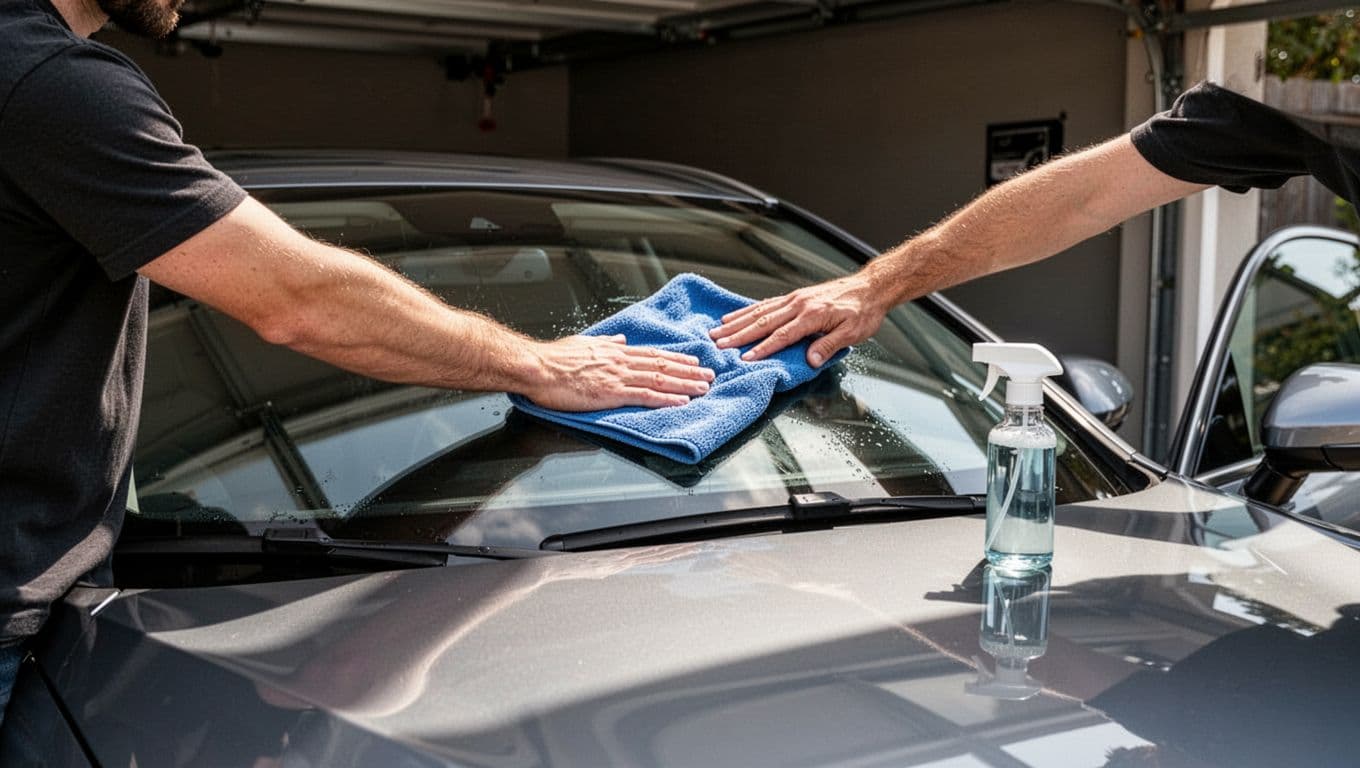
Spray the cleaner onto the towel instead of flooding the glass. This reduces overspray on paint, plastic, and rubber. It also gives you better control around the edges.
- Wipe one window at a time, starting at the top and moving downward.
- Use overlapping strokes to cover the complete surface.
- Turn the towel to a clean side when it becomes damp or dirty.
- Use a second dry microfiber towel to buff away remaining moisture.
- Inspect the glass from different angles before moving to the next window.
Circular motions help loosen greasy film, while straight final passes make missed streaks easier to spot. Many automotive glass cleaning tips also recommend working from the top down and finishing with a dry side of the towel.
Clean the outside of the windshield in one direction and the inside in another. For example, use horizontal passes outside and vertical passes inside. If you see a streak later, the direction tells you which surface needs another wipe.
How to clean car windows on the inside
Interior glass often looks clean until low sunlight exposes a cloudy film. Dashboard oils, smoke residue, fingerprints, plastic vapors, and air-conditioning dust can settle on the windshield and side windows.

Spray the towel, not the dashboard
Use a separate interior-glass microfiber towel. Spray a small amount of tint-safe cleaner onto the towel, not directly onto the window. This prevents liquid from running into speakers, switches, vents, and dashboard gaps.
Wipe the glass in small sections. Start near the top, then work down toward the dashboard. Keep the towel flat and use light pressure, especially around window film and heated windshield elements.
For difficult windshields, sit in the passenger seat while cleaning the driver’s side. This position gives you a better angle and helps you reach the lower corners without leaning across the steering wheel.
Buff the glass until it feels dry
After cleaning, use a second dry microfiber towel to buff the surface. The glass should feel smooth and dry, with no damp areas or cloudy patches.
Don’t keep adding cleaner if the window still looks hazy. Excess product is often the cause. A clean, dry towel usually removes the remaining film more effectively than another spray.
A dry towel should remove residue, not spread it. Turn to a fresh towel side before the glass starts looking cloudy.
Inspect the windshield from both inside and outside. If the marks look different depending on your viewing angle, clean both surfaces before assuming the glass has a permanent defect.
Troubleshooting haze, residue, and stubborn grime
A streak-free result can require a second pass when the glass has built-up contamination. Identify the type of problem before choosing a stronger method.
When the glass looks cloudy or hazy
Haze usually comes from too much cleaner, a towel carrying polish or dressing, or an interior film that wasn’t fully removed. Start with a clean, dry microfiber towel and buff the window slowly.
If the haze remains, dampen a fresh towel lightly with clean water. Wipe a small area, then dry it immediately with another towel. This removes leftover product without adding another layer of cleaner.
Check the towel as you work. If it feels greasy, replace it. A towel that was used on the dashboard may look clean but still contain enough dressing to create haze.
When sticky residue remains
Tree sap, insect marks, tape residue, and adhesive need time to soften. Hold a damp microfiber towel over the spot for a short period, then wipe gently. Use a glass-safe automotive remover only if its label confirms compatibility with tint and surrounding surfaces.
Never scrape residue with a razor, knife, credit card, or abrasive pad. These tools can scratch glass and may cut or lift window film. Repeat the softening process instead of increasing pressure.
A professional glass treatment can help with heavy contamination that won’t release through normal washing. This is useful for vehicles exposed to road construction dust, coastal air, or long periods without washing.
When water spots or mineral marks remain
White spots usually come from minerals left behind after water dries. First, wash the glass with clean water and dry it fully. If the marks remain, use a dedicated automotive water-spot remover and test it on a small area.
Follow the product instructions closely. Keep acidic cleaners away from paint, metal trim, rubber, and window film unless the manufacturer confirms they are safe. Rinse the glass and buff it dry after treatment.
For regular care, dry the windows after washing instead of allowing water to evaporate in the sun. This simple step limits new mineral deposits.
Simple habits that keep car windows clear
Clean car windows stay clearer when contamination doesn’t have time to build up. Wipe fingerprints and fresh bird droppings as soon as possible, using a damp microfiber towel rather than a dry cloth.
Wash exterior glass whenever you wash the car, and give the interior windows attention every few weeks. Clean the windshield before applying a rain-repellent product, wax, or glass coating. Oils and residue can prevent those products from bonding evenly.
Keep microfiber towels in a sealed, clean container inside the vehicle. Don’t store them loose in the trunk, where they can collect sand and dust. Replace towels that feel rough, shed fibers, or remain greasy after washing.
If you’re comparing products, look for a formula designed for automotive glass rather than a general household spray. Car and Driver’s tested automotive glass cleaner guide can help you compare suitable options, while 3D’s glass-cleaning guidance reinforces the value of a clean towel and a dry final buff.
Clear glass starts with a controlled process
The best way to clean car windows without streaks is simple: work in the shade, remove loose dirt first, use a compatible cleaner, and keep interior and exterior towels separate.
Use light pressure and small sections. Finish with a dry microfiber towel, then inspect the glass before the product dries. With the right supplies and a careful routine, your windows can stay clear, fresh, and comfortable to drive through in bright sunlight.
Get a price on window and glass protection
Shop #7, 44, 22nd Street, Ras Al Khor Industrial Area 2, open 24 hours. Tell us the car and we reply with a price and a time.
Would rather talk? Call +971 55 168 5050. Someone answers 24 hours.
See us first on Google
Google lets you choose the sites you want to see more of. Add Bud Car Wash as a preferred source and our car care guides show up more often in Top Stories and in Google’s AI answers.
Opens Google in a new tab. You can remove us again at any time.

Sammie O is the owner of Bud Car Wash, a 24 hour hand car wash and detailing shop at Shop #7, 44, 22nd Street, Ras Al Khor Industrial Area 2, Dubai. He writes the car care guides on this site based on work done in his own bay.
View All Articles