
Last updated 1 September 2026 by Sammie O, owner of Bud Car Wash in Ras Al Khor Industrial Area 2, Dubai.
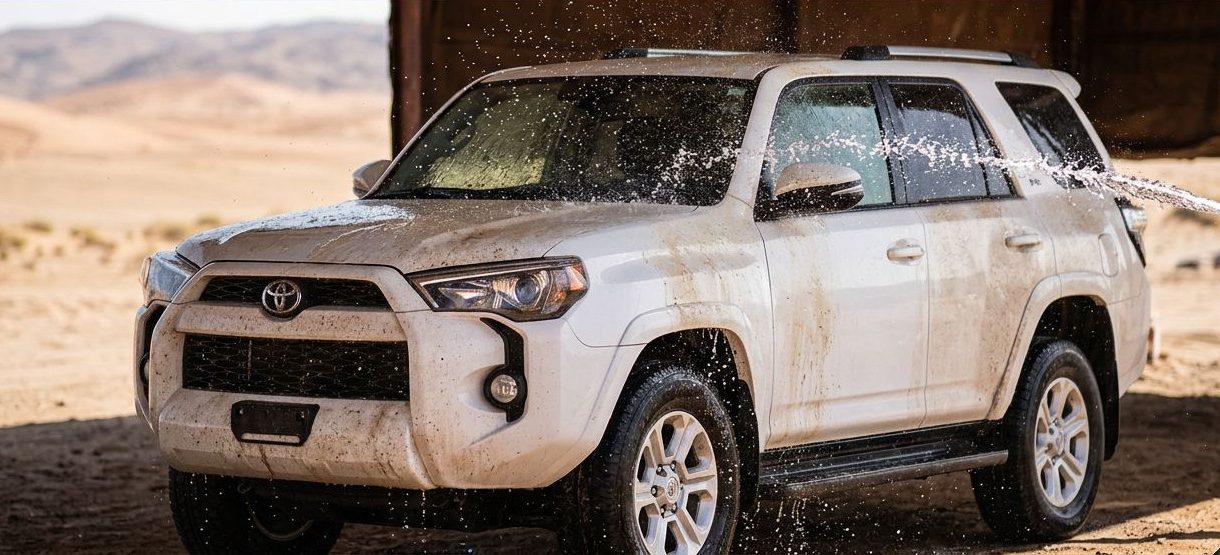
A desert road trip leaves more than a dusty exterior. Fine sand settles in panel gaps, wheel wells, door jambs, roof rails, and underbody areas where a quick rinse may miss it. To wash car after trip, start with water, not a sponge or mitt. Rubbing dry grit across the paint can create fine scratches and leave the clear coat looking dull.
The safest process is straightforward: let the vehicle cool, remove loose sand, use automotive-safe products, rinse hidden areas carefully, and dry the entire vehicle. The first rinse does most of the protective work, so don’t rush it.
Want us to do it instead?
We do detailing and surface protection at our Ras Al Khor bay, 24 hours a day. Fill this in and we reply with a price and a time. The message writes itself, so you only tap send.
Would rather talk? Call +971 55 168 5050. Someone answers 24 hours.
How to wash car after trip: Start safely
Before reaching for the hose, choose a suitable location and inspect the vehicle. A little preparation helps protect the paint, brakes, tires, and surrounding surfaces.
Wait for cool brakes and panels
Park the vehicle in the shade and allow the body panels to cool. Water evaporates quickly on hot paint, which can leave mineral spots before you finish rinsing.
Brakes can also stay hot after long descents, heavy traffic, or off-road driving. Don’t spray cold water directly onto hot rotors or calipers. Wait until the wheels and brake areas have cooled naturally before washing them.
Check the tires for cuts, trapped stones, or visible damage. Look under the vehicle for oil, coolant, or fuel leaks. If you find a fluid spill, don’t hose it toward a drain. The DC clean-water guide for auto services advises keeping automotive fluids out of drains.
Prepare the right supplies
Gather a hose with a shutoff nozzle, pH-neutral car shampoo, two buckets, grit guards, microfiber wash mitts, a soft wheel brush, and clean drying towels. A pressure washer can help with the undercarriage, but it isn’t required.
Avoid dish soap, household cleaners, stiff brushes, and old bath towels. These products can strip protective layers or drag grit across the surface. Use a separate mitt and brush for the wheels, tires, and wheel wells.
Remove loose sand before touching the paint
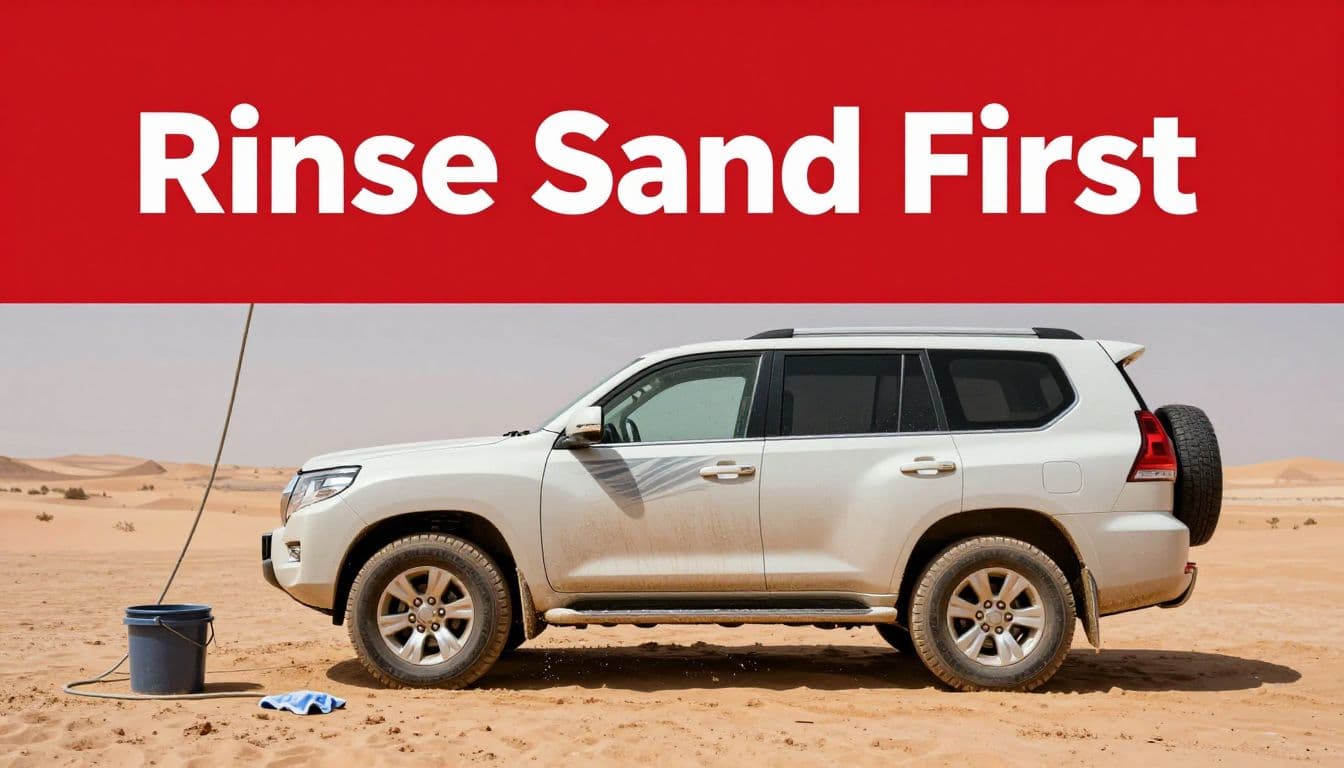
The first rinse should remove as much dry sand and dust as possible. Don’t begin with a mitt, even if the vehicle looks only lightly dusty. Desert grit can be too fine to see, but it is still abrasive.
Rinse from the roof down
Use a gentle, steady stream of water and work from the roof toward the lower panels. This lets loosened sand move downward instead of spreading it over areas you’ve already rinsed.
Spend extra time on the hood, windshield base, side mirrors, grille, door handles, and roof rails. Rinse inside the gaps around the lights and trim, but don’t force water into openings with high pressure.
Move slowly around the lower doors, rocker panels, bumpers, and tailgate. These areas collect road film, mud, and sand thrown up by the tires.
Sand is safest when it is moving away from the paint, not being pushed across it.
Soften stuck grit without scrubbing
If sand or mud remains after the first rinse, apply an automotive pre-wash foam or a car shampoo solution. Follow the product’s recommended dwell time, then rinse again. The product should soften the residue before your mitt touches the surface.
A waterless wash is suitable for light dust or spot cleaning, not for a vehicle covered in desert sand. The EPA’s home water guidance includes waterless car wash products for spot cleaning and recommends a car wash kit that keeps runoff away from storm drains.
Never scrape stuck sand with a towel, brush, or plastic card. Add more water or pre-wash solution instead.
Wash the exterior with automotive-safe products
Once loose sand has been removed, wash the vehicle in the shade. Keep the surface wet while you work, especially in hot weather.
Use a two-bucket wash method
Fill one bucket with car shampoo and water. Fill the second with clean water for rinsing the mitt. A grit guard in each bucket helps keep sand at the bottom instead of putting it back on the paint.
Start at the roof and upper windows. Clean one small section at a time, using light pressure and straight passes. Rinse the mitt after each section, then reload it with shampoo.
Continue through the glass, upper doors, hood, trunk, and lower panels. The lowest sections usually carry the most grime, so wash them last. If the mitt falls onto the ground, replace it or rinse it thoroughly before using it again.
Don’t allow soap to dry on the vehicle. If the sun reaches one side, rinse that area before moving on.
Clean wheels and tires separately
Wheels need their own tools because brake dust, sand, and road grime collect heavily around them. Rinse each wheel first, then use a wheel cleaner that matches the wheel’s finish. Check the label before using products on painted, polished, chrome, or alloy wheels.
Use a soft brush for the wheel face and a smaller brush around the lug nuts. Clean the tire sidewalls with a separate tire brush. Avoid spraying cleaner onto hot wheels, and don’t let strong wheel chemicals dry on the surface.
The wheel wells need attention too. Rinse the liner, suspension area, and inner bumper edges from a safe angle. Never place your hands behind a wheel while another person is moving the vehicle.
Rinse the undercarriage and wheel wells
Desert sand collects underneath the vehicle, especially around the front subframe, suspension parts, mud flaps, and rear wheel wells. Mud after a desert rain can hold moisture against metal parts and create additional grime.

Use pressure carefully
A pressure washer can remove packed sand from the underbody, but use the lowest effective setting and a wide fan spray. Keep the nozzle well away from paint, rubber seals, tires, cameras, sensors, and trim.
Don’t aim concentrated pressure at wheel bearings, CV boots, brake components, electrical connectors, or charging ports. Avoid spraying directly into fuse boxes, engine-bay openings, and door seals. Never point a pressure washer at people, pets, or electrical outlets.
You don’t need to crawl under the car for a normal wash. Spray from the side and behind each wheel. If the vehicle must be lifted, use proper stands and follow the manufacturer’s lifting points. A jack alone isn’t safe support for working underneath.
Consumer Reports notes that an undercarriage wash helps remove material that can contribute to corrosion. Its guide to car-wash undercarriage cleaning explains why this area deserves more than a quick exterior rinse.
Dry the vehicle fully and inspect the details
A complete rinse removes shampoo and loosened dirt from the paint, glass, wheels, and lower panels. Open the doors, fuel door, hatch, and hood only when it is safe, then rinse the jambs and edges where sand often remains.
Dry paint without adding marks
Use a clean, plush microfiber drying towel. Blot large panels or use light, straight passes with minimal pressure. Don’t use the same towel on the wheels and paint.
Dry the mirrors, grille, door handles, badges, roof rails, and window seals. Water trapped in these areas can run over clean paint later and leave dirty streaks. A clean air blower can help remove water from emblems, trim gaps, and mirrors without rubbing.
Keep the vehicle in the shade until the paint and glass are fully dry. A dry surface makes it easier to spot remaining sand, water marks, or road film.
Clean the cabin and check the finish
Desert dust also enters through open doors and shoes. Remove the floor mats, vacuum sand from the carpet and seats, and clean the door sills. Vacuum before using any interior cleaner so dry grit doesn’t turn into muddy residue.
Inspect the paint under good light. Small chips, scratches, or dull areas may need separate polishing or paint repair. If the finish is clean and dry, apply a compatible wax or paint sealant according to its instructions. Don’t polish a panel that still has sand on it.
Save water without skipping important areas
Water conservation is practical during a post-trip wash. Use a hose nozzle with a shutoff, work in the shade, and avoid letting water run while you change tools. A measured bucket wash can reduce waste, but a heavily sand-covered vehicle still needs a thorough pre-rinse.
If you need to wash car after trip at home, keep dirty runoff away from storm drains and follow local water-use rules. Don’t use a hose to move oil, mud, or chemical residue toward a drain.
A professional car wash is a useful option when sand is packed into the underbody or when water disposal is difficult. The EPA’s guidance on commercial car washes explains that commercial facilities can reclaim wastewater through filtration systems. This can reduce polluted runoff and limit water waste.
Quick desert road trip car wash checklist
- Park in the shade and let hot panels, wheels, and brakes cool.
- Inspect the tires, paint, and underside for damage or fluid leaks.
- Rinse loose sand from the roof down before touching the paint.
- Use pre-wash foam for stuck mud and grit instead of scrubbing.
- Wash with pH-neutral car shampoo and clean microfiber tools.
- Clean wheels, tires, wheel wells, and the undercarriage separately.
- Keep pressure away from electrical components, seals, sensors, and hot brakes.
- Rinse door jambs, trim gaps, and other hidden areas.
- Dry the vehicle completely with clean towels.
- Vacuum desert dust from the cabin and floor mats.
Keep the next trip from leaving lasting damage
A careful post-trip wash protects more than the vehicle’s appearance. Removing loose sand before contact, rinsing hidden areas, and drying the finish fully helps reduce scratches, stains, and trapped grime.
When you wash car after trip, patience matters most at the beginning. Give the vehicle a complete rinse before using soap, and use professional service when packed sand or runoff makes a home wash impractical. That simple process leaves the car cleaner, safer to inspect, and ready for the road again.
Get a price on detailing and surface protection
Shop #7, 44, 22nd Street, Ras Al Khor Industrial Area 2, open 24 hours. Tell us the car and we reply with a price and a time.
Would rather talk? Call +971 55 168 5050. Someone answers 24 hours.
See us first on Google
Google lets you choose the sites you want to see more of. Add Bud Car Wash as a preferred source and our car care guides show up more often in Top Stories and in Google’s AI answers.
Opens Google in a new tab. You can remove us again at any time.

Sammie O is the owner of Bud Car Wash, a 24 hour hand car wash and detailing shop at Shop #7, 44, 22nd Street, Ras Al Khor Industrial Area 2, Dubai. He writes the car care guides on this site based on work done in his own bay.
View All Articles