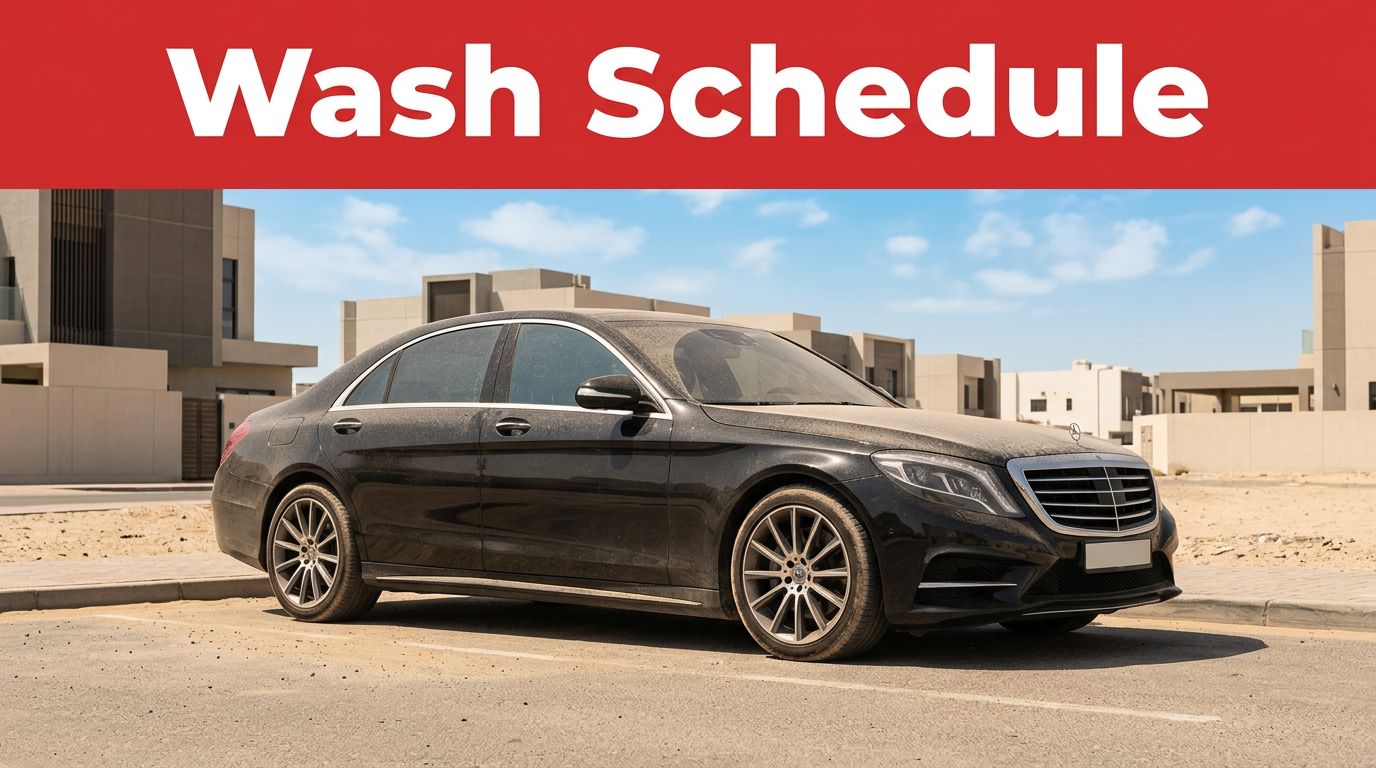
Last updated 19 August 2026 by Sammie O, owner of Bud Car Wash in Ras Al Khor Industrial Area 2, Dubai.
Dubai sandstorms leave more than an unattractive film on your vehicle. Fine grit can settle into seals, vents, door jambs, and the underbody.
A light dusty layer and heavy sand buildup need different treatment. If you need to clean car after sandstorm conditions, rushing can turn loose grit into paint scratches.
The safest routine is simple: wait until the storm passes, rinse with clean water, wash with gentle products, then inspect the areas that are easy to miss. Start only when conditions are safe.
Clean Car After Sandstorm: Start With Safety
A parked vehicle is the safest vehicle to clean. If the sandstorm is active, keep the vehicle parked. Do not drive when visibility is hazardous, even if the car needs urgent cleaning.
The UAE’s sandstorm safety guidance advises drivers to avoid exposed roads and stop in a safe place when visibility becomes extremely poor. Allow the storm to pass and let loose sand settle before you begin.
Wait for safe conditions
Keep windows, doors, and the sunroof closed during the storm. Set the air conditioner to recirculation, or close the external air inlet, so dusty air doesn’t enter the cabin or load the filter.
Never attempt to wash beside a busy road during poor visibility. Park in a sheltered location when possible, and wait until wind conditions are calm enough to handle water, towels, and cleaning products safely.
Separate light dust from heavy sand
A thin layer of settled dust usually needs a thorough rinse and a gentle hand wash. Heavy buildup on the roof, bonnet, glass, wheels, and wheel arches needs several rinse passes.
Never wipe either condition with a dry cloth. Sand grains act like small pieces of abrasive paper across the clear coat. This is the first rule to remember when you clean car after sandstorm exposure.
Rinse Sand Before Washing the Paint
The safest way to clean car after sandstorm buildup is to remove loose grit before any mitt, sponge, or towel touches the paint. Work in shade, and wash a cool vehicle because hot panels dry water and shampoo too quickly.
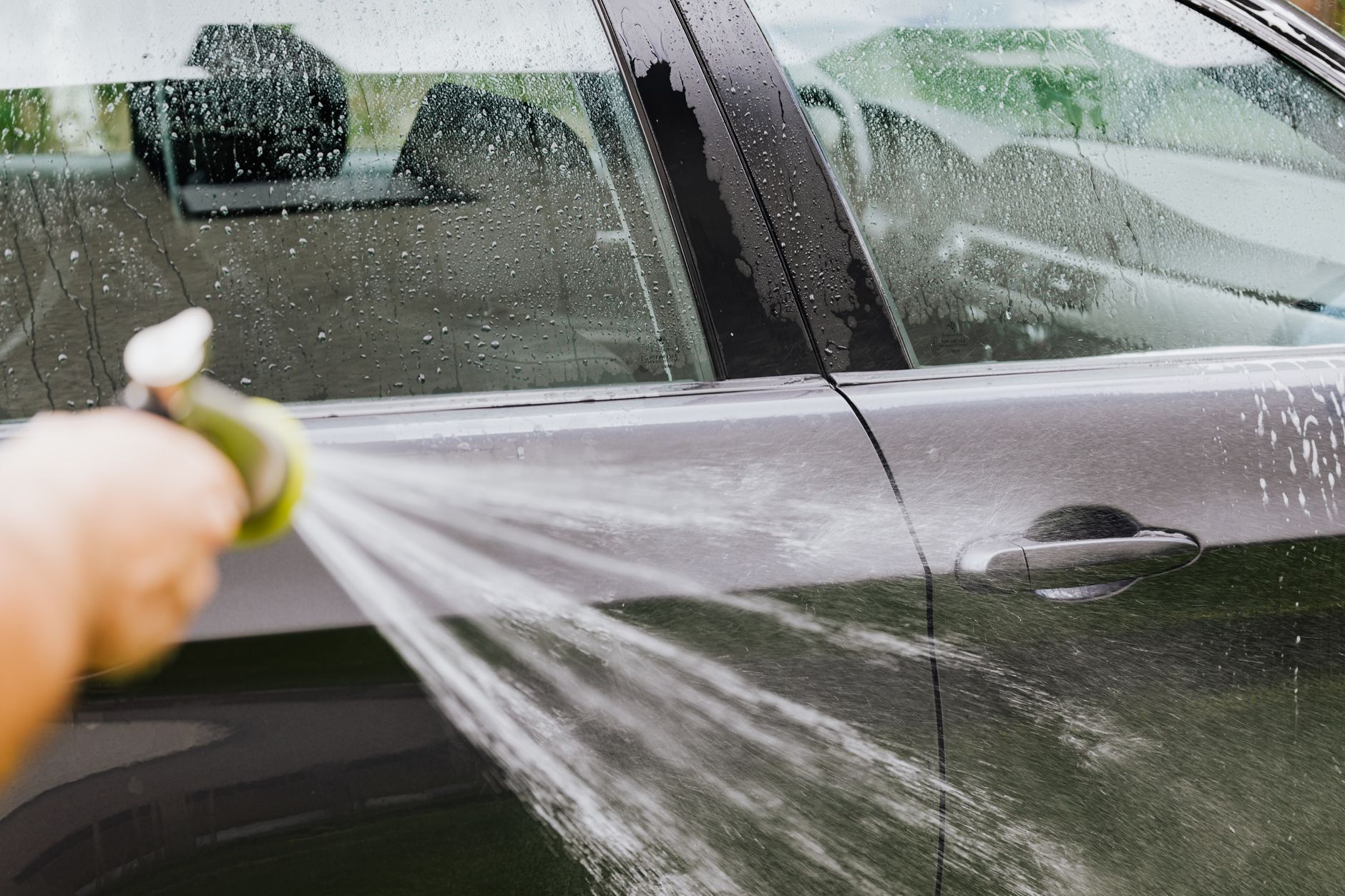
Photo by Karola G
Use clean water first
Start at the roof and rinse downward. A garden hose with a steady flow or a pressure washer on a low setting can lift sand without contact. Give extra attention to mirrors, number plates, grilles, headlights, and lower doors.
Don’t use a strong jet close to rubber seals, badges, sensors, or chipped paint. Rinse again if water still carries visible grit across the panel. The water should do the first cleaning work, not the towel.
Wash with clean tools
Use a pH-neutral car shampoo, clean water, and a clean microfiber wash mitt. A two-bucket method helps keep grit away from the mitt. Wash one panel at a time, starting at the top, and rinse the mitt often.
Avoid automatic brush washes immediately after a storm. Shared brushes can hold sand and drag it across the finish. Use a separate microfiber towel for glass, and never reuse a towel that has touched wheels or the ground.
Check Seals, Vents, and the Undercarriage
Once exterior panels are clean, inspect the places that collect sand and affect seals or airflow. These areas often hold residue after the paint looks clean.
Clean doors and seals
Open each door and wipe the jambs, sills, hinges, and rubber seals with a damp microfiber towel. Rinse it in clean water before moving to the next opening.
Check the window channels and sunroof surround. Sand left in these tracks can make seals gritty and affect smooth glass movement. Keep water away from switches, speakers, and electrical controls.
Clear vents carefully
Remove loose dust from dashboard vents and the bonnet intake with a vacuum or short bursts of compressed air directed outward. Don’t spray water, shampoo, or dressing into the vents.
If airflow is weak or the cabin smells dusty, have the cabin air filter checked. Aman Roads’ adverse-weather guidance recommends keeping windows and air vents closed during dusty conditions.
Rinse below the vehicle
Sand settles under the front bumper, side steps, wheel arches, and chassis. Rinse these areas with a gentle underbody setting where available. Never crawl beneath a car supported only by a jack.
Clean wheels and tyres with separate tools. A professional undercarriage wash is a safer choice when sand is packed into areas you can’t reach.
Dry, Protect, and Use Less Water
After washing, blot and dry the panels with clean microfiber towels. Avoid rough rags, paper towels, and circular scrubbing. A clean towel reduces the chance of moving grit across the clear coat.
When the vehicle is dry, apply a suitable wax or paint sealant if the finish needs fresh protection. Keep products off glass, rubber seals, and textured plastic unless the label allows them.
Water use matters in Dubai. A UAE water-use release estimated that a traditional car wash uses nearly 150 litres per vehicle, about twice the consumption of a self-service wash bay.
At home, use a trigger nozzle, switch off the hose between panels, and choose a bucket or controlled-rinse method where practical. Use only the water needed to remove the sand fully. A rushed rinse can waste water and leave abrasive grit behind.
For heavy buildup, a professional exterior wash is a sensible option. Bud Car Wash also provides deep interior detailing and wax-and-polish services when sand has reached the cabin or the paint needs added care.
Conclusion
A careful clean car after sandstorm routine starts with safety, not a towel. Wait for clear conditions, rinse loose sand with clean water, then wash gently with fresh microfiber tools.
Pay attention to vents, door jambs, seals, glass channels, wheels, and the undercarriage. Light dust can often be handled at home, while heavy sand buildup deserves a controlled professional wash. Protecting the finish begins with one simple choice: never drag dry sand across the paint.