Last updated 27 September 2026 by Sammie O, owner of Bud Car Wash in Ras Al Khor Industrial Area 2, Dubai.
When you wash an electric car, the paint needs the same careful cleaning as any vehicle, but the charging flap, cameras, and sensors need extra attention. A safe wash is straightforward when you follow your owner’s manual and keep high-pressure water away from sensitive areas.
The exact protections vary by make and model. Use gentle tools, check every opening before washing, and treat manufacturer instructions as the final word.
Want us to do it instead?
We do manual car wash at our Ras Al Khor bay, 24 hours a day. Fill this in and we reply with a price and a time. The message writes itself, so you only tap send.
Would rather talk? Call +971 55 168 5050. Someone answers 24 hours.
Key Takeaways
- Read your vehicle’s owner’s manual before using a pressure washer or automatic car wash.
- Stop charging and close the charging-port door before washing.
- Keep direct high-pressure spray away from ports, sensors, cameras, seals, and other openings.
- Use a soft microfiber cloth and the cleaning method specified for your vehicle’s lenses.
- Activate the vehicle’s car wash mode only if it has one, and follow its instructions.
Why an Electric Car Needs a Careful Wash
An electric car can be washed using standard exterior-care methods, but its exterior equipment needs attention. Charging ports, cameras, parking sensors, and door seals sit in areas that may collect dust and road grime. A forceful spray or abrasive tool can damage a component or push dirt against a delicate surface.
That doesn’t mean water must never touch these areas. Tesla, for example, says to rinse camera lenses with water and dry them with a microfiber cloth. The right method depends on the vehicle, so check the manual before cleaning a lens or spraying near an opening.
In Dubai, dust and road residue can build up quickly, especially after long drives. Regular washing helps keep the paint and glass clear, while careful work around sensors supports their visibility. If a warning appears after washing, stop and check the manual before assuming the sensor has failed.
Prepare the Vehicle Before Washing
A few checks before you start can prevent avoidable problems. Park on a stable surface, switch off the vehicle as instructed, and remove charging equipment.
Check the manual and close every opening
Find the exterior-cleaning section in your owner’s manual. Look for instructions about pressure washers, automatic washes, camera lenses, sensors, and charging-port care. A pressure limit in one manufacturer’s manual doesn’t automatically apply to another vehicle.
Make sure the charging cable is disconnected and the port door is fully closed. Also check that windows, doors, the boot, and any other openings are secured. If the charging flap appears damaged or won’t close properly, avoid spraying that area and arrange an inspection.
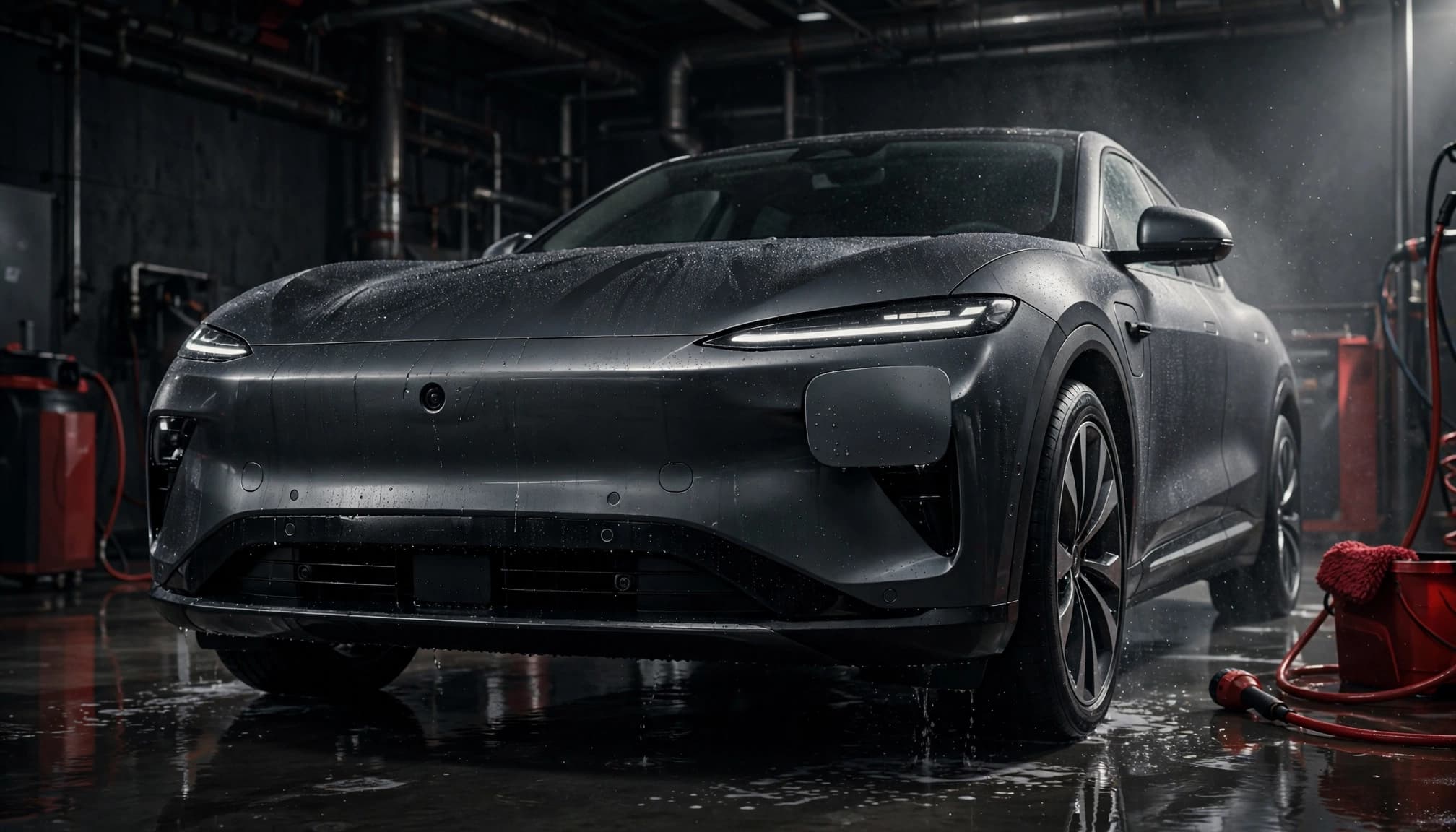
Use car wash mode when your model has it
Some electric vehicles include a dedicated car wash setting, but its functions differ by manufacturer. Tesla Model Y Car Wash Mode, for example, closes the windows, locks the charge port, and disables features such as the windshield wipers and parking sensor chimes. Tesla instructs drivers to activate it while stationary and not charging.
Follow the steps for your own model. Kia also provides a car wash mode, with manual guidance that it prevents the charging door from opening through the exterior button while the mode is on. Don’t assume one brand’s mode or procedure is available on every EV.
Wash Safely Around Charging Ports
The charging-port door should stay closed throughout the wash. The port’s protection is designed for normal use, but that isn’t a reason to aim a pressure washer at it or leave the flap open.
Keep direct spray away from the port
Use a gentle stream or a damp microfiber cloth around the closed flap. Don’t direct a pressure washer nozzle at the port, hinge, or surrounding seal. Avoid scrubbing grit into the paint, too. Rinse loose dirt away first, then clean the panel with a soft wash mitt.
Tesla’s Model Y manual warns against aiming high-velocity liquid at the charge port while the vehicle is charging. Disconnecting before washing is a simple way to avoid that situation. For model-specific instructions, see Tesla’s Model Y cleaning guidance.
Clean around the flap without forcing it open
Use a clean cloth to wipe the surrounding paint and the outer edge of the closed flap. Don’t insert cloths, brushes, or tools into the port. If grime is trapped along the seam, use a damp microfiber cloth and light pressure rather than levering the flap open.

After washing, check that the flap is dry on the outside and closes normally. If water or debris appears to have entered the port, follow the vehicle manual before reconnecting a charger.
Clean Cameras and Sensors Without Abrasion
Parking sensors and cameras help with visibility and driver assistance. Dirt can affect what a driver sees or what a system detects, so clean them gently and check the manual for the correct method.
Use a soft cloth and light pressure
Rinse loose dust from the area before wiping. Use a soft, clean microfiber cloth, and avoid abrasive sponges, stiff brushes, strong solvents, or concentrated cleaners unless the manufacturer specifically approves them. A gritty cloth can scratch a lens or mark the surface around a sensor.
Ford advises cleaning camera lenses and sensors with lukewarm or cold water and a soft cloth, and says not to pressure-wash them. Its manual gives an exterior-washing limit of 2,000 psi, but that is Ford-specific guidance, not a safe limit for every electric car.
Don’t aim a pressure washer at a sensor
Even if the rest of the vehicle allows pressure washing, keep the nozzle away from cameras, sensors, seals, and trim joints. A broad, low-pressure rinse is safer than a narrow jet. Keep a sensible distance and move the spray across the panel rather than holding it on one spot.
Follow the manual if it gives a different cleaning method. Some vehicles have several types of sensors, and not every component sits in an obvious location. If you’re unsure whether a small panel is a camera, sensor, or cover, wipe it gently rather than probing or spraying it.
Choose a Wash Method That Fits Your EV
Hand washing gives you more control around the charging flap and exterior sensors. Automatic washes can also be suitable for some vehicles, but check the manual for restrictions before entering.
Hand wash for close control
Rinse loose dirt from the body, then wash with a clean microfiber mitt and a vehicle-safe shampoo. Work in sections and rinse the mitt often so grit doesn’t drag across the paint. Use separate cloths for the paint and the wheels.
A careful hand wash is useful after a long drive, when insects or road film may collect around the front camera and grille. Avoid leaning tools against sensors or leaving wash equipment hanging near the charging flap.
Confirm automatic wash compatibility
Check whether your vehicle allows a touchless wash, a soft-cloth wash, or a conveyor system. Some vehicles need a specific setting before entering. Tesla’s Car Wash Mode includes controls for vehicle features, and the manual gives separate instructions for conveyor washes. Other manufacturers may use different procedures or may advise against certain wash types.
If an overnight charging stop is part of your route, plan where you’ll park and charge rather than washing beside a connected charger. For trip planning, you can also review Brewton hotels with EV charging.
Finish the Wash With a Simple Check
Drying and inspection help you catch anything left behind. Use a clean microfiber towel, and don’t rub hard over lenses or sensor covers.
Dry sensitive areas gently
Pat cameras and sensors dry or follow the vehicle’s recommended method. Tesla’s Model Y guidance permits rinsing camera lenses with water, followed by drying with a microfiber cloth. That instruction is model-specific, so check your own manual before using the same method.
Wipe the charging flap and nearby seals without pulling or twisting them. Remove soap residue from the surrounding paint, then confirm the flap is shut and the charging cable is stored away from the wash area.
Check the vehicle before driving
Look for water or soap left on windows, lights, cameras, and sensor covers. Start the vehicle and check for warnings if the manual recommends it. If a camera view is unclear or a sensor alert appears, clean the exterior surface gently and consult the owner’s manual if the alert remains.
Avoid testing driver-assistance features in traffic just to check whether they work. If a warning persists, book an inspection with a qualified service provider.
Frequently Asked Questions
Can I take an electric car through an automatic car wash?
Often, but the answer depends on the model and wash type. Check the owner’s manual for touchless, soft-cloth, and conveyor restrictions. Use the vehicle’s car wash mode if equipped, and follow its instructions before entering.
Should I cover the charging port while washing?
Keep the charging-port door closed and the vehicle disconnected from the charger. Don’t add a cover that could trap moisture or interfere with the flap unless the manufacturer recommends one.
Can I use a pressure washer on an electric car?
Some manuals allow pressure washing within specific limits, while others restrict it around exterior components. Keep high-pressure spray away from the charging port, sensors, cameras, and seals. Follow the limit in your own manual rather than applying another brand’s specification.
What should I do if a sensor warning appears after washing?
Check that the sensor surface is clean and dry, then review the vehicle manual. If the warning remains, contact a qualified service provider instead of repeatedly spraying or scrubbing the sensor.
Keep the Wash Gentle and Model-Specific
A clean electric car doesn’t require a complicated wash routine. Close the charging-port door, use soft materials, and keep direct high-pressure spray away from sensors, cameras, and seals.
Your owner’s manual sets the right method for your model. Follow it before choosing a wash setting or cleaning a sensitive component, and you can keep the vehicle clean without risking avoidable damage.
Get a price on manual car wash
Shop #7, 44, 22nd Street, Ras Al Khor Industrial Area 2, open 24 hours. Tell us the car and we reply with a price and a time.
Would rather talk? Call +971 55 168 5050. Someone answers 24 hours.
See us first on Google
Google lets you choose the sites you want to see more of. Add Bud Car Wash as a preferred source and our car care guides show up more often in Top Stories and in Google’s AI answers.
Opens Google in a new tab. You can remove us again at any time.

Sammie O is the owner of Bud Car Wash, a 24 hour hand car wash and detailing shop at Shop #7, 44, 22nd Street, Ras Al Khor Industrial Area 2, Dubai. He writes the car care guides on this site based on work done in his own bay.
View All Articles