

Last updated 28 September 2026 by Sammie O, owner of Bud Car Wash in Ras Al Khor Industrial Area 2, Dubai.
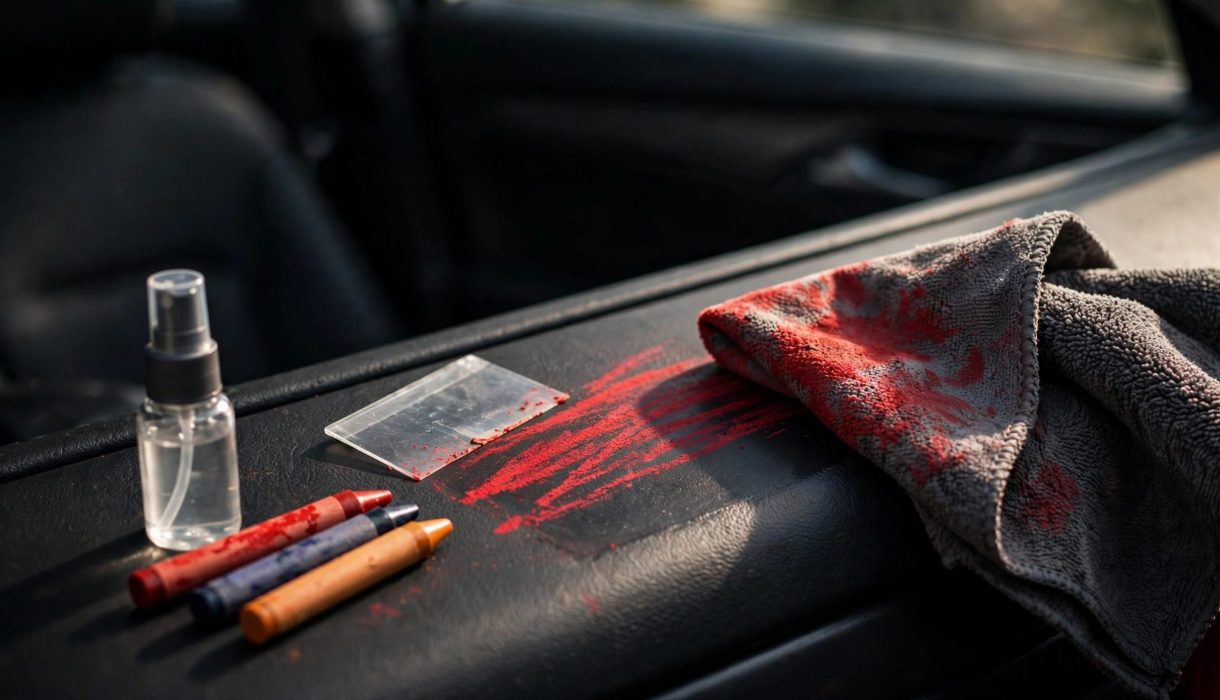
A crayon mark can leave both wax and color behind, and the safest cleaning method depends on where it landed. If you’re trying to remove crayon car interior marks, first identify whether the surface is fabric, vinyl, plastic, or leather.
Work slowly and use a cleaner approved for that material. A small test in a hidden spot can help prevent a simple cleanup from turning into faded trim or damaged upholstery.
Want us to do it instead?
We do interior detailing at our Ras Al Khor bay, 24 hours a day. Fill this in and we reply with a price and a time. The message writes itself, so you only tap send.
Would rather talk? Call +971 55 168 5050. Someone answers 24 hours.
Key Takeaways
- Check the surface and your vehicle owner’s manual before cleaning.
- Lift hardened wax gently with a plastic tool, then treat any remaining color with a surface-appropriate cleaner.
- Use a small amount of cleaner and moisture. Blot fabric and leather, and wipe vinyl or plastic without scrubbing.
- Test the cleaner in an inconspicuous area first.
- Keep liquids and cleaning products away from screens, switches, airbag covers, and seat airbag seams.
Identify the Marked Surface First
Interior materials can look similar but react differently to cleaners. Check your owner’s manual if you aren’t sure what the seat or trim is made from.
Fabric upholstery
Cloth seats and carpet can absorb colored residue. Scrubbing may push wax and pigment deeper into the fibers, so plan to lift the solid material first and blot the remaining mark.
Vinyl and plastic trim
These nonporous surfaces are easier to wipe, but textured grain can hold small wax deposits. Strong cleaners can also discolor or dull some plastic finishes. Tesla’s cleaning guidance for interior materials cautions that some cleaners can damage or discolor plastic trim.
Leather and coated upholstery
Leather needs a gentle, material-specific cleaner. Avoid treating it like fabric, and don’t use a solvent to loosen wax. Coated surfaces can lose their finish if rubbed hard or cleaned with an unsuitable product.
Prepare the Area Before You Clean
A few simple steps help control the wax and protect the surrounding cabin.
Gather basic supplies
Use a clean microfiber cloth, a soft plastic scraper or trim tool, and a cleaner labeled for the affected material. For cloth seats, use an upholstery cleaner. For leather, use a leather cleaner and follow its directions. Bissell’s car-interior cleaning guide also advises following the cleaner manufacturer’s instructions and using microfiber.
Avoid metal blades, stiff brushes, scouring pads, and paper towels that may shed or scratch. Don’t start with a household degreaser, nail polish remover, or another strong solvent.
Protect nearby components
Park in shade and let a hot cabin cool before cleaning. Heat can soften crayon and make it easier to spread. Place a dry cloth around the mark to catch loosened wax, and keep cleaner off nearby switches, screens, speakers, and seat seams.
Test any cleaner on a hidden area first. Apply it to the cloth rather than spraying broadly onto a seat or dashboard.
Remove Crayon From Fabric Upholstery
Fabric needs a controlled approach because moisture and rubbing can carry color into the weave.
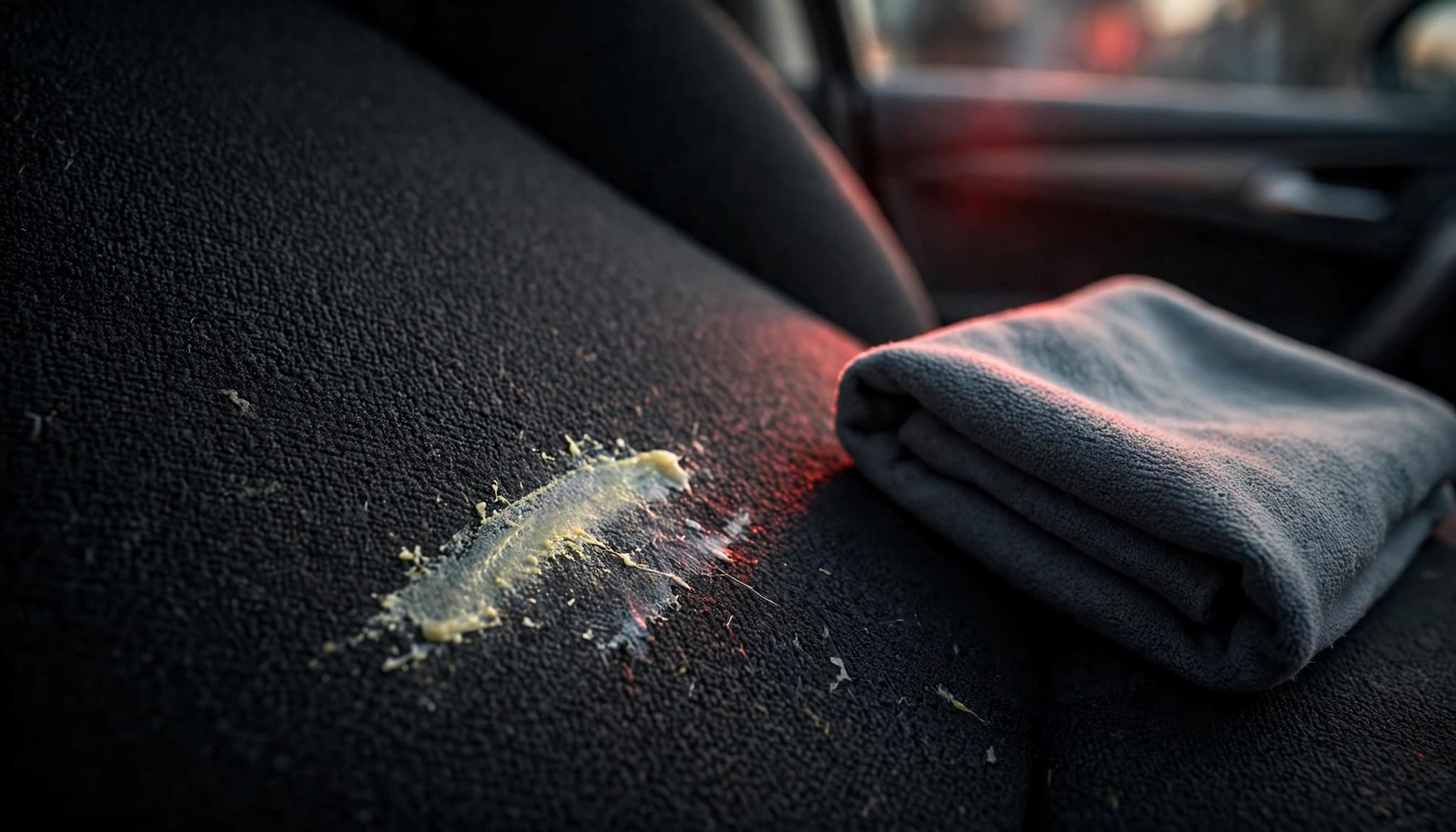
Lift the wax without grinding it in
If the mark is soft, let the area cool. You can hold a sealed, cool pack against it briefly, with a dry cloth between the pack and upholstery. Don’t apply ice directly or leave moisture on the fabric.
When the wax is firm, lift it carefully with a plastic scraper. Work from the outside toward the center, keeping the tool nearly flat. Pick up loose flakes with a vacuum attachment rather than brushing them across the seat.
Blot the remaining color
Apply a small amount of fabric-safe upholstery cleaner to a microfiber cloth. Blot the mark gently, using a clean part of the cloth as color transfers. Avoid soaking the fabric, and follow the cleaner’s label for contact time and removal.
If the cloth starts picking up seat dye, stop. Let the area dry fully before checking the result. Repeat only if the fabric remains unchanged and the product directions allow it.
Clean Crayon From Vinyl and Plastic
Wipeable surfaces usually need less cleaner than fabric. The goal is to lift the wax while preserving the surface texture and finish.
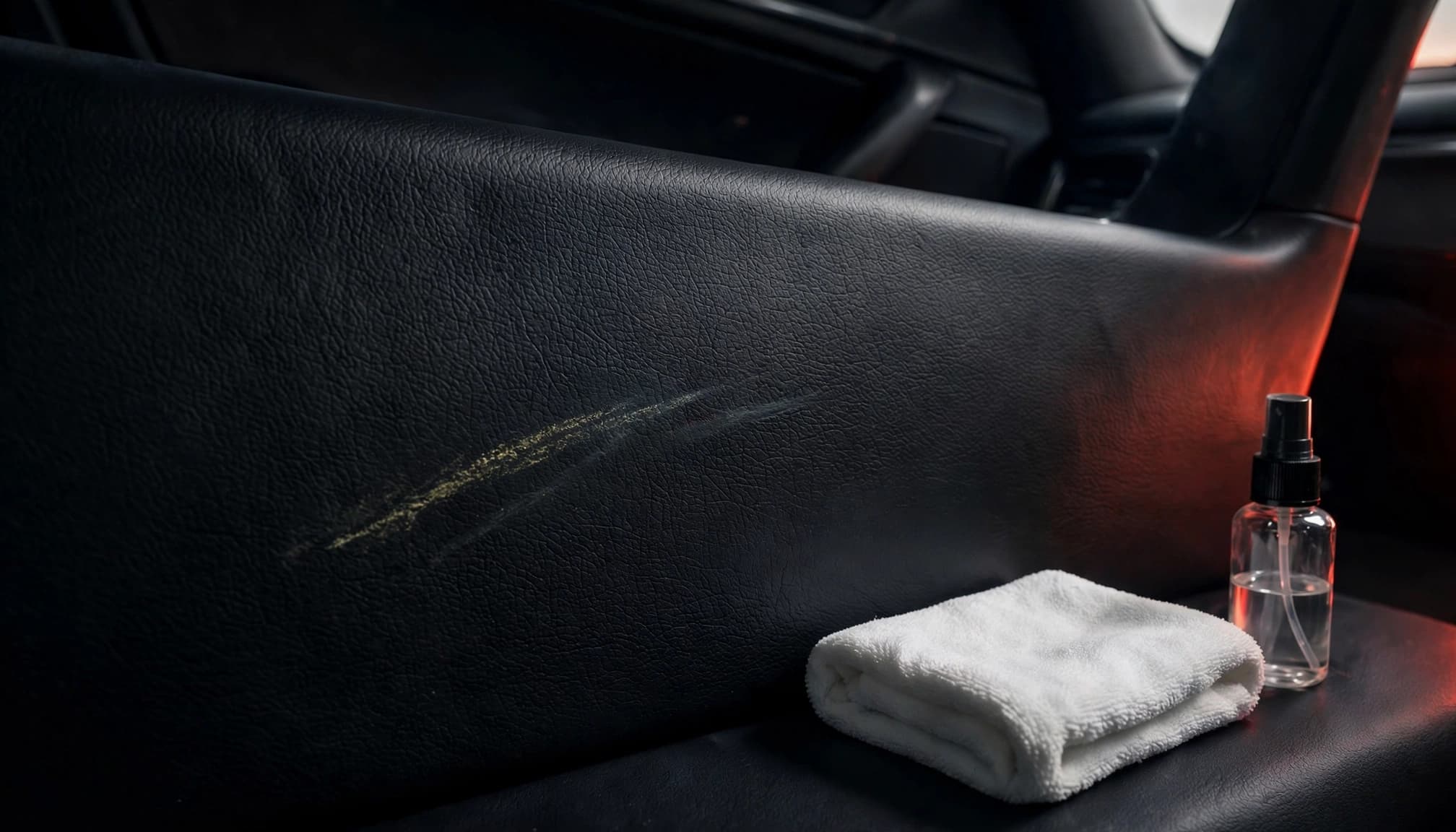
Lift residue from the surface
Once the area is cool, use a plastic trim tool to lift any raised wax. Keep the edge gentle and avoid scraping repeatedly in one spot. For grooves in textured trim, use a soft brush with light pressure to loosen residue, then wipe it away.
Wipe with a damp cloth
Use a clean microfiber cloth with a small amount of mild, surface-safe cleaner. A little soapy water can work on vinyl, but use as little water as possible. Armor All’s vinyl and interior cleaning advice gives the same practical caution for soap and water on vinyl.
Wipe the spot, then follow with a separate cloth lightly dampened with clean water if needed. Dry the area promptly. Avoid spraying cleaner directly onto dashboard panels or near display edges.
Treat Leather With Extra Care
Leather marks are best handled with patience and a cleaner made for leather. The surface may have a protective coating that can be damaged by aggressive rubbing.
Remove only the raised wax
Let the wax cool and harden. Lift raised material gently with a soft plastic tool, without pressing into the leather grain. Don’t use a knife, a rough scraper, or direct heat. Heat can soften the wax and may affect the leather finish.
Clean and dry the spot
Apply leather cleaner to a microfiber cloth, not directly to the seat. Follow the product instructions and blot or wipe lightly. Use a clean, dry cloth to remove leftover cleaner, then allow the leather to air-dry.
Test first in a concealed area, especially on light-colored or worn leather. If the mark remains or the finish changes, stop and ask a professional detailer to assess it. Toyota’s car-interior cleaning advice recommends choosing products suited to the material being cleaned.
Handle Wax Residue Without Damaging the Finish
After lifting the solid crayon, check the area under good light. A greasy-looking patch can be remaining wax, while a colored shadow may be pigment. Treat either with a cleaner suitable for the surface rather than escalating to a stronger solvent.
Use a fresh cloth and work in small passes. On fabric, blot instead of rubbing. On vinyl or plastic, wipe gently and dry the spot. On leather, stick to leather cleaner and its label directions. If residue is lodged in a seam or deep texture, avoid flooding the area; excess moisture can reach foam, wiring, or adhesive beneath the surface.
Do not use a hot iron, hair dryer, or heat gun to melt wax from a car seat. Heat can spread the mark and may affect the upholstery or nearby trim. A slow, cool removal gives you more control.
Avoid Common Cleaning Mistakes
Crayon is a small stain, but the wrong tool can leave a larger repair problem. Avoid abrasive pads, stiff brushes, metal blades, and repeated hard scraping. They can scratch plastic, flatten fabric, or mark leather.
Keep solvent cleaners and strong detergents away from seats with side airbags. Ford’s interior-cleaning warning cautions that these products can contaminate seat-mounted airbags. Never wet an airbag cover or spray near a seat seam that may contain an airbag.
Stop if color transfers from the upholstery, a finish turns cloudy, or the mark grows as you clean. Check the vehicle manual for approved care instructions, or use a professional detailer for delicate or persistent stains.
Frequently Asked Questions
Can I use dish soap on a crayon mark?
A small amount of mild soap diluted in water may be suitable for some vinyl, but it isn’t a universal interior cleaner. Check the manual and test the solution in a hidden area. For fabric or leather, use a cleaner intended for that material.
Should I use rubbing alcohol or nail polish remover?
No. These products can damage or discolor interior surfaces. Avoid solvents, especially around seats with airbags, and choose a cleaner labeled for the affected material.
What if the wax is gone but the color remains?
The remaining shadow may be pigment. Use a suitable fabric or surface cleaner and blot gently, following its label. If the mark persists after a cautious attempt, stop rather than scrubbing harder.
When should I contact a detailer?
Get professional help if the mark is deep in upholstery, sits on delicate leather, reaches a seam, or remains after gentle cleaning. A detailer can assess the material and use appropriate tools without unnecessary abrasion or moisture.
Keep the Interior Clean and Protected
The safest way to remove crayon from a car interior is to work by material, lift the wax gently, and treat remaining color with a compatible cleaner. Test first, use minimal moisture, and keep products away from electronics and airbag areas.
A calm, careful cleanup protects the finish as well as the cabin’s appearance. If the surface begins to change or the stain won’t lift, stop and get professional care.
Get a price on interior detailing
Shop #7, 44, 22nd Street, Ras Al Khor Industrial Area 2, open 24 hours. Tell us the car and we reply with a price and a time.
Would rather talk? Call +971 55 168 5050. Someone answers 24 hours.
See us first on Google
Google lets you choose the sites you want to see more of. Add Bud Car Wash as a preferred source and our car care guides show up more often in Top Stories and in Google’s AI answers.
Opens Google in a new tab. You can remove us again at any time.

Sammie O is the owner of Bud Car Wash, a 24 hour hand car wash and detailing shop at Shop #7, 44, 22nd Street, Ras Al Khor Industrial Area 2, Dubai. He writes the car care guides on this site based on work done in his own bay.
View All Articles
