Last updated 8 July 2026 by Sammie O, owner of Bud Car Wash in Ras Al Khor Industrial Area 2, Dubai.
Coffee on a car seat looks harmless for a minute. Then it spreads, dries, and leaves a brown ring that seems to hang on for days. The good news is that most stains come out cleanly when you move fast and use the right method for the seat material.
The wrong move is usually the easy one, rubbing harder or soaking the seat. If you want to remove coffee stains from car seats without damaging fabric, leather, or vinyl, the steps below keep the process safe and practical.
Want us to do it instead?
We do interior detailing at our Ras Al Khor bay, 24 hours a day. Fill this in and we reply with a price and a time. The message writes itself, so you only tap send.
Would rather talk? Call +971 55 168 5050. Someone answers 24 hours.
Key Takeaways
- Blot first, always. Rubbing pushes coffee deeper into the seat and makes the mark bigger.
- Match the cleaner to the material. Fabric, leather, and vinyl each need a different approach.
- Use as little liquid as possible. Too much moisture leaves rings, smell, and long dry times.
- Set-in stains need a second pass. Older coffee marks usually need a cleaner made for upholstery.
- Odor matters too. A stain can fade while the smell stays behind.
Act Fast Before the Coffee Sets
Fresh coffee is easier to clean because it has not had time to sink in. The first few minutes matter most, so stay calm and work in small steps.
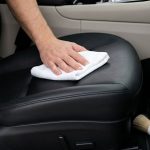
- Blot the spill right away. Use a clean microfiber cloth, paper towel, or absorbent towel. Press gently and lift the liquid out.
- Work from the outside in. This keeps the stain from spreading into a larger ring.
- Use cool water for a light rinse. Dampen the cloth, do not pour water on the seat.
- Test any cleaner first. Pick a hidden spot and check for color change or spotting.
- Dry the area with airflow. Open the windows, turn on the fan, or park in shade with the doors open.
Rubbing is the fastest way to make a small spill turn into a larger stain.
If the coffee had milk, cream, or sugar, act even faster. Those ingredients leave residue, and they can hold onto odor after the stain fades.
Clean Fabric Car Seats Without Spreading the Stain
Fabric seats need a gentle cleaner and a light hand. They absorb liquid fast, so the goal is to lift the coffee without soaking the cushion underneath.

Start with a simple mix of cool water and a few drops of mild dish soap. Put the solution on the cloth, not directly on the seat. Dab the stain, wait a moment, then blot again with a dry cloth. Repeat with fresh cloths until the mark starts to fade.
For coffee that has set into the fibers, a small amount of diluted white vinegar can help on fabric, but only after a spot test. Keep the mix light. A damp seat is fine. A soaked seat is not. Too much liquid pushes the stain deeper and creates a drying problem.
A soft upholstery brush can help on fabric if the stain is stubborn. Use short, gentle strokes. Then blot again with a clean towel. Once the stain is gone, let the seat dry fully before using the car.
Baking soda is better for odor than for the stain itself, so save it for the last step if the seat still smells like coffee.
Leather and Vinyl Need a Gentler Touch
Leather and vinyl are easier to wipe clean, but they are less forgiving when harsh cleaners are used. Strong vinegar mixes, baking soda, and abrasive pads can leave damage or dull spots.
| Seat material | Safe cleaner | Best method | Avoid |
|---|---|---|---|
| Fabric | Cool water, mild dish soap, or an upholstery cleaner | Blot, apply lightly, air-dry | Soaking, hard scrubbing |
| Leather | Leather cleaner and a soft microfiber cloth | Wipe gently, dry right away, condition after | Vinegar, baking soda, harsh detergents |
| Vinyl | Mild soap and water | Wipe clean, rinse with a damp cloth, then dry | Abrasive pads, solvent sprays |
The takeaway is simple. Fabric can handle a little more cleaning effort, but leather and vinyl need a softer approach.
For leather, use a cleaner made for automotive leather, then wipe with a barely damp cloth. Dry it right away with another soft towel. Once the seat is fully dry, apply leather conditioner if the product label recommends it. That helps keep the surface from drying out.
Vinyl is usually the easiest surface to clean. Mild soap and water are often enough. Wipe the seat, follow with a clean damp cloth, and dry it well. Do not use rough pads. They can leave visible marks that are harder to hide than the coffee stain itself.
Set-In Coffee Stains Need a Different Pass
Old stains need more patience. By the time coffee dries, it can bind to the surface and leave a shadow even after the first wipe.
Start by lightly dampening the area with cool water. This helps loosen the dried residue. Then apply the right cleaner for the seat material and blot again. If the stain is still there, repeat the process with fresh cloths. A second or third light pass is usually better than one heavy soak.
For fabric, an automotive upholstery cleaner often works better than household soap on a set-in stain. It is made to break down residue without leaving too much moisture behind. A soft brush can help lift the coffee from the fibers, but keep the pressure light.
If the stain has a dark edge, stop and let the seat dry before trying again. It is easy to think more cleaner will fix it faster. Often, it just makes the spot bigger.
Remove the Odor Before It Sticks
A clean-looking seat can still smell like coffee. That is common when the spill included milk, cream, or sugar. The odor usually stays in the fibers after the visible stain is gone.
For fabric seats, sprinkle a light layer of baking soda over the dry area and leave it for a few hours. Vacuum it up once the seat is completely dry. This helps pull out the smell without adding more moisture.
For leather and vinyl, skip the baking soda on the surface. Use air circulation, a clean dry towel, and a leather-safe or interior-safe cleaner if the smell remains. Leave the windows open when possible. Fresh air does more than most people expect.
If the odor comes back after the car warms up, the spill may still be trapped in the padding. That usually means the seat needs a deeper clean.
When an Upholstery Cleaner Is the Better Choice
Household solutions work well for small, fresh spills. They are not always the best answer for older stains or deep odor.
Use a dedicated upholstery cleaner when:
- the stain is older and has already dried
- the spill included milk, cream, or syrup
- the coffee spot keeps returning after drying
- the fabric seat still smells after a full cleaning
- you need a cleaner finish fast for a family car or rideshare vehicle
A good automotive upholstery cleaner gives you a stronger result without the guesswork. It also lowers the chance of over-wetting the seat. For leather, stick with a leather-specific cleaner instead of an all-purpose interior spray.
A Clean Finish
Coffee stains are easier to handle when you move fast, blot first, and choose the right cleaner for the seat material. That simple order matters more than scrubbing harder or using more liquid.
If the spill is fresh, a careful first pass may be all you need. If it has set in, take your time, keep the seat lightly damp, and let the cleaner do the work. A clean seat starts with a calm response and a gentle touch.
FAQ
Can coffee stains become permanent?
Yes, they can if they sit too long or if the seat is soaked and scrubbed the wrong way. Fresh stains usually lift much more easily. Older stains may leave a shadow, especially on light-colored fabric.
Is vinegar safe for car seats?
Diluted vinegar can be safe on fabric if you spot test it first. Do not use it on leather, and avoid heavy use on vinyl. A light touch is the safer choice.
Is baking soda safe for car seats?
Baking soda is safe on dry fabric seats when used for odor control. It should be vacuumed off after it sits. Skip it on leather and vinyl, since it can leave residue.
How long do car seats take to dry?
Dry time depends on how much cleaner you used and how much the seat absorbed. Light cleaning can dry in a few hours. A deeper cleaning can take longer, especially in humid weather.
Get a price on interior detailing
Shop #7, 44, 22nd Street, Ras Al Khor Industrial Area 2, open 24 hours. Tell us the car and we reply with a price and a time.
Would rather talk? Call +971 55 168 5050. Someone answers 24 hours.
See us first on Google
Google lets you choose the sites you want to see more of. Add Bud Car Wash as a preferred source and our car care guides show up more often in Top Stories and in Google’s AI answers.
Opens Google in a new tab. You can remove us again at any time.

Sammie O is the owner of Bud Car Wash, a 24 hour hand car wash and detailing shop at Shop #7, 44, 22nd Street, Ras Al Khor Industrial Area 2, Dubai. He writes the car care guides on this site based on work done in his own bay.
View All Articles