
Last updated 28 July 2026 by Sammie O, owner of Bud Car Wash in Ras Al Khor Industrial Area 2, Dubai.
A clean car shouldn’t come at the cost of polluted runoff, wasted water, or damaged paint. The products, tools, location, and washing method you choose all affect your vehicle and the environmental impact of your maintenance routine.
An eco-friendly car wash at home is practical when you control the water, keep harsh chemicals away from drains, and use products made for automotive finishes. Improving your home car washing habits helps protect your car’s paint, trim, wheels, and interior without overstating what biodegradable products can do. These 14 practices ensure you achieve a professional shine while remaining responsible.
Want us to do it instead?
We do manual car wash at our Ras Al Khor bay, 24 hours a day. Fill this in and we reply with a price and a time. The message writes itself, so you only tap send.
Would rather talk? Call +971 55 168 5050. Someone answers 24 hours.
Key Takeaways
- Wash your vehicle away from storm drains and local waterways to prevent runoff pollution.
- Use a trigger nozzle, two buckets, grit guards, and high-quality microfiber tools to ensure a safe wash.
- Select pH-neutral cleaning products specifically formulated for vehicles rather than harsh household dish soaps.
- Treat the term biodegradable as a product claim, not as an open invitation to release cleaning chemicals into the environment.
- Minimize the frequency of full washes by keeping up with regular maintenance and paint protection to repel stubborn road grime.
Start With the Right Wash Setup
1. Choose a Safe Washing Location
The best place for a home car wash is a designated wash area with controlled drainage. If that isn’t available, choose a hard surface away from storm drains, streams, and ponds. Check your local requirements before washing on a driveway or near a public road.
Dirty wash water can carry brake dust, tire residue, oil, and detergent into storm drains. Most storm drains send water directly toward local waterways instead of a treatment plant. Washing over permeable ground may help water soak into the soil, but it does not make chemical runoff harmless. Use that option only when local guidance permits it and you are certain the runoff will not reach a drain.
A suitable location also protects the vehicle. Mud and grit won’t splash back onto freshly cleaned panels, and you can work around the car without standing in pooled water.
2. Remove Loose Dirt Before You Touch the Paint
A dry towel can drag sand across clear coat like fine sandpaper. Start with a gentle rinse that removes loose dust, road film, and grit before applying shampoo.
Use a spray nozzle with a wide fan rather than a concentrated jet. Keep the nozzle a safe distance from the paint, badges, weather seals, and loose trim. High pressure can force water behind emblems, lift damaged clear coat, or push dirt into door seals.
A careful pre-rinse reduces the amount of rubbing needed later. That protects the paint surface and helps your wash water stay cleaner because less loose debris is being moved around by hand.
3. Control Water With a Trigger Nozzle
A hose left running between panels creates unnecessary water waste. Fit the hose with a trigger nozzle that shuts off when you release it. Use short bursts for rinsing instead of a continuous stream to practice effective water conservation.
Water control matters most during the final rinse. Work from the roof downward, then close the nozzle while you move around the vehicle. A gentle flow also reduces splashing onto windows, walls, garden beds, and nearby soil.
The EPA WaterSense water-saving tips provide useful guidance for reducing household water use. The same habit applies here: use water where it performs a clear cleaning job, not as background noise.
4. Wash in the Shade and on a Cool Surface
Direct sun can dry shampoo before you rinse it. Dried soap leaves spots and may require extra rubbing, which increases the chance of swirl marks. Hot panels can also make some cleaners evaporate unevenly.
Wash during a cooler part of the day or park the vehicle in shade. Test the surface with the back of your hand. If the panel feels hot, wait before applying product.
A cool, shaded car needs less water for correction rinses. It also gives you more control over the cleaner, protecting paint, plastic trim, rubber seals, and glass from dried residue.
Use Less Water Without Rubbing Dirt In
5. Use the Two-Bucket Method
Keep one bucket for clean shampoo solution and another for rinsing your wash mitt. Dip the mitt into the rinse bucket after cleaning a panel, then load it with fresh solution before continuing.
This separates much of the loosened dirt from the shampoo water. A grit guard at the bottom of each bucket adds another layer of protection by keeping debris below the mitt.
Work from the cleanest areas to the dirtiest. Start with the roof, glass, and upper panels. Finish with the lower doors, bumpers, and rear section. This prevents heavy road grime from spreading across cleaner paint.
For those looking to minimize their environmental footprint even further, consider the rinseless car wash method. Products like Optimum No Rinse utilize advanced encapsulating lubricants to lift dirt away safely, offering a more efficient alternative to a traditional bucket wash that requires significantly less water.
6. Choose a pH-Balanced Car Shampoo
A pH-balanced automotive shampoo removes road film while preserving wax, sealant, and paint-safe coatings. When selecting your supplies, look for a biodegradable car soap that effectively cleans without harming the environment. Follow the dilution instructions on the label, as using a concentrated formula does not necessarily lead to better cleaning results.
Avoid household dish soap for regular car washing. It can strip protective layers and leave rubber trim dry over time. Strong degreasers also need careful use because they may dull unprotected plastic or affect sensitive finishes.
Look for the EPA Safer Choice label when comparing household and cleaning products. A labeled product has passed ingredient and performance reviews, but the label does not remove the need for proper dilution or disposal.
7. Understand What “Biodegradable” Really Means
Biodegradable means a substance can break down through natural processes under suitable conditions. It does not mean the product is harmless to fish, soil, plants, or groundwater immediately after use.
A biodegradable wheel cleaner, shampoo, or degreaser can still carry oil, metal particles, and surfactants into a drain. Concentrated products can also cause problems when poured onto soil or into a gutter. Read the label and safety data sheet, then follow local disposal instructions.
Choose a product with clear ingredients, sensible dilution directions, and automotive compatibility. Use only the amount required. Responsible handling matters as much as the word printed on the bottle.

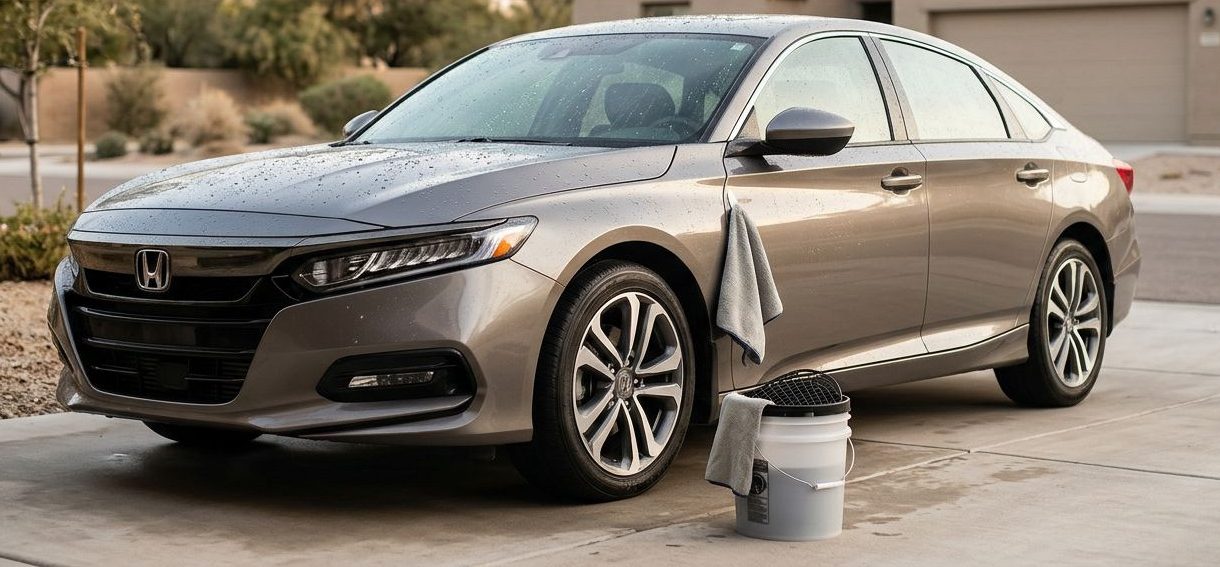
Photo by www.kaboompics.com
Protect Paint, Wheels, and Trim
8. Use Separate Tools for Wheels
Wheels collect brake dust, road salt, tar, and heavy road grime. Don’t use the same mitt or brush on your paint after cleaning them. Keep wheel brushes, buckets, and microfiber tools separate.
Clean wheels before washing the body if they are heavily soiled. Rinse them first, apply a wheel-safe cleaner, agitate gently, and rinse thoroughly. Always check whether the product is safe for clear-coated, painted, polished, or chrome wheels.
Separate tools protect the paint from sharp metallic particles. They also reduce cross-contamination, which means you need less aggressive cleaner on both the wheels and body.
9. Use Gentle Brushes on Tires and Wheel Crevices
A soft wheel brush reaches behind spokes without scratching delicate finishes. A separate stiff-but-safe tire brush can remove browning and old dressing from rubber sidewalls.
Avoid household brushes with exposed metal or rough edges. Test any new tool in a small hidden area first. Keep the brush wet and rinse it often so trapped grit doesn’t mark the wheel.
After cleaning, apply a water-based tire dressing if you use one. Avoid products that leave a heavy, oily surface, especially near brake components. A clean, natural-looking finish is easier to maintain and less likely to attract dust.
10. Wash the Car From Top to Bottom
The roof, windows, hood, and upper doors usually carry less heavy dirt than the lower panels. Cleaning them first keeps your wash mitt cleaner and reduces repeated rinsing.
Use straight, light passes instead of circular scrubbing. Rinse each section before the shampoo dries. Pay attention to door handles, badges, fuel doors, and panel gaps, where grime collects.
This top-down method protects clear coat by limiting abrasive particles. It also reduces product use because the same mitt and solution can cover more of the cleaner upper body before you reach the dirtiest areas.
11. Dry With Clean Microfiber Towels
Allowing water to air-dry can leave mineral spots, especially in hot or hard-water areas. Use clean, plush microfiber towels or a filtered air blower to remove water from the paint, mirrors, grilles, and trim.
Don’t reuse a towel that touched the wheels or ground. Fold the microfiber towels into sections and turn to a clean side as it becomes damp or dirty. Press lightly rather than dragging it across a dusty panel, as proper technique is vital for paint protection.
Wash your drying cloths separately with a mild detergent. Skip fabric softener because it can reduce absorbency and leave residue. Proper towel care extends its life, reduces waste, and helps prevent fine scratches.
Finish With Cleaner Interior Care and Safer Disposal
12. Clean the Interior With Low-Moisture Methods
Interior cleaning does not need a bucket of water. You can utilize a waterless car wash spray designed for interior surfaces, which often features non-toxic ingredients, for light dusting or quick touch-ups. Vacuum loose dust first, then use a lightly damp microfiber cloth and a small amount of interior-safe cleaner. Apply the product directly to the cloth rather than spraying it onto screens, switches, vents, or instrument panels.
Use a cleaner specifically designed for the material. Plastic, vinyl, leather, fabric, and alcantara-style surfaces require different care. Excess water can stain upholstery, weaken adhesives, or create moisture around delicate electronics. Reusable cloths and a measured amount of cleaner reduce packaging, water use, and chemical residue while providing better control over the finish.
13. Apply Simple Paint Protection
Applying a high-quality sealant or wax helps water and dirt slide off the surface during later washes. For long-term paint protection, consider applying a ceramic coating or a user-friendly ceramic spray. These advanced formulas provide durable ceramic protection that keeps your vehicle looking new. Apply these products only after the vehicle is clean and dry, following the manufacturer instructions.
While protection does not make maintenance entirely effortless, it reduces how strongly road film sticks, which shortens future wash times and limits the need for heavy scrubbing. Ensure the product you choose is suitable for your specific finish, whether you have a standard clear coat, vinyl wrap, matte finish, or a ceramic coating. Avoid applying tire dressing or solvent-based products to brake rotors, pedals, steering wheels, or windshield glass to ensure driving safety.
14. Dispose of Wash Water and Containers Responsibly
Never pour leftover concentrated cleaner into a storm drain, street gutter, garden bed, or near local waterways. Keep products in their original containers, ensure the caps are tight, and follow local guidelines for household hazardous waste. When dealing with dirty wash water, it is best to use a gray water safe approach by utilizing a designated drain that connects to an approved wastewater treatment facility.
If you visit a commercial car wash, you may find that they utilize a water reclamation system to filter and reuse water, effectively minimizing the impact on the environment. However, always ask the provider what systems are in place rather than assuming every facility operates the same way. The EPA guidance for mobile washing operations explains why these wash water controls are vital. Empty containers should be handled according to the label and local recycling rules, as a product cannot be called environmentally responsible if its final disposal is ignored.
Frequently Asked Questions
Can I wash my car on the grass to be eco-friendly?
While washing on grass might seem like a natural filter, it is generally discouraged because the soil cannot adequately process the oils, heavy metals, and chemical surfactants found in automotive runoff. These contaminants can damage your lawn, harm groundwater, and eventually reach local ecosystems. It is always safer to use a designated wash area that directs water to a sanitary sewer system.
Is dish soap safe for washing my vehicle?
Household dish soaps are formulated to cut through heavy grease, which is too harsh for automotive clear coats. Regular use can strip away your car’s wax or sealant and eventually dry out rubber trim and plastic components. Stick to pH-neutral car shampoos that are specifically engineered to clean paint while maintaining its protective layers.
How often should I wash my vehicle to minimize environmental impact?
There is no set schedule, but keeping up with routine maintenance and applying paint protection, such as wax or a ceramic spray, helps repel grime and reduces the frequency of deep washes. When your car is dirty, spot-cleaning or using a waterless wash product can often remove light dust without needing a full bucket-and-hose setup. Washing only when necessary is the most effective way to conserve water and reduce runoff.
Conclusion
An eco-friendly car wash starts with simple choices: controlled water, clean tools, gentle products, and responsible wastewater handling. These habits protect your clear coat, trim, wheels, upholstery, and local waterways at the same time.
The strongest approach involves more than just selecting a product labeled green. By choosing high-quality, sustainable detailing products and washing in the right location, you ensure that every cleaning chemical is handled responsibly. Ultimately, your vehicle stays cleaner for longer, and your routine leaves a much lighter environmental mark behind.
Get a price on manual car wash
Shop #7, 44, 22nd Street, Ras Al Khor Industrial Area 2, open 24 hours. Tell us the car and we reply with a price and a time.
Would rather talk? Call +971 55 168 5050. Someone answers 24 hours.
See us first on Google
Google lets you choose the sites you want to see more of. Add Bud Car Wash as a preferred source and our car care guides show up more often in Top Stories and in Google’s AI answers.
Opens Google in a new tab. You can remove us again at any time.

Sammie O is the owner of Bud Car Wash, a 24 hour hand car wash and detailing shop at Shop #7, 44, 22nd Street, Ras Al Khor Industrial Area 2, Dubai. He writes the car care guides on this site based on work done in his own bay.
View All Articles