
Last updated 3 August 2026 by Sammie O, owner of Bud Car Wash in Ras Al Khor Industrial Area 2, Dubai.
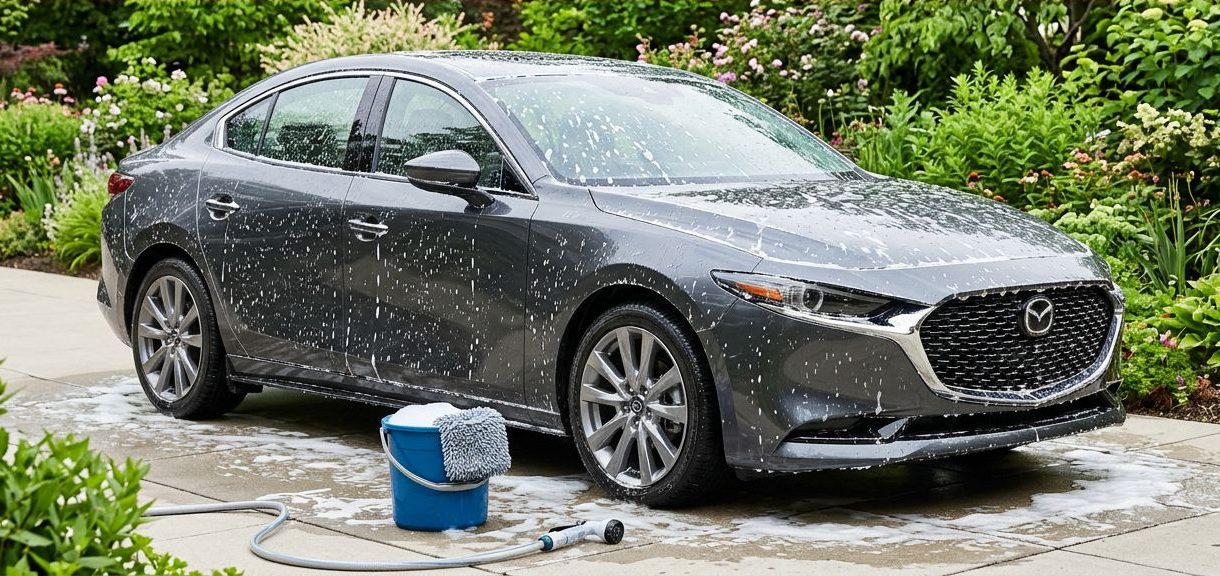
A clean car should not come at the cost of unnecessary chemical runoff. The right eco friendly car shampoo can remove dust, road film, and everyday grime while supporting a more responsible washing routine.
Many products use terms such as biodegradable, non-toxic, and plant-based. These descriptions can be useful, but they don’t tell the full story. Product ingredients, dilution, wastewater handling, and water use all affect the overall impact of a car wash.
Choosing the right formula is the first step. Your washing method matters just as much.
Want us to do it instead?
We do manual car wash at our Ras Al Khor bay, 24 hours a day. Fill this in and we reply with a price and a time. The message writes itself, so you only tap send.
Would rather talk? Call +971 55 168 5050. Someone answers 24 hours.
What Makes a Car Shampoo More Eco-Friendly?
Eco-friendly car shampoo is designed to clean the vehicle with ingredients that may have a lower environmental impact than some conventional formulas. Still, there is no single formula that makes every product equally responsible.
The word “biodegradable” means ingredients can break down under certain conditions. Those conditions may include temperature, microorganisms, oxygen, and time. The speed and completeness of that breakdown can vary between products.
Biodegradable doesn’t mean the shampoo is harmless when poured onto soil, plants, or a road drain. Concentrated wash water can still contain soap, dirt, oil, brake dust, and other residue collected from the vehicle.
The phrase “non-toxic” also needs careful attention. It doesn’t provide a complete picture of how a product affects aquatic life, soil, surfaces, or people when used incorrectly. Read the ingredient information and safety instructions instead of relying only on front-label claims.
Look for a product with:
- A clear ingredient list and dilution instructions.
- A phosphate-free formula where possible.
- No chlorine or petroleum-based cleaning ingredients.
- A pH range suitable for automotive paint, plastic, rubber, and protective coatings.
- Packaging that can be recycled or purchased in a refill size.
- Directions that explain safe storage, handling, and disposal.
King County’s car wash guidance recommends choosing soap that is biodegradable and free of phosphates, fragrance, chlorine, and petroleum-based ingredients. These recommendations are useful when comparing labels, but local requirements can differ.
Biodegradable describes how an ingredient breaks down. It does not give permission to discharge wash water anywhere.
A formula that uses less product per wash may also reduce packaging and chemical use. That only applies when you follow the recommended dilution. Adding extra shampoo usually creates more foam, not a cleaner finish.
How to Choose Eco Friendly Car Shampoo for Your Vehicle
The best eco friendly car shampoo must match both the vehicle and the way you wash it. A product made for exterior paint may not be suitable for leather, fabric, screens, or delicate interior surfaces.
Start by checking the label for surface compatibility. The instructions should tell you whether the product is suitable for clear coat, ceramic coatings, vinyl, plastic trim, and polished metal. If the information is unclear, choose a product with more complete directions.
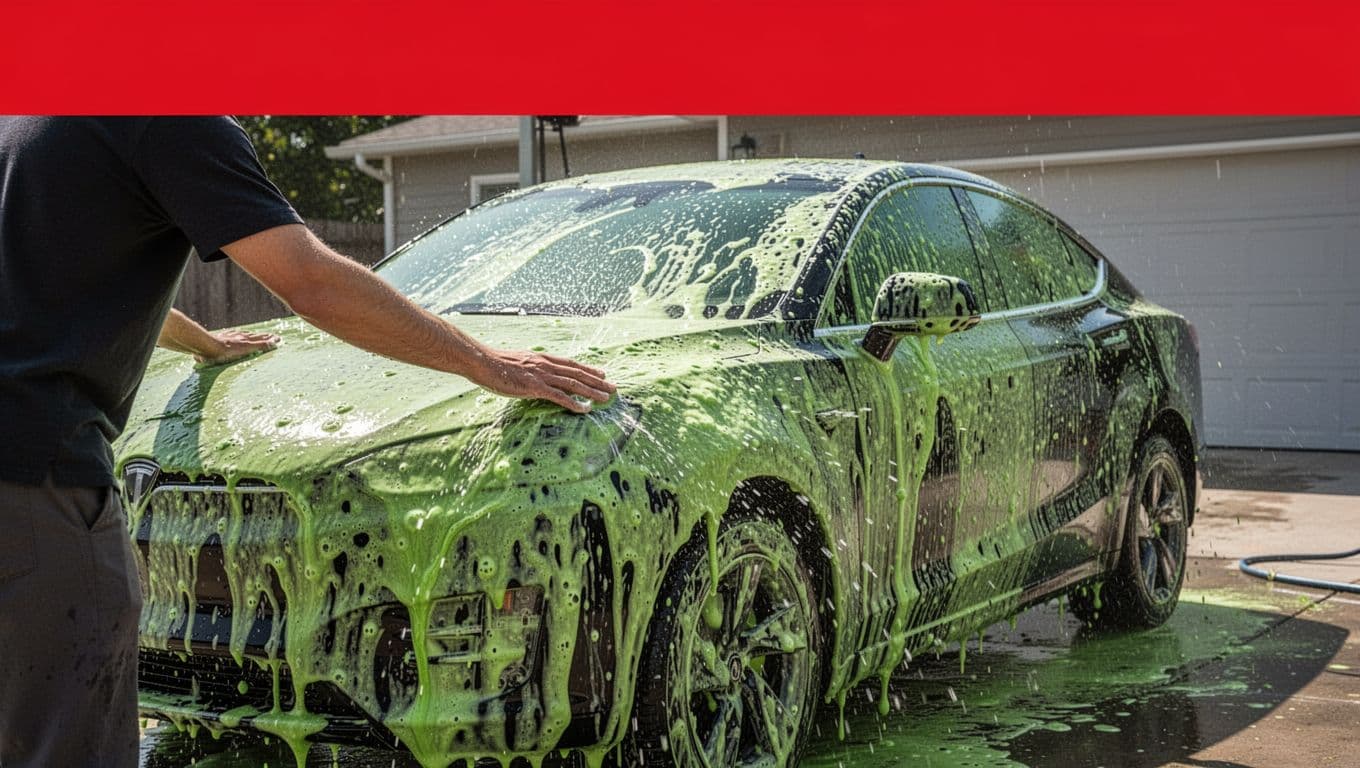
Foam level is not a reliable measure of cleaning quality. A thick layer of suds may look impressive, but it doesn’t prove that the shampoo has better ingredients or a lower environmental impact. Rinseability, lubrication, and surface safety are more useful features.
A good shampoo should help the wash mitt move across the paint without dragging loose grit over the surface. It should rinse away without leaving a heavy film. If your water leaves mineral spots, a product that rinses cleanly can make drying easier.
Avoid using household dish soap as a regular car shampoo. It may remove protective products and can leave the finish feeling dry. A dedicated vehicle formula is made for automotive surfaces and gives you clearer instructions for dilution and use.
Compare products by cost per wash, not only by bottle price. A concentrated 500-milliliter bottle may provide more washes than a larger ready-to-use container. Check the exact water-to-product ratio before comparing value.
If you plan to wash at home, choose a formula that suits your available water and wastewater setup. Rinseless and waterless products can be useful for lightly dusty vehicles, but they must be used only on suitable surfaces and according to the label. Heavy sand or thick mud needs more care to reduce the chance of scratches.
Is Biodegradable Car Shampoo Enough?
A biodegradable formula is a better starting point than a product with unclear environmental information. It isn’t the complete solution.
Every wash creates wastewater. The water picks up road grime, oil residue, tire particles, brake dust, and dirt from the car’s lower panels and wheels. Even a mild shampoo becomes part of that dirty mixture after use.
The location of the wash is important. Water flowing into a storm drain may receive different treatment than water sent into a sanitary wastewater system. In many areas, storm drains lead directly to waterways or drainage channels.
Treehugger’s eco-friendly car wash guidance also recommends avoiding certain harsh ingredients and keeping dirty wash water away from storm drains. The same principle applies even when your shampoo carries a biodegradable label.
Before washing at home, check local wastewater and water-use regulations. Property rules may also apply in apartment buildings, shared parking areas, and managed communities. In Dubai, confirm that your chosen washing location allows the activity and has suitable drainage.
Never assume that a public drain is an approved place for used wash water. If you cannot confirm the correct disposal method, a professional wash bay is the safer choice.
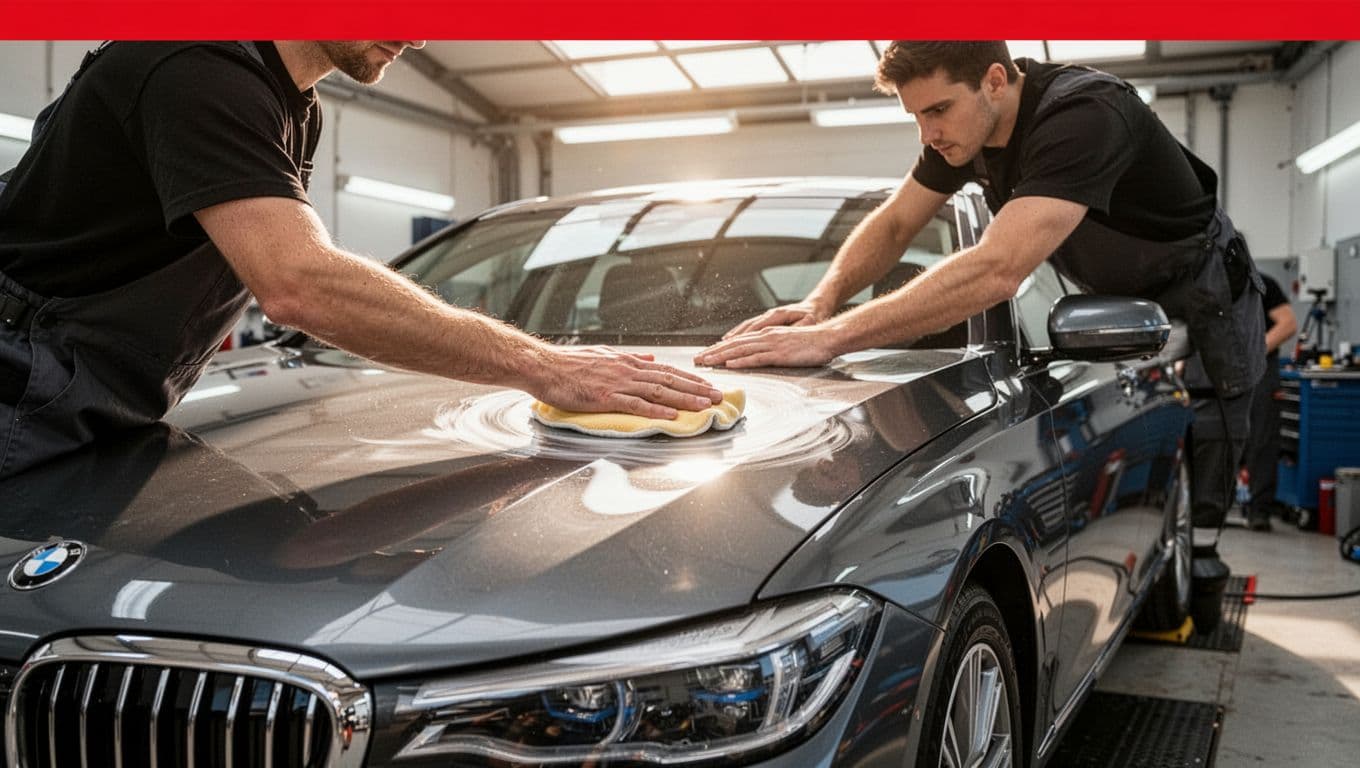
A professional car wash should also be able to answer basic questions about its products and wastewater process. Ask which shampoo is used, whether it is diluted according to the manufacturer’s instructions, and how runoff is handled.
How to Wash a Car With Less Waste
An eco friendly car shampoo works best when it is part of a careful, measured process. You don’t need complicated equipment, but you do need to control the water, product, and contact with the paint.
- Read the product instructions first. Measure the recommended amount instead of pouring shampoo by eye. The correct dilution gives the formula enough cleaning power without creating unnecessary waste.
- Choose a suitable washing area. Work in the shade when possible, and avoid locations where dirty water can flow into storm drains, public roads, or planted areas. Follow local water-use and wastewater requirements.
- Remove loose dirt before contact washing. A controlled pre-rinse helps loosen dust and sand. Use a shut-off nozzle so water isn’t running while you move around the vehicle.
- Wash from the top down. Use a clean microfiber mitt for painted panels and a separate mitt or brush for wheels and lower trim. Rinse the mitt often so grit doesn’t move back onto clean paint.
- Use the measured shampoo solution once. Don’t keep adding product when the water looks less foamy. Foam fades during use, but the solution may still be cleaning effectively.
- Rinse thoroughly and dry promptly. Remove soap from trim, glass, panel gaps, and emblems. A clean microfiber towel reduces water marks and helps you spot any remaining residue.
Heavy mud, sand, or oily deposits need a different approach. Scrubbing those areas before loosening the dirt can create fine scratches. Give the surface more water or use professional equipment that can remove the contamination with less direct pressure.
A waterless or rinseless wash isn’t suitable for every condition. Avoid it when the vehicle has thick grime or loose abrasive material. Using less water is helpful only when the method still protects the finish.
When Professional Car Washing Is the Better Choice
Home washing gives you control over the shampoo and process, but it isn’t always the lower-impact option. A small parking area may have no approved way to manage wastewater. Shared properties may also restrict outdoor washing.
Professional equipment can help remove dirt with measured chemical use and controlled water flow. A proper wash bay may also provide a more suitable drainage arrangement than a driveway. Ask the business how it manages used water rather than assuming every commercial wash follows the same process.
A professional service is especially useful when the car has heavy dust, sand, stains, wheel contamination, or neglected paint. Exterior washing can be combined with interior detailing and wax-and-polish work, helping maintain a cleaner, better-protected vehicle without repeated home washing.
For Dubai vehicle owners, Bud Car Wash provides exterior car washing, deep interior detailing, and wax-and-polish services. Customers can ask the team which products are used and how the service supports responsible water and chemical handling.
Turtle Wax Pro’s overview of eco-friendly car wash chemicals explains why environmentally focused products often use biodegradable ingredients. Product claims still need to be checked individually, especially when a vehicle has a ceramic coating, vinyl wrap, or sensitive trim.
A dependable provider should give clear answers about:
- The shampoo’s surface compatibility and dilution.
- The treatment of wash water and runoff.
- The amount of water used for the service.
- The extra care provided for wheels, trim, coatings, and delicate finishes.
A professional wash isn’t automatically eco-friendly. Good products, careful methods, and responsible wastewater handling must work together.
Conclusion
The right eco friendly car shampoo can deliver a clean, glossy finish without relying on vague green claims. Check the ingredients, follow the dilution instructions, and treat biodegradable and non-toxic labels as starting points rather than complete guarantees.
Your washing location matters as much as your shampoo. Keep dirty water away from storm drains, follow local wastewater and water-use rules, and choose a professional service when home drainage is uncertain. A responsible wash protects the vehicle, the finish, and the surroundings.
Get a price on manual car wash
Shop #7, 44, 22nd Street, Ras Al Khor Industrial Area 2, open 24 hours. Tell us the car and we reply with a price and a time.
Would rather talk? Call +971 55 168 5050. Someone answers 24 hours.
See us first on Google
Google lets you choose the sites you want to see more of. Add Bud Car Wash as a preferred source and our car care guides show up more often in Top Stories and in Google’s AI answers.
Opens Google in a new tab. You can remove us again at any time.

Sammie O is the owner of Bud Car Wash, a 24 hour hand car wash and detailing shop at Shop #7, 44, 22nd Street, Ras Al Khor Industrial Area 2, Dubai. He writes the car care guides on this site based on work done in his own bay.
View All Articles