

Last updated 4 August 2026 by Sammie O, owner of Bud Car Wash in Ras Al Khor Industrial Area 2, Dubai.
A steam car wash can lift road film, oily marks, and everyday grime with far less water than a hose-based wash. It can also refresh door panels, seats, floor mats, and other areas where excess moisture causes slow drying.
The process isn’t a universal replacement for washing or detailing. A careful operator uses controlled heat, low pressure, clean microfiber towels, and the right technique for each surface. If you’re considering a steam car wash service, knowing its strengths and limits will help you choose wisely.
Want us to do it instead?
We do manual car wash at our Ras Al Khor bay, 24 hours a day. Fill this in and we reply with a price and a time. The message writes itself, so you only tap send.
Would rather talk? Call +971 55 168 5050. Someone answers 24 hours.
What Is a Steam Car Wash and How Does It Work?
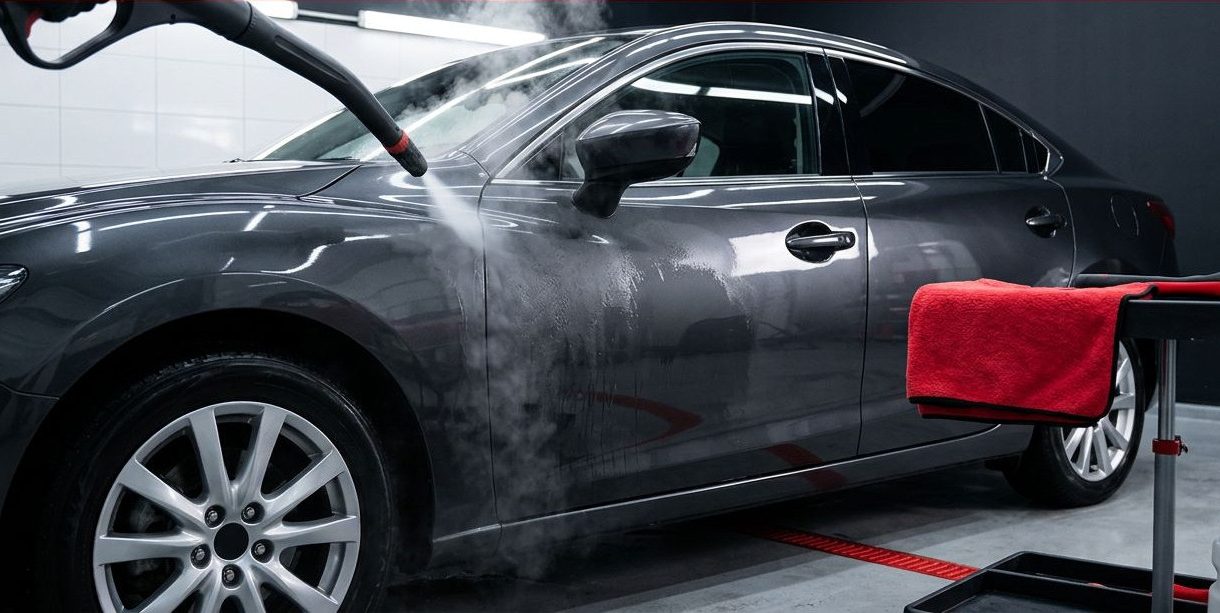
A steam car wash uses a machine that heats a small amount of water and releases it as hot, low-moisture vapor. The heat softens grease and loosens dirt. A microfiber towel then lifts the residue from the panel.
This method uses much less water than a conventional hose wash, although steam cleaning isn’t completely water-free. A technician still needs fresh towels, suitable products, and careful handling. Dirty towels can move grit across the paint and create fine marks.
Steam works well on light to moderate surface contamination. It can remove fingerprints, traffic film, oily door jambs, dashboard buildup, cupholder residue, and dirt around badges or trim.
It is less suitable for thick mud, loose sand, caked salt, or heavy underbody grime. Those contaminants need more physical removal and often a controlled rinse. Trying to wipe them away with steam alone can increase the risk of scratching.
The machine’s temperature and pressure also matter. A technician should work in short passes, keep the nozzle moving, and wipe loosened soil immediately. This creates a clean finish without soaking the vehicle.
Is a Steam Car Wash Safe for Paint?
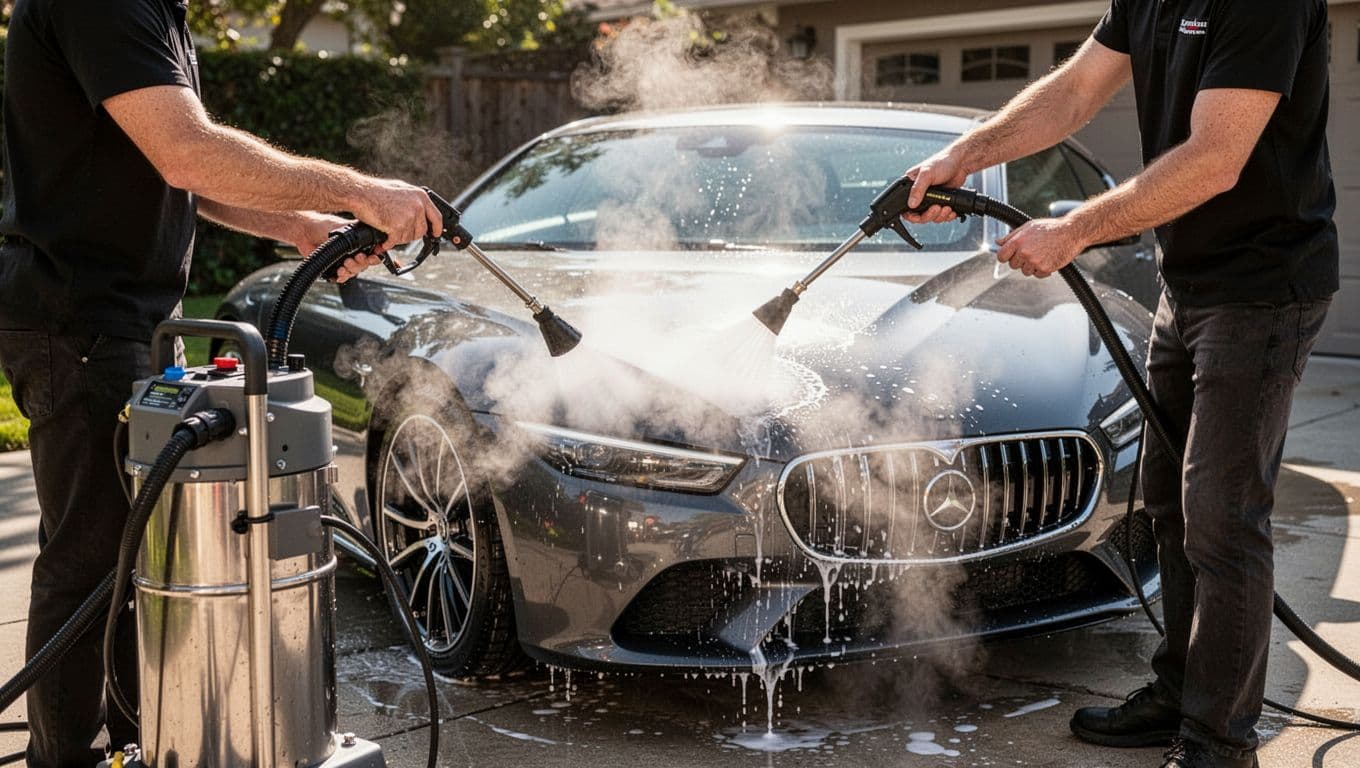
On healthy automotive paint, steam can be safe when applied correctly. The vapor loosens surface contaminants, but it doesn’t polish scratches or repair faded clear coat.
The main risk comes from poor technique. Wiping dry grit across a panel can create fine marks, regardless of the wash method. Excessive heat may also affect damaged clear coat, loose decals, vinyl wraps, paint protection film edges, and recently repaired areas.
Before cleaning begins, the vehicle should be cool and out of direct heat where possible. The technician should check for paint chips, peeling lacquer, exposed touch-up paint, and loose trim. Steam should keep moving, while the towel work should use clean, plush microfiber cloths.
The biggest paint risk is usually not the steam. It is wiping loosened grit with a dirty towel.
Exterior areas that need extra care
Door handles, window seals, badges, cameras, parking sensors, and grille openings need a controlled approach. Steam forced into a gap can carry moisture behind trim or into a component.
Wax or a paint sealant can help the clean surface shed dirt, but steam doesn’t replace these protection services. It also doesn’t replace machine polishing when the paint has oxidation, swirl marks, or scratches.
Wheels and tires
Steam can loosen brake dust and oily buildup on wheels, tires, and wheel arches. It can be useful around spokes and lug nuts, but heavy brake dust may need a wheel-safe cleaner and gentle agitation.
Avoid concentrated heat on tire valve stems, wheel weights, hot brake components, delicate finishes, and exposed seals. Wheels should be cool before cleaning. A professional can identify whether the finish is painted, polished, or clear-coated.
Steam Cleaning Car Interiors Without Excess Moisture
The interior is where a low-moisture steam car wash can offer a clear advantage. Steam loosens oily marks on plastic, rubber, vinyl, and textured panels without leaving seats and carpets saturated.
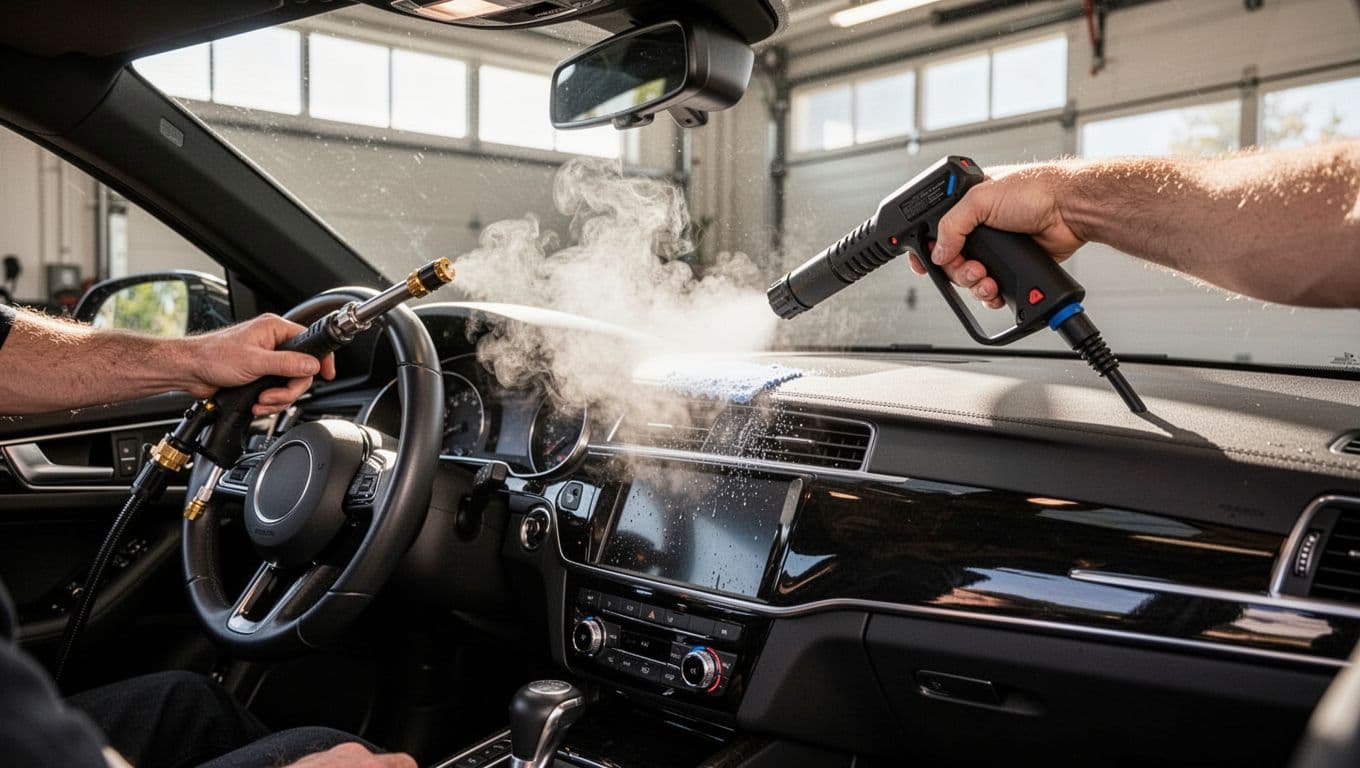
For fabric seats and carpets, the nozzle should be used with short passes. A towel or extraction method should capture the loosened soil. Steam alone doesn’t pull all embedded dirt from a cushion. Drink, food, and oil stains may need fabric cleaner and hot-water extraction.
Leather needs a lighter touch. Excessive heat can dry the surface, weaken coatings, or affect seams and adhesives. Steam may suit selected hard-wearing areas, but automotive leather should be cleaned with a suitable upholstery product and conditioned when required.
Headliners are especially sensitive. Direct steam can loosen the adhesive holding the fabric to the roof panel. Use only a light application, or leave this area to a professional detailer.
The same caution applies to screens and controls. Never direct steam into an infotainment screen, instrument cluster, air vents, speaker grilles, USB ports, window switches, steering-wheel controls, or dashboard seams.
For sensitive touchpoints, apply moisture to a towel rather than the component. Dry the area with a separate cloth after cleaning.
Steam can refresh an interior, but it can’t fix a broken seal, soaked carpet padding, or persistent mold. A musty smell may come from the cabin filter, air-conditioning system, or damp insulation. These issues need diagnosis instead of repeated surface cleaning.
Can You Steam Clean the Engine Bay?
Engine-bay steam cleaning is possible, but it isn’t a routine task for every car owner. Modern engine compartments contain sensors, wiring connectors, control modules, fuse boxes, alternators, and exposed belts.
Water or vapor in the wrong place can create starting problems or electrical faults. The engine must be cool before cleaning, and sensitive components need protection.
A professional detailer can use controlled low-moisture steam, suitable degreasers, brushes, and compressed air where appropriate. The nozzle should never be held against connectors, seals, bearings, or electrical housings.
Avoid DIY engine steaming if you don’t know where the fuse box, air intake, alternator, or electronic control units are located. For older vehicles, modified cars, and cars with visible wiring, professional service is the safer choice.
Steam Car Wash vs. Traditional Washing
The right method depends on how dirty the vehicle is and what finish it has. This comparison gives a quick guide.
| Method | Best suited to | Main limitation |
|---|---|---|
| Steam cleaning | Light to moderate dirt, interiors, spot cleaning, and water-conscious maintenance | Limited for heavy mud, sand, and underbody grime |
| Traditional hand wash | Full exterior cleaning, loose road dirt, and regular maintenance | Uses more water and needs careful drying |
| Pressure washing | Wheel arches, tires, underbody areas, and heavy loose contamination | High pressure can damage seals, trim, chips, and delicate surfaces |
A steam car wash is a strong choice when the vehicle needs a controlled exterior refresh, interior touch-up, or detailed work around trim. Traditional hand washing is often better after off-road driving, a sandstorm, or long exposure to thick mud.
Pressure washing should be handled carefully around sensors, window seals, paint chips, cameras, and loose trim. High pressure can force water into areas that low-moisture cleaning would leave undisturbed.
The best result may combine methods. A detailer can remove loose grit safely, use steam on suitable surfaces, clean wheels with dedicated products, and apply wax or sealant afterward. No single method is correct for every vehicle.
When Professional Detailing Is the Better Choice
Professional detailing is preferable when the car has sensitive materials, serious contamination, or visible paint damage. It is also practical when you want the whole vehicle cleaned consistently.
A trained technician can assess the paint, wheel finish, upholstery, trim, and electronic areas before choosing a method. They can separate cleaning from protection. Exterior washing removes contamination, while polishing, waxing, and paint sealants address finish and protection.
Be careful with low-priced services that promise a complete steam clean without asking about the vehicle’s condition. Ask what happens to heavy grit, how towels are managed, whether the interior is dried, and which areas are excluded.
For vehicle owners in Dubai, a professional business such as Bud Car Wash can be useful when exterior washing, deep interior detailing, or wax-and-polish work needs to be handled together. The service should match the car’s condition, rather than forcing every surface through the same process.
How to Choose a Safe Steam Wash Service
Before booking, ask a few direct questions:
- Will the vehicle be inspected before steam is applied?
- How does the team handle sand, mud, and loose grit?
- Are separate microfiber towels used for paint, wheels, and the interior?
- Will steam be kept away from screens, sensors, vents, and electrical connectors?
- Is drying included for carpets, seats, floor mats, and door pockets?
- Does the quoted price include wax, polish, stain extraction, or other add-ons?
The price of a steam car wash varies with vehicle size, interior condition, exterior contamination, and the level of detailing requested. A basic exterior service costs less than a full interior treatment with stain extraction and paint protection.
Request an itemized quote so you know whether the service is a wash, a detail, or a package with additional products. Choose a provider that treats paint, leather, plastic, glass, rubber, wheels, and electronics as different surfaces.
Conclusion
A steam car wash is a practical water-saving option for light to moderate dirt, interior touchpoints, and careful detailing around trim. It isn’t the best answer for thick mud, heavy sand, underbody buildup, damaged paint, or every engine bay.
Safe results depend on moving heat, clean towels, controlled pressure, and surface-specific care. When the car needs more than a surface refresh, professional detailing provides a better assessment and a cleaner, more protected finish.
Get a price on manual car wash
Shop #7, 44, 22nd Street, Ras Al Khor Industrial Area 2, open 24 hours. Tell us the car and we reply with a price and a time.
Would rather talk? Call +971 55 168 5050. Someone answers 24 hours.
See us first on Google
Google lets you choose the sites you want to see more of. Add Bud Car Wash as a preferred source and our car care guides show up more often in Top Stories and in Google’s AI answers.
Opens Google in a new tab. You can remove us again at any time.

Sammie O is the owner of Bud Car Wash, a 24 hour hand car wash and detailing shop at Shop #7, 44, 22nd Street, Ras Al Khor Industrial Area 2, Dubai. He writes the car care guides on this site based on work done in his own bay.
View All Articles
