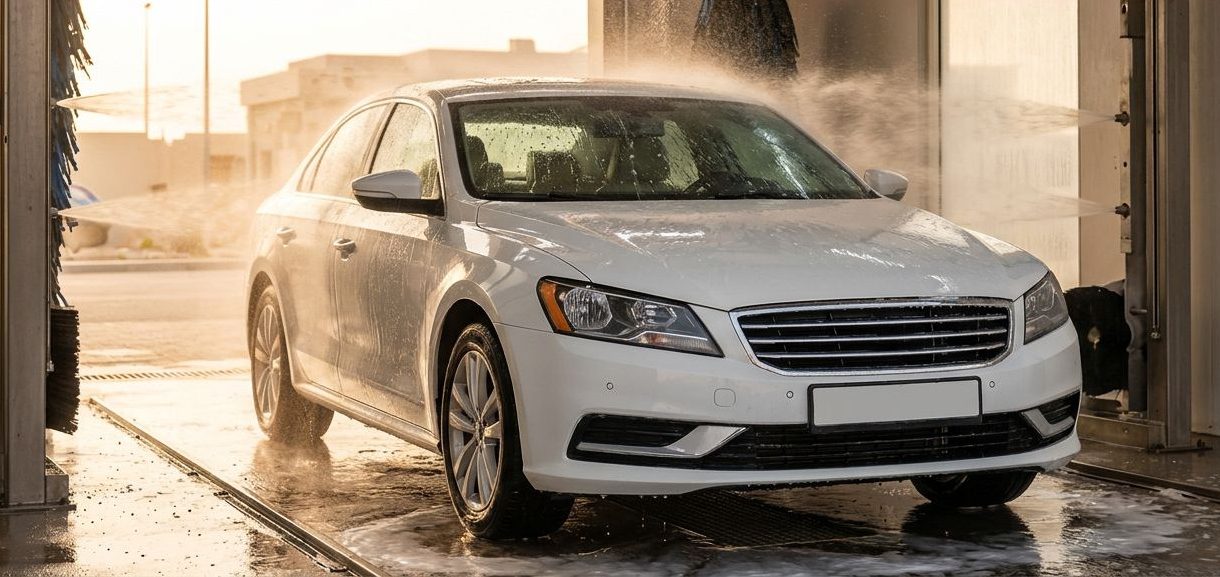

Dubai’s dust, sand, and heat can change a clean car’s appearance within days. An automatic car wash gives you a practical way to remove road film, loose dirt, and surface dust without spending an hour washing at home.
The right service isn’t only about speed. Wash type, equipment condition, drying method, and package extras all affect the final result. Once you understand the options, you can choose a reliable clean for daily use and reserve detailing for deeper care.
Understanding Automatic Car Wash Options
An automatic wash uses mechanical equipment, water, cleaning solutions, and drying systems to clean the vehicle’s exterior. You usually drive into an in-bay system, where the equipment moves around the stationary car, or onto a conveyor, where the vehicle passes through a sequence of cleaning stations.
The process often starts with a pre-rinse to loosen dust and sand. Soap is then applied, followed by brushes, cloth materials, or high-pressure water, depending on the wash type. The car receives a final rinse before air dryers remove most of the remaining water.
Some packages add wheel cleaning, an underbody rinse, spray wax, or a protective sealant. These extras can improve the finish, but they don’t replace proper interior cleaning or paint correction.
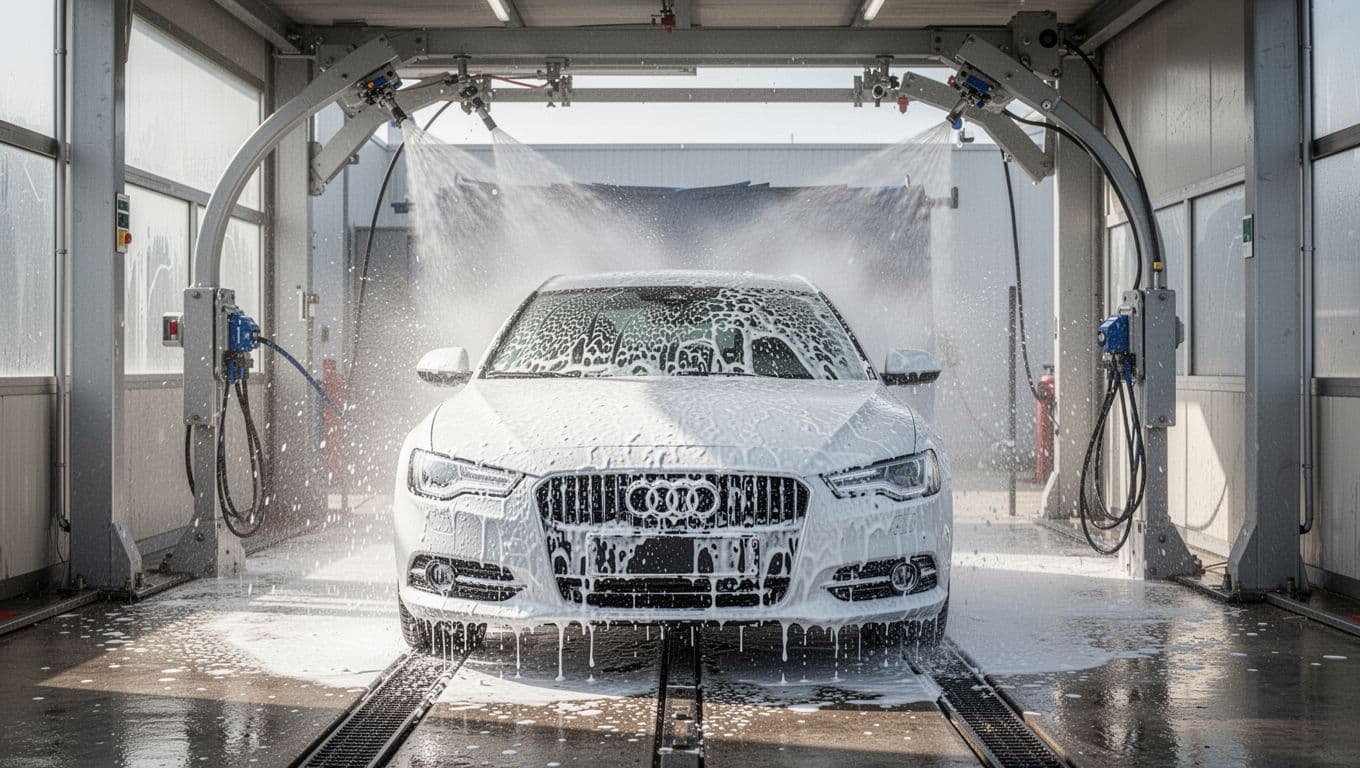
The condition of the equipment matters as much as the wash design. Clean brushes, well-maintained dryers, fresh water, and correctly mixed cleaning products support a better result.
How to Choose an Automatic Car Wash
Your choice should match the vehicle’s finish, the type of dirt on the car, and the level of cleaning you expect. A quick exterior wash is suitable for routine maintenance, while a more complete package is better when the vehicle has heavy road film or has gone several weeks without cleaning.
Soft-touch and touch-free systems
Soft-touch washes use cloth strips or foam materials that make contact with the vehicle. This contact helps remove stubborn dirt that water and detergent may leave behind. The quality of the materials and the maintenance of the system are important because trapped grit can affect the paint.
Touch-free systems use high-pressure water and cleaning chemicals without cloth or brush contact. They reduce physical contact with the paint, which can be helpful for vehicles with delicate finishes, wraps, or certain coatings. Heavy dirt may need extra pre-treatment because there is no material scrubbing the surface.
A detailed comparison of soft-touch and touch-free carwashing explains the main difference between contact cleaning and high-pressure cleaning.
| Wash type | Main cleaning method | Suitable for | Main point to check |
|---|---|---|---|
| Soft-touch | Cloth or foam contact | Routine dirt and road film | Brush and material maintenance |
| Touch-free | Water pressure and detergents | Delicate finishes and light dirt | Strength of pre-rinse and chemicals |
| Tunnel wash | Conveyor and several stations | Fast, regular exterior cleaning | Conveyor instructions and equipment care |
| In-bay automatic | Machine moves around a parked car | Convenient single-vehicle washing | Drying coverage and package details |
Neither system is automatically perfect for every car. A well-maintained soft-touch wash can clean more effectively than poorly maintained equipment. A touch-free wash can be gentler, but its detergents and pressure still need to be suitable for the vehicle.
The terms brushless and touchless are also used in different ways. This brushless versus touchless car wash comparison can help you understand how the services differ before you select a package.
Touch-free cleaning reduces brush contact, but it still depends on a strong pre-rinse, suitable chemicals, and proper drying.
If your vehicle has fresh paint, a matte finish, a vinyl wrap, or a ceramic coating, check the care instructions before choosing a wash. Some finishes need gentler products or hand washing.
The Main Benefits of Regular Automatic Washing
The most obvious benefit is convenience. You can clean the vehicle during a short break, on the way home, or between appointments. There is no need to fill buckets, manage hoses, or store several cleaning products.
Regular washing also helps remove substances that can stay on the exterior for too long. Dust, bird droppings, insects, oily road film, and salt-based residue can make the paint look dull. Removing surface contamination regularly keeps the car looking fresher and makes later detailing easier.
An automatic car wash is also useful for routine vehicle care because it creates a consistent cleaning habit. A car that is washed occasionally often needs more effort than one that receives a quick exterior clean at suitable intervals.
For many drivers, the benefits include:
- Less time spent cleaning the vehicle at home.
- A cleaner exterior after dusty commutes and long drives.
- Access to professional equipment and commercial-grade cleaning products.
- Optional wax, polish, wheel, and underbody services.
- A practical maintenance wash between full detailing appointments.
The result depends on the package. A basic cycle may remove loose dirt but leave marks around emblems, door handles, wheels, and lower panels. A more complete service gives those areas greater attention.
What Does an Automatic Car Wash Cost?
There is no single price for an automatic wash. Local rates vary according to the facility, vehicle size, location, wash equipment, package level, and selected add-ons. A standard exterior cycle costs less than a package that includes wheel treatment, underbody cleaning, wax, or paint protection.
Use the service details to compare value rather than choosing only the lowest price.
| Package level | Common inclusions | Best use |
|---|---|---|
| Basic exterior | Pre-rinse, soap wash, rinse, air drying | Frequent surface cleaning |
| Enhanced wash | Basic service plus wheels or underbody cleaning | Dusty vehicles and road film |
| Wash and protect | Cleaning plus spray wax or sealant | Added shine and short-term protection |
| Membership plan | Several washes under recurring terms | Drivers who wash regularly |
Ask whether the listed price includes drying, wheel cleaning, interior vacuuming, and taxes. Some facilities list these services separately. A low starting price may increase once you add the features you expected.
For a vehicle that needs more than surface cleaning, a professional service can offer better value than repeating basic washes. Interior stains, embedded sand, dull paint, and neglected wheels need focused work rather than another quick cycle.
How to Get Better Results From Your Wash
A few simple steps can improve the result and protect the vehicle during the process.
- Remove loose personal items and secure accessories. Close all windows and the sunroof. Fold mirrors only if the facility instructs you to do so, and remove fragile external items when required.
- Follow the entry and conveyor instructions. Keep the wheels aligned, place the vehicle in the recommended gear, and follow signals from the staff. Incorrect positioning can affect the wash and drying coverage.
- Deal with heavy dirt before the main cycle. Thick mud, dried bird droppings, and heavy insect residue may need a pre-rinse or spot treatment. Ask the staff which option is available instead of relying on the standard cycle alone.
- Choose the cleaning method based on the finish. A touch-free service can reduce contact with delicate paint, while a maintained soft-touch system may remove heavier surface dirt more effectively.
- Pay attention to drying. Water left around mirrors, handles, trim, and badges can create spots in Dubai’s heat. A professional drying stage helps, but inspect these areas after the wash and wipe them with a clean microfiber towel if needed.
- Avoid washing a hot car in direct sun when possible. Heat can dry water and cleaning products quickly. A shaded bay or cooler part of the day gives the wash more time to work properly.

A clean exterior also makes problems easier to spot. After washing, look for stone chips, scratches, cloudy areas, and damaged trim. Early attention can prevent a small issue from becoming more expensive.
When an Automatic Wash Isn’t Enough
An automatic wash is designed mainly for exterior maintenance. It won’t remove deep interior stains, pet hair, strong odors, or sand trapped inside carpets. It also won’t correct scratches, restore badly oxidized paint, or provide the same detailed attention as hand-applied wax and polish.
Choose professional detailing when the vehicle needs more focused care. Deep interior cleaning can refresh seats, carpets, mats, dashboards, and hard-to-reach areas. Exterior detailing can include careful wheel cleaning, paint decontamination, polishing, and protective products.
For vehicle owners in Dubai, a service such as Bud Car Wash can combine a regular exterior clean with deep interior detailing or wax-and-polish work. This gives you a practical maintenance option while keeping more intensive care available when the vehicle needs it.
The best routine often uses both services. Regular automatic washing removes everyday dirt, while periodic detailing restores areas that a quick wash cannot reach.
Conclusion
An automatic car wash is a convenient choice for regular exterior maintenance, especially when dust, sand, and road film build up quickly. The best option depends on the wash system, the condition of the equipment, the vehicle’s finish, and the package details.
Choose touch-free cleaning when reducing contact is your priority, or select a well-maintained soft-touch service when stronger surface cleaning is needed. Keep expectations clear, inspect the drying, and use professional detailing when your car needs more than a quick clean. A consistent washing routine keeps the vehicle looking fresher, cleaner, and easier to maintain.

Sammie O is the owner of Bud Car Wash, a 24 hour hand car wash and detailing shop at Shop #7, 44, 22nd Street, Ras Al Khor Industrial Area 2, Dubai. He writes the car care guides on this site based on work done in his own bay.
View All Articles