
Last updated 13 September 2026 by Sammie O, owner of Bud Car Wash in Ras Al Khor Industrial Area 2, Dubai.
A wet car interior can start to smell before the seats feel dry. If you need to dry wet car interior surfaces after a spill, leak, or rainstorm, act within the first day. Removing water quickly reduces the chance of mold, stained upholstery, damaged electronics, and lingering odors.
The safest approach is simple: extract standing water, remove damp materials, improve airflow, and check beneath the carpet. Fragrance sprays and baking soda may cover a smell, but they won’t remove trapped moisture. Start with the water source, then dry the cabin thoroughly.
Want us to do it instead?
We do interior detailing at our Ras Al Khor bay, 24 hours a day. Fill this in and we reply with a price and a time. The message writes itself, so you only tap send.
Would rather talk? Call +971 55 168 5050. Someone answers 24 hours.
Act Quickly Before Moisture Spreads
Water rarely stays where you first see it. It travels through carpet backing, seat foam, insulation, and the padding beneath the floor. A quick response helps protect both the visible interior and the hidden materials underneath.
Remove standing water first
Move the car to a dry, covered area if possible. Remove the key, switch off the ignition, and take out all loose items and floor mats. If rain is still entering, close the doors or repair the source before drying begins.
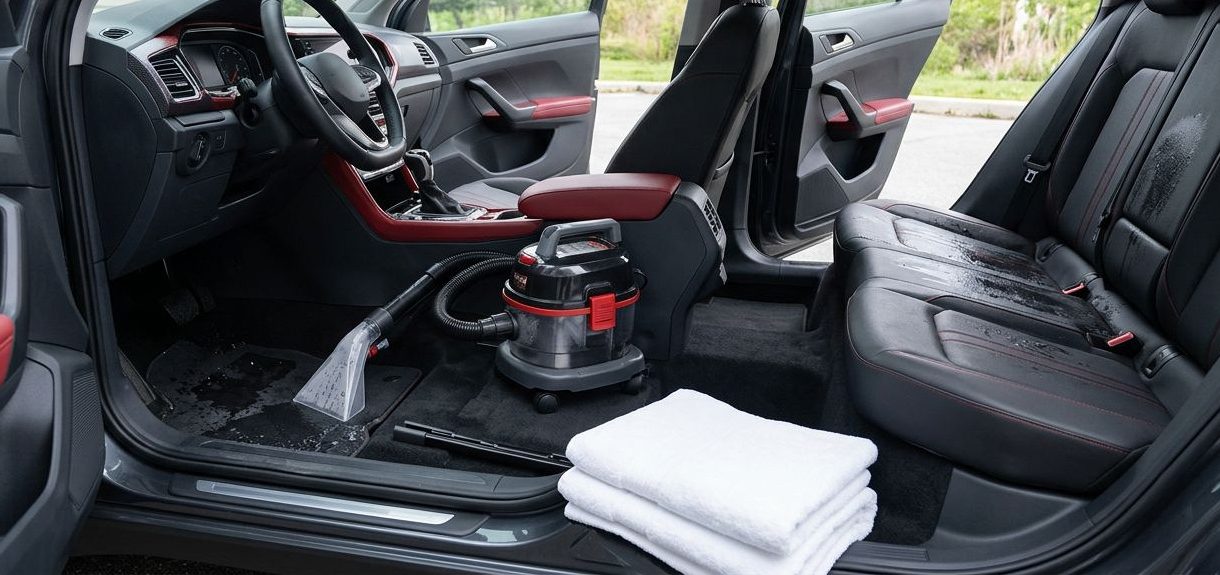
Use clean towels to absorb puddles. Press down firmly on wet carpet and upholstery, then replace each towel when it becomes saturated. A wet-dry vacuum can remove more water, but use only a machine designed for liquid pickup and follow its instructions.
Never use a regular household vacuum on standing water. Keep electrical equipment away from puddles, wet extension cords, and damaged outlets. Don’t use an open flame, fuel-burning heater, or high-temperature heat gun inside the car.
Set up safe airflow
Open the doors and windows when the weather is dry. Remove the floor mats so air can reach both sides. If you use a fan, place it outside the vehicle and direct air across the open doorway toward an exit.
A dehumidifier can help in a dry garage when the electrical setup is safe. Don’t leave a fan or dehumidifier where water can reach its plug or motor. Never run the engine in a closed garage for ventilation or air conditioning.
If you already see fuzzy mold or heavy mold growth, don’t blow air directly across it. Air movement can spread spores. Arrange professional cleaning instead.
How to Dry Wet Car Interior Materials Safely
Once standing water is gone, work methodically when you dry wet car interior materials. The goal is to remove moisture, not move it deeper into the foam. Keep checking the same areas until towels stay dry and the carpet no longer feels cool or heavy.

Extract before using heat
Start with the carpets, mats, and seat surfaces. Blot first, then make several slow passes with the wet-dry vacuum. Move in different directions so the vacuum reaches moisture between the carpet fibers.
Do not soak the interior with extra water unless the material requires controlled cleaning. Excess liquid can enter seat foam, wiring channels, and sound-deadening pads. For a small spill, a damp microfiber cloth and suitable upholstery cleaner are usually enough.
Remove rubber mats and wash them separately. Carpet mats should be extracted on both sides and dried upright. Don’t return any mat to the vehicle while the underside is still damp.
Improve evaporation without overheating
After extraction, leave the cabin open for several hours. Position the car in shade or bright indirect light. Direct sun can warm the seats, but surface heat won’t remove water trapped under the carpet.
Avoid hair dryers, heat guns, and portable heaters. Excessive heat can discolor vinyl, stiffen leather, loosen adhesives, and damage plastic trim. It can also create a fire risk around cleaning products.
A fan and dry air work better than extreme heat. Continue the process until the carpet, seat seams, floor edges, and storage compartments are fully dry. The recurring official guidance for water-damaged materials is to clean and dry them within 24 to 48 hours whenever possible.
Check Under Carpets, Seats, and Trim
A dry-looking cabin isn’t proof that the vehicle is dry. Carpet has a backing layer, and many cars have foam or insulation beneath it. These materials can hold water for days and create a musty odor later.
Inspect hidden areas carefully
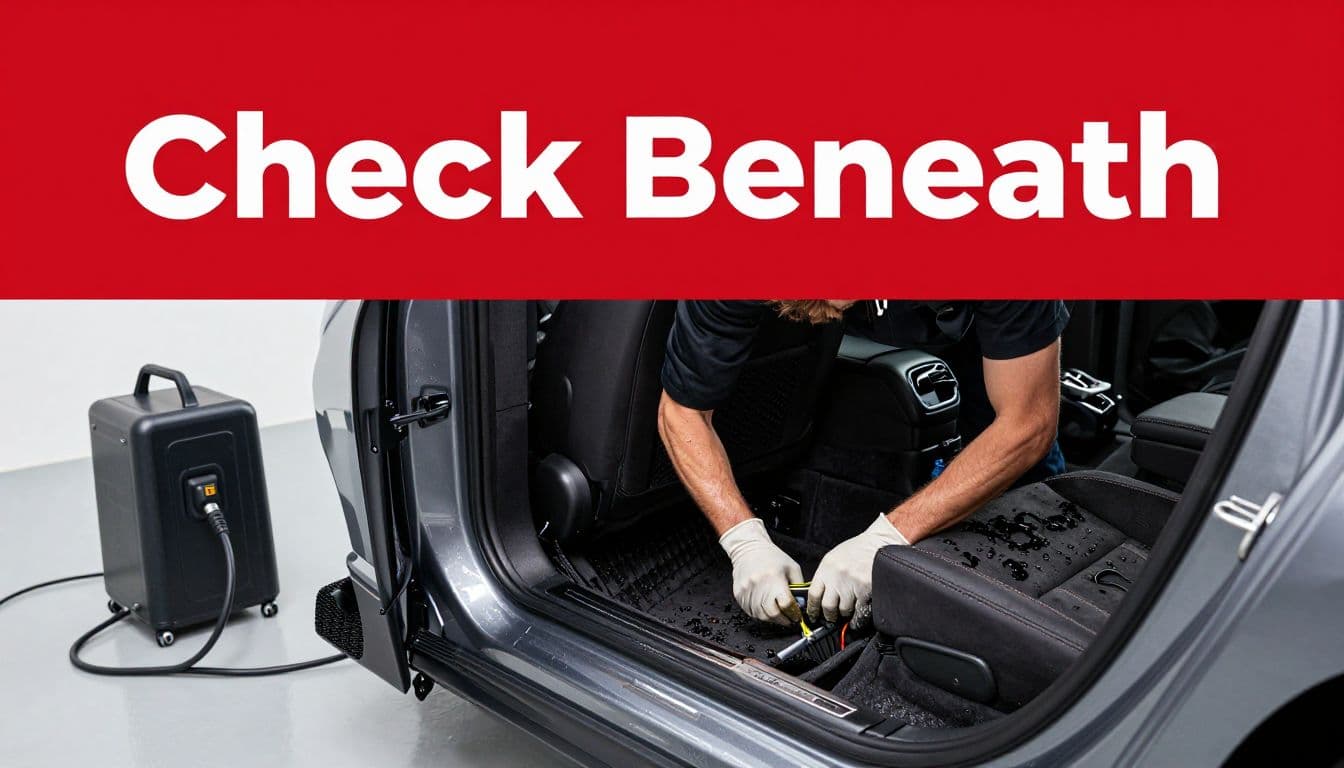
Press a dry towel into the carpet near the pedals, door sills, and rear footwells. Check beneath removable mats, around seat rails, inside the trunk, and in the spare-wheel well. If water entered through the roof, inspect the headliner and upper door trim for damp spots.
Look for the original cause as well. Common entry points include damaged door seals, blocked sunroof drains, windshield seals, trunk seals, and clogged cowl drains. Air conditioning condensation can also create a wet front passenger footwell.
Kelley Blue Book includes checking under the seats and dashboard among its flood-damage inspection checks. That area deserves attention because moisture can reach wiring and control modules before the carpet looks badly soaked.
A carpet can feel dry on top while the padding below remains wet. Always check the layers underneath before treating the odor.
Take care around seats and wiring
Don’t remove seats, loosen trim, or pull up carpet near airbag components unless you have the right training. Seat wiring, occupancy sensors, belt pretensioners, and airbag connectors are often located beneath or beside the seats.
Many safety-system connectors are marked in yellow, but never rely on color alone. Don’t unplug, probe, pull, or spray cleaner into any connector. If water reached the area below a seat, stop at surface extraction and arrange a professional inspection.
Clean Spills Before They Become Odors
Clean water from rain and leaks mainly creates a drying problem. Milk, coffee, juice, food, and other liquids create a second problem because residue remains after the visible moisture disappears.
Treat the source, not the smell
Extract the spill before applying cleaner. Use a product made for the material, and test it on a hidden area first. Apply a small amount to cloth or upholstery rather than flooding the seat.
For fabric, blot with a clean towel and use a soft brush only when the care instructions allow it. For leather or synthetic leather, use an automotive leather cleaner and a lightly damp cloth. Avoid harsh household chemicals that can strip protective finishes or leave a sticky residue.
After cleaning, remove the loosened liquid with towels or a wet-dry vacuum. A mild detergent may help with washable hard surfaces, but never mix cleaning products. In particular, don’t mix bleach with ammonia because the combination can create toxic vapors.
Skip perfume-based fixes
Baking soda, vinegar, coffee grounds, and fragrance products may provide short-term relief. None of them can remove water trapped inside carpet padding or seat foam. Strong perfume can also make it harder to identify mold, mildew, or a leaking seal.
Source removal is the reliable approach. Clean the residue, extract the moisture, dry the material, and inspect it again after several days. If the smell returns when the cabin warms up, hidden moisture or contamination is still present.
When Professional Remediation Is Necessary
Some wet interiors need more than household tools. The water source, contamination level, drying time, and affected systems all determine the correct response.
Treat floodwater and sewage water as contaminated
Floodwater may contain sewage, bacteria, oil, chemicals, and sharp debris. Wear gloves and closed shoes, but don’t assume ordinary interior cleaning will make contaminated foam or insulation safe.
If floodwater soaked carpet padding, seat foam, insulation, or other porous materials, professional removal may be necessary. Materials that can’t be cleaned and dried fully within 24 to 48 hours can continue to support mold growth. The EPA’s flood cleanup resources explain why wet porous materials often require removal instead of surface deodorizing.
Don’t drive a flood-damaged vehicle if water reached the dashboard, fuse boxes, battery area, or major wiring. The NHTSA guidance for hurricane- and flood-damaged vehicles warns that flood-damaged cars can have short circuits and other serious hazards.
Protect airbags and electronics
Airbags, seat-belt pretensioners, electronic control modules, and seat sensors aren’t ordinary interior parts. Water exposure can affect their operation even when the cabin has been dried.
Don’t reconnect power, test electrical accessories, or spray cleaner near wet connectors. If water reached under-seat wiring, the dashboard, door wiring, or an airbag area, arrange an inspection with a qualified automotive technician. NHTSA provides separate air bag safety guidance, and its recommendations should take priority over DIY cleaning advice.
A detailer can extract water, clean upholstery, and dry interior materials. A mechanic or auto electrician must assess safety systems and damaged wiring. For serious flood exposure, contact your insurer before removing major components.
Prevent Future Dampness and Musty Smells
After the cabin is dry, prevent the same problem from returning. A recurring wet floor usually points to a leak, blocked drain, or failed seal that needs repair.
Use these simple habits:
- Check door, trunk, and sunroof seals after heavy rain.
- Clear drainage channels according to the vehicle manual.
- Remove wet umbrellas, towels, shoes, and floor mats promptly.
- Keep washable rubber mats clean and dry underneath.
- Inspect the trunk and spare-wheel well after water exposure.
- Clean spills immediately instead of allowing them to soak into seat foam.
- Keep windows closed during rain and check that doors latch fully.
If the interior stays damp, avoid parking the vehicle closed for long periods. Improve airflow when conditions are dry, and don’t cover the car while moisture remains inside.
A Dry Interior Starts With Complete Moisture Removal
The right way to dry wet car interior areas is to extract water, inspect hidden layers, clean residue, and allow safe airflow. Rushing to add fragrance only hides the problem and can delay the inspection of wet padding, mold, or damaged wiring.
For a minor spill, household towels, a liquid-safe wet-dry vacuum, and controlled ventilation may be enough. Floodwater, sewage contamination, moisture under seats, or an odor that keeps returning needs professional attention. Bud Car Wash can provide deep interior detailing for cleaning and extraction, while qualified automotive technicians should handle safety-system and electrical inspections.
Get a price on interior detailing
Shop #7, 44, 22nd Street, Ras Al Khor Industrial Area 2, open 24 hours. Tell us the car and we reply with a price and a time.
Would rather talk? Call +971 55 168 5050. Someone answers 24 hours.
See us first on Google
Google lets you choose the sites you want to see more of. Add Bud Car Wash as a preferred source and our car care guides show up more often in Top Stories and in Google’s AI answers.
Opens Google in a new tab. You can remove us again at any time.

Sammie O is the owner of Bud Car Wash, a 24 hour hand car wash and detailing shop at Shop #7, 44, 22nd Street, Ras Al Khor Industrial Area 2, Dubai. He writes the car care guides on this site based on work done in his own bay.
View All Articles