
Last updated 16 November 2026 by Sammie O, owner of Bud Car Wash in Ras Al Khor Industrial Area 2, Dubai.
A long drive in Dubai starts with a roadworthy car, enough fuel and water, and a route planned around traffic and tolls. This long-drive checklist for Dubai covers the essential vehicle checks and practical preparations for UAE conditions.
Heat can expose tyre, battery and cooling-system problems that may go unnoticed on a short trip. A few checks before departure can help you travel with greater confidence and handle an unexpected delay safely.
Want us to do it instead?
We do manual car wash at our Ras Al Khor bay, 24 hours a day. Fill this in and we reply with a price and a time. The message writes itself, so you only tap send.
Would rather talk? Call +971 55 168 5050. Someone answers 24 hours.
Key Takeaways
- Check tyre condition and cold pressure, battery warnings, oil, coolant, brakes and air conditioning before you leave.
- Plan your route and fuel stops, and allow for Salik tolls where your route crosses a toll gate.
- Carry water and a basic emergency kit. These are practical preparations, not a statement that every item is legally required.
- Keep seat belts fastened and know the UAE emergency numbers: 999 for police, 998 for ambulance and 997 for fire services.
Check tyres and the battery before the heat
Tyres and batteries deserve attention before a long journey, especially when the car will sit in high temperatures or travel for hours at highway speeds. Check them before packing the vehicle, while you still have time to arrange maintenance if needed.
Inspect tyre condition and pressure
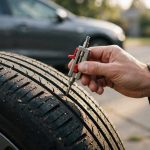
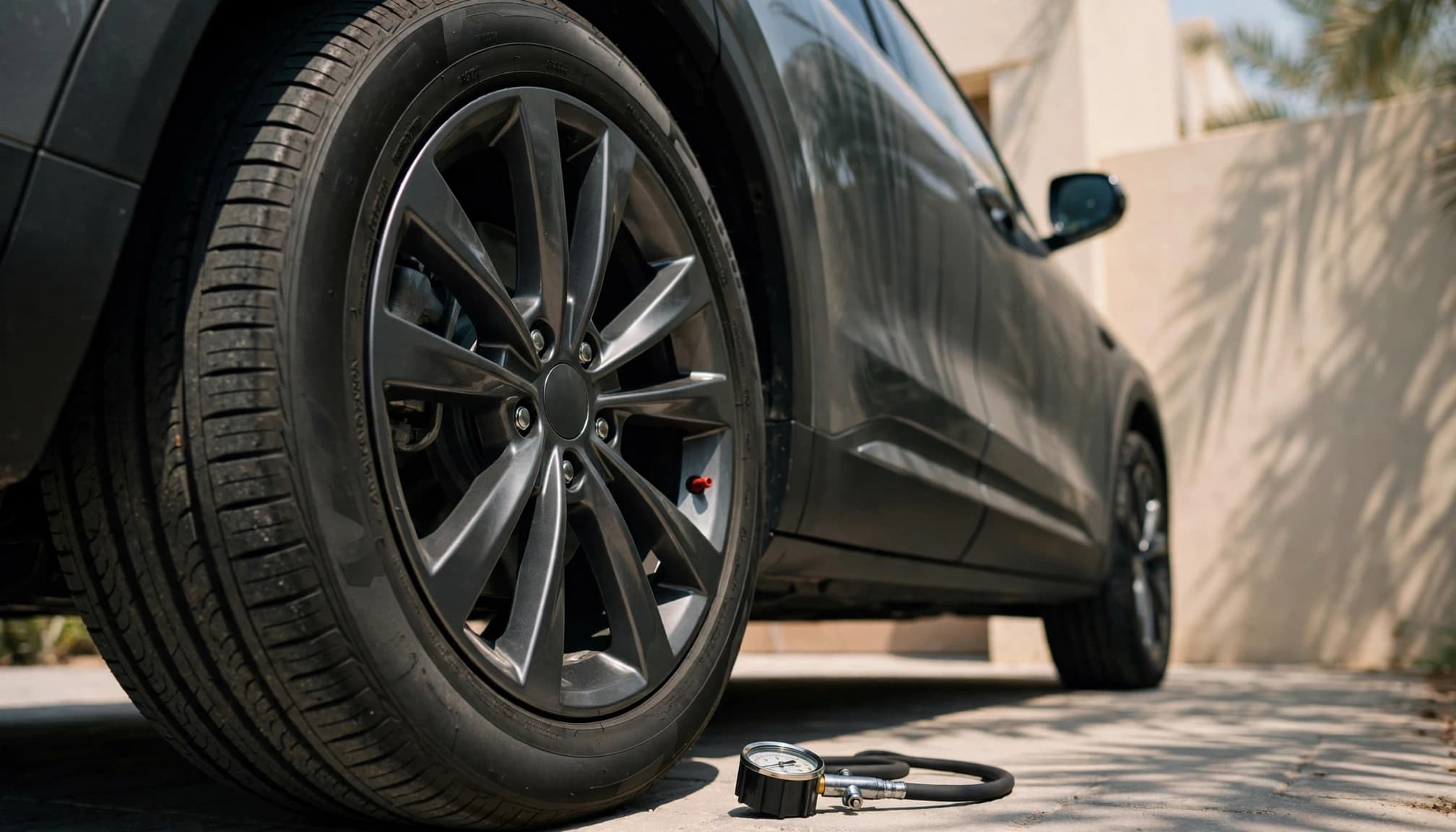
Look across each tyre for cuts, bulges, cracks or uneven wear. The tread should be in good condition. RTA guidance sets a minimum tread depth of 1.5 mm. Check pressure when the tyres are cold and use the pressure listed in your vehicle manual or on the manufacturer’s label, not a guess based on appearance.
Include the spare tyre in your check if your vehicle has one. Make sure it is usable and that the tools needed to change a wheel are present. RTA recommends checking tyre pressure at refuelling intervals in its Light Motor Vehicle Handbook.
Check battery signs and warning lights
Look for battery warnings on the dashboard and check for visible corrosion or damage around the battery terminals. Slow starting can also be a sign that the battery needs attention. If you notice any of these signs, arrange a battery test before setting out rather than relying on a jump-start after a stop.
Check fluids, brakes and air conditioning
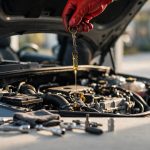
Dubai’s summer heat makes a sound cooling system and working air conditioning especially important for a comfortable trip. Before departure, check the engine oil and coolant levels according to your vehicle manual. Look beneath the vehicle for signs of oil or water leaks.
Test the brakes at low speed before joining a main road. If you hear unusual noises, feel vibration or notice the car pulling to one side, arrange an inspection before the journey. RTA’s summer vehicle inspection guidance also recommends checking tyre condition, oil, coolant, leaks and air conditioning.
Check that the air conditioning cools properly before you leave, not after the cabin has heated up in traffic. Clean the windscreen inside and out, top up washer fluid and test the wipers. Clear visibility matters when road spray, dust or glare affects the view ahead.
If your vehicle needs mechanical attention, we offer mechanical services at Bud Car Wash in Dubai. A warning light, leak or braking issue should be dealt with before a long journey.
Plan your route and fuel stops
Dubai traffic can change the time a trip takes, even when the distance looks manageable. Set your destination before departure and review the route for roadworks, incidents and likely delays. RTA Smart Drive provides traffic information, travel-time estimates, roadwork and accident updates, rerouting and speed-limit alerts. It also offers offline use. You can find it through the RTA Smart Drive app page.
Choose the route before you start driving
Enter the route while parked and make sure your phone is charged. If you’re travelling beyond Dubai, save the destination and route details in case mobile coverage becomes limited. Avoid making route changes while driving. Pull over safely before adjusting the navigation or checking a message.
For a trip that includes an airport transfer or private driver, compare options before departure. Our guide to UAE chauffeur and transfer services can help you consider alternatives to driving yourself.
Plan fuel with a practical buffer
Start with enough fuel to reach your first planned stop without relying on a last-minute fill-up. Check fuel availability along the route using the ADNOC Distribution or Emarat station locators. Keep the fuel buffer larger if your route includes long stretches between towns or if traffic could add significant time.
A planned stop also gives you a chance to stretch, use facilities and check the car before continuing. Avoid letting the fuel gauge fall close to empty in an unfamiliar area.
Budget for Salik tolls
A route through Dubai may cross Salik toll gates. The Dubai government’s toll information lists AED 6 during peak periods from Monday to Saturday, between 06:00 and 10:00 and between 16:00 and 20:00. The listed off-peak rate is AED 4. No toll applies between 01:00 and 06:00 daily, and Ramadan timings may differ. Check the Dubai government’s Salik toll schedule when estimating the cost of a route.
A vehicle using Salik needs a tag and an account. RTA guidance says to install the tag within 10 working days of the first Salik use. The account holder remains responsible for toll trips, even when someone else is driving the vehicle. If you’re using a rental car, include toll charges in your travel budget and understand how they’ll be handled under your rental arrangement.
Pack a basic roadside emergency kit
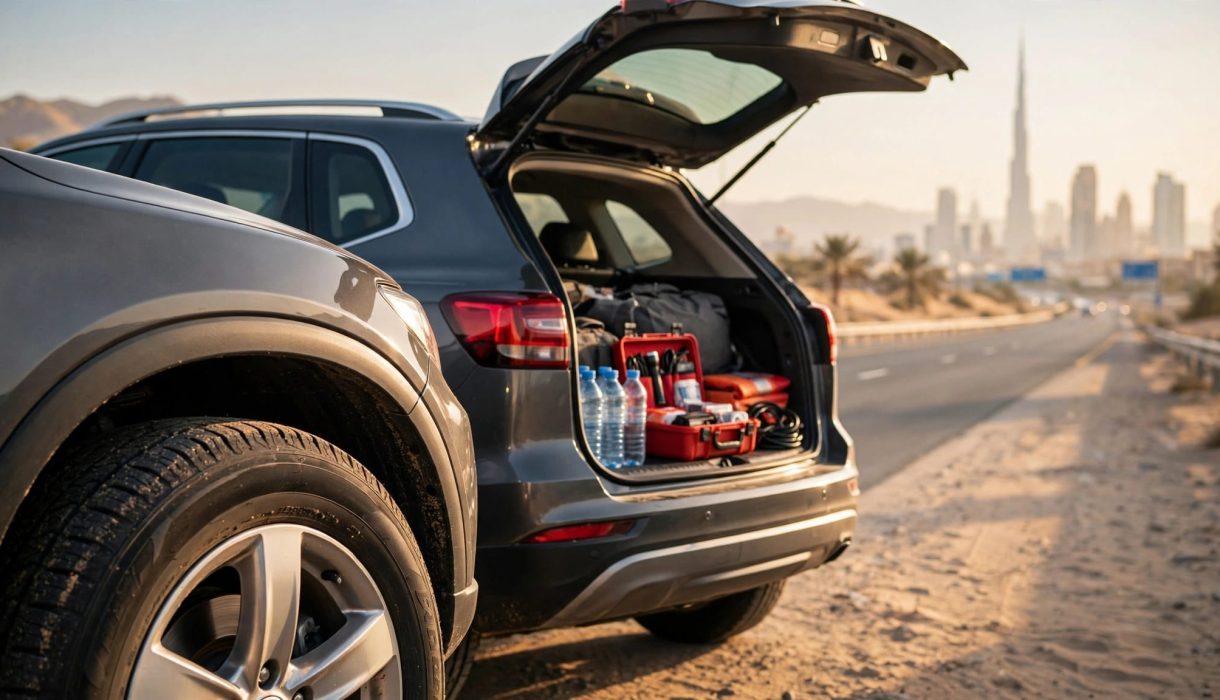
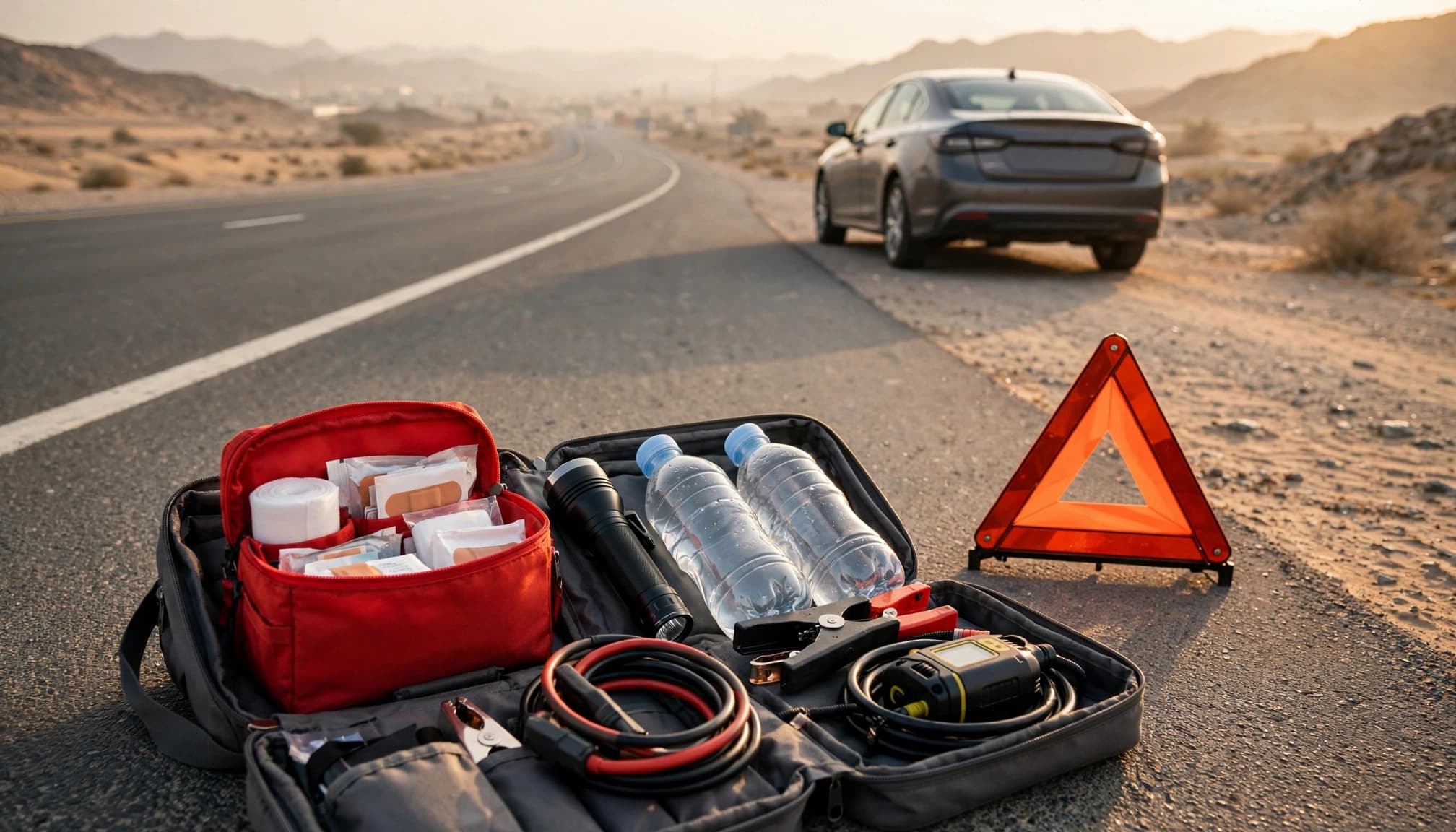
Keep a small kit where you can reach it without unloading the car. A useful set of items includes drinking water, a first-aid kit, a flashlight, a reflective vest, a warning triangle, a phone charging cable and a power bank. A tyre inflator or repair kit can also help with a minor tyre problem, if it suits your vehicle.
These are practical preparations, not a list of items confirmed as mandatory for every private car. Keep water out of direct sunlight where possible, and make sure your phone has enough charge for navigation and emergency calls.
Know what to do if there’s a breakdown or accident
If the car develops a problem, move to a safe place away from moving traffic if you can. Turn on hazard lights and contact roadside assistance or emergency services as needed. Do not stand beside the vehicle in an exposed traffic lane.
For an accident in the UAE, call 999 and give the location. If nobody is injured and the accident is minor, move the vehicle to the shoulder and wait at least 15 metres away. If anyone is injured, leave the vehicles where they are and wait for an ambulance. The UAE emergency guidance lists 998 for ambulance and 997 for Fire Department or Civil Defence.
Follow UAE road rules and drive with care
The legal baseline is a licensed vehicle in good technical condition. The UAE’s Federal Decree-Law on Traffic Regulation states that vehicles used on the road must be licensed, in good technical condition and equipped to the approved specifications. RTA’s Dubai driving handbook also states that drivers and passengers must wear seat belts.
Before departure, check that every passenger can buckle up and that luggage is secured. Loose bags can shift during braking and distract the driver. Keep your attention on the road, leave a safe gap and follow posted speed limits. RTA’s road-safety guidance outlines UAE driving and traffic rules.
Take a break when you feel tired. If a trip is long, plan rest stops before you start and share driving only with someone who is licensed and alert. A comfortable cabin and a sensible pace help make the drive safer for everyone in the car.
Frequently Asked Questions
What tyre pressure should I use for a Dubai road trip?
Use the pressure stated in your vehicle manual or manufacturer label. Check it when the tyres are cold, and include the spare if you have one. RTA’s minimum tread-depth guidance is 1.5 mm.
Which emergency number should I call in the UAE?
Call 999 for police, 998 for an ambulance and 997 for Fire Department or Civil Defence. For an accident, give the operator your location and say whether anyone is injured.
Do I need a Salik account for a long drive?
If your vehicle will use Salik gates, it needs a tag and an account. RTA guidance gives 10 working days after first use for tag installation. The account holder is responsible for toll trips, including trips made by another driver.
Is an emergency kit legally required?
The items listed here are practical preparations for a breakdown or delay. This article does not present the suggested kit as a legal requirement for every private car.
Start the drive prepared
A reliable long drive begins with a vehicle in good condition, a clear route and enough fuel for planned stops. Check tyres, battery signs, fluids, brakes and air conditioning before departure, then keep water and emergency essentials within reach.
Dubai’s heat and traffic can change the pace of a journey. A few minutes of preparation can help you set out with greater confidence and make better decisions if the trip does not go to plan.
Get a price on manual car wash
Shop #7, 44, 22nd Street, Ras Al Khor Industrial Area 2, open 24 hours. Tell us the car and we reply with a price and a time.
Would rather talk? Call +971 55 168 5050. Someone answers 24 hours.
See us first on Google
Google lets you choose the sites you want to see more of. Add Bud Car Wash as a preferred source and our car care guides show up more often in Top Stories and in Google’s AI answers.
Opens Google in a new tab. You can remove us again at any time.

Sammie O is the owner of Bud Car Wash, a 24 hour hand car wash and detailing shop at Shop #7, 44, 22nd Street, Ras Al Khor Industrial Area 2, Dubai. He writes the car care guides on this site based on work done in his own bay.
View All Articles