

Last updated 18 October 2026 by Sammie O, owner of Bud Car Wash in Ras Al Khor Industrial Area 2, Dubai.
Steering wheel vibration at highway speeds often starts with wheel imbalance, tire problems, or worn steering and suspension parts. The pattern helps narrow the inspection, but vibration alone doesn’t identify the faulty component.
A shake that appears during steady driving needs a different assessment from one that starts when you brake. For safe, comfortable travel, start by noting when the vibration appears and whether other warning signs accompany it.
Want us to do it instead?
We do car steering change at our Ras Al Khor bay, 24 hours a day. Fill this in and we reply with a price and a time. The message writes itself, so you only tap send.
Would rather talk? Call +971 55 168 5050. Someone answers 24 hours.
What Steering Wheel Vibration Tells You
The most useful detail is when the shaking starts. Notice whether it appears during steady cruising, acceleration, braking, or after hitting a pothole.

These patterns help guide the inspection without replacing a diagnosis.
| Vibration pattern | Useful inspection focus |
|---|---|
| Appears at certain road speeds | Wheel balance, tire condition, and wheel condition |
| Starts when you apply the brakes | Braking system, tires, and suspension |
| Follows a pothole or kerb impact | Tire damage, wheel damage, alignment, and suspension |
| Comes with pulling or uneven tread wear | Tire pressure, alignment, and worn components |
Tell the workshop whether the shaking reaches the seat or floor as well. That information helps, but its location doesn’t prove which wheel or component is responsible.
Don’t accelerate to reproduce the problem. If it happens during normal driving, remember the conditions and describe them once you’re safely parked.
A vibration that fades at another speed still needs attention. A smoother steering wheel doesn’t mean the underlying problem has disappeared.
Wheel Imbalance Is a Common Starting Point
A wheel-and-tire assembly needs an even distribution of mass as it rotates. An imbalance can produce a shake that becomes more noticeable at certain speeds.
An owner’s manual hosted by NHTSA identifies steering-wheel vibration as a possible sign of unbalanced wheels. It also notes effects on handling and tire life.
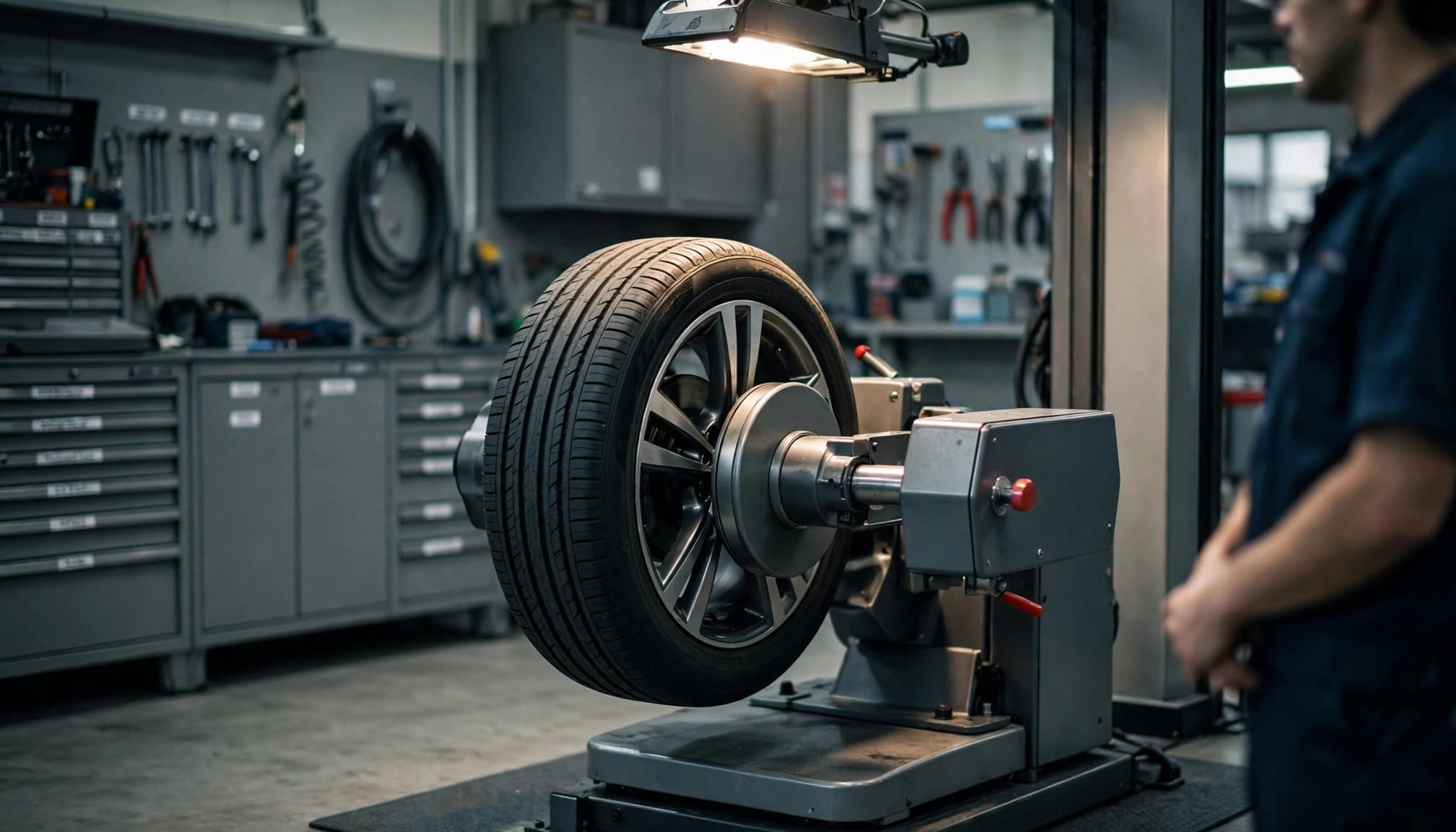
A balancing machine measures imbalance in the rotating assembly. However, balancing doesn’t repair a damaged tire or restore worn steering parts.
If shaking began after tire fitting or wheel work, include that detail when booking an inspection. The workshop can assess balance alongside tire seating, wheel condition, and mounting.
Persistent vibration after balancing needs further investigation. Repeating the same adjustment without inspecting the tires and surrounding components can leave the original fault unresolved.
Tire Pressure, Damage, and Uneven Wear
Tires deserve close attention before a long drive. Their condition affects road contact, ride comfort, and vehicle control.
Incorrect tire pressure
Underinflation and overinflation change how a tire carries the vehicle’s load. They can also contribute to irregular wear.
Use the vehicle manufacturer’s recommended pressure, shown on the tire-information label or in the owner’s manual. The maximum pressure printed on the tire sidewall isn’t the normal setting for your vehicle.
NHTSA’s tire safety guidance recommends checking pressure at least monthly, with the tires cold. Don’t release air from a hot tire simply because its reading is higher after driving.
Correct pressure supports proper tire performance. It doesn’t rule out damage or another cause of vibration.
Damaged tires and uneven tread
A sidewall bulge, distorted tread, or exposed cords requires immediate attention. Internal tire damage can also exist without an obvious external mark.
Uneven wear may include one edge wearing faster or patches of higher and lower tread. These patterns can accompany alignment problems, worn components, or other tire-related faults.
Temporary flat spots can develop after a vehicle remains parked. However, don’t assume a persistent shake will disappear with use.
Balancing can correct imbalance, but it can’t make a structurally damaged tire safe.
If you spot a bulge, tread separation, or exposed cords, don’t continue driving on that tire.
Alignment Problems Need a Different Repair
Wheel alignment concerns the angles of the wheels relative to the vehicle and road. Balancing concerns how evenly the wheel-and-tire assembly rotates.
The two services address different problems. An alignment won’t automatically remove a shake caused by imbalance.
Pulling to one side, an off-centre steering wheel, and uneven tread wear can point toward an alignment assessment. Tire pressure differences and worn parts can produce overlapping symptoms, so the inspection matters.
A 2024 warranty information booklet hosted by NHTSA identifies incorrect inflation, wheel imbalance, and misalignment as possible causes of vibration or irregular wear.
Alignment may contribute indirectly to a rough ride when it allows uneven tire wear to develop. Correcting the angles doesn’t restore tread that has already worn unevenly.
After a significant pothole or kerb impact, inspect the tire, wheel, and suspension before treating alignment as the complete solution.
Worn Steering and Suspension Components
Steering wheel vibration can become more noticeable when worn components allow unwanted movement. These faults may appear alongside tire or balance problems.
Steering joints and suspension parts
Tie-rod ends, ball joints, and suspension bushings help control wheel position. Wear can allow movement that affects steering accuracy and stability.
Possible warning signs include clunking over bumps, loose-feeling steering, or difficulty maintaining a steady path. None of these symptoms identifies one part with certainty.
Worn dampers can also allow excessive wheel movement and contribute to uneven tire wear. A proper inspection assesses component condition before recommending replacement.
These parts affect control, so a new steering looseness deserves prompt attention even when the vibration seems mild.
Wheel condition and bearings
A bent wheel may follow a hard road impact. Its condition needs assessment alongside the tire rather than a balance adjustment alone.
Wheel-bearing problems may produce humming or roughness, sometimes alongside vibration. Noise can change with road speed, but the sound alone isn’t a reliable diagnosis.
A workshop can assess wheel movement, bearing condition, and mounting. Don’t attempt these checks beside a busy road or beneath an unsupported vehicle.
Vibration While Braking Needs Separate Attention
Shaking that begins when you press the brake pedal should be reported as a braking-related symptom. Don’t assume it has the same cause as vibration during steady cruising.
Describe whether the steering wheel shakes, the brake pedal pulses, or the vehicle pulls. Also mention any change in stopping performance.
A brake inspection should assess the braking system and related wheel, tire, and suspension conditions. The driving pattern helps direct that assessment without establishing which part needs repair.
Anti-lock braking can cause rapid pedal pulsation during hard braking or on a low-grip surface. That normal response doesn’t explain repeated shaking during ordinary, gentle stops.
Avoid repeated hard stops to test the problem. If braking feels weaker, the pedal becomes unusually soft, or the vehicle pulls sharply, stop safely and arrange assistance.
Even with normal stopping performance, repeated vibration during braking needs prompt inspection before another highway journey.
When to Stop Driving
A new vibration shouldn’t be ignored before a long trip. The urgency depends on its severity and the warning signs around it.
Arrange an inspection promptly
A mild but persistent shake, with normal steering and braking, still needs diagnosis. Postpone extended highway driving until the cause has been assessed.
Prompt attention is also appropriate when vibration follows tire work, develops after an impact, or comes with uneven wear. A recent repair doesn’t rule out another fault.
Don’t assume that every mild vibration permits a safe drive to the workshop. If the vehicle feels unstable or you’re unsure about control, arrange recovery.
Stop safely and arrange recovery
Don’t continue driving if shaking becomes severe, steering control changes, or you see significant tire damage.
Urgent warning signs include:
- A tire bulge, exposed cords, or separating tread.
- Sudden pressure loss or a visibly deflated tire.
- Heavy knocking, a wheel that appears loose, or strong pulling.
- Reduced braking, smoke, or a strong burning smell.
Reduce speed smoothly and move to a safe stopping place. Avoid abrupt steering or braking where traffic conditions allow.
On a highway, use hazard lights as appropriate and follow local roadside-safety procedures. Don’t stand beside the vehicle in an exposed traffic lane.
Practical Next Steps Before Your Next Long Drive
A focused inspection is more useful than replacing parts based on a single symptom. We recommend addressing steering wheel vibration before committing to an extended journey.
- Record the pattern. Note whether it occurs during steady driving, acceleration, or braking. Include recent impacts, tire changes, or wheel work.
- Inspect what you can safely see. When parked, look for obvious tire damage and uneven wear. Measure cold tire pressures with a suitable gauge.
- Arrange a wheel and tire assessment. The inspection should consider balance, tire condition, wheel condition, and mounting.
- Assess related systems where needed. Pulling, looseness, noise, or braking symptoms call for suitable steering, suspension, or brake checks.
Don’t crawl underneath the vehicle or lift it without the correct equipment and knowledge. An external visual check also can’t rule out hidden damage.
Ask for an explanation of the identified fault and the recommended repair. This helps distinguish a balance adjustment from tire replacement or mechanical work.
After repair, the vehicle should be assessed under suitable conditions to establish whether the original symptom has been resolved. Don’t treat a brief improvement as proof that every contributing problem has been corrected.
For long-distance travel, allow time for diagnosis and repairs before departure. This reduces the pressure to continue a journey with an unresolved handling problem.
Resolve the Cause Before Returning to Highway Speeds
Steering wheel vibration deserves a clear diagnosis, even when it appears only at certain speeds. Wheel balance, tire condition, alignment, and worn components each need the right assessment.
Pay attention to changes in control, visible tire damage, and reduced braking. These warning signs require a safe stop rather than another attempt to test the vehicle.
A properly assessed and repaired vehicle gives you a more comfortable drive and a sounder basis for your next long journey.
Get a price on car steering change
Shop #7, 44, 22nd Street, Ras Al Khor Industrial Area 2, open 24 hours. Tell us the car and we reply with a price and a time.
Would rather talk? Call +971 55 168 5050. Someone answers 24 hours.
See us first on Google
Google lets you choose the sites you want to see more of. Add Bud Car Wash as a preferred source and our car care guides show up more often in Top Stories and in Google’s AI answers.
Opens Google in a new tab. You can remove us again at any time.

Sammie O is the owner of Bud Car Wash, a 24 hour hand car wash and detailing shop at Shop #7, 44, 22nd Street, Ras Al Khor Industrial Area 2, Dubai. He writes the car care guides on this site based on work done in his own bay.
View All Articles