
Last updated 17 October 2026 by Sammie O, owner of Bud Car Wash in Ras Al Khor Industrial Area 2, Dubai.
A slow tire leak can lower pressure over time without leaving a tire completely flat. Regular pressure checks help you catch the change before a long drive, a highway stop, or an unfamiliar route becomes more difficult.
If one tire keeps losing pressure, treat it as a warning that needs attention. A dashboard light may help, but a gauge and a professional inspection give you a clearer picture of the tire’s condition.
Want us to do it instead?
We do tyre and wheel services at our Ras Al Khor bay, 24 hours a day. Fill this in and we reply with a price and a time. The message writes itself, so you only tap send.
Would rather talk? Call +971 55 168 5050. Someone answers 24 hours.
Early signs of a slow tire leak
A tire that looks usable can still be losing air. Watch for changes in pressure and appearance, especially when the same tire shows the same problem more than once.
Pressure drops again after inflation
If one tire repeatedly measures below the vehicle’s recommended pressure, record the reading and date. Compare it with the other tires, then check again under similar conditions. A continuing drop in just one tire is a stronger reason for inspection than a single low reading.
Temperature changes can affect readings, so compare like with like. Check tires before driving, rather than comparing a cold reading with one taken after a long trip.
Changes in appearance or handling
A visibly low tire, a bulge, a cut, exposed cords, or separated tread needs immediate attention. Don’t drive on a tire with visible damage or severe loss of pressure.
A slow leak may also show up as repeated pressure warnings or a vehicle that feels different through the steering wheel. These clues don’t identify the cause, but they tell you to stop treating the pressure loss as a one-time issue.
How to check tire pressure accurately
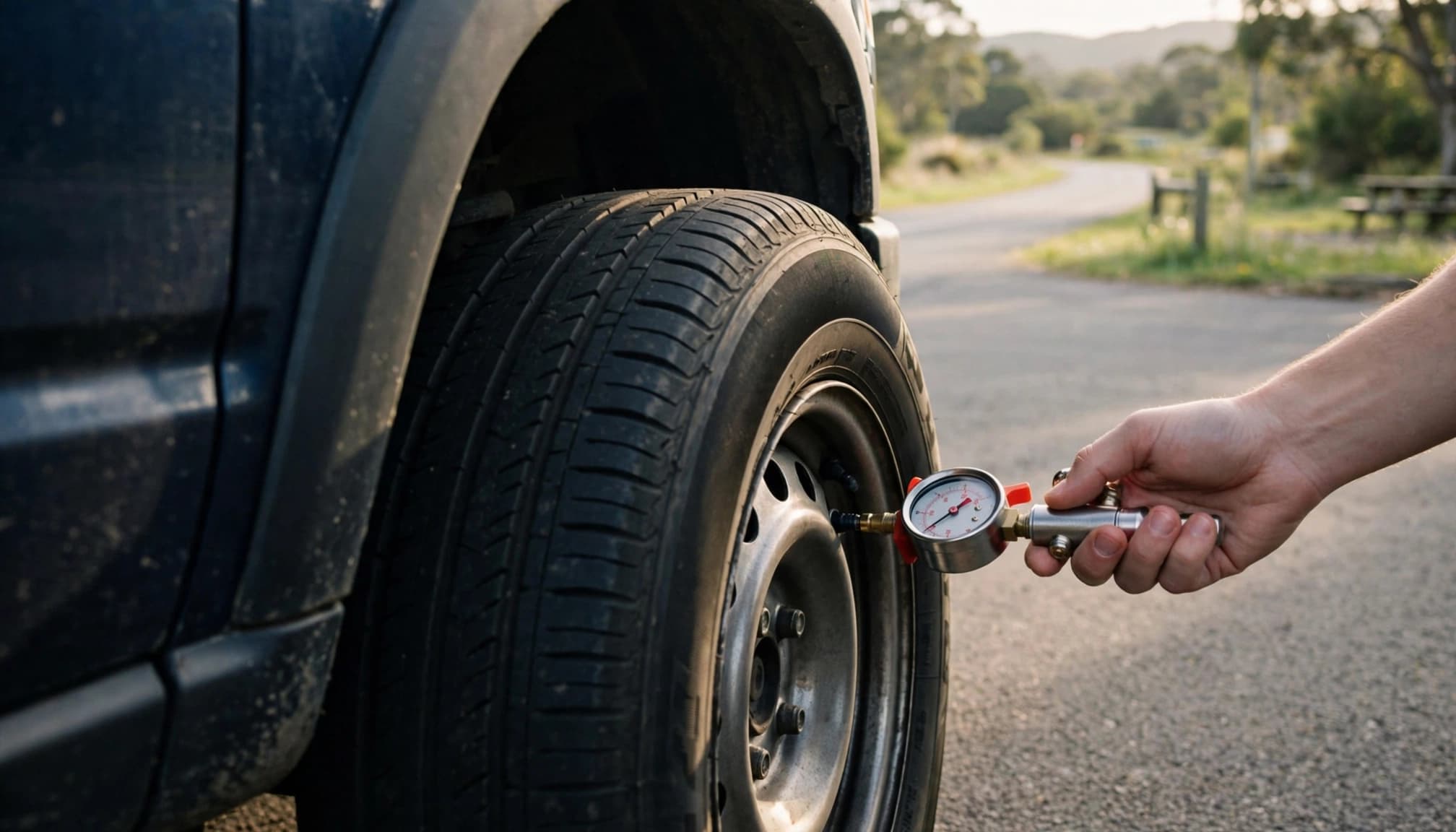
Use a reliable tire-pressure gauge and compare each reading with the vehicle’s recommended cold pressure. The correct pressure is usually listed on the tire and loading placard inside the driver’s door area, or in the owner’s manual. Follow the vehicle’s specified pressure, not the maximum printed on the tire sidewall.
Measure when the tires are cold
The U.S. Tire Manufacturers Association defines cold tires as tires on a vehicle parked for at least three hours. Check all four tires with the same gauge and note the reading for each one. This makes it easier to spot one tire that is losing pressure while the others remain steady.
The USTMA tire care guidance recommends measuring inflation pressure with a tire gauge when tires are cold. Keep the gauge in your vehicle or travel kit so you can check pressure before setting out.
Compare and record readings
Remove the valve cap, press the gauge firmly onto the valve stem, and read the result. If the gauge does not seat properly, air may escape during the check and give you an inaccurate reading. Replace the cap after measuring.
Write down the pressure and date, then compare later readings taken in similar conditions. A brief record helps separate a recurring loss from a one-time difference. If you need to add air, use the pressure listed on the placard, then keep monitoring the tire.
Where a tire may be losing air
Air loss can come from a puncture, a damaged valve stem, or a poor seal between the tire and wheel. Corrosion or damage to the wheel can also affect the seal. A quick look may show a nail, screw, or other object, but the source isn’t always visible from outside the tire.
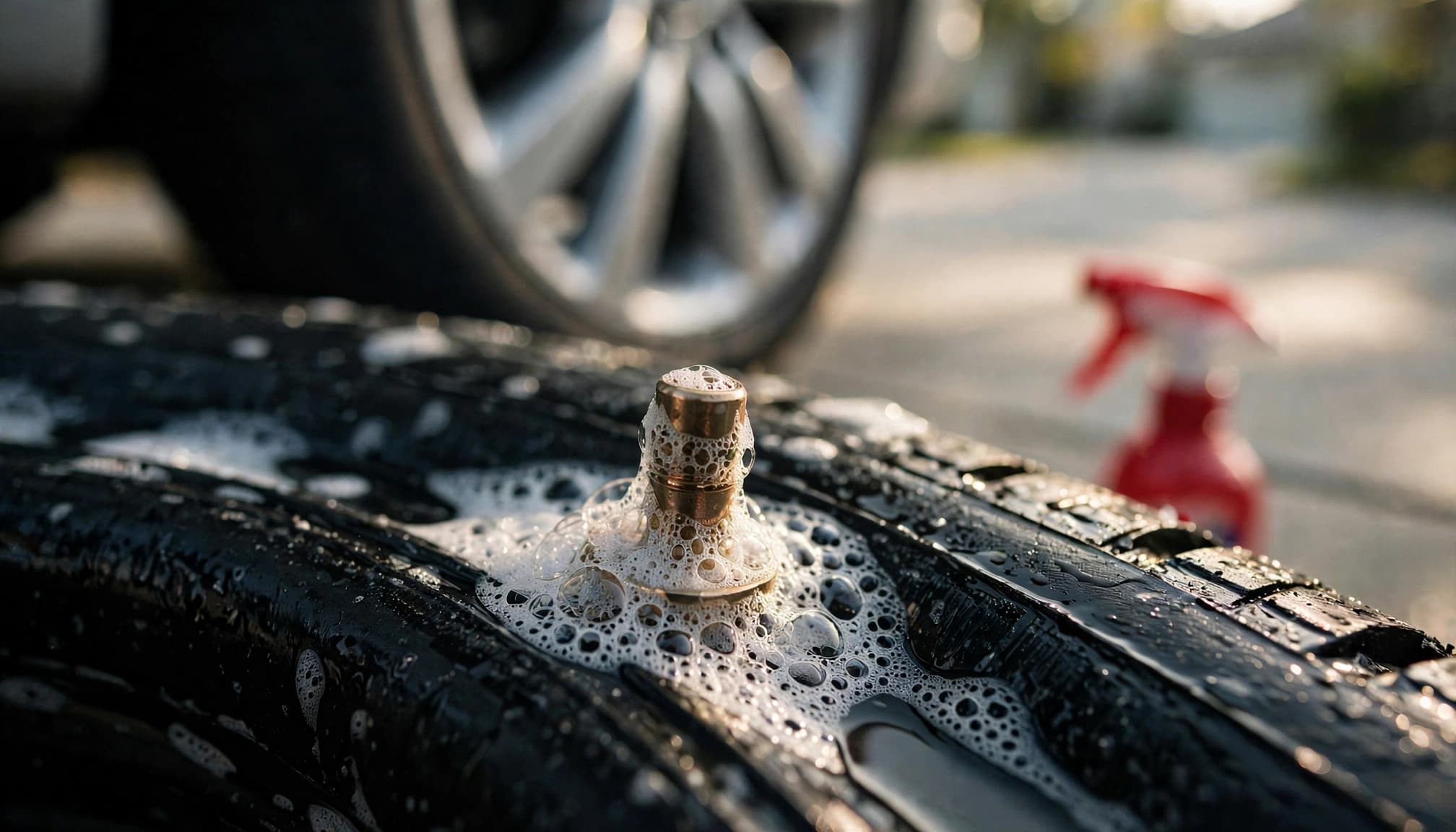
If you see an object lodged in the tread, leave it in place and have the tire assessed. Removing it can make air escape faster. A tire professional can inspect the tire and wheel, identify where pressure is escaping, and advise whether repair or replacement is appropriate.
A valve cap helps keep dirt and moisture away from the valve, but it does not repair a leak. If the pressure continues to fall, replacing the cap alone won’t resolve the underlying problem.
What the TPMS warning can and can’t tell you
The Tire Pressure Monitoring System (TPMS) can alert you when tire pressure has fallen significantly. It is useful, but it doesn’t replace regular checks. A warning light may appear after pressure has already dropped enough to affect safe driving.
Don’t rely on the dashboard alone
A warning light tells you to check the tire pressure, not which part is leaking or whether the tire can be repaired. If the light comes on, pull over where it is safe and inspect the tires. If one looks visibly low or damaged, don’t continue driving on it.
NHTSA guidance notes that routine pressure checks remain important, even in vehicles with TPMS. Its TPMS information advises drivers to check tires regularly because a puncture or other damage can cause pressure loss.
Check manually between trips
Make tire checks part of your regular vehicle routine, particularly before a long drive. A warning light may not alert you to a gradual change early enough for your plans. A gauge gives you an actual reading, so you can compare the tire against the vehicle’s recommended pressure.
If the light returns after you inflate a tire, arrange an inspection. Repeatedly adding air can keep the tire usable for a short time, but it doesn’t fix the cause.
What to do when pressure keeps dropping
When one tire repeatedly loses pressure, avoid relying on repeated top-ups as a travel plan. Use the gauge to confirm the reading, note whether the tire looks damaged, and arrange a prompt inspection by a qualified tire professional.
If the tire is only slightly low and has no visible damage, follow the vehicle’s pressure recommendation and travel only as needed to reach a safe place or a tire service provider. Keep speed and distance limited. Stop if the tire’s appearance or handling worsens.
Don’t continue a long journey with a tire that loses pressure between checks. A highway trip puts more demand on tires, and a loss of pressure can make the tire overheat or fail. A short delay for an inspection is safer than being stranded with a flat in an unfamiliar area.
If pressure falls rapidly, the tire looks flat, or you notice a cut, bulge, exposed cords, or tread separation, don’t drive on it. Use roadside assistance or a correctly inflated spare if you can change it safely and follow the vehicle’s instructions.
When not to drive on a tire
A tire that is visibly damaged or dangerously underinflated should stay off the road. Do not try to reach a distant repair shop by driving on a flat or a tire with serious damage. That can increase the damage and make the vehicle harder to control.
Park in a safe place away from moving traffic. If you’re on a road shoulder, stay clear of traffic and request roadside assistance. Use a spare only if it is in safe condition and your vehicle’s instructions allow it for the trip. If you’re unsure, wait for professional help.
A TPMS light with normal-looking tires still calls for a pressure check. If you cannot measure pressure safely, or the vehicle handles differently, stop driving and arrange assistance. A warning light shouldn’t be ignored just because the tire appears inflated.
How a tire professional assesses a repair
A professional can identify whether the leak comes from a puncture, valve, wheel, or another source. They can also inspect damage that isn’t visible while the tire is mounted.
The tire needs an internal inspection
A proper puncture repair requires removing the tire from the wheel and inspecting it for damage, including damage to the inner liner. The USTMA repair basics explain why an outside-only look isn’t enough to determine whether a tire is safe to repair.
A puncture’s location matters. USTMA procedures limit repairs to the tread area, and its passenger and light-truck guidance sets a maximum puncture size of 1/4 inch (6 mm). Damage outside those limits may mean the tire needs replacement.
Don’t assume every puncture is repairable
A nail or screw in the tread doesn’t automatically mean the tire can be repaired. The tire’s condition, puncture size, location, and internal damage all affect the decision. The USTMA puncture repair procedures outline those limits.
A qualified tire professional can assess the full tire and recommend repair or replacement. This inspection is especially important before a long drive, when a recurring leak could leave you stopped far from help.
Key takeaways
- Check tire pressure with a gauge when tires are cold, and compare readings with the vehicle placard.
- Track repeated pressure loss instead of relying on a dashboard warning or repeated inflation.
- Don’t drive on a visibly damaged or dangerously underinflated tire.
- Have suspected punctures assessed by a qualified tire professional.
FAQ
Can I tell if a tire has a slow leak just by looking?
Not always. A tire can lose pressure without looking flat. Use a gauge and compare readings over time. Visible cuts, bulges, exposed cords, or a tire that appears low need immediate attention.
How often should I check tire pressure?
Check pressure regularly and before long trips. Take readings when the tires are cold, ideally after the vehicle has been parked for at least three hours.
Should I remove a nail or screw from the tire?
No. Leave it in place and arrange a professional inspection. Removing an object can let air escape faster and may increase tire damage.
Can a punctured tire always be repaired?
No. Repair depends on the puncture’s location and size, as well as the tire’s internal condition. A tire professional needs to inspect it before deciding.
Keep pressure loss from becoming a flat
A slow tire leak is easier to manage when you catch it through routine pressure checks. Keep a record of readings, take repeated loss seriously, and have a qualified professional inspect the tire before a long drive.
Get a price on tyre and wheel services
Shop #7, 44, 22nd Street, Ras Al Khor Industrial Area 2, open 24 hours. Tell us the car and we reply with a price and a time.
Would rather talk? Call +971 55 168 5050. Someone answers 24 hours.
See us first on Google
Google lets you choose the sites you want to see more of. Add Bud Car Wash as a preferred source and our car care guides show up more often in Top Stories and in Google’s AI answers.
Opens Google in a new tab. You can remove us again at any time.

Sammie O is the owner of Bud Car Wash, a 24 hour hand car wash and detailing shop at Shop #7, 44, 22nd Street, Ras Al Khor Industrial Area 2, Dubai. He writes the car care guides on this site based on work done in his own bay.
View All Articles