
Last updated 19 October 2026 by Sammie O, owner of Bud Car Wash in Ras Al Khor Industrial Area 2, Dubai.
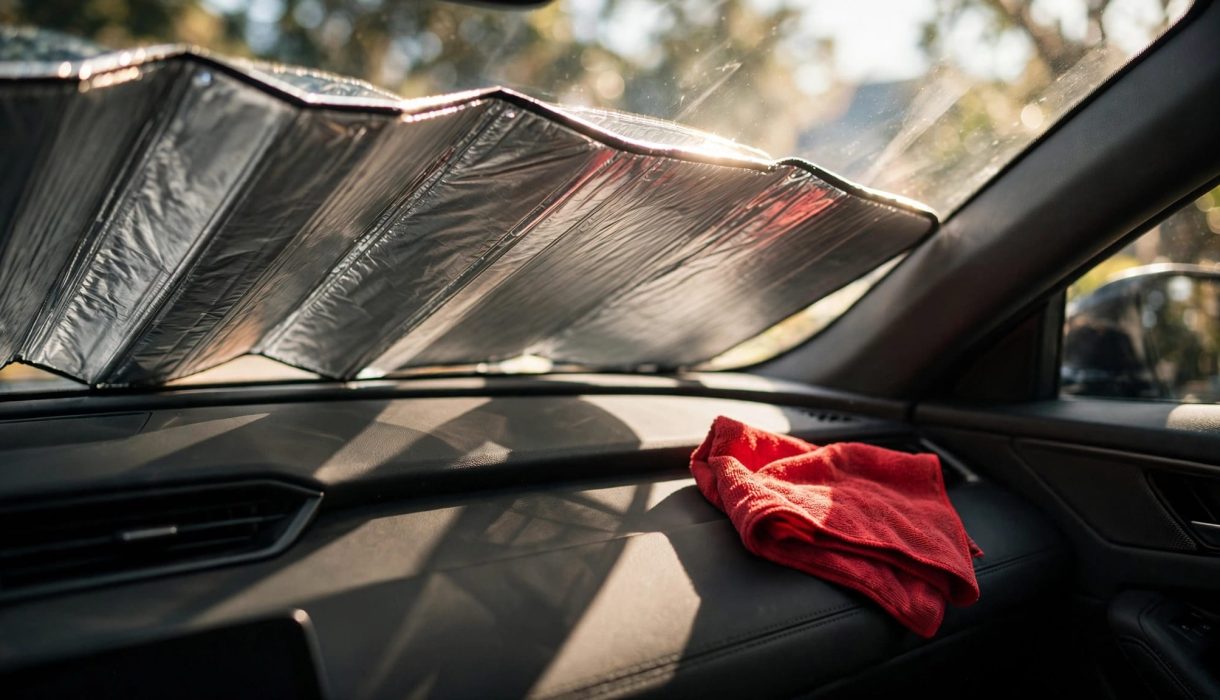
Car dashboard sun damage can mean fading, cracks, dry-looking surfaces, or warping over time. A windshield sunshade, shaded parking, and careful cleaning can reduce the dashboard’s exposure, but no routine can guarantee it will stay unchanged.
For long drives and travel days, a few simple habits help limit direct sunlight while keeping the interior clean. The best approach combines everyday protection with products suited to your dashboard’s materials.
Want us to do it instead?
We do interior detailing at our Ras Al Khor bay, 24 hours a day. Fill this in and we reply with a price and a time. The message writes itself, so you only tap send.
Would rather talk? Call +971 55 168 5050. Someone answers 24 hours.
Why sunlight affects a car dashboard
The dashboard sits close to the windshield, where it receives direct sun during much of the day. Heat and light can wear down interior materials, changing their appearance and condition over time. The process varies by vehicle, material, parking conditions, and how often the car is exposed.
Fading may appear as a change in color or an uneven finish. Cracks can develop in a surface that has become dry or brittle, while some materials may change shape. These signs can appear gradually, so regular checks help you notice changes early.
Prevention is more practical than trying to restore a damaged surface. A sunshade and shaded parking reduce direct exposure, while gentle cleaning helps remove dust and grime without adding unnecessary wear.
Use a windshield sunshade whenever you park
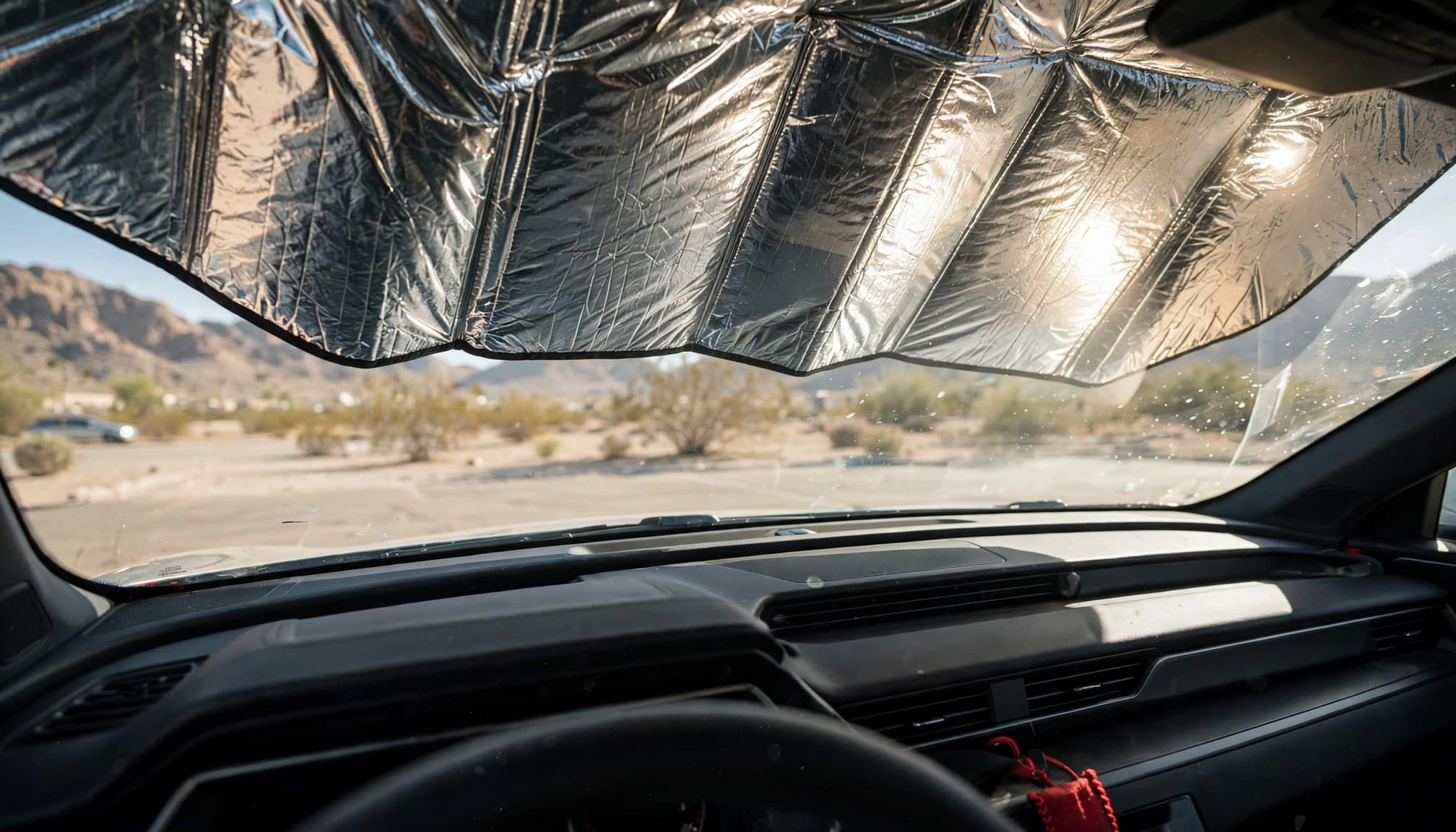
A sunshade creates a barrier between the windshield and the dashboard. It’s a practical option for errands, workdays, and long stops on a road trip. Gauge Magazine also describes a reflective windshield sunshade as a way to block direct sunlight and reduce heat inside the vehicle.
Make it part of your parking routine
Place the sunshade behind the windshield before leaving the vehicle. A snug fit helps cover more of the glass and keeps direct sun off a larger area of the dashboard. Follow the sunshade’s instructions for fitting and storage.
Keep it somewhere you can reach when parked, such as in a door pocket or another suitable storage space. If you use a foldable shade, close and store it before driving so it doesn’t obstruct your view or interfere with vehicle controls.
Use other windows when a stop is longer
A windshield shade protects the area behind the front glass, but the side windows can still let in sunlight. For longer stops, use suitable side-window shades where permitted and where they don’t block the driver’s view.
A shade reduces exposure; it doesn’t make the cabin sunproof. Avoid treating it as a guarantee against fading, cracking, or warping, especially when the car is parked outdoors for extended periods.
Choose shaded or covered parking when possible
Parking in shade can reduce the amount of direct sunlight reaching the windshield and dashboard. A garage or covered parking space offers another practical option, especially if the vehicle sits in the same place for several hours.
The U.S. Department of Energy includes shaded or covered parking and sunshades among its summer-driving tips for reducing cabin heat. These steps also fit naturally into a road-trip routine: where you stop and how you park can affect how much sun reaches the interior.
Position the car to limit direct exposure
When several spaces are available, choose one that puts the dashboard out of direct sun for the expected parking period. The shade from a building or tree may shift during the day, so the spot that looks protected at arrival may become sunny later.
A sunshade remains useful when shade is partial or uncertain. Use both when practical, especially during a long stop, rather than relying on a patch of shade that may move.
Plan stops with parking in mind
For a meal, sightseeing break, or overnight stay, look for covered parking or a reliably shaded area when choosing where to leave the car. This can be a small part of trip planning, alongside your route and rest stops.
If your drive includes a destination where you’ll leave the car for several hours, a sunshade is useful when you can’t control the parking conditions.
Clean the dashboard with material-appropriate products
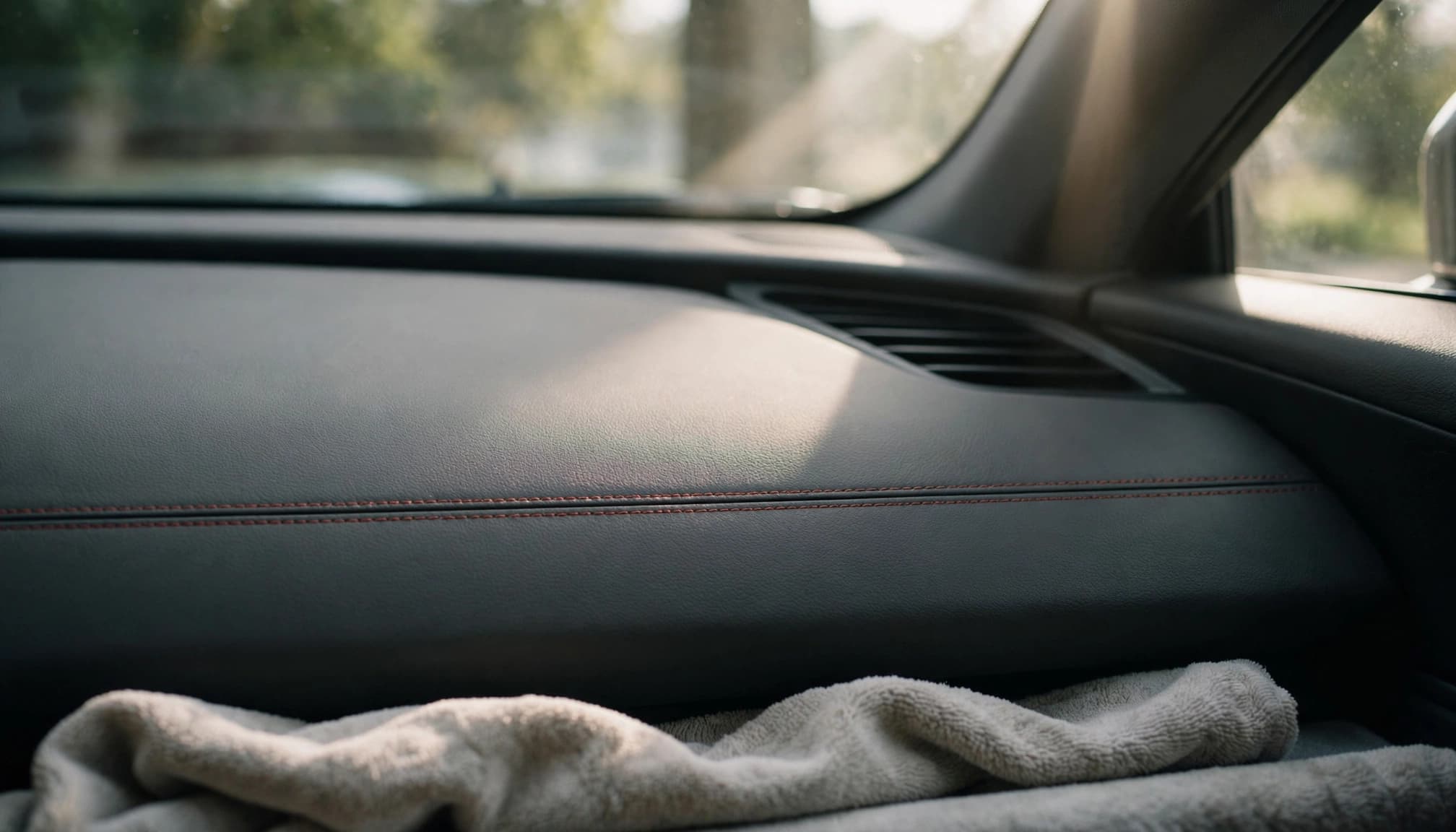
Dust and grit can collect on the dashboard, especially after road trips or frequent window use. Removing them with a soft cloth helps keep the surface clean without scrubbing. Toyota’s car-interior cleaning guide recommends a microfiber cloth dampened with water or a mild all-purpose cleaner for dashboard cleaning.
Start gently and avoid excess moisture
Wipe the dashboard with a clean microfiber cloth. If a dry cloth doesn’t lift the dust, dampen it lightly rather than spraying cleaner directly onto the surface. That helps keep liquid away from seams, vents, switches, and screens.
For stubborn dirt, Toyota’s guidance suggests using a soft-bristle brush. Work gently, then wipe away any remaining residue with a clean cloth. Avoid vigorous scrubbing, which can leave marks or wear the finish.
Match the cleaner to the surface
Dashboards can include different materials and finishes, sometimes within the same vehicle. A cleaner that’s suitable for one surface may not be right for another. Use the care instructions in your owner’s manual and choose products labeled as compatible with the specific material.
Take extra care around screens, instrument panels, stitched areas, and trim. These surfaces may need different cleaning methods. When you’re unsure about a product, the vehicle’s care instructions provide a safer starting point than a general-purpose household cleaner.
Condition the dashboard only when the material calls for it
Cleaning and conditioning are separate jobs. A cleaner removes surface dirt; a conditioner or protectant is intended for certain materials and finishes. Applying a product that doesn’t match the dashboard can leave residue, alter the finish, or create an unwanted shine.
Check the owner’s manual for material-specific care instructions. If it recommends a conditioner for a particular surface, follow the product directions and use it only where stated. Avoid applying leather conditioner to plastic or vinyl just because those materials appear similar.
A clean, dry microfiber cloth is often enough for routine dust removal. For deeper interior care, choose a product based on the dashboard material rather than relying on one product for every surface. This keeps maintenance simple and avoids unnecessary treatment.
Notice early changes before they become more visible
A quick check during regular cleaning can help you spot changes. Look for fading, a surface that feels unusually dry, small cracks, or areas that appear raised or distorted. Pay attention to locations that receive direct sun through the windshield.
Dust, streaks, and product residue can make a dashboard look dull without indicating material damage. Clean a small area gently and see whether the appearance improves. If a crack or warped area remains, cleaning won’t repair it, and more product may make the finish harder to assess.
Avoid pulling, pressing, or scraping a damaged surface. If the damage is spreading or affects a safety-related area, such as the visibility of the instrument panel, ask an automotive professional about appropriate repair options.
Keep dashboard protection in your travel routine
Travel often means leaving a car parked in unfamiliar places, sometimes for longer than planned. Keep a sunshade in the vehicle so it’s ready at a hotel, attraction, station, or rest stop. Use shaded or covered parking when available, then check that the shade is fitted before leaving.
Build a simple routine around stops: remove loose items from the dashboard, place the shade, and park where direct sun is reduced. When you return, store the shade securely before setting off. These small steps are easy to repeat and help keep the interior in good condition through regular use.
After a long trip, wipe away dust with a soft microfiber cloth and inspect the dashboard for changes. Use the right care product for the material, not an all-purpose treatment by default. Consistency matters, but these measures reduce exposure rather than guarantee that fading, cracking, or warping won’t occur.
Key takeaways
- Use a windshield sunshade whenever you park, particularly during long stops.
- Choose shaded or covered parking when it’s available.
- Clean with a soft microfiber cloth and a product suited to the dashboard material.
- Follow the owner’s manual before using a conditioner or protectant.
- Prevention reduces sun exposure but cannot guarantee a damage-free dashboard.
Frequently asked questions
Can a sunshade prevent all dashboard sun damage?
No. A sunshade reduces direct sunlight through the windshield, but it can’t guarantee protection from fading, cracking, or warping. Use it alongside shaded parking and suitable interior care.
Is it better to park in shade or use a sunshade?
Use both when practical. Shade reduces direct exposure from outside the vehicle, while a sunshade helps protect the dashboard when shade isn’t available or doesn’t cover the windshield throughout the stop.
How should I clean a car dashboard?
Use a clean microfiber cloth, lightly dampened if needed. Toyota recommends water or a mild all-purpose cleaner for the dashboard and a soft-bristle brush for stubborn dirt. Follow your vehicle’s care instructions for its specific materials.
Should I apply conditioner to every dashboard?
No. Conditioner is only appropriate for surfaces and materials named in the product directions and vehicle-care guidance. A dashboard with plastic or vinyl surfaces may need a different approach from a leather-trimmed area.
Keep protection simple and consistent
Sunlight can gradually change a dashboard’s appearance, especially when a vehicle spends long periods parked outdoors. A windshield sunshade, shaded parking, and gentle material-appropriate cleaning are practical ways to reduce exposure and care for the interior.
Make those steps part of your regular parking and travel routine. They won’t guarantee a dashboard stays free of damage, but they can help limit unnecessary wear over time.
Get a price on interior detailing
Shop #7, 44, 22nd Street, Ras Al Khor Industrial Area 2, open 24 hours. Tell us the car and we reply with a price and a time.
Would rather talk? Call +971 55 168 5050. Someone answers 24 hours.
See us first on Google
Google lets you choose the sites you want to see more of. Add Bud Car Wash as a preferred source and our car care guides show up more often in Top Stories and in Google’s AI answers.
Opens Google in a new tab. You can remove us again at any time.

Sammie O is the owner of Bud Car Wash, a 24 hour hand car wash and detailing shop at Shop #7, 44, 22nd Street, Ras Al Khor Industrial Area 2, Dubai. He writes the car care guides on this site based on work done in his own bay.
View All Articles