
Last updated 25 September 2026 by Sammie O, owner of Bud Car Wash in Ras Al Khor Industrial Area 2, Dubai.
A drink spills during a long drive, and your first instinct is to scrub the seat. On Alcantara, that can leave the fibers looking flatter than the stain did. To clean Alcantara seats well, you need light contact, little moisture, and enough drying time before you brush the surface.
The method is straightforward, but the order matters. Start with dry dirt, treat marks gently, and restore the nap only after the seat has dried.
Want us to do it instead?
We do interior detailing at our Ras Al Khor bay, 24 hours a day. Fill this in and we reply with a price and a time. The message writes itself, so you only tap send.
Would rather talk? Call +971 55 168 5050. Someone answers 24 hours.
Why Alcantara seats need a light touch
Alcantara has a soft, textured surface that shows changes in its fibers. Dust, body oils, and repeated contact can make a busy area look darker or smoother than the surrounding seat. A forceful scrub may make that difference more visible.
Check the surface before treating a stain
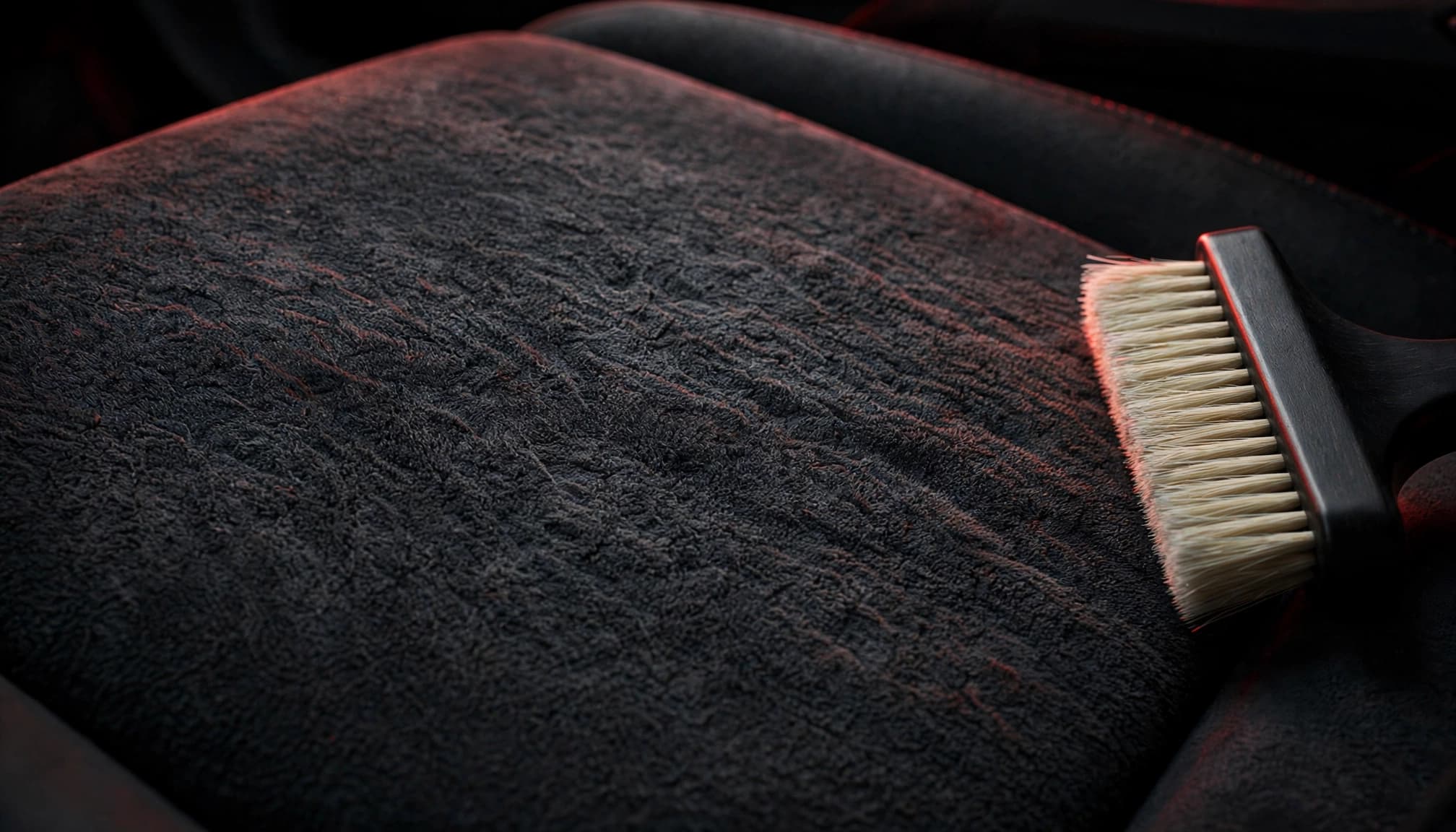
Look at the seat from more than one angle. A flattened patch can appear dark even when there is no spill to remove. If the area changes appearance as the fibers move, begin with dry cleaning and leave liquid cleaner aside.
Pay attention to the seat base, outer bolster, and areas near the seat belt. They collect different amounts of dust and contact. Treat the affected area rather than wetting the entire seat by default.
Follow the care instructions for your car
Check the vehicle handbook and any seat-care guidance before applying a product. Seat construction and adjacent materials vary, so a cleaner suitable for one interior isn’t automatically suitable for another.
Alcantara’s official cleaning guidance recommends a soft brush or dry cloth for daily dusting. For weekly care, it recommends a slightly damp white cotton cloth. Those are sensible starting points when your vehicle’s instructions don’t say otherwise.
Get the seat ready before cleaning
Good preparation keeps grit out of the cloth and helps you avoid spreading a small mark across a larger area.
Gather simple, clean tools
You’ll need a vacuum with a clean, soft upholstery attachment, a soft brush, and clean white cloths. Have water available for lightly dampening a cloth. For a more thorough clean, check whether your vehicle’s guidance allows the mild soap method described by Alcantara.
White cloths make transferred dirt easier to see. Keep one cloth for cleaning and another for lifting any remaining moisture or residue. Replace a cloth once it becomes dirty; otherwise, you’re putting that dirt back onto the seat.
Test before treating a visible area
Try your planned method on an inconspicuous part of the seat. Apply a small amount with the cloth, let the area dry fully, and check its color and texture. Don’t judge the result while it’s damp.
If you plan to use a dedicated upholstery product, follow both its directions and the vehicle manufacturer’s advice. No single cleaner is the right choice for every Alcantara-trimmed seat. If the test leaves a mark or changes the feel of the material, stop.
How to clean Alcantara seats, step by step
Work in stages instead of trying to remove every mark in one pass. That gives you control over pressure and moisture.
Start with a dry pass
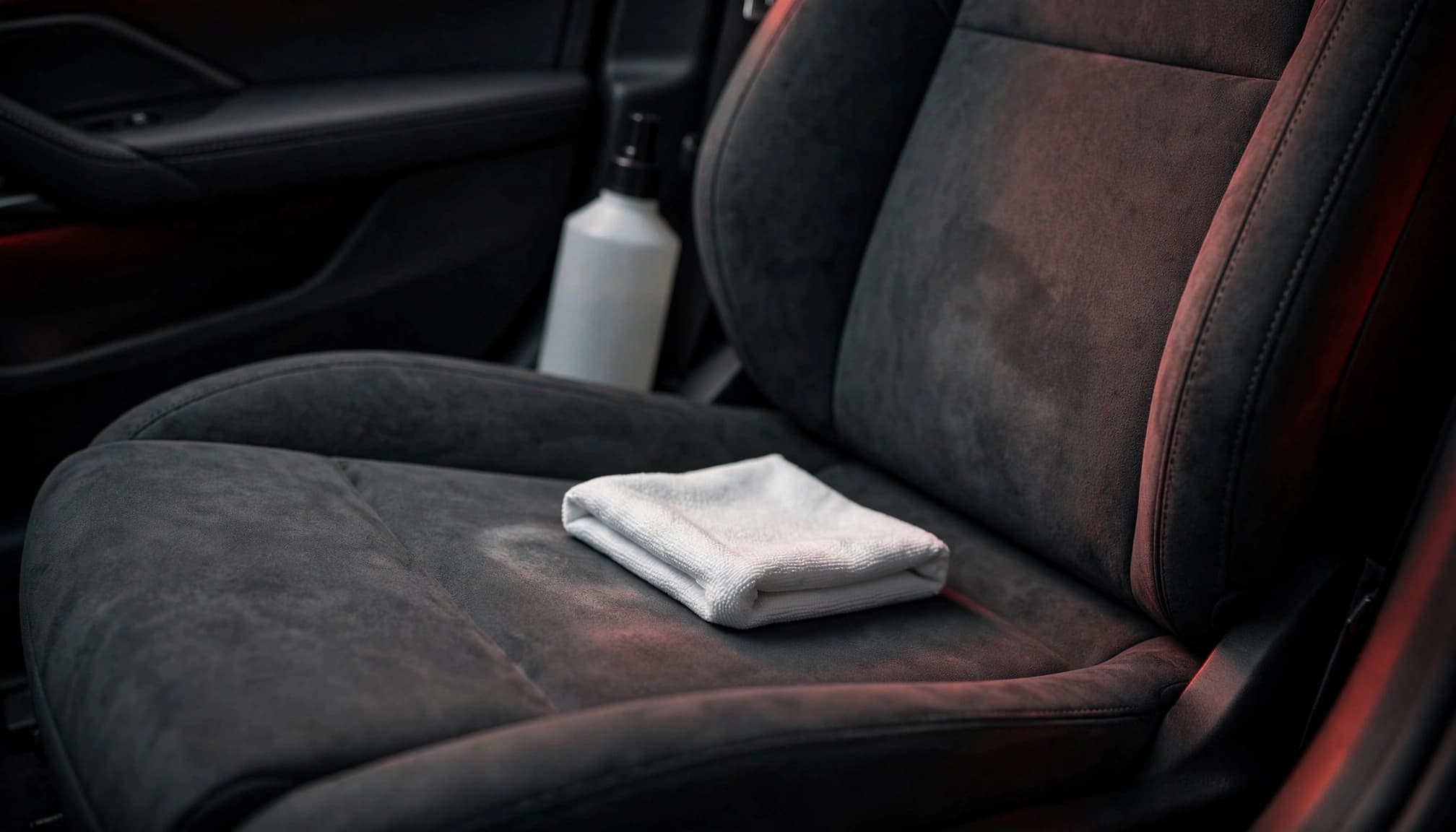
- Remove loose items and crumbs. Clear the seat base and the gap beside the backrest so debris won’t drag across the fabric.
- Vacuum gently. Use the clean upholstery attachment with light contact. Guide it over the surface and seams without pressing it into the fibers.
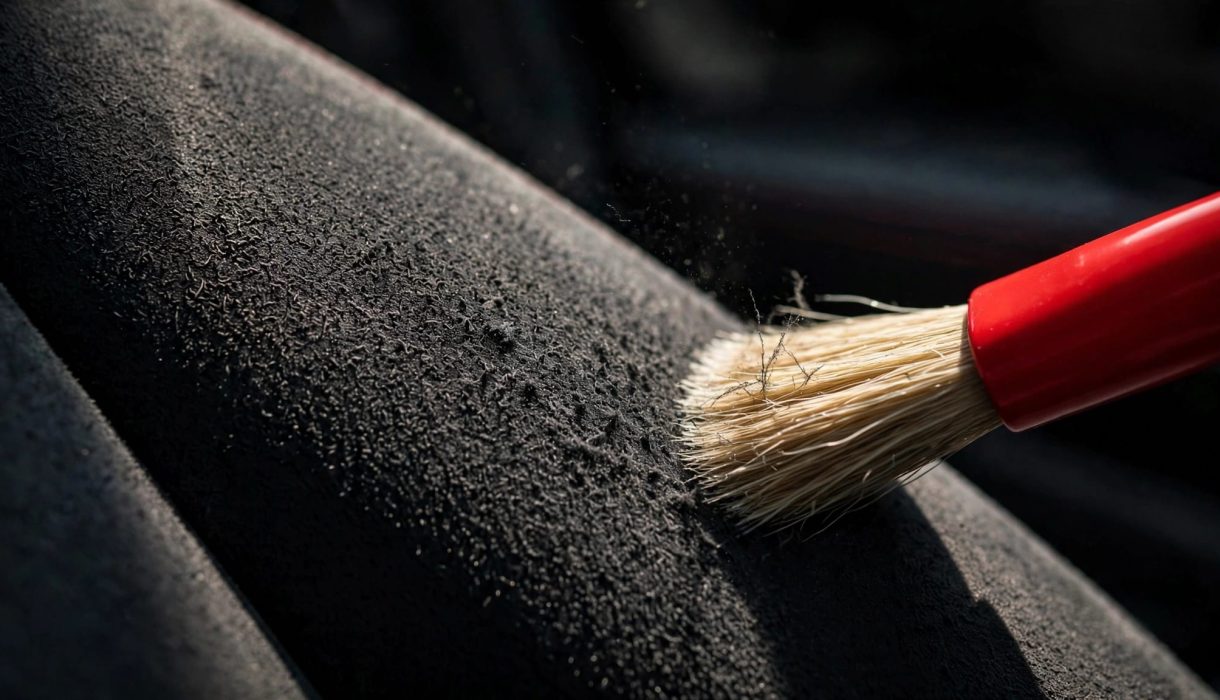
- Lift remaining dust. Use a soft brush or dry cloth for areas the vacuum missed. Keep your movements light.
Check the seat again before adding moisture. Dry cleaning may be enough for routine dust or a patch that looked dull because the nap had settled.
Wipe with minimal moisture
- Dampen and wring out a clean cloth. It should feel slightly damp, not wet enough to drip. Wipe the affected area gently without grinding the cloth into the seat.
- Blot any remaining mark. Press a clean section of cloth lightly onto it, then lift. Repeat with a clean area of the cloth rather than scrubbing back and forth.
- Remove residue carefully. If your approved method calls for mild soap, use it sparingly and follow with a thoroughly wrung, clean cloth. Don’t leave the seat saturated.
Alcantara’s cleaning instructions describe removing dust first, then using a slightly moistened white cotton cloth. For a more thorough clean, the manufacturer describes clean water and mild soap with a soft cloth or sponge that has been thoroughly wrung out. Your car’s care instructions still take priority for its installed seats.
Treat spills without spreading them
A fresh spill needs prompt attention, especially before it reaches seams or settles into the surface. Alcantara advises treating stains within 30 minutes and working from the outside edge toward the center.
Blot a fresh spill first
Use a clean, absorbent cloth to lift the spill. Start at its outer edge and move inward so the affected area doesn’t grow. Turn the cloth to a clean section as it picks up liquid.
Keep pressure light. A hard push can drive liquid farther into the seat, while rapid rubbing can change the look of the nap. Once you’ve lifted what you can, use only the cleaning method approved for the material and vehicle.
Take care with dried or oily marks
A dried mark may need more than one gentle attempt. Vacuum loose residue first, then test a slightly damp cloth in a hidden spot before working on the mark. Let the area dry between attempts so you can see what remains.
Body oil on a seat bolster can also make fibers look matted. Repeatedly wetting that patch isn’t a reliable fix. If it remains dark or stiff after careful cleaning, ask an interior-detailing professional to assess it rather than increasing the pressure.
Let the seat dry before restoring the nap
Moist fibers are easier to disturb. Give the seat time to dry before deciding whether its texture needs attention.
Allow plenty of drying time
After a more thorough clean, Alcantara’s instructions say to leave the material to dry overnight. Keep the seat out of use during that time where practical. In a warm Dubai car, ventilation is a better choice than directing heat at a damp patch.
Check the surface with a clean hand before brushing. If it still feels cool or damp, wait longer. Don’t use a hair dryer or intense heat to speed the process.
Brush lightly in several directions
Once dry, pass a clean, soft-bristle brush over the flattened area with gentle strokes. Change direction lightly to lift the fibers and blend their appearance with the rest of the seat. Don’t bear down or try to force a uniform look in one pass.
Wait for full drying before grooming the nap. Brushing a damp seat can leave the fibers looking pressed down again.
Alcantara recommends delicate brushing after drying. Keep that word in mind: the brush should move the surface fibers, not scrape the material.
Cleaning mistakes that can spoil the finish
Most problems come from using too much force or applying a method meant for tougher upholstery. A careful seat clean takes less product than many drivers expect.
Avoid harsh products and heavy water
Skip bleach, strong household cleaners, and unapproved interior sprays. Don’t assume an alcohol-based product is suitable for general seat cleaning. If your vehicle handbook or a stain-specific material guide gives different instructions, follow that guidance for the exact situation.
Never pour water onto the seat or soak it with a spray bottle. Alcantara’s method uses a slightly damp, wrung-out cloth, which is easier to control. Don’t assume a steam cleaner or extraction machine is appropriate for your installed seats without checking the vehicle manufacturer’s directions.
Avoid friction and heat
Stiff brushes, abrasive pads, and aggressive rubbing can leave a patch looking smoother than the rest of the seat. Scrubbing harder when a stain resists usually makes the finish less even.
Avoid direct heat while drying, too. A long stretch of air drying gives you a clearer view of the result before you decide whether another gentle pass is needed.
Keep seats fresh between long drives
Regular light care reduces the need for a larger clean. It’s particularly useful if your car carries passengers, luggage, or snacks on frequent trips.
Clear dust before it builds up
Dust the seats with a soft brush or dry cloth as part of your usual interior tidy. Vacuum crumbs before they work into the seat seams. For routine wiping, use the slightly damp cloth approach recommended by Alcantara, subject to your vehicle’s instructions.
Give high-contact areas a quick look after a long drive. The driver’s outer bolster and seat base often need attention sooner than a rarely used rear seat.
Protect the texture through daily use
Deal with spills promptly and avoid leaving damp bags or clothing against the upholstery. If the surface looks pressed down but isn’t stained, let it dry and try a light brush before reaching for cleaner.
If a mark keeps returning or covers a large area, professional interior detailing may be the better option. Bud Car Wash offers interior detailing in Ras Al Khor, Dubai, with 24/7 availability. Confirm the seat material and the proposed cleaning method with the team before treatment.
Key Takeaways
- Vacuum Alcantara gently before using a damp cloth, so loose dirt doesn’t rub against the fibers.
- Test every cleaning method in a hidden area and use as little moisture as possible.
- Blot spills from the outside inward. Don’t scrub a stain that resists light treatment.
- Let the seat dry completely, then brush the nap delicately in several directions.
- Check your vehicle’s care instructions before using a product or cleaning machine.
FAQ
Can I use a regular car upholstery cleaner on Alcantara?
Don’t assume it is suitable because the label says “upholstery.” Check the cleaner’s directions, Alcantara’s guidance, and your vehicle handbook. Test a permitted product in a hidden area and let the test patch dry before treating a visible seat panel.
Why does my Alcantara seat look shiny after cleaning?
A shiny patch may be damp, still hold residue, or have fibers pressed in one direction. Let it dry fully first. Then try a delicate pass with a soft brush. If the patch feels stiff or its appearance doesn’t improve, stop brushing and have it assessed before another wet clean.
How often should I clean Alcantara car seats?
Remove surface dust regularly rather than waiting for a deep clean. Alcantara recommends daily dusting with a soft brush or dry cloth and a weekly wipe with a slightly damp white cotton cloth. Your use of the car matters too: clean up crumbs and spills after a trip instead of leaving them until the next scheduled tidy.
A clean seat should still feel soft
The best result is a clean surface that keeps its texture. Gentle contact and minimal moisture protect that finish better than a forceful scrub.
Vacuum first, test your method, and blot marks carefully. Once the seat is fully dry, a light brush can bring the nap back into shape without undoing your cleaning work.
Get a price on interior detailing
Shop #7, 44, 22nd Street, Ras Al Khor Industrial Area 2, open 24 hours. Tell us the car and we reply with a price and a time.
Would rather talk? Call +971 55 168 5050. Someone answers 24 hours.
See us first on Google
Google lets you choose the sites you want to see more of. Add Bud Car Wash as a preferred source and our car care guides show up more often in Top Stories and in Google’s AI answers.
Opens Google in a new tab. You can remove us again at any time.

Sammie O is the owner of Bud Car Wash, a 24 hour hand car wash and detailing shop at Shop #7, 44, 22nd Street, Ras Al Khor Industrial Area 2, Dubai. He writes the car care guides on this site based on work done in his own bay.
View All Articles