Last updated 4 August 2026 by Sammie O, owner of Bud Car Wash in Ras Al Khor Industrial Area 2, Dubai.
A car wash at home can leave your vehicle clean, glossy, and protected without the cost of a full detailing service. The result depends less on expensive equipment and more on using the right products, washing in the correct order, and keeping dirt away from the paint.
Many paint marks start with one simple mistake: rubbing loose grit across a dry panel. Use a shaded location, separate wheel tools, clean microfiber materials, and a careful top-to-bottom process. Start with the right setup before you reach for the hose.
Why the Right Car Wash at Home Method Matters
Your vehicle collects more than visible dust. Road film, brake dust, sand, bird droppings, and oily residue can cling to the paint and wheels. A quick wipe with an old cloth may spread these particles across the surface and create fine scratches.
A proper wash loosens contamination before contact. Water removes loose dirt, shampoo provides lubrication, and a clean mitt lifts remaining residue away from the panel. This combination gives you a cleaner finish with less rubbing.
The weather also matters. In Dubai, strong sunlight and high temperatures can dry water and shampoo quickly. That can leave mineral spots and soap marks before you finish rinsing. Wash early in the morning, later in the afternoon, or in a shaded area where the panels stay cool.
A clean car can still develop swirl marks if the wash mitt carries grit from the lower panels to the paint.
Work in sections and rinse your tools often. The step-by-step car wash guide also recommends soaking the vehicle first and washing from the highest point downward. That order helps keep dirt from moving back onto clean areas.
The Right car wash at home Supplies
You don’t need a large collection of detailing products. A small set of suitable tools gives you better control and reduces the chance of paint damage.
Choose these product categories for a safe and effective wash:
- A pH-neutral car shampoo is gentle on clear coat, existing wax, and many ceramic coatings.
- Two large buckets help separate shampoo water from rinse water. A grit guard can add another layer of protection.
- A soft microfiber wash mitt is safer than a rough sponge because it holds dirt away from the paint.
- Dedicated wheel brushes should never be used on body panels. Select a soft brush for painted or clear-coated wheels.
- Several clean, plush microfiber drying towels absorb water without the rough texture of old household cloths.
- A hose with a gentle spray nozzle is enough for most vehicles. A pressure washer can help, but it needs careful handling.
- Use a wheel cleaner, glass cleaner, tire cleaner, and drying aid only when each product matches the surface.
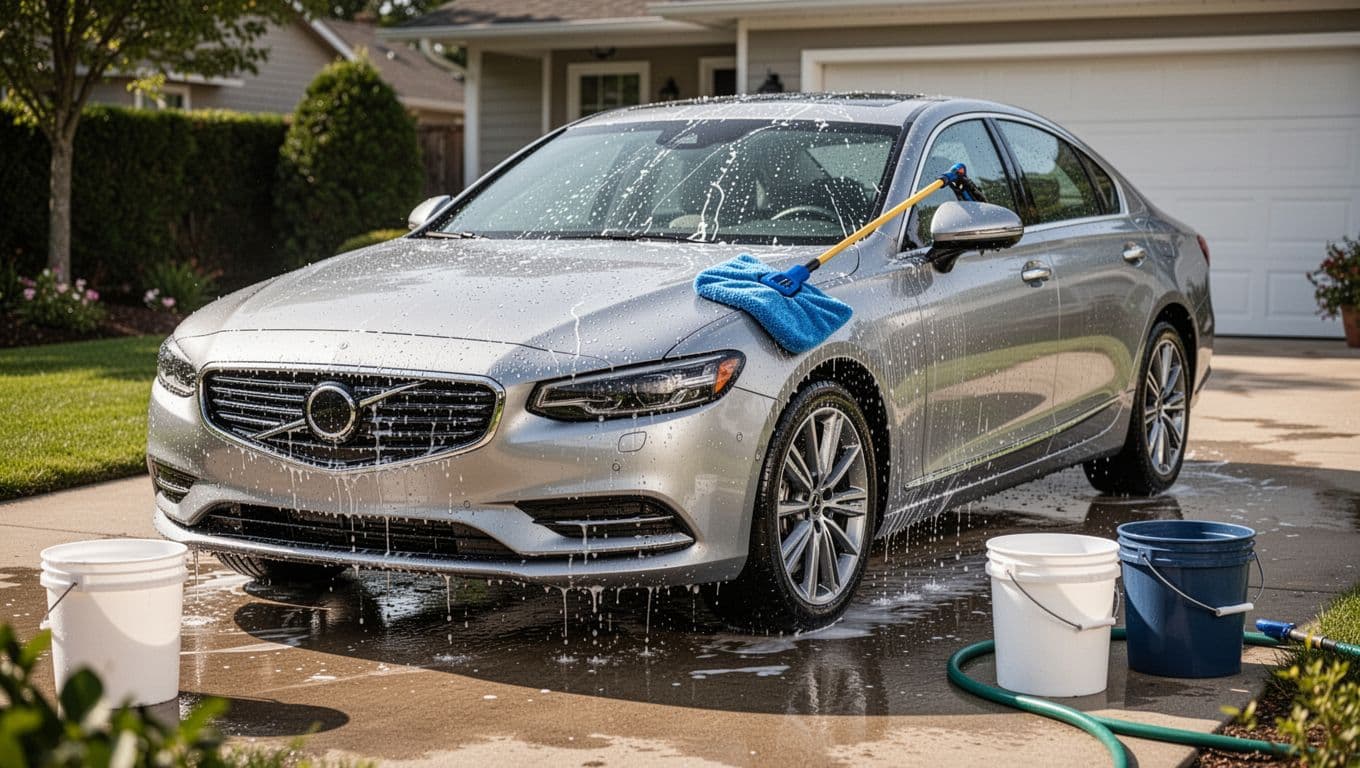
Keep one towel for paint, another for glass, and separate materials for wheels and tires. Wash microfiber towels separately from household laundry. Avoid fabric softener because it can reduce absorbency.
A hose and two buckets can produce an excellent finish when used correctly. If you’re comparing equipment choices, this home wash demonstration shows how pre-rinsing and foam can reduce contact with heavily soiled paint.
How to Wash Your Car at Home Step by Step
The best car wash at home follows a consistent order. Keep the process simple and avoid allowing soap or water to dry on the vehicle.
- Park in shade and close the windows.
Remove watches, rings, or anything that can touch the paint. Check that the bodywork and wheels are cool. Lift the wipers only if the vehicle manufacturer allows it. - Rinse the vehicle thoroughly.
Start at the roof and work down. Use the hose or pressure washer to remove loose sand and dust before the mitt touches the surface. A wide spray pattern is safer than a narrow, powerful jet. - Clean the wheels before the body.
Wheels collect the heaviest brake dust and road grime. Spray a suitable wheel cleaner on one cool wheel, let it work for the time stated on the label, then agitate gently with a dedicated brush. Rinse completely before moving to the next wheel. - Prepare the buckets.
Add car shampoo to one bucket and clean water to the other. Dip the mitt into the shampoo solution, then wash one small area at a time. Rinse the mitt in the clean-water bucket before collecting more shampoo. - Wash from the roof downward.
Clean the roof, glass, upper doors, bonnet, and boot first. Lower doors, bumpers, and side skirts come last because they hold more grit. Use straight, light passes instead of circular scrubbing. Rinse the mitt whenever it feels dirty. - Rinse each section as you go.
Don’t leave shampoo sitting on the panels while you finish the whole car. A gentle flow of water can carry soap away without forcing dirt across the surface. Pay attention to mirrors, trim, door handles, badges, and panel gaps. - Dry without dragging water across dry paint.
Start with a clean microfiber drying towel. Lay it flat and pull it lightly, or pat the panel dry. Use a second towel when the first becomes damp or collects residue. Open the doors briefly and dry the edges, fuel door, and boot lip.
If the car is heavily dirty, a second gentle wash is safer than pressing harder with the mitt. Aggressive rubbing may remove a mark faster, but it can also leave dull patches or fine scratches.
For stubborn bird droppings or insects, soak the area with shampoo solution for several minutes. Place a damp microfiber towel over the residue if needed, then lift it away gently. Never scrape dried contamination with a plastic card, blade, or dry cloth.
Paint and Wheel Safety Notes
Different finishes need different care. Standard glossy paint with a clear coat is usually easy to maintain, but a product that works on one surface may damage another.
Matte paint should be washed with a matte-safe cleaner. Avoid wax, polish, abrasive compounds, and strong rubbing because these can create uneven shiny patches. Ceramic-coated vehicles need a shampoo that matches the coating instructions. A harsh cleaner or unsuitable wax may reduce the expected finish and water behavior.
Wheel finishes also vary. Painted and clear-coated alloys, polished aluminum, chrome, and diamond-cut wheels don’t all react the same way. Use a product labeled for your wheel type, keep the wheel cool, and test an unfamiliar cleaner on a small hidden area first.

Avoid these common mistakes:
- Don’t use dish soap as your regular car shampoo. It isn’t designed for automotive finishes and may remove protective products.
- Don’t use the same bucket, brush, or cloth for wheels and paint.
- Don’t spray a pressure washer directly into door seals, soft convertible tops, damaged paint, wheel bearings, or electrical openings.
- Don’t apply tire dressing to the tread or brake components. Keep the product on the sidewall and remove excess to reduce sling.
- Don’t use acidic wheel cleaner on polished or sensitive finishes unless the label clearly approves it.
Read the product label before mixing cleaners. Never combine wheel chemicals, bleach, household detergents, or other products in the same container.
Drying, Protection, and Interior Finishing
Drying is part of the wash, not an optional final touch. Minerals in tap water can remain on the surface after evaporation, especially when the car sits in hot weather. A clean drying towel reduces these marks and leaves less work for polishing later.
After drying, apply protection if the surface needs it. A spray sealant or drying aid gives short-term gloss and helps water run off during future washes. Traditional wax provides a richer finish for some vehicles, while a ceramic maintenance product may suit a coated car. Follow the instructions and apply only to clean, dry surfaces when required.
Don’t apply a product over dust, water spots, or traffic film. The residue can become trapped beneath the protection and make the finish look uneven.
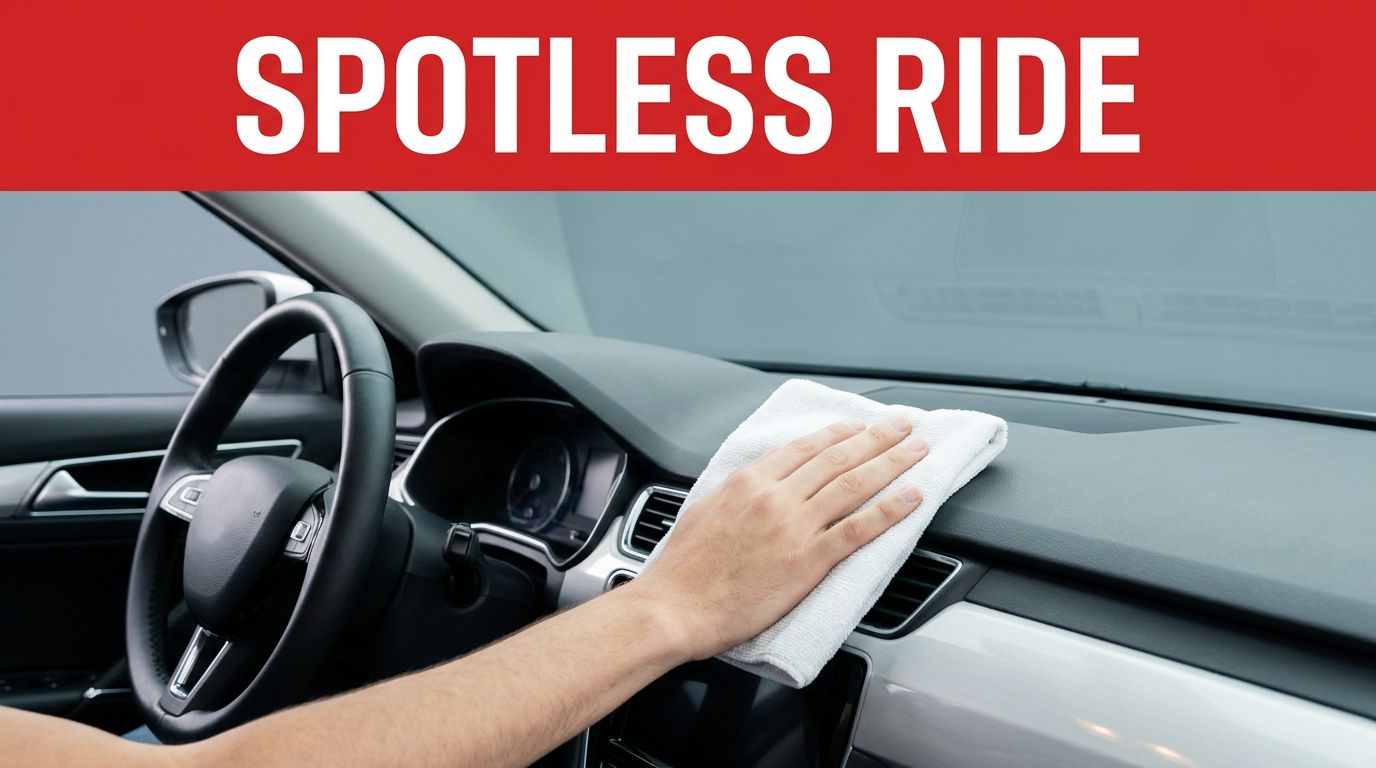
The interior can be refreshed with a separate set of tools. Remove floor mats, vacuum seats and carpets, wipe hard surfaces with a suitable interior cleaner, and clean glass with a lint-free towel. Avoid soaking electronic controls, speaker grilles, leather seats, or roof lining.
When a Home Wash Isn’t Enough
A home wash handles regular dust, light road film, and routine maintenance. It may not remove bonded contamination, heavy oxidation, deep stains, paint transfer, or neglected interior buildup.
Clay treatment can remove bonded particles after washing, but it needs plenty of lubricant and light pressure. Polishing should be left to someone with the right machine, pads, and paint knowledge because excessive correction can reduce clear coat thickness.
Professional detailing is also useful when you want paint decontamination, machine polishing, interior extraction, or a protective service. For ideas about different wash methods and equipment, this car wash discussion on r/cars offers practical owner perspectives, although product advice should always be checked against your vehicle’s finish.
Conclusion
A successful car wash at home starts before the first spray. Choose shade, use clean tools, separate wheel equipment, rinse thoroughly, and wash from the roof down with light pressure.
The right routine protects paint, wheel finishes, and existing surface protection while keeping the vehicle fresh between professional services. When contamination or damage needs more than a safe wash, professional detailing provides the careful cleaning and finish restoration your vehicle may require.