Last updated 4 August 2026 by Sammie O, owner of Bud Car Wash in Ras Al Khor Industrial Area 2, Dubai.
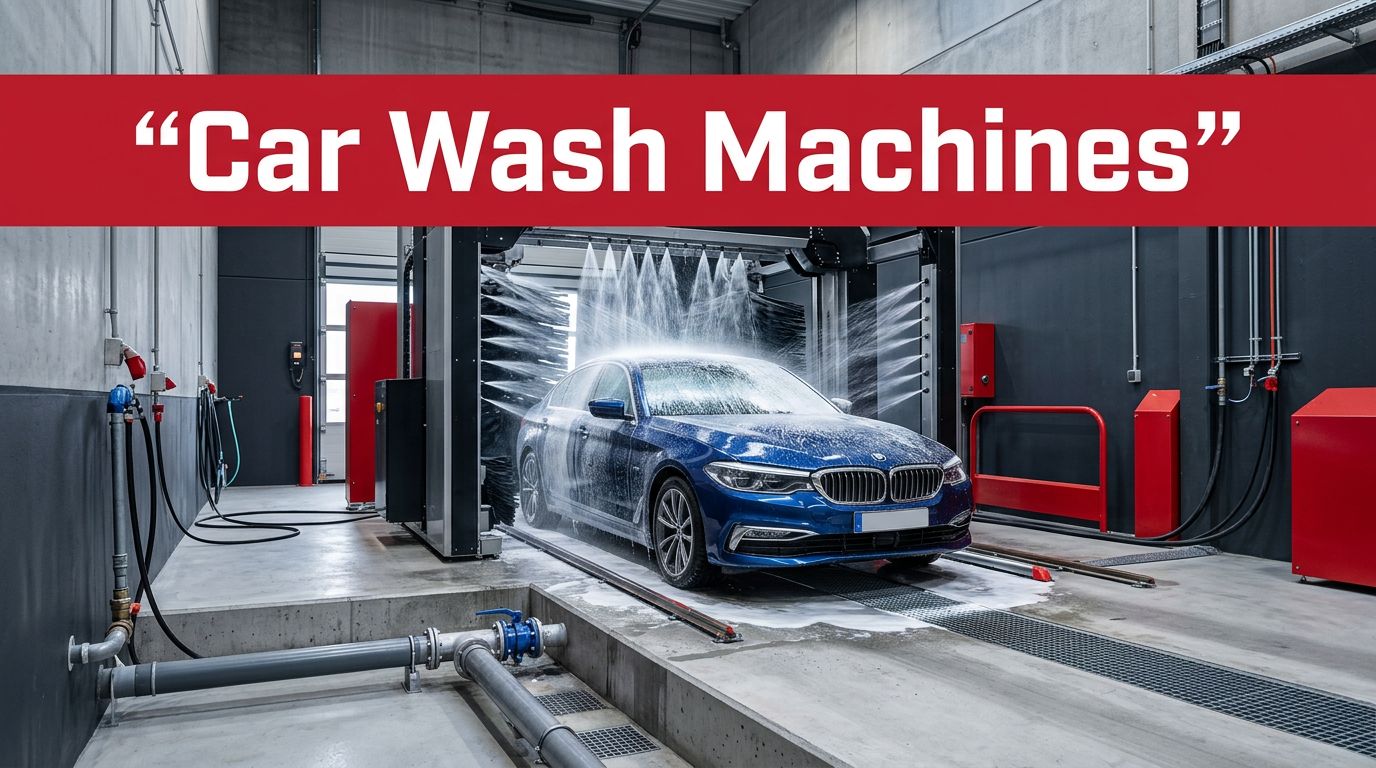
An automatic car wash machine can turn a slow wash bay into a faster, more consistent service. The wrong system can create expensive drainage, electrical, and maintenance problems.
For a car wash owner, detailer, fleet manager, or private buyer, the right choice depends on daily volume, available space, wash quality, labor, and budget. A machine should support the service you promise, not limit it.
Before comparing brands, check how each system works, what installation requires, and what it costs after purchase. That is where a reliable investment starts.
How to Choose a Car Wash Machine for Your Site
Start with your wash model, not the equipment catalogue. A small detailing studio may need a high-pressure washer, foam system, vacuum, and water treatment equipment. A busy retail location may need an in-bay automatic system or a full conveyor tunnel.
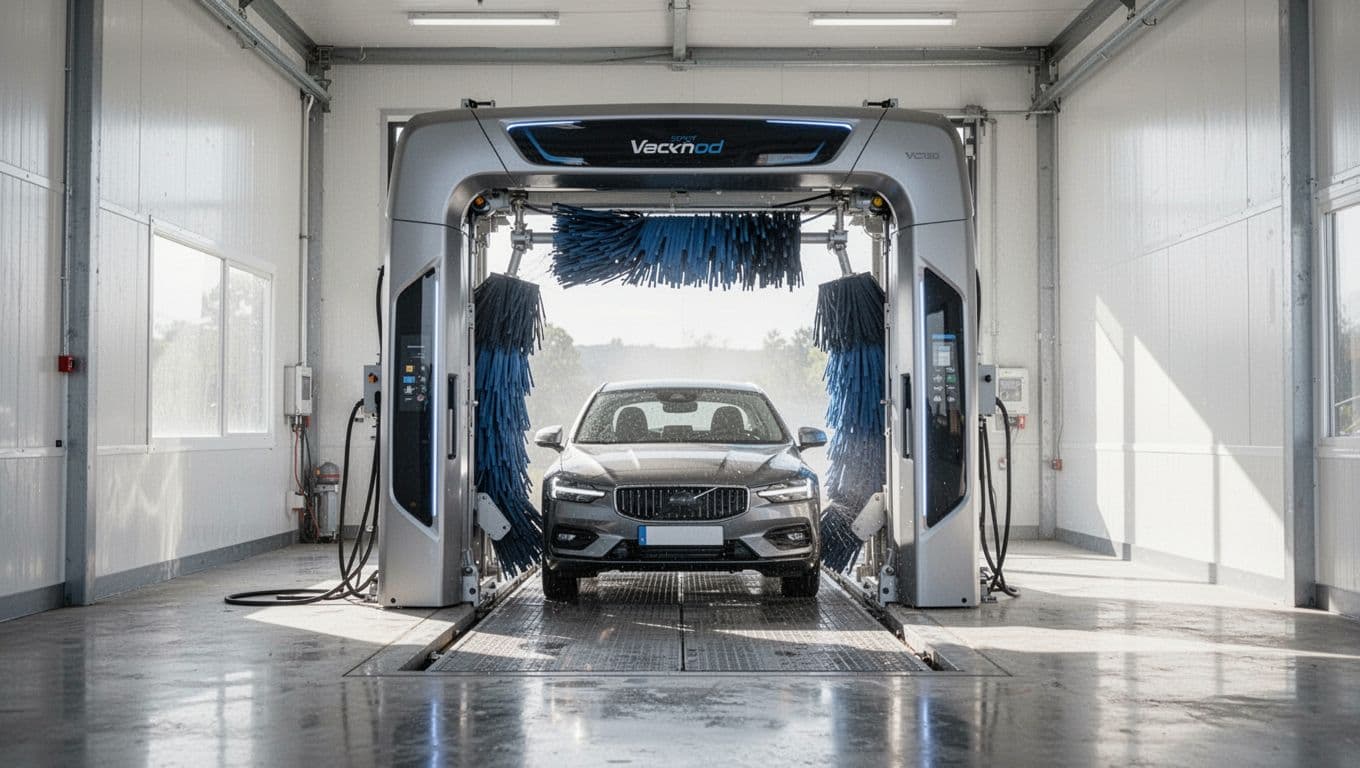
An in-bay automatic machine keeps the vehicle in one position while a gantry moves around it. This setup suits sites with limited space and moderate demand. It can offer a consistent exterior wash without requiring a large team.
A tunnel system moves vehicles through several wash stages. It needs more space, more civil work, and stronger planning, but it can handle higher traffic when the site layout supports it. The conveyor, dryers, brushes, chemical dosing, and payment system must work together.
Match the system to daily demand
A fleet operator may value repeatable results and short service times. A detailing business may prefer more manual control, because delicate paintwork, wheels, interiors, and protective treatments need personal attention.
If you need a car wash machine for a retail site, ask the supplier for its rated capacity, cycle time, water use, power demand, and recommended bay dimensions. Compare those figures with your busiest operating periods, not your average quiet days.
Consumers should also separate commercial machines from home-use pressure washers. A pressure washer can support driveway cleaning, but it isn’t the same as an automatic wash system. Home users should check local wastewater rules before washing vehicles where runoff can enter storm drains.
Car Wash Machine Types Compared
Each system has a different balance of speed, cleaning action, space, and operating cost. The table below gives a practical starting point.
| System | Best fit | Relative capital cost | Main consideration |
|---|---|---|---|
| Rollover or in-bay automatic | Small to medium wash sites | Medium | Vehicles remain stationary while the equipment moves |
| Touchless automatic | Sites focused on no brush contact | Medium to high | Needs suitable pressure, chemicals, and dwell time |
| Friction automatic | Retail washes needing strong surface contact | Medium to high | Brushes or cloth media require regular inspection |
| Conveyor tunnel | High-volume commercial locations | High | Requires more space, civil work, and equipment |
| Self-service bay | Operators who want customer-controlled washing | Low to medium per bay | Payment, pumps, hoses, and bay maintenance remain important |
Touchless systems use pressurized water and chemicals rather than direct brush contact. They can be useful for vehicles with sensitive finishes, but no-contact washing still depends on proper chemical concentration, nozzle condition, water pressure, and pre-rinse performance.
Friction systems use cloth or brushes to remove road film through contact. They can provide a strong visible clean when the wash media is clean and correctly maintained. Damaged or contaminated media can create poor results and may increase the risk of surface marks.
A trolley system can suit a compact bay, but published space figures are not universal. One supplier lists around 5 to 10 square metres for some trolley installations and 15 square metres as a minimum for certain setups. Treat this as early planning guidance only, then confirm the exact dimensions with the equipment manufacturer. The car wash equipment methods guide also gives a useful breakdown of common system types and washing methods.
Calculate Total Cost of Ownership
The purchase price is only one part of the budget. A lower-priced machine can become expensive if it needs major drainage work, frequent repairs, high water use, or specialist parts.
Include these costs before approving a purchase:
- The machine, pumps, dryers, controls, payment equipment, and safety systems.
- Delivery, installation, civil work, plumbing, electrical work, and commissioning.
- Water treatment, reclaim equipment, chemical storage, drainage, and wastewater handling.
- Detergents, waxes, cloth or brush media, filters, hoses, and replacement nozzles.
- Labor, operator training, servicing, insurance, utilities, and potential downtime.
A complete car wash machine quote should state what is included. Ask whether the price covers the control panel, installation drawings, site supervision, testing, staff training, spare parts, and warranty support. A quote that excludes these items can look attractive while leaving major costs for later.
A machine quote is incomplete until it lists installation, water treatment, drainage work, commissioning, and operator training.
Water and electricity can affect monthly costs more than expected. Compare the supplier’s water-use figures with your expected vehicle volume. Check whether a reclaim system is compatible with the machine and local water quality. Reclaim equipment may reduce fresh-water demand, but it needs filters, tanks, cleaning, and regular monitoring.
The car wash business equipment checklist is useful when reviewing supporting equipment beyond the main automatic unit. Use it to check for missing items before comparing final proposals.
Prepare Water, Drainage, Electrical, and Permits
Site preparation should happen before you order equipment. A machine may fit inside a bay but still fail during installation if the floor, drains, water supply, or electrical service cannot support it.
Water requirements depend on the pump, nozzle arrangement, reclaim design, and wash cycle. Confirm the required flow rate, pressure, pipe size, inlet connection, filtration, and storage capacity. If the site has inconsistent supply pressure, the system may not deliver the same wash quality throughout the day.
Drainage needs careful planning. The floor should direct wastewater to the correct collection points, with suitable grates and access for cleaning. Local rules may require silt traps, oil separation, pretreatment, or a specific connection to the sewer system. Never assume that wash water can enter a standard stormwater drain.
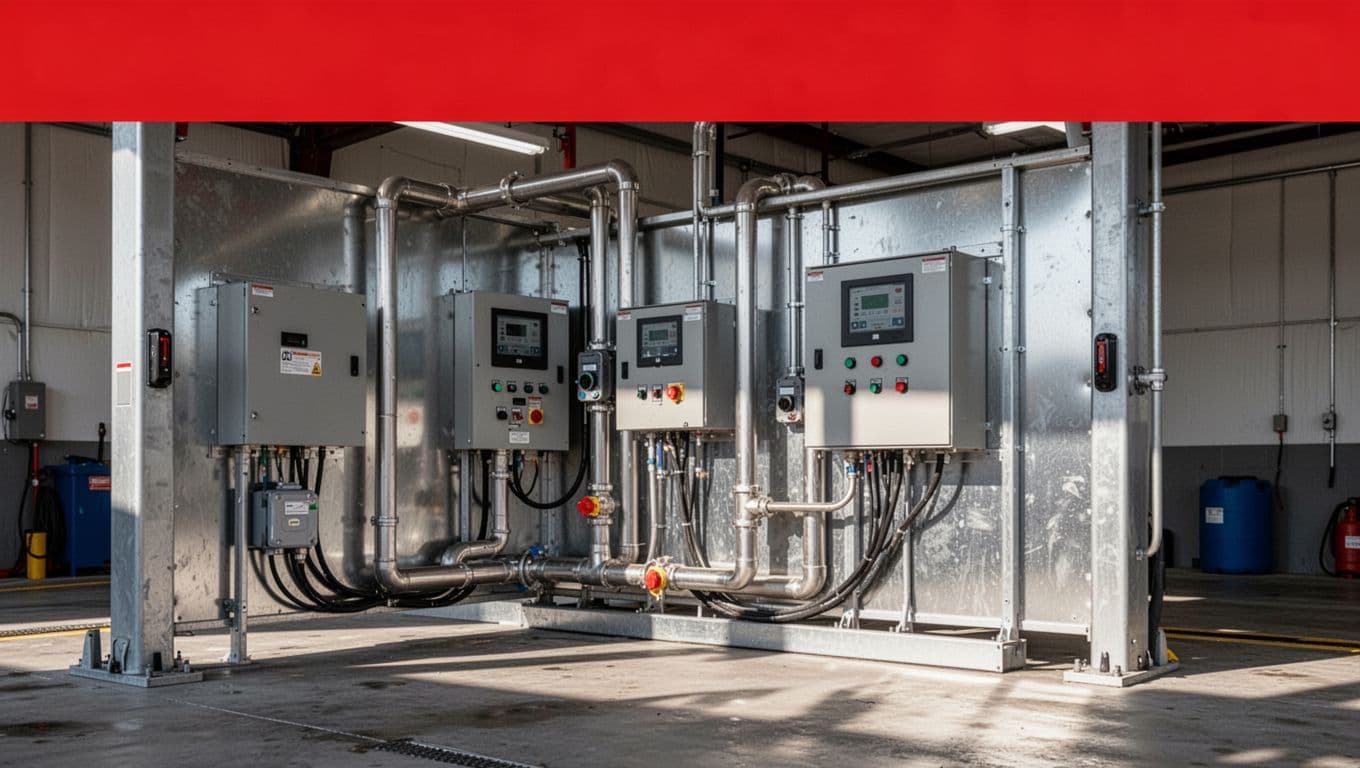
Electrical needs also vary by model. Confirm voltage, phase, amperage, circuit protection, isolators, control-panel location, and cable routing with a qualified contractor. Wet areas need appropriate equipment protection, safe access, and a clear emergency-stop arrangement.
For a Dubai installation, confirm requirements with the property owner, contractor, utility providers, and relevant local authorities. Check building, plumbing, electrical, water-discharge, and local environmental requirements before work begins. The automatic wash machine space guidance can help with initial layout discussions, but it doesn’t replace a local site inspection or approval.
Choose Features That Protect Quality and Uptime
The right features should improve wash results, reduce avoidable wear, and make daily operation easier. They shouldn’t be selected only because they appear on a brochure.
Look for adjustable chemical dosing, reliable pressure control, clear fault indicators, accessible filters, emergency stops, and simple operator controls. Automatic dryers should have enough coverage for the vehicle sizes you expect to wash. If you serve SUVs, vans, or fleet vehicles, confirm clearance and wash-arm movement before purchase.
Wash media deserves close attention. Ask how often cloth or brushes should be replaced, how they are cleaned, and whether replacement parts are available locally. Touchless equipment should include accessible nozzles and filters, because blocked components can quickly reduce cleaning performance.
Plan maintenance before the first wash
Daily checks may include rinsing bay surfaces, checking chemical levels, inspecting hoses, clearing screens, and looking for leaks. Nozzles, brushes, cloth, belts, bearings, pumps, and dryers need checks based on the manufacturer’s service schedule.
Staff should know how to stop the machine safely and report unusual vibration, pressure loss, water leaks, chemical changes, or incomplete drying. Small faults are easier to correct before they cause a cancelled wash or a damaged component.
Ask the supplier for a written maintenance plan and parts list. Confirm response times, warranty exclusions, technician availability, and the cost of common service items. A machine that is easy to repair can protect service continuity better than a cheaper system with limited support.
Conclusion
The right car wash machine depends on your space, vehicle volume, wash method, staff, and service promise. Rollover, touchless, friction, tunnel, and self-service systems all have a place, but each creates different installation and operating demands.
Review the full cost of ownership, not only the equipment price. Confirm water supply, drainage, electrical capacity, permits, and local environmental requirements before signing an order.
A well-planned system delivers cleaner vehicles, more consistent service, and fewer interruptions. The best investment is the machine that fits the site and supports the quality your customers expect.