You open the car door after a wash and find a damp seat, wet carpet, or water along the window. A car that leaks after a wash can be worrying, especially when you’re about to drive a long distance or carry luggage.
The wash may have exposed an existing problem with a drain, seal, window fit, or windshield. The water’s location offers useful clues, but it doesn’t confirm the cause. Start with a careful inspection, then get professional help if the leak returns or reaches electrical components.
Key Takeaways
- Water after a wash can point to a blocked drain, worn seal, poorly aligned window, or leak around the windshield or sunroof.
- Where water first appears can help narrow the search, but water may travel beneath trim or carpet before it becomes visible.
- Check for dampness and debris safely. Avoid pressure washers, sharp tools, and forceful air when testing drains.
- Persistent water, musty odors, wet wiring, or a leak near the dashboard need a professional inspection.
Car leaking after wash: common causes
A high-volume rinse can make a weak seal or drainage problem easier to notice. It doesn’t prove that the wash caused the fault, and the same wet carpet can have more than one possible source.
Blocked sunroof drains
Many sunroof designs direct water that passes the outer panel into channels and drain tubes. If leaves, dust, or other debris block a drain, water can overflow into the headliner, pillars, or cabin. Nissan Parts’ overview of water leaks describes how clogged sunroof drains can leave water with nowhere to go.
A blocked drain may leave dampness around a roof corner or down a pillar. The visible drip can be some distance from the blockage, so don’t assume the nearest opening is the source.

Worn seals or a poor window fit
Door, window, and sunroof seals can become cracked, flattened, loose, or misshapen. A window that doesn’t sit squarely in its frame can also leave a gap. Water may then pass the seal during a strong rinse, especially if the spray hits the gap directly.
AAA notes that sunroof rubber seals can crack and fail. Its information on sunroof seals is a reminder to check the seal itself, while remembering that a sunroof leak can also involve its drainage path.
Windshield, body, and other drains
Water around the windshield edge may point to a problem with the glass seal or a previous windshield installation. A leak near a door can come from the door seal, window alignment, or a blocked door drain. Some cars also have drains near the cowl or air-conditioning system. If a drain is blocked or water is routed incorrectly, moisture can enter the cabin.
The source isn’t always connected to the wash. For example, a clogged air-conditioning drain can cause cabin dampness at another time, and may be noticed after a wash by coincidence.
What the leak pattern can tell you
The first wet spot is useful evidence. Note whether water appears at the roof, window, windshield, footwell, or inside a door. Also note whether it happens only after a wash, after rain, while the air-conditioning is running, or under more than one condition.
| Where you notice water | Possible areas to inspect |
|---|---|
| Headliner or upper pillar | Sunroof drain, sunroof seal, roof seam |
| Door panel or door sill | Window fit, door seal, door drain |
| Dashboard or windshield corner | Windshield seal, cowl area, nearby drain |
| Front footwell | Door, windshield, cowl, or air-conditioning drain |
| Rear footwell or luggage area | Rear door, hatch seal, rear glass, body seams |
These are starting points, not a diagnosis. Water can run behind interior trim and under carpet before it shows, so a wet floor doesn’t always mean the leak is directly above it.
How to find the water’s entry point
Record where and when it appears
Before cleaning the area, take a few clear photos and note the conditions. Record which side is wet, whether the roof or windows were open, and whether the water appeared during the wash or after the car was parked. Check the front and rear footwells, seat edges, headliner, and luggage area.
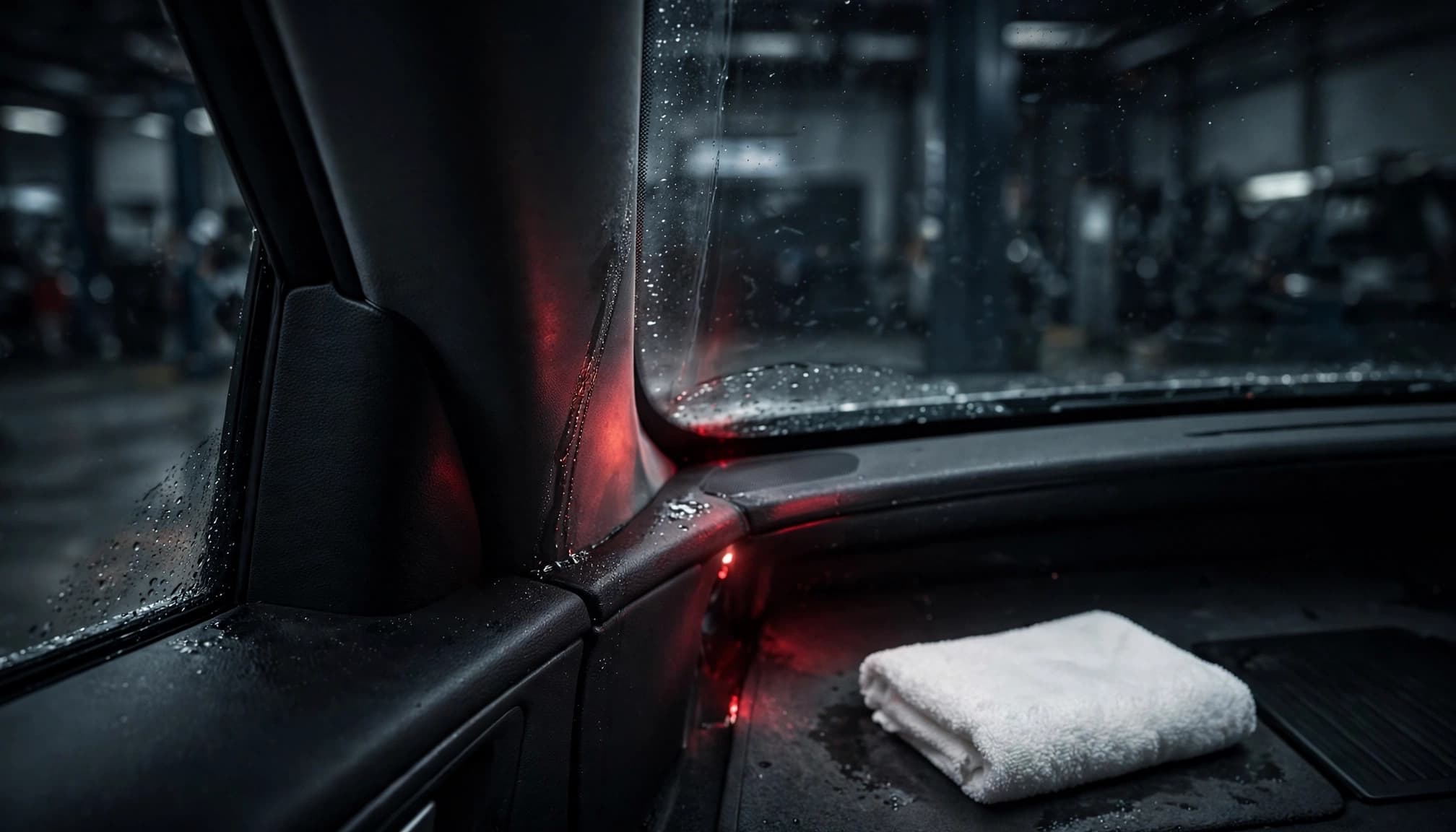
A clean, dry towel can help show where fresh water lands. Place it beneath the suspected area, then check for new moisture after a mild rinse. Keep the car parked on level ground where possible, and avoid testing several areas at once.
Inspect from the outside and inside
Look for visibly damaged weatherstripping, debris around the sunroof opening, and window gaps that appear uneven. Check whether doors and windows close fully. AAA’s sunroof-tray guidance describes opening the sunroof to view its tray and drain holes. Designs differ, so use the owner’s manual for model-specific access and avoid dismantling trim.
If you use water to test an area, ask someone to watch inside while you apply a gentle flow to one exterior section at a time. Start low and move upward gradually. Don’t aim a pressure washer at seals, glass edges, or drain openings. Stop if water begins entering the cabin.
Safe checks you can do yourself
Start with visible and low-risk checks. Remove leaves from accessible areas around the windshield cowl or sunroof channel, but don’t push debris deeper into a drain. Wipe away dirt from door and window seals with a soft cloth, then inspect the rubber for cracks, gaps, or sections that have come loose.
Avoid using metal wire, sharp picks, or compressed air to clear drains. These can damage a hose or push a blockage farther in. Don’t pour a large amount of water into a sunroof channel, and don’t remove headliner panels or door trim unless you have the right instructions and experience.
After the inspection, dry accessible water with towels and open the doors in a safe, dry place to air out the cabin. Lift removable floor mats to check underneath. Carpet padding can hold water even when the surface feels dry, so a quick wipe may not be enough to prevent a lingering odor.
When professional repair is needed
Book an inspection if water returns after you clean visible debris, or if the source isn’t clear. A technician can check the drain paths, door and window fit, windshield installation, and seals without relying on guesswork. AAA lists clogged sunroof and air-conditioning drains among the possible sources a mechanic may investigate when a car has water accumulation or an unusual smell.
Get help promptly if water reaches the dashboard, electrical connectors, seat wiring, or fuse areas. Warning lights, electrical faults, repeated window problems, or a soaked headliner also need attention. Don’t keep testing the leak with more water when the cabin is already wet.
A persistent musty smell or damp carpet is another reason to arrange an inspection. AAA’s list of possible drain issues includes clogged sunroof and air-conditioning drains. A technician can check for hidden moisture and identify the entry point before the problem affects another area of the interior.
Keep the cabin dry after the repair
Once the source is repaired, dry the carpet and upholstery fully. If the padding beneath the carpet remains wet, ask a professional to assess it rather than covering the damp area with a mat. Lingering moisture can lead to odors and may hide a leak that hasn’t been fixed.
Check the relevant seals and drains during routine cleaning, particularly before a long drive or a trip with luggage in the boot. Clear leaves and loose debris from accessible channels. If water appears again, note the exact location and conditions, then share them with the repair technician. Those details can help shorten the diagnosis.
Frequently asked questions
Can a car wash cause a leak?
A wash can reveal a weak seal, blocked drain, or window-fit problem by sending water over areas that may not get the same exposure during ordinary driving. The timing alone doesn’t confirm that the wash damaged the car.
Is a small amount of water around a sunroof normal?
Some sunroof designs direct water that passes the outer panel into drain channels. Water should follow the intended path out of the vehicle. If it reaches the headliner, pillars, or cabin, have the drainage system and seals checked.
Can I clear a sunroof drain at home?
You can remove visible debris from an accessible channel, following your owner’s manual. Avoid wire, forceful air, or large amounts of water. If the drain remains blocked or you can’t locate its outlet, have a technician clear and inspect it.
Should I drive with wet carpet?
Dry the area and check for water near electrical components before driving. If the carpet is soaked, the source is unclear, or warning lights or electrical problems appear, arrange professional help before using the car.
Get the leak checked before your next drive
Water inside the cabin points to a problem that needs locating, not a single cause that fits every car. Check where the moisture first appears, inspect visible seals and drains safely, and record when the leak happens.
If the water returns, reaches electrical areas, or leaves the carpet damp, arrange a professional inspection. A confirmed repair and a fully dry interior make the next journey more comfortable and protect the cabin from further moisture.

Sammie O is the owner of Bud Car Wash, a 24 hour hand car wash and detailing shop at Shop #7, 44, 22nd Street, Ras Al Khor Industrial Area 2, Dubai. He writes the car care guides on this site based on work done in his own bay.
View All Articles