

Last updated 18 October 2026 by Sammie O, owner of Bud Car Wash in Ras Al Khor Industrial Area 2, Dubai.
If your car’s AC blows warm air while you’re stopped, then cools as you drive, airflow at the front of the car is one of the first things to consider. The “AC warm at idle” symptom can point to a cooling fan or airflow problem, but it doesn’t confirm one fault on its own.
The change can be frustrating on a long drive, especially in traffic or while waiting to pick someone up. Understanding what changes between idling and driving can help you describe the problem clearly and avoid unsafe DIY repairs.
Want us to do it instead?
We do manual car wash at our Ras Al Khor bay, 24 hours a day. Fill this in and we reply with a price and a time. The message writes itself, so you only tap send.
Would rather talk? Call +971 55 168 5050. Someone answers 24 hours.
Key Takeaways
- Air moving through the grille helps the condenser release heat. At idle, the cooling fan must provide much of that airflow.
- A weak or non-working fan, blocked airflow, low refrigerant, or a compressor or control issue can affect cooling.
- If cabin airflow is weak at every speed, the problem may differ from air that blows strongly but stays warm.
- Refrigerant service requires specialized equipment and qualified handling. Don’t vent refrigerant or try to diagnose the charge by adding more.
Why Car AC Can Cool Better While Driving
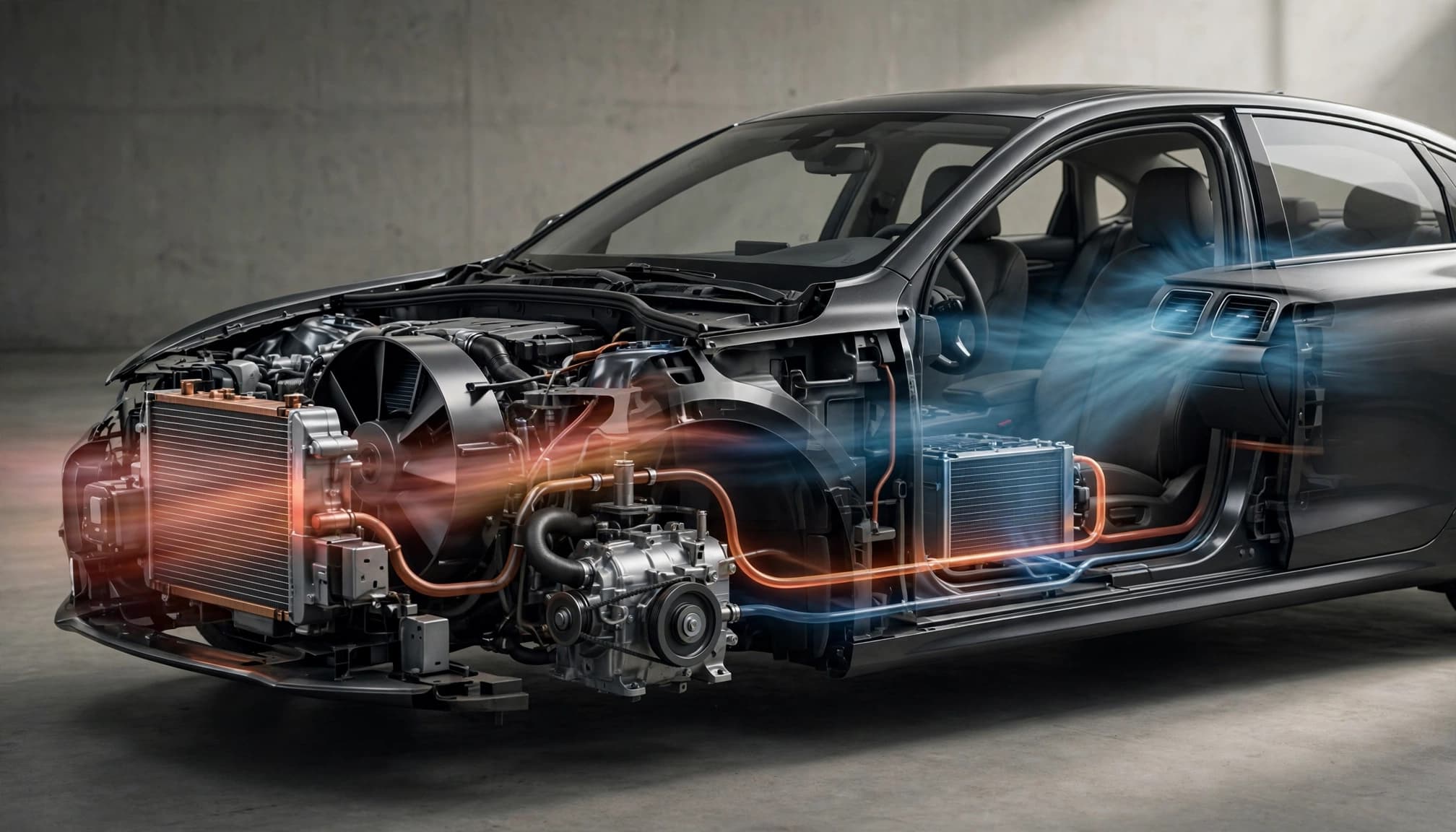
Your AC system removes heat from the cabin and releases it outside the car. The condenser, usually mounted near the radiator at the front, needs airflow to shed that heat. The condenser’s role in the AC cycle helps explain why airflow can change how well the system cools.
What changes when the car moves
At road speed, air passes through the grille and across the condenser. That added airflow can help the refrigerant lose heat even if the cooling fan is weak or not working as it should.
When the car is stopped, there’s little natural airflow. The fan has to pull or push air through the condenser and radiator. If airflow is restricted, or the fan doesn’t operate correctly, the AC may struggle to cool until the vehicle starts moving again.
On some vehicles, engine speed can also affect a belt-driven compressor’s output. But systems vary, so speed-related cooling doesn’t point to one cause by itself.
Why the fan matters at a stop
The AC and engine cooling systems share space at the front of the vehicle, and some vehicles use a fan for both jobs. A fan fault can therefore affect AC performance and, in some cases, engine temperature.

Common Causes of Warm AC at Idle
Several faults can produce similar symptoms. A technician needs to assess the system rather than assume that one part has failed.
Cooling fan or restricted airflow
A fan that doesn’t run when needed may leave the condenser without enough airflow at a stop. Dirt, leaves, or other debris on the front of the condenser can also limit airflow. Bent or damaged fins may contribute.
Repair shops list fan problems and restricted condenser airflow among the possible causes of warm AC at idle. Triangle Car Care’s overview of warm AC at idle describes these alongside refrigerant issues. A blocked condenser is not the only explanation, but it’s a useful part of the diagnosis.
Refrigerant, compressor, or control problems
A low refrigerant charge, often caused by a leak, can reduce cooling. Compressor performance or an electrical control issue can also affect how the system operates. These problems aren’t reliably diagnosed by looking at the vent temperature alone.
Other repair-shop guidance also lists compressor and control issues among possible causes. Because several faults can feel alike inside the cabin, adding refrigerant without a proper diagnosis may hide the real issue or create another problem.
Read the Symptoms Before Choosing a Repair
The pattern can help narrow down what a technician should inspect. It can’t confirm which component has failed, but clear observations are useful.
Warm at a stop, cooler on the road
If the air starts cooling soon after the car moves, airflow across the condenser deserves attention. A fan problem or a restriction near the condenser may fit that pattern. Note whether this happens in traffic, at a long stop, or whenever the car is parked with the engine running.
Also watch the engine temperature gauge. If it rises above its normal range while the vehicle is stopped, pull over safely and follow the vehicle’s instructions. Don’t continue driving an overheating car.
Weak airflow or warm air at every speed
If little air comes from the vents even when the fan setting is high, the issue may involve cabin airflow rather than the AC’s ability to remove heat. If airflow is strong but consistently warm at idle and on the road, the cause may be elsewhere in the cooling system.
A change that comes and goes can also matter. Record when the air turns warm, how long it takes to cool again, and whether the engine temperature changes at the same time. Those details are more useful than guessing at a part.
Safe Checks You Can Make Without Tools
You can gather useful information without opening the AC system or reaching near moving parts. Start by noting whether the problem appears only when the vehicle is stationary and whether the cabin fan continues to blow strongly.
From a safe position, look through the grille for obvious leaves or debris blocking the front of the condenser. Don’t push tools through the grille, bend the fins, or reach toward a fan. Electric fans can start unexpectedly, including after the engine has been switched off.
Pay attention to warning lights and the temperature gauge. If the engine begins to overheat, stop in a safe place and switch the engine off. Avoid running the engine in an enclosed garage, and don’t inspect the car while stopped in a traffic lane.
It also helps to tell the technician whether the AC cools at highway speed, how quickly it warms at a stop, and whether the issue is worse in hot weather. These observations support diagnosis without requiring you to disassemble anything.
What a Technician May Need to Diagnose
A proper diagnosis starts by reproducing the symptom and assessing the system as a whole. The technician may inspect condenser airflow, fan operation, visible damage, compressor operation, and the relevant electrical controls.
If the AC’s refrigerant charge is in question, it requires suitable service equipment. A refrigerant leak may need to be identified and repaired before the system is recharged. Simply adding refrigerant doesn’t show whether there’s a leak or whether another component is causing the poor cooling.
Refrigerant handling requires training
In the United States, technicians who service motor vehicle AC systems must meet EPA Section 609 training and certification requirements. Refrigerant recovery and handling are not suitable DIY jobs. Don’t release refrigerant into the air or connect charging equipment without the training and tools needed to use it safely.
Frequently Asked Questions
Is a bad cooling fan the most likely cause?
A fan fault is one possible cause, particularly when the AC cools better once the car is moving. Restricted condenser airflow, a refrigerant problem, or a compressor or control issue can cause similar symptoms. The pattern helps guide diagnosis, but it doesn’t confirm the failed part.
Why does the AC cool while driving but warm up in traffic?
The moving car brings more air through the grille and across the condenser. When the car stops, the fan must provide the airflow. If that airflow is inadequate, AC performance may drop at idle and improve once the vehicle moves.
Can I add refrigerant myself?
Don’t use refrigerant top-up as a substitute for diagnosis. A low charge may indicate a leak, and proper service requires equipment for handling refrigerant. A qualified technician can assess the system and determine what repair is needed.
Is it safe to keep driving with warm AC?
Warm AC alone doesn’t always mean the car is unsafe to drive. If the engine temperature rises, a warning light appears, or you notice another serious change, stop safely and switch off the engine. Never ignore signs of overheating.
Get the Cause Checked Before a Long Drive
AC that blows warm at idle can point to an airflow problem, but the fan, condenser, refrigerant charge, compressor, and controls may all need consideration. Notice whether the air cools once you’re moving, whether vent airflow is strong, and whether engine temperature changes.
Those details give a technician a clearer starting point. A proper diagnosis helps address the fault without unsafe refrigerant handling or unnecessary parts replacement.
Get a price on manual car wash
Shop #7, 44, 22nd Street, Ras Al Khor Industrial Area 2, open 24 hours. Tell us the car and we reply with a price and a time.
Would rather talk? Call +971 55 168 5050. Someone answers 24 hours.
See us first on Google
Google lets you choose the sites you want to see more of. Add Bud Car Wash as a preferred source and our car care guides show up more often in Top Stories and in Google’s AI answers.
Opens Google in a new tab. You can remove us again at any time.

Sammie O is the owner of Bud Car Wash, a 24 hour hand car wash and detailing shop at Shop #7, 44, 22nd Street, Ras Al Khor Industrial Area 2, Dubai. He writes the car care guides on this site based on work done in his own bay.
View All Articles