
Last updated 23 November 2026 by Sammie O, owner of Bud Car Wash in Ras Al Khor Industrial Area 2, Dubai.
A squeak after a car wash often comes from water on the brakes, not a sudden fault. Brakes may squeak after a car wash when moisture or a thin layer of surface rust causes brief noise as the brake pads meet the rotors.
If the sound fades as you drive, it may be temporary. A squeak that continues, gets louder, or comes with grinding or pedal vibration needs attention. Here’s how to tell the difference.
Want us to do it instead?
We do brake services at our Ras Al Khor bay, 24 hours a day. Fill this in and we reply with a price and a time. The message writes itself, so you only tap send.
Would rather talk? Call +971 55 168 5050. Someone answers 24 hours.
Why brakes may squeak after a car wash
Water reaches the wheels during a wash, and the brakes can stay damp after the vehicle leaves the bay. That moisture can affect the contact between the brake pads and rotors, producing a squeal during braking.
Moisture and a thin layer of rotor rust
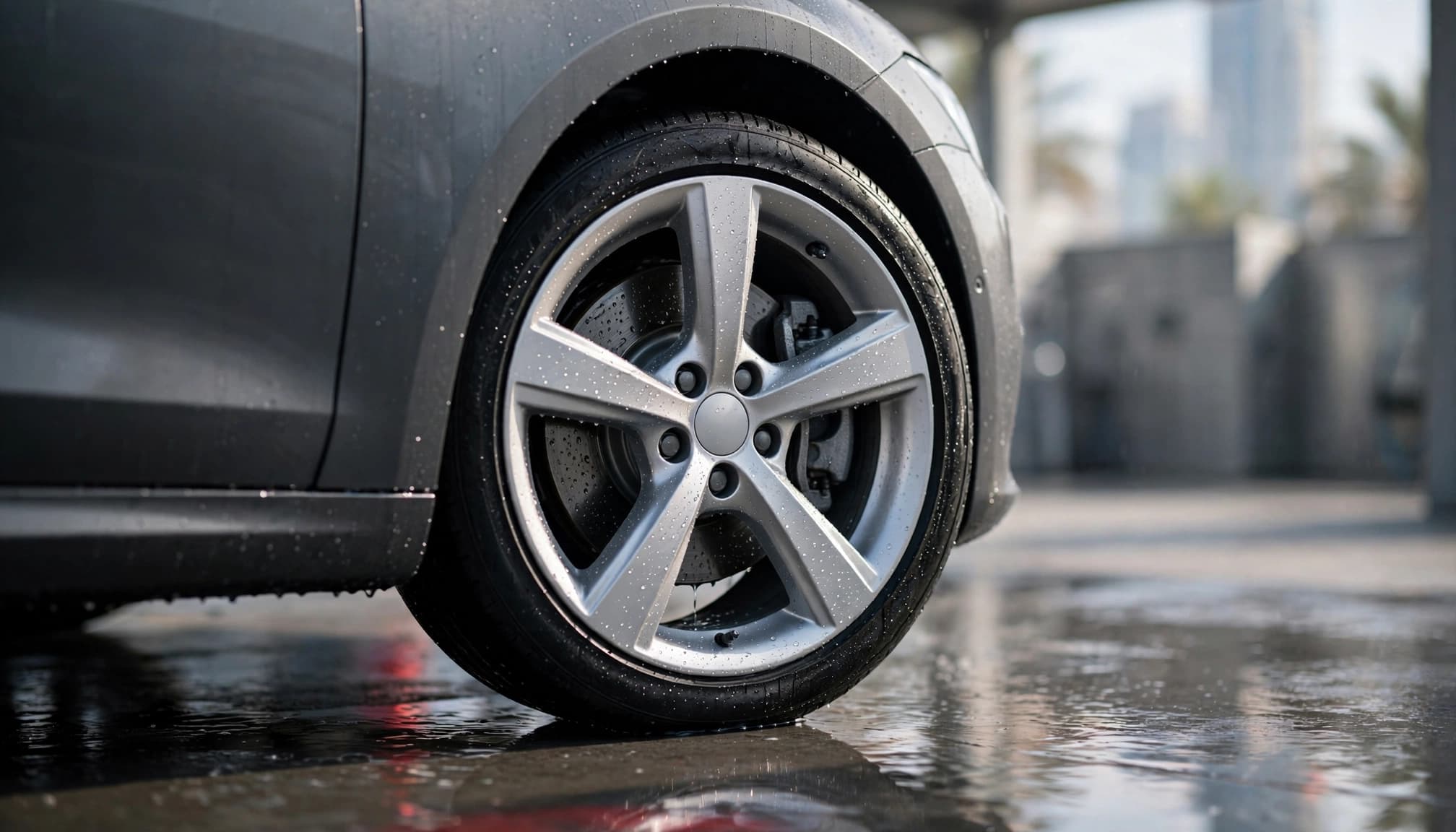
Brake rotors are metal discs that the pads press against to slow the car. When a rotor stays wet, a light film of surface rust can form. The next time you brake, contact between the pads and rotor may create a squeak or brief scraping sound.
This can also happen after rain or overnight condensation. CRC Industries explains how moisture can contribute to brake squeaking. A noise that begins just after washing is consistent with moisture around the brakes, but the timing alone doesn’t prove that moisture is the only cause.
Why the sound may be temporary
Normal braking can wear away a light layer of surface rust as the pads contact the rotor. As the brakes dry and the surface clears, the noise may fade. A short-lived squeak after a wash is different from a sound that continues during regular driving.
Pay attention to how the sound changes. If it gets quieter and disappears, the brakes may have been reacting to moisture. If it continues or develops into grinding, arrange an inspection rather than assuming it will stop on its own.
When the noise may have another cause
A car wash can make you notice a brake sound that was already present. It can also leave dirt or moisture around brake components. If the squeak doesn’t fade, consider other possible causes.
Worn pads, dirt, or brake hardware
Brake pads wear down with use, and worn pads can produce squealing. Dirt on the pads or rotors may also contribute to noise. Other possibilities include brake hardware or a lack of lubrication at parts where it’s needed.
The Tire Choice lists these as common causes of brake squeaks. The sound alone can’t identify which cause applies. A technician can inspect the pads, rotors, and related components to find the source.
Persistent noise and pedal vibration
A squeak that remains after the brakes have dried deserves attention, especially if it occurs during repeated trips or becomes louder. Grinding or scraping can also indicate that the brakes need inspection.
Notice whether the brake pedal vibrates or pulses when you slow down. BestParts also notes pulsation, vibration, and continuing brake noise. If you experience these symptoms, have the braking system checked before relying on the vehicle for a long drive.
What to do after hearing a brake squeak
After leaving the wash, use the brakes gently and normally in a safe area. Listen for whether the sound fades as the vehicle dries. Avoid hard braking just to test the noise, and don’t ignore a sound that persists.
If you’re preparing for a long drive, ongoing brake noise is worth addressing before you set off. Brakes are essential to safe travel, and an inspection can help identify wear or another issue early. If the noise stays, we check brakes at Bud Car Wash. We swap worn pads and machine rotors on the vehicle to remove pedal vibration, and you can wash and fix the brakes on the same visit. See our brake services.
Key takeaways
- Moisture or light surface rust can cause brief brake noise after washing.
- A squeak that fades is different from continuing or worsening noise.
- Grinding, scraping, or pedal vibration calls for a professional inspection.
Frequently asked questions
Is it normal for brakes to squeak after a car wash?
It can happen when the brakes are wet or a thin layer of surface rust forms on the rotors. If the noise is brief and fades, moisture may be the cause. Persistent noise needs attention.
How long should the squeak last?
There isn’t one fixed time for every vehicle. It depends on conditions such as how wet the brakes are and how the car is driven. Focus on whether the sound fades or continues, rather than relying on a set time.
Should I drive if the brakes keep squeaking?
If the noise continues, becomes grinding or scraping, or comes with pedal vibration, arrange a professional inspection. Don’t treat an ongoing brake sound as a normal effect of washing.
Distinguish brief noise from a brake concern
A short squeak after a wash may come from moisture or surface rust, and it can fade as you drive. Continuing noise, grinding, scraping, or pedal vibration needs a closer look.
For a long drive, dependable brakes matter more than a clean finish. If the sound doesn’t go away, have the brakes inspected before travelling.
Need your brakes checked? Bud Car Wash is at Shop #7, 44, 22nd Street, Ras Al Khor Industrial Area 2, open 24 hours with no appointment. See our brake services.
Get a price on brake services
Shop #7, 44, 22nd Street, Ras Al Khor Industrial Area 2, open 24 hours. Tell us the car and we reply with a price and a time.
Would rather talk? Call +971 55 168 5050. Someone answers 24 hours.
See us first on Google
Google lets you choose the sites you want to see more of. Add Bud Car Wash as a preferred source and our car care guides show up more often in Top Stories and in Google’s AI answers.
Opens Google in a new tab. You can remove us again at any time.

Sammie O is the owner of Bud Car Wash, a 24 hour hand car wash and detailing shop at Shop #7, 44, 22nd Street, Ras Al Khor Industrial Area 2, Dubai. He writes the car care guides on this site based on work done in his own bay.
View All Articles