

Last updated 19 August 2026 by Sammie O, owner of Bud Car Wash in Ras Al Khor Industrial Area 2, Dubai.
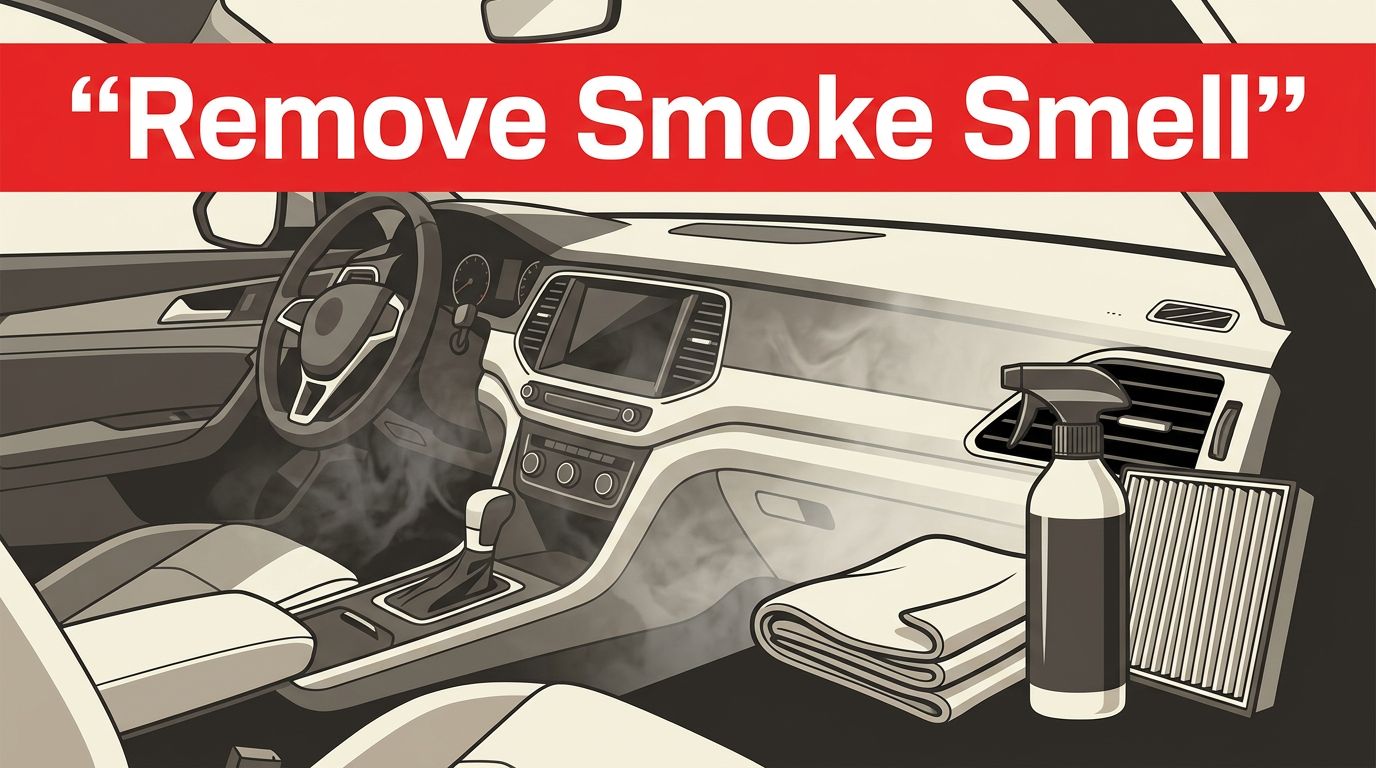
The fastest way to remove smoke smell car owners notice after a cigarette is to clean the source, not cover it with fragrance. Smoke residue settles into seats, carpets, headliners, dashboards, and air vents.
A freshener may improve the first impression, but the odor often returns when the cabin heats up. To get lasting results, clean the porous materials, replace the cabin filter, treat the HVAC system, and dry the interior properly.
Why Smoke Odor Stays Inside a Car
Smoke is more than an unpleasant smell. It leaves a sticky residue on surfaces and can settle into materials that hold odor for weeks or months.
The Mayo Clinic’s explanation of thirdhand smoke describes how tobacco pollutants remain on surfaces after the visible smoke has cleared. A car interior creates many places for this residue to collect.
Porous materials hold the odor
Fabric seats, carpet, floor mats, seat foam, and the headliner can absorb smoke particles. Leather and vinyl can also retain residue in their grain, stitching, and seams.
Wildfire smoke can create a similar problem. Fine particles may settle on the dashboard, glass, trim, and filter before moving into fabric and foam.
The HVAC system can spread it again
The blower motor pulls cabin air through the HVAC system. Smoke residue can remain in the cabin air filter, vent passages, or evaporator housing. When you turn on the fan, warm air can bring the smell back into the cabin.
This is why cleaning only the seats may not solve the problem. The odor source may be behind the dashboard or inside the ventilation system.
Prepare the Car Before Cleaning
Work outdoors or in a well-ventilated area. Open all doors and windows, remove personal items, and take out the floor mats. Choose a dry day so the interior can air out after cleaning.
The EPA’s guidance on tobacco smoke and indoor air quality explains that ventilation and air cleaning can reduce smoke exposure but don’t remove all contaminants. In a car, fresh airflow supports drying, but it doesn’t replace surface cleaning.
Before applying any product, test it on a hidden area. Check beneath a seat, along the carpet edge, or on the underside of a mat. Wait for the area to dry and check for fading, staining, or texture changes.
Use separate products according to their labels. Never mix cleaning chemicals, especially bleach, ammonia, acids, or disinfectants. Chemical mixtures can release harmful vapors and damage interior materials.
Wear gloves when cleaning heavy residue. If the vehicle has significant soot, mold, or water damage, use professional help instead of working in a closed cabin.
Remove Smoke Smell Car Owners Notice From Hard Surfaces
Hard surfaces should be cleaned before fabrics. Otherwise, residue can transfer back onto freshly cleaned seats and carpets.
Vacuum and wipe the cabin first
Use a crevice tool to vacuum the gaps around the seats, center console, seat rails, door pockets, and carpet edges. Remove loose ash, dust, and particles before using liquid cleaner.
For the dashboard, door panels, steering wheel, console, and plastic trim, use an automotive interior cleaner or a mild soap solution recommended for the material. Spray the cleaner onto a microfiber cloth instead of directly onto buttons, screens, speakers, or electrical parts.
Work in small areas. Allow the cleaner to sit for around 2 to 5 minutes if the product label permits it, then wipe the surface dry with a clean cloth. Use several cloths so you don’t spread the residue across the cabin.
Pay attention to steering wheels and gear selectors. These areas collect residue from frequent hand contact and need more than a quick fragrance spray.
Clean the glass and hidden edges
Smoke film often coats the inside of the windows. Use an automotive glass cleaner and a lint-free towel. Clean in straight passes, then inspect the glass from different angles.
Wipe the inside of the windshield, sun visors, rear-view mirror, door seals, and the trim around the windows. These areas are easy to overlook, but odor can remain along their edges.
Repeat the wipe-down if the cloth becomes yellow or brown. A second cleaning is often more effective than using a stronger product once.
Clean Seats, Carpets, and the Headliner
Fabrics need controlled moisture. Too little cleaning leaves odor behind, while too much water can soak seat foam and create a mildew problem.
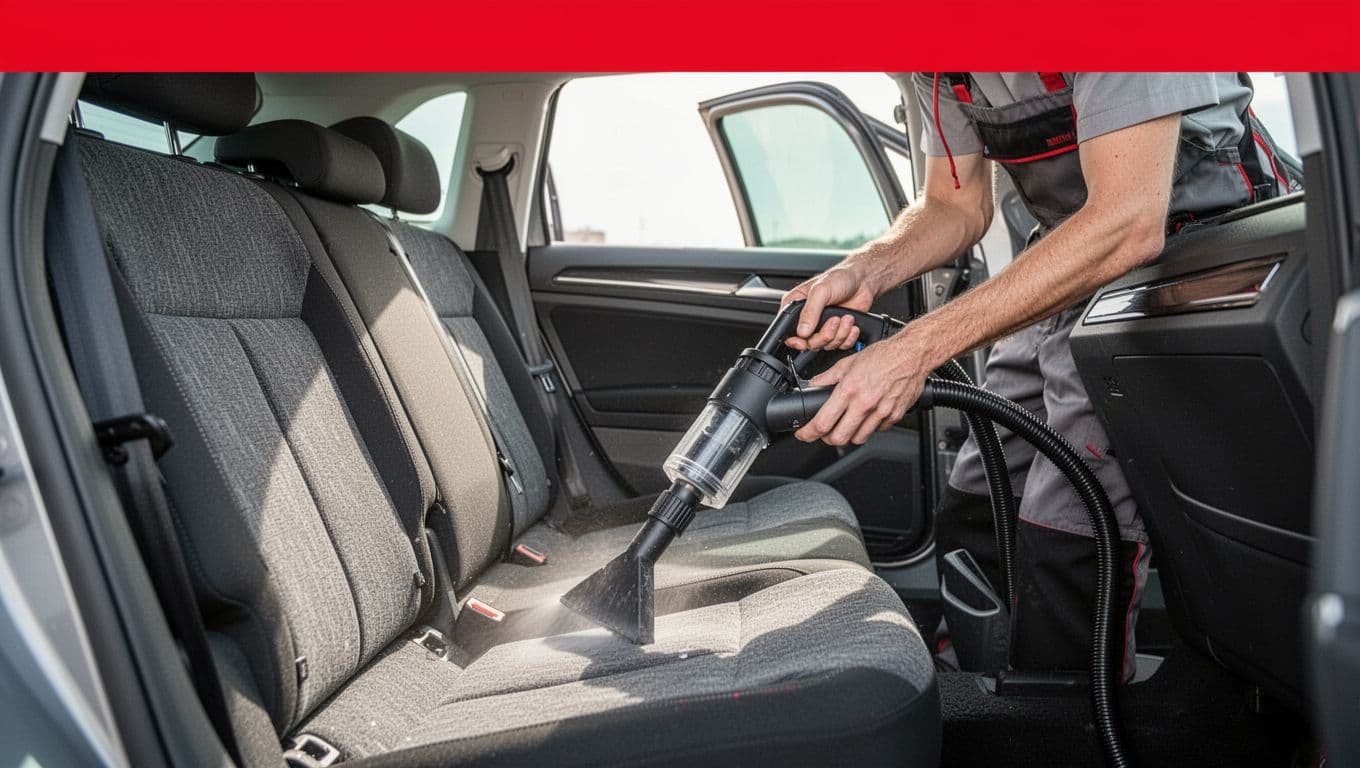
Remove smoke smell car odor from upholstery
Start by vacuuming both sides of the floor mats and the visible surfaces of the seats. Use a soft brush on fabric, but avoid aggressive scrubbing that can damage the fibers.
Apply an upholstery cleaner designed for automotive interiors. Test it first, then work in a small section. Let the cleaner dwell for about 5 to 10 minutes, or follow the product’s stated time. Keep the surface damp, not soaked.
Agitate lightly with a soft upholstery brush. Extract the dirty moisture with a wet-dry vacuum or upholstery extractor. Make several slow passes without flooding the material.
For heavy cigarette or cigar odor, repeat the process after the first area has dried. Seat foam may need deeper extraction because it can retain smoke residue below the fabric.
Clean floor carpets and mats in the same way. Remove mats from the car before washing them. Never reinstall them while damp.
Treat the headliner carefully
The headliner absorbs odor, but its adhesive backing can loosen when saturated. Spray a small amount of cleaner onto a microfiber cloth or soft brush, not directly across the ceiling.
Clean one small section at a time. Allow approximately 1 to 2 minutes of dwell time, then wipe gently with a dry towel. Avoid pressing hard or leaving wet patches.
If the headliner has visible staining, test a specialist product first. Some marks need professional cleaning rather than repeated moisture.
After cleaning, leave the doors and windows open until the fabric is fully dry. This may take several hours or overnight. Use fans if available, but don’t direct high heat at the headliner or leather.
Treat the HVAC System
HVAC cleaning is an important part of any plan to remove smoke smell car interiors develop after repeated exposure.
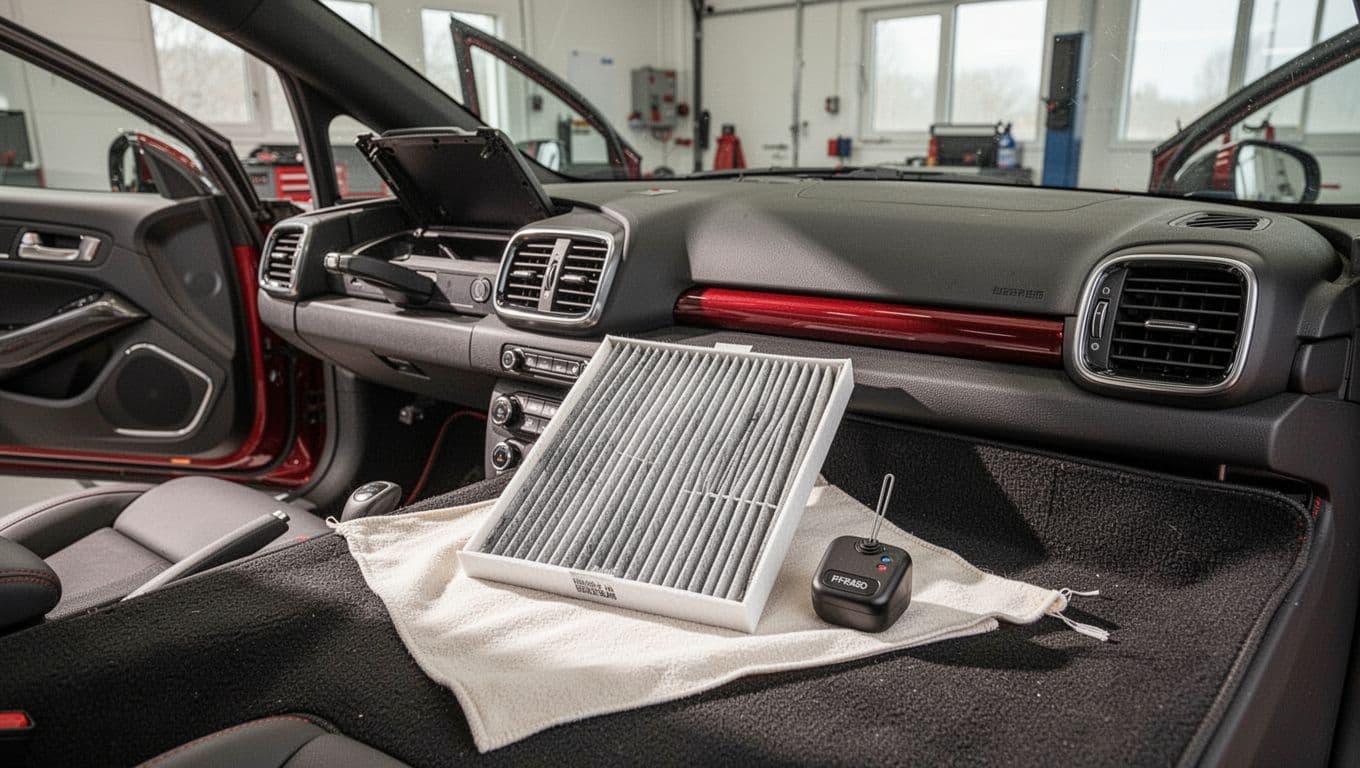
Replace the cabin air filter
Check the vehicle manual for the cabin filter location. It may sit behind the glovebox, under the dashboard, or near the windshield cowl.
Replace a filter that looks gray, dirty, or smells strongly of smoke. A new filter won’t clean residue already inside the ducts, but it prevents the old filter from continuing to release odor.
Clean the filter housing with a dry or slightly damp cloth. Let the area dry before fitting the replacement.
Clean vents and evaporator areas safely
Use a soft detailing brush and vacuum to clean the vent openings. Don’t push debris deeper into the ducts.
For persistent odors, use an automotive HVAC cleaner made for evaporators or ventilation systems. Follow the label exactly. Some products require access through the filter housing, while others use a designated drain tube or vent application point.
Don’t spray household cleaner into vents, electronics, or the dashboard. Run the fan or air conditioning only as directed by the product instructions. Keep doors open during treatment and drying.
If the smell gets stronger when the fan runs, the evaporator case or ductwork may need access that isn’t practical for a DIY owner. A professional detailer can inspect those areas without damaging the dashboard.
Should You Use an Ozone Generator?
Ozone treatment can reduce strong odors, but it isn’t a substitute for cleaning. It may change odor compounds without removing the smoke residue trapped in fabric, foam, carpet backing, and trim.
The Thirdhand Smoke Resource Center’s ozone guidance also warns that ozone generators can create new chemicals rather than remove every contaminant. Ozone can irritate the lungs and may react with materials inside the vehicle.
Never sit in the car while an ozone generator is operating. Remove people, pets, and plants from the area. Follow the equipment instructions, keep the vehicle closed only for the stated treatment period, and ventilate it thoroughly afterward.
Ozone may affect rubber seals, leather, plastics, and adhesives, especially with repeated or excessive use. For this reason, it is better treated as a controlled last step after physical cleaning. Professional equipment and proper ventilation reduce the risk, but they don’t make ozone harmless.
What to Do When the Odor Returns
A returning odor usually points to an untreated source, trapped moisture, or HVAC contamination. Use this quick check:
- Smell the cabin with the fan off, then turn the fan on. A stronger odor from the vents points toward the filter, ducts, or evaporator.
- Check beneath the seats, inside the center console, and under the carpet edges for ash, dampness, or forgotten fabric items.
- Recheck the headliner and seat seams. These areas often hold odor after the main surfaces look clean.
- Replace the cabin filter if it wasn’t changed during the first cleaning.
- Let the interior dry longer if it smells musty. Moisture trapped in carpet or foam can create mildew odors.
- Repeat targeted cleaning instead of spraying more fragrance across the whole cabin.
If the smell remains after two careful cleaning cycles, the residue may have reached the seat foam, carpet padding, or HVAC housing. A professional interior detail can use extraction equipment and controlled deodorizing treatment to reach those areas.
Conclusion
To remove smoke smell car interiors need more than an air freshener. Clean hard surfaces, wash fabrics with controlled moisture, treat the headliner carefully, replace the cabin filter, and inspect the HVAC system.
Keep the vehicle ventilated while it dries, and never mix cleaning products. With a source-focused process, you can restore a cleaner, fresher cabin without covering the odor with another scent.

