
A clean convertible soft top looks ready for the road, but rough washing can push water toward seams and seals. If you notice damp seats after a wash, the roof deserves more than another scrub. Gentle cleaning protects the material; checking the seals and drains helps you find where water is getting in.
Start by identifying the roof material. Your cleaner, brush, and protectant should match it.
Identify the roof material before you wash
Convertible roofs are commonly made with a woven fabric outer layer or a smooth vinyl surface. They can look similar when dusty, so check the owner’s manual or roof maker’s care instructions before choosing products.
Fabric tops
Fabric usually has a visible weave and a textured feel. Dust and road grime can settle into that texture, which is why a soft brush helps. The roof may also have a protective coating, so don’t use its feel or a water-beading test as your only way to identify it.
Use a cleaner labelled for fabric convertible tops. A product intended for paint or upholstery may leave residue or affect the roof’s finish.
Vinyl tops
Vinyl usually looks smoother and has no obvious woven texture. It calls for a cleaner suitable for automotive vinyl, followed by a vinyl-compatible protectant if the manufacturer recommends one.
Don’t apply a fabric waterproofer to vinyl. If the material is unclear, check the vehicle manual or ask a detailing professional before applying any treatment.
Choose products that suit a soft top
You need a soft brush, clean microfiber towels, water for a gentle rinse, and a cleaner approved for your roof material. Keep a separate brush for the top. A brush used on wheels can carry grit that marks the surface or catches on stitching.
Choose a cleaner that rinses away fully, and follow its dilution and contact-time instructions. Chemical Guys’ convertible-top cleaning guide covers cleaning and protection as separate parts of roof care. That distinction matters: a protectant goes on a clean, dry surface, not over trapped dirt.
Avoid household bleach, strong degreasers, abrasive pads, and stiff brushes. Also keep wax and oily dressings away from fabric unless the product instructions expressly permit them. Test an unfamiliar cleaner on a discreet area first.
How to clean convertible soft top fabric and vinyl safely
Wash the roof in shade when it feels cool. Drive by Detail’s soft-top care advice recommends cleaning the whole top rather than treating only one dirty patch, which can leave an uneven finish.
- Close the roof and windows fully. Check that the roof latches as intended. Move loose items away from the cabin edges before washing.
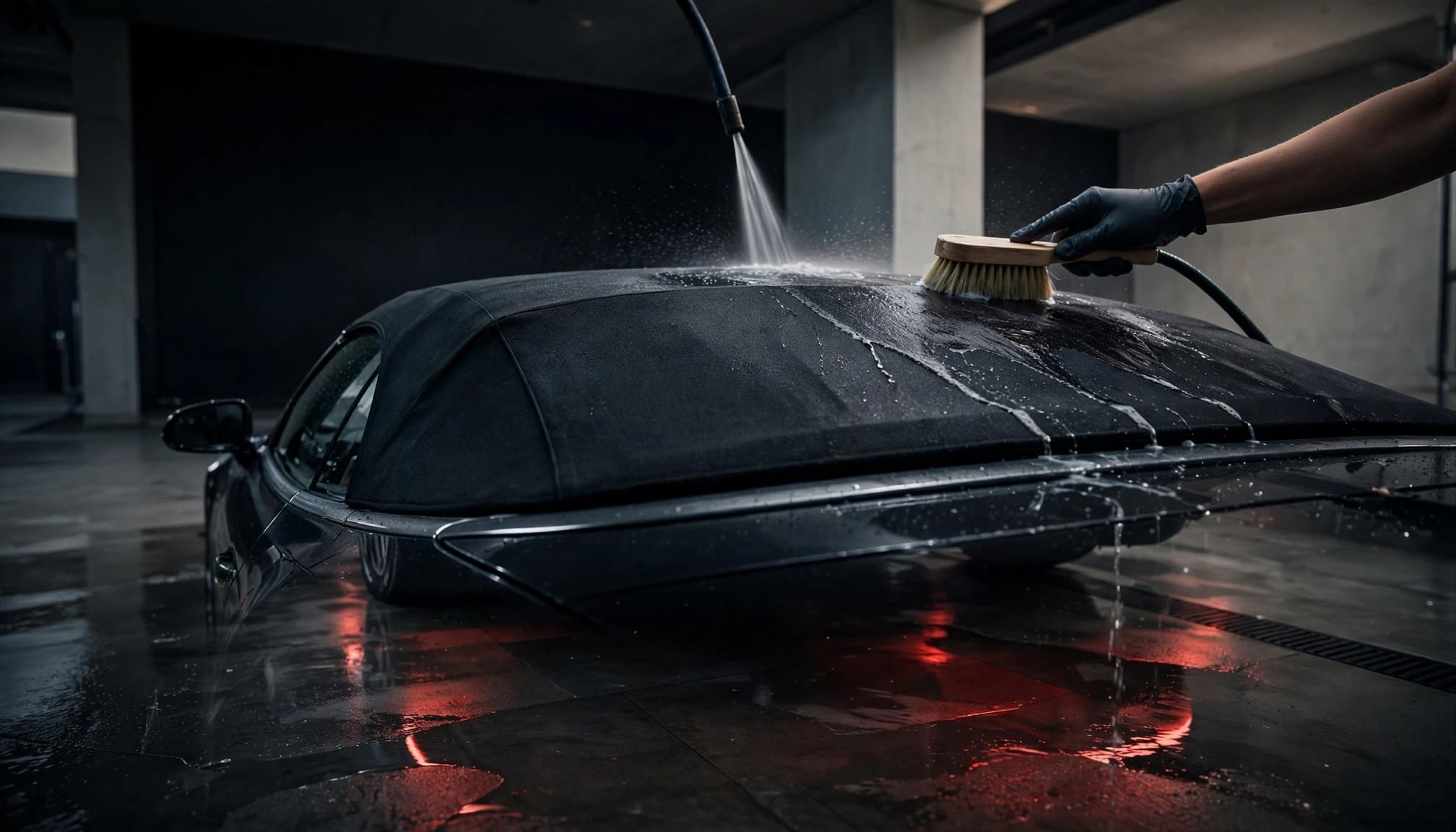
- Remove dry debris. Lift leaves and grit with a soft brush or gentle vacuuming. Pay attention to the roof folds and the areas beside the rear window. Don’t drag trapped grit across the material.
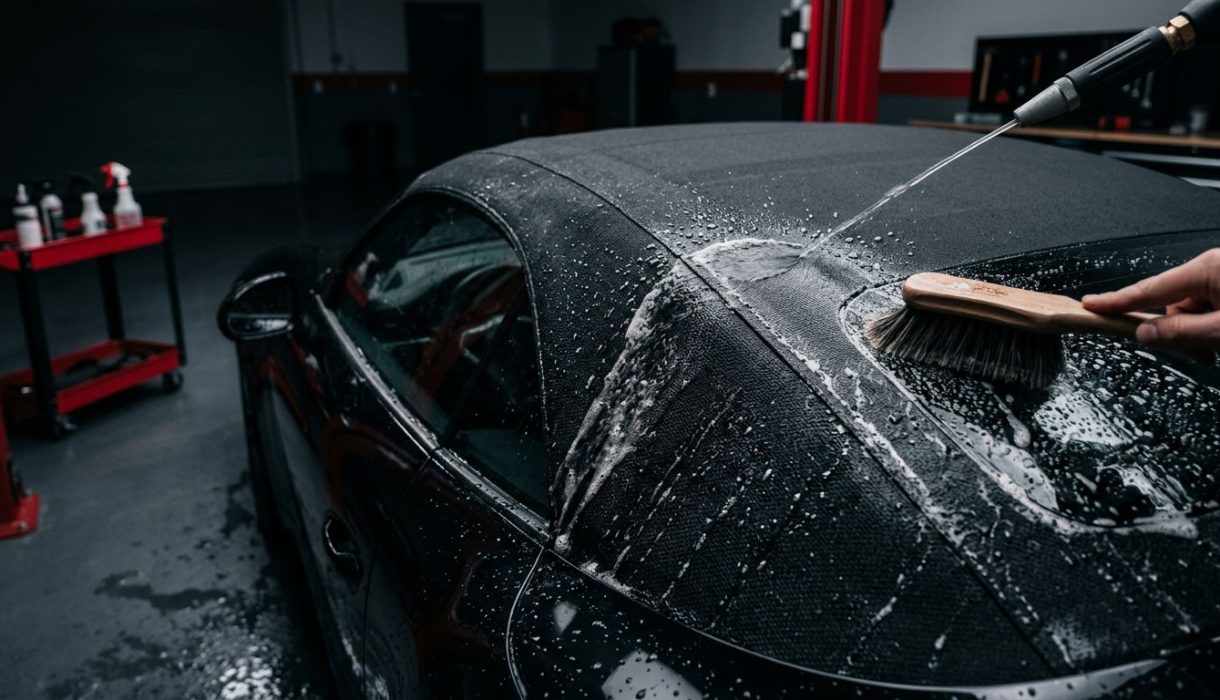
- Rinse lightly from above. Use a gentle flow to wet the roof and carry away loose dust. Keep the water moving over the surface instead of directing it into a seam or window seal.
- Apply the right cleaner. Follow the product label and work across the full roof in manageable areas. Use light brush strokes on fabric. On vinyl, use a soft cloth or brush suitable for its finish.
- Rinse out the cleaner. Use low-pressure water until runoff is clear and no suds remain. Leftover cleaner can dry into visible patches.
- Let the roof dry fully. Blot excess water with a clean microfiber towel. Don’t fold the top while it is wet unless your vehicle’s instructions permit it.
Spend extra time on a stained area only if the cleaner’s directions allow it. Hard scrubbing may damage the surface without removing the stain.
Control water pressure around seams and windows
A hose with a gentle flow gives you more control than a forceful spray. Keep the nozzle above the roof and aim across the surface. Let water run down the top in the direction it would during ordinary rainfall.
Skip the pressure washer when possible
Pressure-washer advice differs. Autoglym’s soft-top guidance doesn’t recommend pressure washing a fabric roof. CarParts.com’s convertible-top cleaning guide describes a low, wide-fan setting at a distance. Neither gives a universal safe setting for every roof.
For a roof with unknown wear, a gentle hose rinse is the cautious choice. Never hold a concentrated jet against fabric, stitching, window edges, or rubber seals.
Keep the spray out of openings
Don’t direct water upward beneath the roof edge. Avoid spraying straight at door-glass seals, the rear window join, roof folds, and stitching lines. These areas manage water when the roof is closed, but a direct spray can force water into places rainfall may not reach.
If a light rinse produces a drip inside, stop washing that area. More water won’t help you identify the cause.
Protect seams, seals, and drainage paths
A soft top relies on more than its outer material to keep the cabin dry. Seams, window seals, and drainage channels all need attention, especially before a long drive or after the car has been parked outside.
Clean around stitching and seals
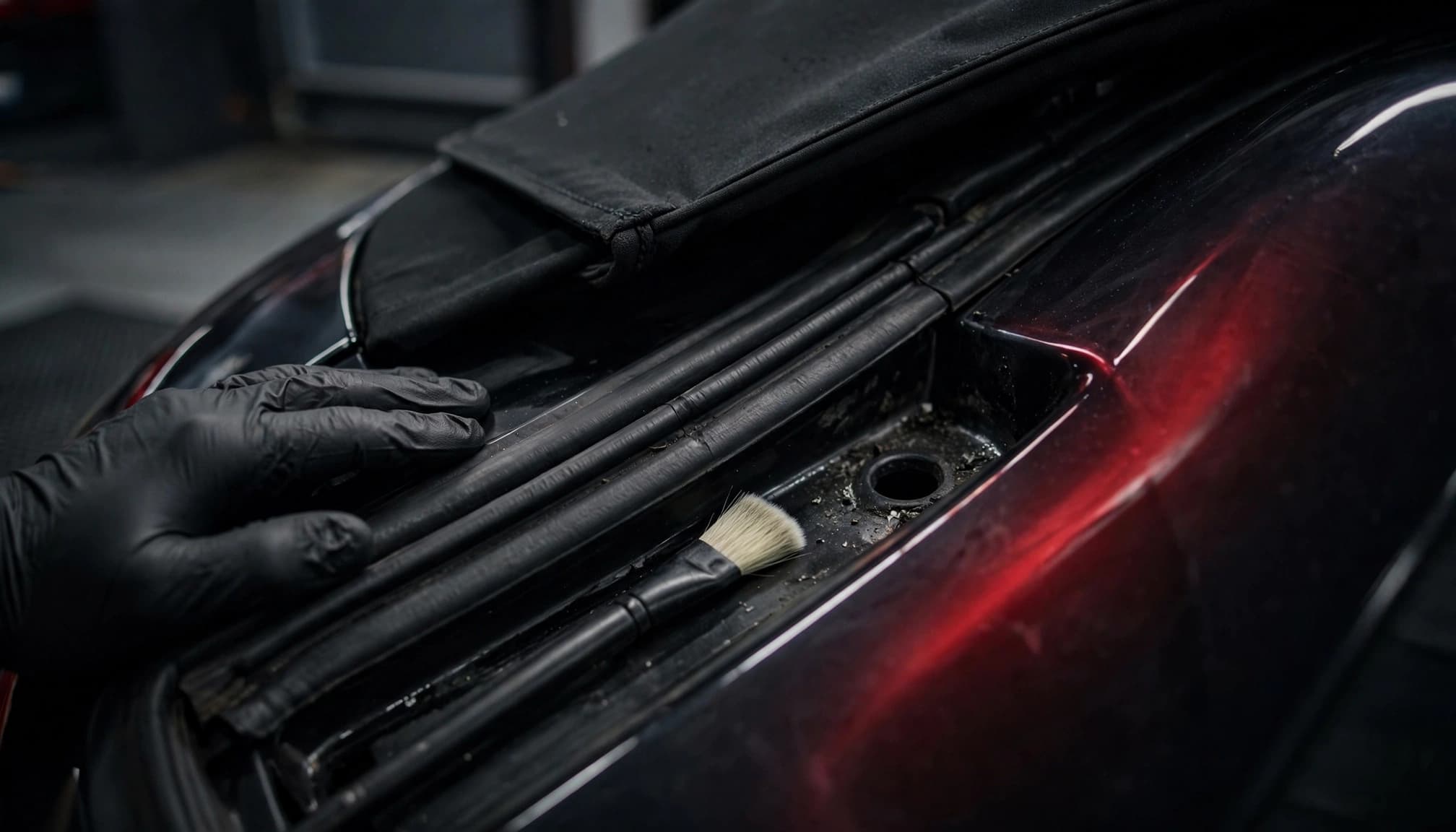
Brush across stitching gently rather than pressing into it. Look for loose threads, separated seams, hardened rubber, or gaps where the glass meets the roof. A cloth can lift dirt from accessible rubber seals without pulling at them.
Keep cleaner off seals if its label says it is for roof material only. Use a seal-care product only when it is compatible with the vehicle and rubber type.
Clear visible debris from drains
Leaves and sand can collect in channels around the roof mechanism and body openings. Remove visible debris by hand or with a soft brush, then check the vehicle’s manual for drain locations. Layouts vary, and some openings are easy to miss.
Don’t push a metal tool or a high-pressure air line into a drain. Either can damage or disconnect a hidden tube. If water pools in a channel or reaches the cabin, arrange an inspection.
Dry the roof and apply protection correctly
A protectant can help maintain the roof’s finish, but it must suit the material. Follow the product’s instructions for drying time, application, and any masking needed around paint or glass.
Wait until the fabric is dry
Fabric treatments may require a completely dry roof before application. Water trapped in the weave can interfere with the finish. Allow enough time in a clean, shaded area, then check seams and folds before spraying.
Apply the product evenly and keep it off glass, trim, and paint if the label directs you to mask them. Don’t treat a roof that is already leaking as though a coating will repair it.
Use vinyl protection only on vinyl
Vinyl care products are designed for a different surface. Apply a compatible product with a clean applicator and wipe away excess as directed. Heavy residue can attract dust and leave an uneven appearance.
A clean convertible soft top still needs sound seals and clear drains. Protection helps maintain the material; it doesn’t replace roof repairs.
Know when a leak needs more than cleaning
Cleaning removes grime. It won’t mend torn fabric, failed stitching, damaged seals, or a blocked drain hidden inside the body.
Note where and when water appears
Water near the top of a side window may point to a glass or roof-edge seal. Dampness behind a seat or in a footwell may have another path. These are clues, not a diagnosis: water can travel behind trim before it becomes visible.
Note whether the leak happens in rain, during washing, or both. Take a photo of the wet area and tell the technician where the car was parked. That information can help narrow down an inspection.
Have persistent leaks checked
If you find a split seam, a seal that no longer sits properly, or recurring cabin dampness, arrange a roof inspection. A professional can check the roof fit, weather seals, and drainage route without relying on a forceful water test.
Dry the affected interior promptly. Damp carpets can hold moisture long after the roof looks dry.
Check the roof before a long drive
Before setting out, confirm that the roof closes and latches normally. Look along the seals for trapped grit, remove leaves from accessible channels, and check the cabin after any recent rain. Pack a clean microfiber towel for dust and light moisture, rather than trying to deep-clean the roof at a stop.
Overnight parking is worth considering too. If your route includes Alabama, Pelham hotels near I-65 offer convenient highway access. Check parking arrangements and the forecast before leaving a convertible outside overnight.
Key takeaways
- Identify fabric or vinyl before buying a cleaner or protectant.
- Wash the whole roof gently, with light brushing and a low-pressure rinse.
- Keep concentrated water away from stitching, glass edges, and seals.
- Check visible drains and seals; cleaning alone can’t fix a leak.
Frequently asked questions
Can I take a soft-top convertible through an automatic car wash?
Check the owner’s manual first. Forceful jets and moving brushes may be unsuitable for a soft roof, particularly one with worn seals. A careful hand wash gives you better control around the roof edges.
Will waterproofing spray stop my convertible from leaking?
A fabric protectant may help maintain the roof’s finish when used as directed. It won’t repair a torn seam, damaged weather seal, or blocked drain. Find the entry point before applying another treatment.
Should I clean the roof before storing the car?
Yes, remove dirt and debris, then let the top dry fully. Check the seals and accessible channels as well. Storing a damp roof or folding it while wet can leave moisture trapped in the material.
Keep the roof clean and the cabin dry
A soft top responds best to the right cleaner, a light brush, and a controlled rinse. Give seams and seals the same care you give the visible roof surface.
If water reaches the cabin, stop treating it as a cleaning problem. Find the leak path and repair the affected seal, seam, or drain before the next long drive.

Sammie O is the owner of Bud Car Wash, a 24 hour hand car wash and detailing shop at Shop #7, 44, 22nd Street, Ras Al Khor Industrial Area 2, Dubai. He writes the car care guides on this site based on work done in his own bay.
View All Articles