
Last updated 24 November 2026 by Sammie O, owner of Bud Car Wash in Ras Al Khor Industrial Area 2, Dubai.
In Dubai’s summer heat, tire pressure can change between a cool morning and a long afternoon drive. Check every tire before driving, use the pressure listed for your vehicle, and treat readings taken after a trip differently from cold readings.
Correct pressure supports safe handling and helps tires wear evenly. A dashboard warning can help, but it won’t replace a regular check with a gauge. Here is how to make a quick tire inspection part of your routine.
Want us to do it instead?
We do tyre and wheel services at our Ras Al Khor bay, 24 hours a day. Fill this in and we reply with a price and a time. The message writes itself, so you only tap send.
Would rather talk? Call +971 55 168 5050. Someone answers 24 hours.
Why tire pressure changes in Dubai’s heat
Air expands as it warms, so a tire that has been driven in hot weather will usually show a higher pressure than it did before the journey. The tire and air inside it also heat up through driving, while Dubai’s high ambient temperatures can add to the effect.
A hot reading is still useful as a warning sign, but it isn’t the right baseline for setting pressure. Your vehicle’s recommended figure is a cold pressure, measured before driving or after the car has been parked for several hours.

What counts as a cold tire?
Check in the morning before you set off, if possible. If the car has already been driven, let it sit for around three hours before measuring. A short drive to a nearby air pump can also warm tires, so the reading may not match the cold recommendation.
Why hot readings can mislead
If you measure after a drive, pressure may sit above the cold figure because the tires are warm. That change is normal. Don’t release air to bring a hot tire down to the cold-pressure number. Once the tire cools, its pressure will fall, and it could then be underinflated.
Find the pressure specified for your car
Look for the tire-pressure placard, usually on the driver’s door frame or inside the fuel flap. The owner’s manual lists the same vehicle-specific information. Check whether the recommended pressure differs for front and rear tires or for a fully loaded vehicle.
Use the placard or manual, not the maximum pressure printed on the tire sidewall. The sidewall figure is a tire limit, not the recommended pressure for your particular car. If your car has different wheel or tire specifications, use the pressure information that applies to its fitted setup.
Lexus UAE’s tire-pressure guide notes that 32–35 PSI is common for many daily-driven cars in the UAE when tires are cold. It isn’t a universal setting. Follow your own vehicle’s placard even if its recommended figure is higher or lower.
How to check tire pressure with a gauge
A handheld digital or dial gauge gives you a direct reading. Use one you can read clearly, and check the pressure before a long drive, especially if the car has been parked in the sun or is carrying extra passengers and luggage.
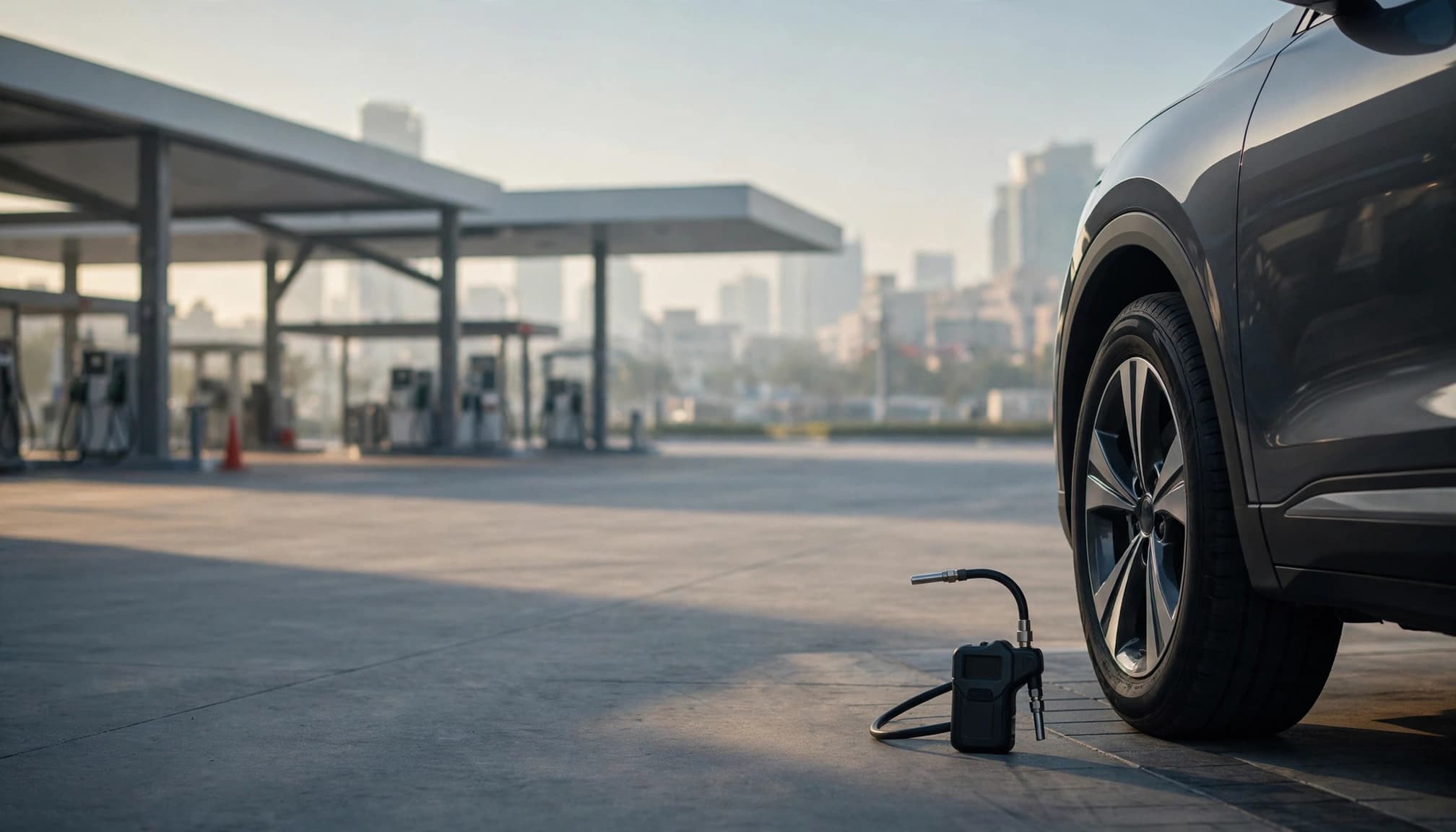
Follow the same steps for each tire
Remove the valve cap and press the gauge firmly onto the valve stem. Read the result, then compare it with the vehicle’s cold-pressure recommendation. Add air if the reading is low, or release a small amount if it is high, then measure again. Replace the cap securely.
Repeat the check on every tire, including the spare. If the gauge reading is difficult to interpret or the valve is damaged, use another gauge or arrange an inspection rather than guessing.
Use the correct pressure for your load
Some placards list different settings for normal driving and a full load. Use the full-load recommendation when carrying additional passengers or luggage, if your vehicle provides one. A loaded car may need a different setup, but the tire sidewall maximum still isn’t the target.
Check a tire after adding air rather than relying only on the pump display. When using a forecourt air pump, take care around moving vehicles and hot pavement, and make sure the valve cap is back in place before leaving.
What to do if your tires are already hot
If you need to check pressure during a journey, take a reading and note that the tires are warm. Don’t bleed air simply to make the reading match the cold figure on the placard. That adjustment can leave the tires below specification after they cool.
If a tire looks visibly low or damaged, don’t treat a higher hot reading as proof that it is safe. Pull over somewhere safe, avoid sudden maneuvers, and arrange assistance if the car feels unstable or the tire has a bulge, cut, or other serious damage. A tire that loses pressure repeatedly needs inspection.
When you reach your destination, let the vehicle cool before making a final pressure adjustment. JACO’s summer tire guidance also recommends setting tire pressure when tires are cold. Keep the same approach during Dubai’s hottest months, even when a warm reading looks higher than expected.
Check all four tires and the spare
Pressure can differ from one tire to another, even on the same car. Check each wheel separately rather than measuring one tire and assuming the others match. Monthly checks are a useful baseline, with an additional check before a long drive or a heavily loaded trip.
A spare tire can lose pressure while it sits unused. Check it at the same time as the road tires, and use the pressure listed for the spare in the manual or on its label. A compact spare may have a different specification from the regular tires.
Fixgo’s summary of NHTSA guidance includes checking tire pressure at least monthly, including the spare. A regular routine helps catch slow leaks before they become a problem on the road.
TPMS helps, but it doesn’t replace a gauge
A tire pressure monitoring system (TPMS) can alert you when pressure has dropped significantly. The NHTSA tire safety guidance says the TPMS warning means at least one tire is significantly underinflated. Treat the light as a prompt to stop safely and inspect your tires as soon as practical.
Don’t wait for the warning light
A TPMS warning isn’t a regular pressure reading for every tire. The system may not alert you to smaller pressure changes, and the spare may not be monitored. Check pressure with a gauge even when no warning appears.
Respond promptly to a warning
When the light comes on, slow down and find a safe place to stop. Check all four tires for visible damage and measure their pressure. If a tire is very low, damaged, or the vehicle handles differently, don’t continue at speed. Arrange roadside assistance or professional inspection.
Make tire checks part of your Dubai travel routine
Check pressure before a long drive, before carrying a full load, and at least once a month. A quick inspection before departure gives you time to correct a low reading while the car is parked, instead of dealing with it on a busy road.
Plan a suitable stop before you travel, especially when driving beyond the city. Practical road-trip stop planning can help you avoid rushing through basic vehicle checks. Keep a pressure gauge in the car, and check tires when they are cool rather than after a hot journey.
Look over the tread and sidewalls during each check. Cracks, bulges, uneven wear, or an object lodged in the tread need attention. Don’t remove an embedded object yourself, as it may be holding air in.
Key takeaways
- Check tire pressure before driving, when tires are cold.
- Use the vehicle placard or owner’s manual, not the tire sidewall maximum.
- Don’t release air from hot tires to match a cold-pressure recommendation.
- Check all four tires and the spare with a gauge.
- Treat TPMS as a warning system, not a substitute for routine checks.
Frequently asked questions
How often should I check tire pressure in Dubai?
Check it at least once a month, and before long drives or journeys with a full load. Check all four tires and the spare. Heat and driving can change readings, so take measurements when tires are cold.
Should I lower tire pressure in summer?
No. Use the cold-pressure setting listed by your vehicle’s manufacturer. Don’t lower pressure simply because a hot tire reads higher after driving.
Can I check pressure at a fuel station after driving?
Yes, but the reading will be affected by warm tires. Don’t adjust it to the cold figure. Let the vehicle cool, then check and set pressure.
Does TPMS tell me when every tire needs air?
No. TPMS warns when a tire is significantly underinflated, but regular gauge checks are still needed. A spare may not be monitored by the system.
Keep cold-pressure checks consistent
Dubai’s heat makes the timing of a pressure check important. Measure before driving, follow the vehicle’s own specification, and leave hot tires alone until they cool. A brief check of every tire, including the spare, is a simple part of preparing your car for the road.
Get a price on tyre and wheel services
Shop #7, 44, 22nd Street, Ras Al Khor Industrial Area 2, open 24 hours. Tell us the car and we reply with a price and a time.
Would rather talk? Call +971 55 168 5050. Someone answers 24 hours.
See us first on Google
Google lets you choose the sites you want to see more of. Add Bud Car Wash as a preferred source and our car care guides show up more often in Top Stories and in Google’s AI answers.
Opens Google in a new tab. You can remove us again at any time.

Sammie O is the owner of Bud Car Wash, a 24 hour hand car wash and detailing shop at Shop #7, 44, 22nd Street, Ras Al Khor Industrial Area 2, Dubai. He writes the car care guides on this site based on work done in his own bay.
View All Articles