
Last updated 16 October 2026 by Sammie O, owner of Bud Car Wash in Ras Al Khor Industrial Area 2, Dubai.
Headlights fog up from the inside when moisture in the air inside the housing cools and forms droplets on the lens. Brief headlight condensation can be normal, but fog that stays for days or water that pools inside may point to a leak or blocked vent.
The difference matters before a long drive: heavy moisture can reduce the light your headlights put on the road. Here’s what causes it, what you can safely check, and when repair is needed.
Want us to do it instead?
We do window and glass protection at our Ras Al Khor bay, 24 hours a day. Fill this in and we reply with a price and a time. The message writes itself, so you only tap send.
Would rather talk? Call +971 55 168 5050. Someone answers 24 hours.
Why moisture forms inside a headlight
Headlight housings have vents
Most headlight assemblies aren’t completely airtight. Small vents allow air pressure to change as the housing heats and cools. Humid air can enter through those vents, then leave moisture on the inner lens when conditions change.
This is why condensation may appear after rain, a car wash, or a change in temperature. The presence of light fog alone doesn’t always mean the headlight is damaged.
Temperature changes create droplets
A warm headlight assembly can cool quickly when the car is parked in cold air or exposed to rain. Moisture in the warmer air inside then condenses on the cooler lens, much like water on a cold drink glass.
Condensation may also become visible after you switch the lights on, then park and let them cool. The pattern can vary with the weather, the headlight design, and how long the vehicle has been driven.
When headlight condensation is normal
Light mist or a thin film that clears as the headlight warms or the surrounding air dries is usually less concerning. It should clear without leaving water pooled at the bottom. A brief return during humid or wet weather can happen, too.
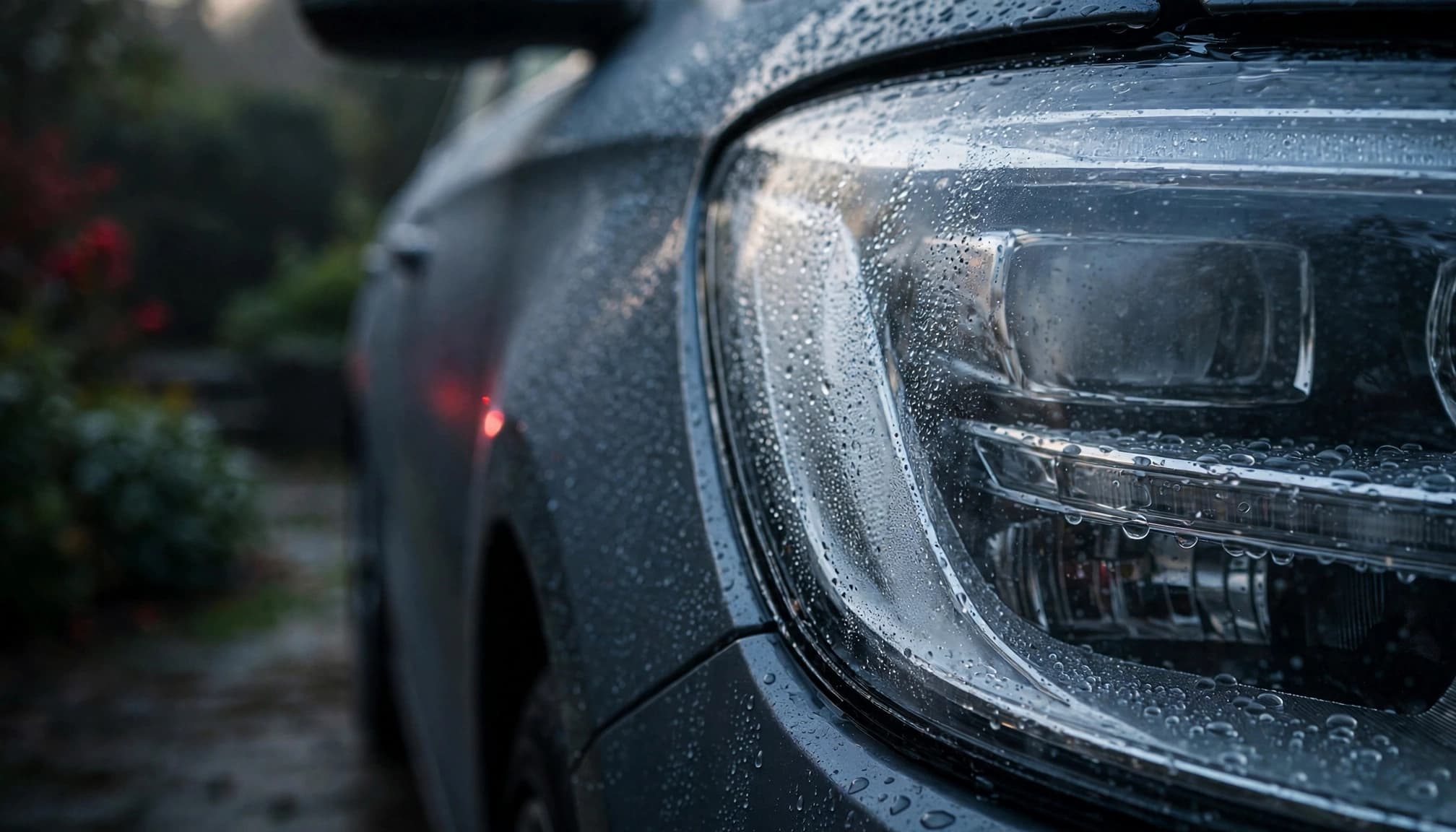
Persistent fogging deserves more attention. Look for large droplets, visible streams of water, standing water at the bottom, or condensation that remains after the headlight has had time to dry. A cracked lens, loose rear cover, damaged seal, or obstructed vent may be letting in too much moisture.
Water inside the assembly is a stronger warning sign than a light film that clears.
Condensation that obscures the beam also needs attention, even if it seems temporary. Reduced visibility can affect your ability to see road hazards and can make your vehicle harder for other drivers to notice.
Safe checks you can make
Park on a dry, level surface, switch off the lights, and let the assembly cool before inspecting it. Check the outer lens for cracks, then look at the rear of the housing for a loose cover or visibly damaged seal. Avoid opening a hot headlight or reaching near bulbs and wiring.
Check the vent area for dirt or debris that could block airflow. Don’t plug the vent with sealant or push tools into it. Blocking a vent can prevent normal air exchange and make moisture worse. AutoZone’s guide to removing headlight moisture also recommends checking vents and bulb seals.
If the lens is lightly fogged, give the headlight time to dry in a warm, dry place. Normal use may help clear mild condensation. Don’t apply a flame, use a high-heat dryer, drill a hole, or direct high-pressure air into the assembly. These methods can damage plastic, seals, or electrical parts.
Aftermarket headlights can have their own vent tubes, membranes, and caps. Confirm that these parts aren’t blocked or incorrectly installed. Guidance on aftermarket headlight vents explains why sealing vents can worsen the problem.
When to arrange repair or replacement
A technician can find the entry point
Arrange an inspection if water keeps returning, the lens has a crack, or the headlight stays fogged after dry conditions. A technician can assess the vent, rear cover, bulb seal, and housing seams. A loose cap or replaceable seal may be repairable, while a blocked or damaged vent may need attention.
Don’t wait if moisture makes the beam dim, uneven, or difficult to see. If your headlights aren’t providing safe visibility, avoid night driving until the issue is addressed.
Replacement may be the right fix
A complete headlight assembly may need replacement when its lens or housing is cracked, the seal has failed and can’t be repaired, or standing water has damaged internal components. Replacing a component may restore clear lighting and protect the electrical parts inside.
The cause matters. Replacing a headlight without fixing a blocked vent or failed seal can allow the same moisture problem to return.
Before a long drive
Check both headlights before setting out, especially after heavy rain or a car wash. Confirm that the lenses are clear enough for the beams to remain bright and even. If one lamp is visibly fogged, compare it with the other and watch whether the moisture clears after normal use.
Brief condensation that disappears is usually different from persistent fog or standing water. Address ongoing moisture before a long trip, when poor visibility can become a serious safety issue.
Conclusion
A little internal mist can result from normal changes in temperature and humidity. Headlight condensation that stays, returns often, or leaves water inside points to a possible vent, seal, or housing problem.
Check the assembly safely and keep the beam’s visibility in mind. If the lens is damaged or water continues to collect, professional repair or replacement can restore clear, reliable lighting.
Get a price on window and glass protection
Shop #7, 44, 22nd Street, Ras Al Khor Industrial Area 2, open 24 hours. Tell us the car and we reply with a price and a time.
Would rather talk? Call +971 55 168 5050. Someone answers 24 hours.
See us first on Google
Google lets you choose the sites you want to see more of. Add Bud Car Wash as a preferred source and our car care guides show up more often in Top Stories and in Google’s AI answers.
Opens Google in a new tab. You can remove us again at any time.

Sammie O is the owner of Bud Car Wash, a 24 hour hand car wash and detailing shop at Shop #7, 44, 22nd Street, Ras Al Khor Industrial Area 2, Dubai. He writes the car care guides on this site based on work done in his own bay.
View All Articles