
Last updated 15 October 2026 by Sammie O, owner of Bud Car Wash in Ras Al Khor Industrial Area 2, Dubai.
A vinyl wrap can stay clean and look sharp without aggressive washing. The safest routine is simple: use gentle products, keep tools away from exposed edges, and dry the vehicle without dragging grit across the film.
Washing a vinyl-wrapped car takes a little more care around seams, mirrors, handles and trim than washing painted panels. The film maker’s instructions and the installer’s care advice should guide your routine, since products and methods can differ between wraps.
Want us to do it instead?
We do manual car wash at our Ras Al Khor bay, 24 hours a day. Fill this in and we reply with a price and a time. The message writes itself, so you only tap send.
Would rather talk? Call +971 55 168 5050. Someone answers 24 hours.
Start with the film’s care instructions
A wrap may be gloss, matte, satin, textured or printed. Care products that suit one finish may leave marks or affect another. Before washing, use the instructions supplied for your film and ask the installer which cleaners and protectants are suitable.
Follow the manufacturer and installer first
General advice is a starting point, not a replacement for instructions made for your specific film. If the manufacturer limits certain cleaners or washing methods, follow those limits. The installer can also explain how the film was applied, including areas with cut edges or complex curves.
Avery Dennison’s vehicle-wrap cleaning and maintenance bulletin describes applying its Supreme Wrap Care Cleaner to a microfiber towel and directly to the surface. Use that cleaner only where it matches your film’s care instructions.
Choose the wash method for the dirt
For light dust or a small amount of road film, a waterless wash may be suitable when the product is approved for the wrap. SGS Graphic describes waterless washing as a preferred option when the vehicle is not overly dirty. If the vehicle has sand, mud or heavy grime, rinse first rather than wiping debris across the film.
Prepare the vehicle before washing
Preparation helps prevent scratches and protects vulnerable edges. Park in shade or a cool area, and let hot panels cool before applying water or cleaner. Heat can make cleaning solutions dry too quickly and leave residue.
Gather clean, soft tools
Use a clean microfiber wash mitt, several soft microfiber towels and a bucket of fresh wash solution. Keep separate towels for the body and lower panels, where grit tends to collect. A hose with a gentle flow is enough for most routine rinsing.
Remove rings, watches or anything that could catch on the film. Check the mitt and towels for grit before they touch the wrap. A soft tool is only safe when it is clean.
Check seams and loose dirt
Look over the edges, corners, door handles, mirrors and bumper curves before you start. Note any lifted film, tears or loose trim, and avoid rubbing those spots. If loose sand or dried mud is present, rinse it away before using a mitt.
Follow a gentle wash sequence
Work one panel at a time, starting with the least dirty areas and leaving the lower panels for last. This keeps grime from the rocker panels and wheel areas off cleaner sections.
Rinse before washing
Use a gentle hose flow to loosen dust and surface dirt. Let water run over the panel rather than directing a hard stream at seams. Rinse from the roof downward, and give the lower panels and wheel arches their own rinse.
If the vehicle is dusty after a long drive, resist the urge to wipe it dry. Fine grit can scratch the film when dragged across the surface.
Wash and rinse in small sections
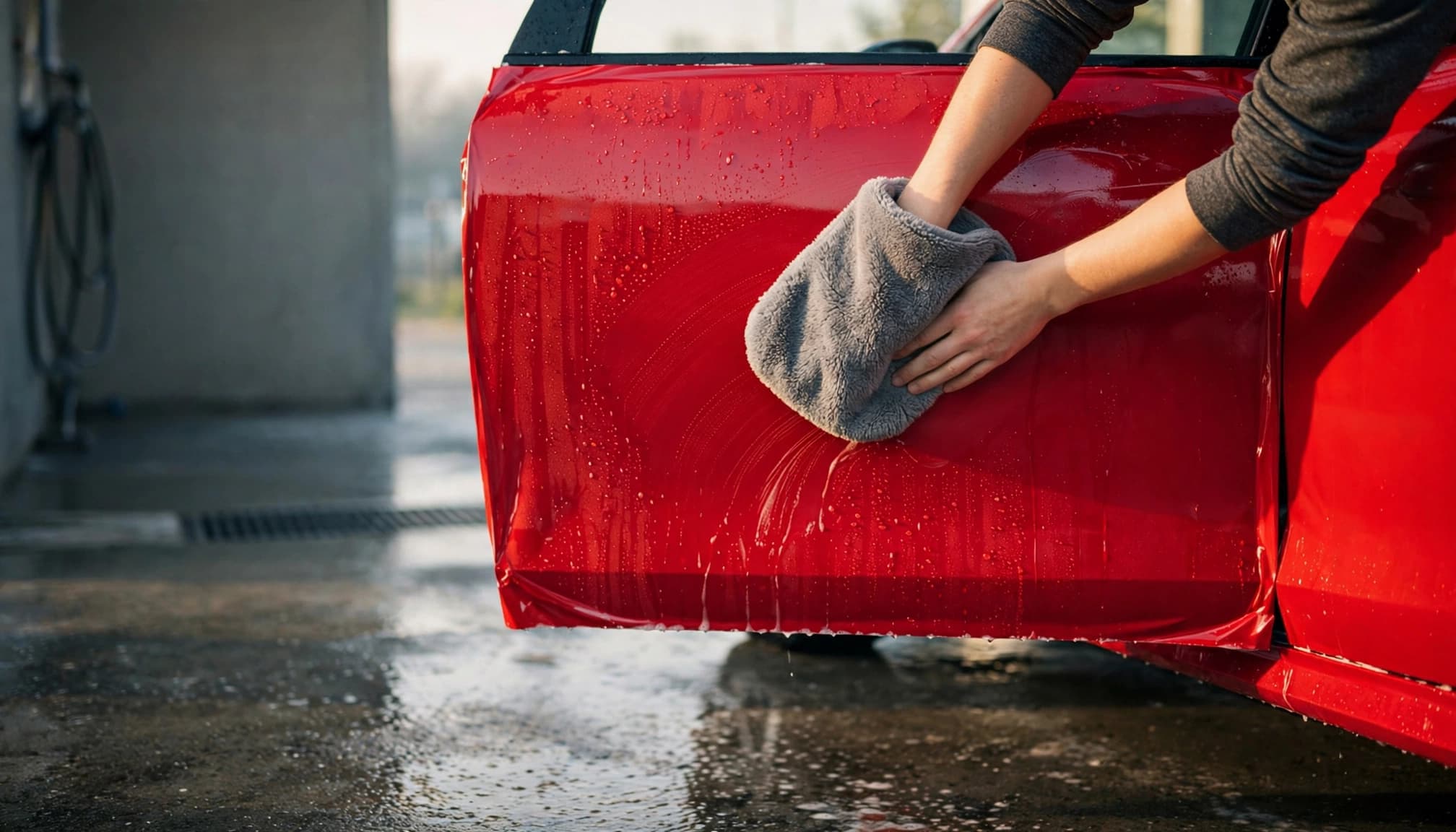
Dip the clean mitt in wash solution and glide it lightly over a small area. Use straight passes, then rinse the mitt often. Avoid scrubbing at stubborn marks, especially near edges or textured film.
Once a panel is clean, rinse it before the soap dries. Repeat the same process on the next panel, changing the mitt or wash solution if either becomes visibly dirty.
Use pressure washers with care
Hand washing is usually the gentler choice. If you use a pressure washer, follow the exact instructions for your film and equipment, and keep the spray moving. A narrow, concentrated stream can put too much force on a seam or cut edge.
Understand the pressure and nozzle guidance
3M’s car-wrap cleaning and maintenance FAQ recommends pressure below 2,000 psi, a 40-degree wide-angle spray pattern and at least 1 foot (300 mm) between the nozzle and vehicle.
SGS Graphic’s vehicle-wrap care guide gives a lower pressure limit, below 1,200 psi. Since published guidance differs, don’t treat one setting as a universal limit. Use the film manufacturer’s or installer’s directions for your wrap.
Keep the spray off vulnerable edges
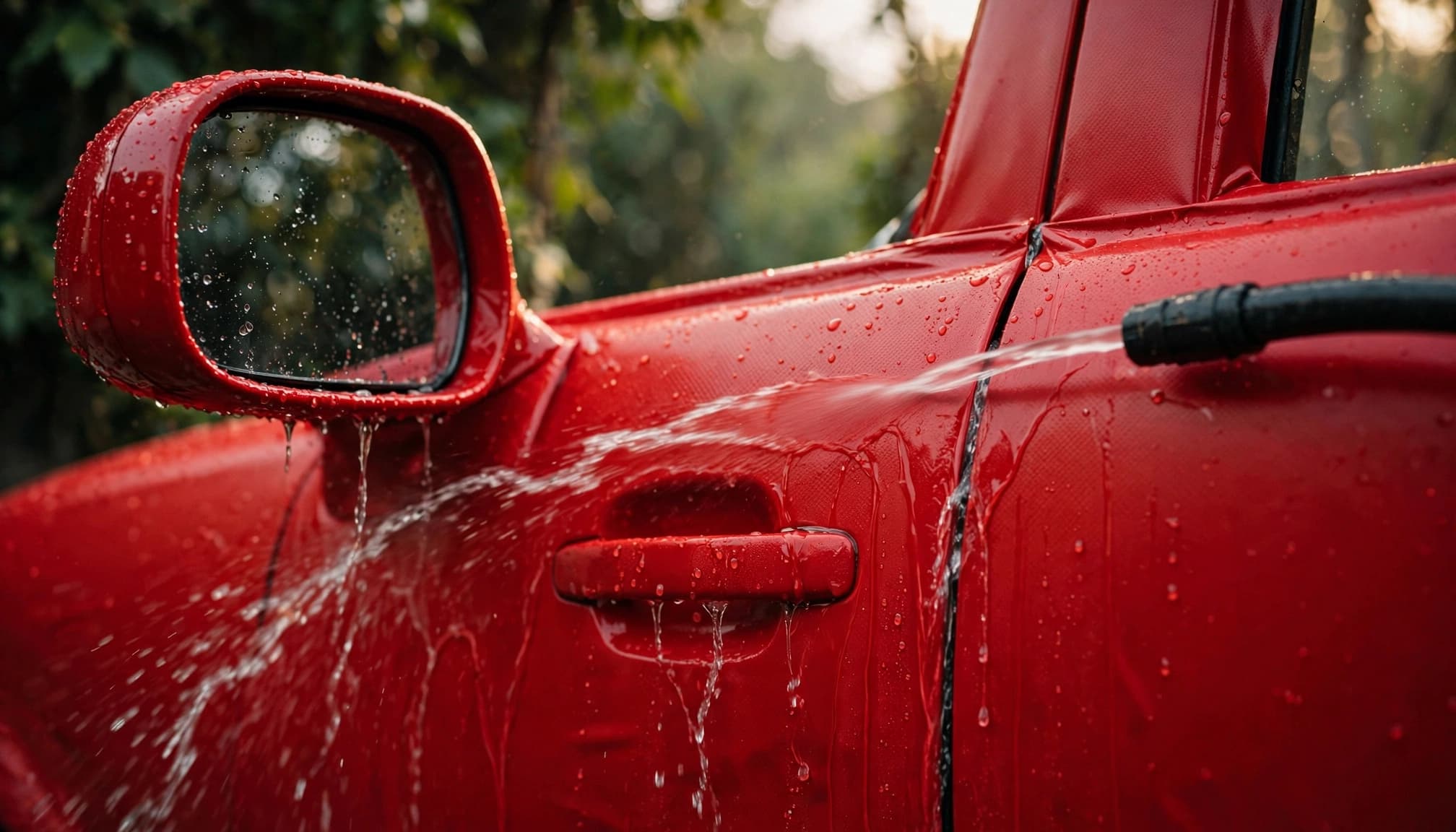
Hold the nozzle at least 1 foot away, use a wide spray pattern and avoid directing water into seams. Keep the stream angled along the panel, moving away from exposed edges rather than forcing water underneath them. Never hold the nozzle close to a corner, trim line or lifted section.
Give edges, seams and recessed areas extra care
Wrap edges are more vulnerable than broad, flat panels. Door handles, side mirrors, bumper corners and panel gaps can collect dirt, but they also give water and tools more chances to catch a lifted edge.
Clean around trim without catching film
Use a soft mitt or microfiber cloth and light pressure around mirror bases, handles, badges and trim. Work alongside the seam rather than dragging the cloth across it. Don’t push a cloth, fingernail or cleaning tool under an edge to remove dirt.
For recessed areas, apply cleaner to the cloth first when the product instructions allow it. This helps control where the liquid goes and reduces the chance of pooling around a seam.
Leave a loose edge alone
If you see film lifting, stop washing that spot. Don’t press it down, pull it back or try to glue it in place. Water and friction can make the damage worse, and an unapproved adhesive may stain the film or complicate a repair.
Take a clear photo of the area and contact the installer for repair advice. Keep pressure washing and scrubbing away from the affected section until it has been assessed.
Avoid products and tools that can damage the wrap
A wrapped vehicle doesn’t need strong chemicals or abrasive cleaning. Choose a cleaner approved for your film and follow its dilution and application directions. If you’re unsure whether a product is suitable, don’t test it on a visible panel.
Avoid abrasive pads, stiff brushes, polishing compounds and cleaners containing strong solvents. They can scratch, dull or soften some films. Automatic car washes with rotating brushes can also catch edges, so hand washing is the safer general option.
Bug residue, bird droppings and tree sap should be removed promptly, but don’t scrape them off. Soften the spot with an approved cleaner and lift it gently with a microfiber cloth. Avoid household degreasers or improvised chemical mixes, especially on matte or printed wraps.
Rinse, dry and inspect the finish
A proper final rinse removes soap that can leave streaks or residue. Rinse from the roof down, including mirrors, handles and trim. Then dry the wrap with a clean, soft microfiber towel or a blower suitable for vehicle drying.
Blot or glide the towel lightly across the surface. Don’t rub hard, and don’t pull the towel across an edge where it can catch. Use a separate dry towel for lower panels, then inspect seams and corners for remaining water or any change in the film.
Regular washing is easier than removing baked-on grime after a long trip. If you’re planning a drive, our Muscle Shoals road trip guide can help with the destination planning while a careful wash keeps your vehicle ready for the road.
Key takeaways
- Use the care instructions for your exact film and finish.
- Rinse grit away before touching the wrap with a mitt or towel.
- Keep pressure-washer distance, nozzle pattern and pressure within the film’s instructions.
- Stop if an edge begins lifting, and leave repair work to the installer.
Frequently asked questions
Can I take a wrapped car through an automatic wash?
Brush-style automatic washes can catch film edges and apply rough contact across the surface. Hand washing is the safer general choice. If you use a touchless wash, follow the film maker’s guidance for water pressure and cleaning chemicals.
How often should I wash a vinyl-wrapped car?
Wash it when dirt, salt, bird droppings or other residue builds up. Prompt cleaning makes it easier to remove contaminants without scrubbing. Travel on dusty roads or through wet weather may mean the vehicle needs washing sooner.
What should I do if I notice an edge lifting?
Stop washing that area and avoid touching or pressing the film. Keep strong water streams and cleaning products away from it, then contact the installer for repair advice. Don’t try to reattach the wrap with household glue or tape.
Keep the wrap clean with a gentle routine
A clean wrap depends on careful rinsing, light contact and controlled drying. Give the edges and seams extra attention, and use the film’s care instructions whenever they differ from general washing advice.
If you prefer a hand wash, our manual car wash service starts at AED 40. Tell the team the vehicle is wrapped so the care approach can suit the film.
Get a price on manual car wash
Shop #7, 44, 22nd Street, Ras Al Khor Industrial Area 2, open 24 hours. Tell us the car and we reply with a price and a time.
Would rather talk? Call +971 55 168 5050. Someone answers 24 hours.
See us first on Google
Google lets you choose the sites you want to see more of. Add Bud Car Wash as a preferred source and our car care guides show up more often in Top Stories and in Google’s AI answers.
Opens Google in a new tab. You can remove us again at any time.

Sammie O is the owner of Bud Car Wash, a 24 hour hand car wash and detailing shop at Shop #7, 44, 22nd Street, Ras Al Khor Industrial Area 2, Dubai. He writes the car care guides on this site based on work done in his own bay.
View All Articles