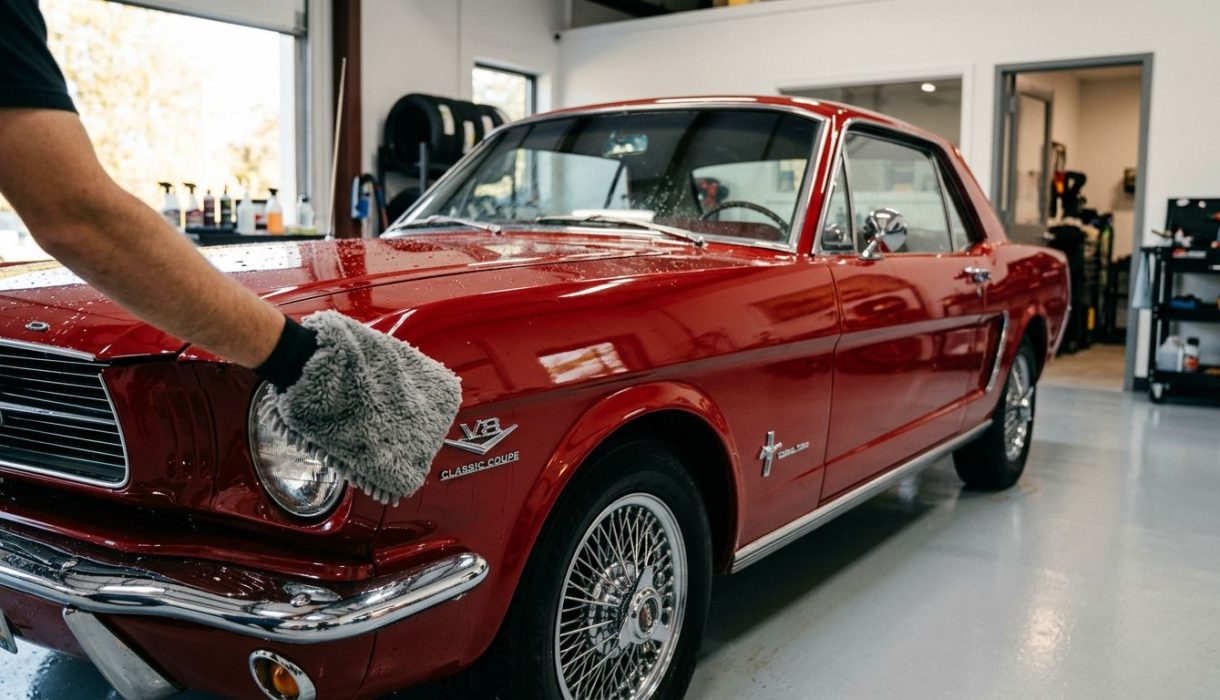

Last updated 30 September 2026 by Sammie O, owner of Bud Car Wash in Ras Al Khor Industrial Area 2, Dubai.
A classic car can look clean after a quick wash and still carry scratches, water in the cabin, or damage to fragile trim. Choosing a classic car wash means matching the cleaning method to the car’s paint, seals, and restoration history.
A careful hand wash is usually the safest starting point, but the provider matters as much as the method. Before you book, check the car’s condition and ask how the wash will be carried out.
Want us to do it instead?
We do manual car wash at our Ras Al Khor bay, 24 hours a day. Fill this in and we reply with a price and a time. The message writes itself, so you only tap send.
Would rather talk? Call +971 55 168 5050. Someone answers 24 hours.
Key Takeaways
- A careful hand wash gives the provider more control around paint, chrome, badges, and older seals.
- Brush-style automatic washes can catch delicate trim or mark vulnerable paint, so avoid them unless the car’s condition and the wash setup are known.
- Touchless washes avoid brushes, but strong chemicals or high-pressure water may still be unsuitable for some cars.
- Tell the provider about weak seals, loose trim, fresh paint, or restoration work before the wash starts.
- Agree on the wash method and any areas to avoid before handing over the keys.
Why a Classic Car Needs a More Careful Wash
Classic cars don’t all have the same needs. A well-preserved car with sound seals and a recent restoration may handle washing differently from a car with cracked rubber, lifting paint, or loose chrome trim.
Older paint can be more vulnerable to scratches, especially if it has already faded or been polished repeatedly. Chrome plating, thin trim, and exterior badges can also be less secure than they appear. A wash that works for a modern daily driver may be too aggressive for those surfaces.
The right provider asks about the car before choosing a process. A quick look at its condition, followed by a short conversation with you, helps prevent avoidable problems.
Check the Car’s Condition Before You Book
A wash provider can’t protect vulnerabilities they don’t know about. Before you choose a service, look over the car in good light and note any areas that need extra care.
Look for weak points
Check the window and door seals for cracks, gaps, or sections that have pulled away. Look for loose chrome, badges, mirrors, and trim. If you see lifting paint, bubbling, rust, or a recent repair, point it out before water or cleaning products touch the car.
Also check for accessories that aren’t firmly attached, such as a period antenna or a replacement mirror. A provider may need to avoid certain areas or use a gentler process.
Consider restoration and paint history
A recent restoration doesn’t always mean the car is ready for a standard wash. Fresh paint may need a waiting period or special care, so ask the body shop or restorer what they recommend. Original paint can also vary in condition across panels, especially if repairs were made at different times.
If you’re unsure how a surface will respond, don’t ask the wash provider to test it with polish or a strong cleaner. Share what you know about the car and choose a conservative wash method.
Choose a Hand Wash for the Most Control
A careful hand wash lets the person washing the car work around fragile details. They can clean more gently near emblems, narrow gaps, chrome edges, and older seals instead of sending the car through a fixed cycle.
Hagerty recommends hand-washing a classic and using microfiber cloths or a sheepskin mitt. Its classic car detailing advice also advises skipping automated car washes. That’s a sensible default when the car has original paint or trim you can’t easily replace.
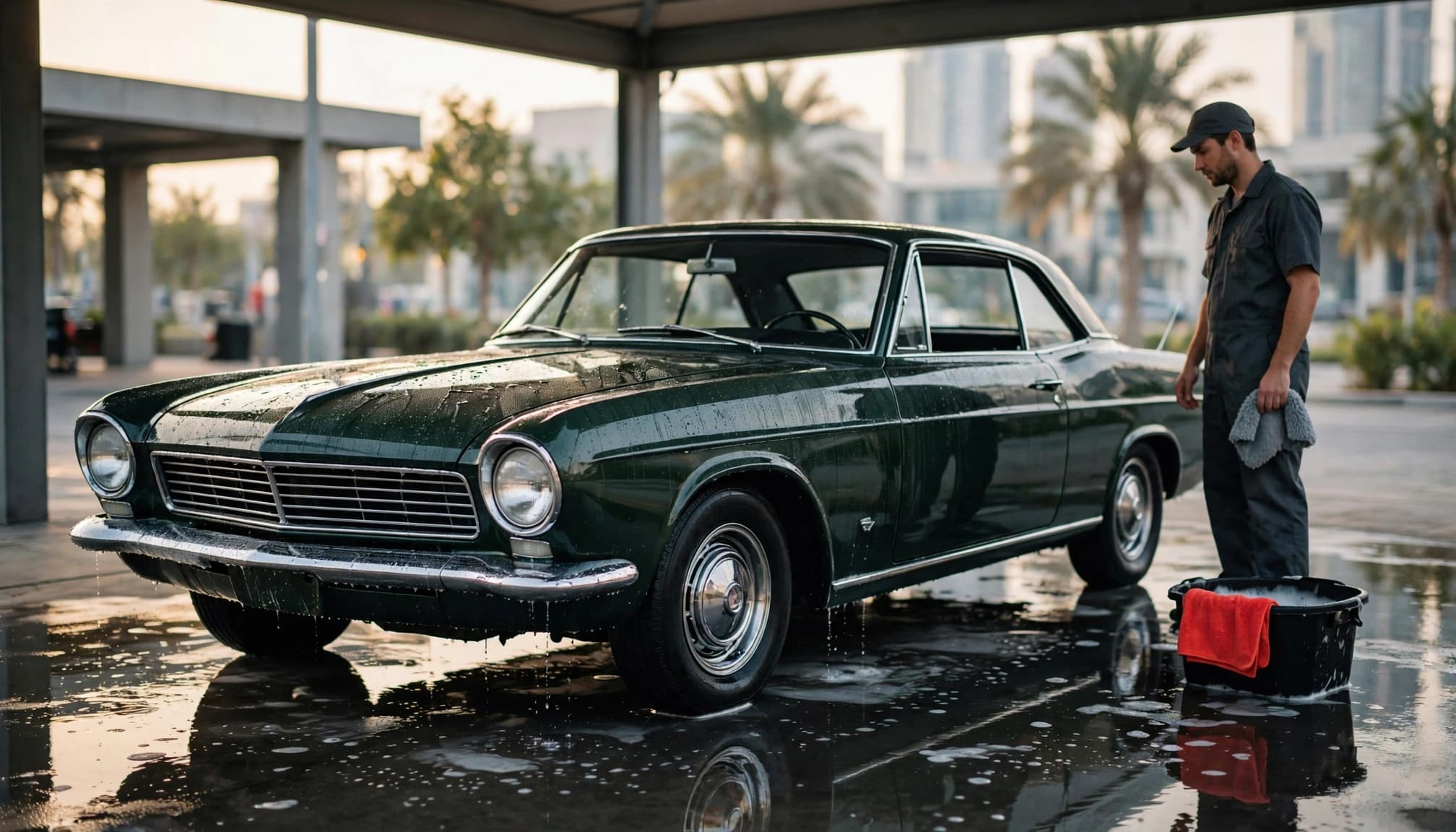
A good hand wash still depends on the process. Ask whether the provider rinses away loose dirt before wiping the surface, uses clean wash materials, and dries the car with a soft towel. The car should be cool to the touch and out of direct sun, which helps prevent water spots as it dries.
Hand washing is especially appropriate when you can stay nearby, discuss delicate areas, and confirm the provider understands what should be left alone.
When a Touchless Wash May Be Appropriate
A touchless wash avoids rotating brushes and cloth strips that can contact the bodywork. It may suit a classic with sound paint and seals when you need a quick rinse and the provider uses a process you’re comfortable with.
It isn’t risk-free. Touchless systems may rely on stronger cleaning products, and high-pressure water can be a concern around deteriorated seals, loose trim, or openings. Ask what products and pressure settings are used, and whether the operator can avoid vulnerable areas.
For a car with known leaks or uncertain paint, a touchless wash may not be the safer choice. A controlled hand wash is easier to adapt to the car’s condition.
Why Brush-Style Automatic Washes Carry More Risk
Brush-style automatic washes move cleaning material across the vehicle, sometimes at speed. That contact can catch loose trim, mirrors, antennas, or badges. If the brushes hold grit from earlier vehicles, they may also mark delicate paint.
The risk depends on the car and the wash equipment. A sound, repainted classic may tolerate more than a car with brittle seals and fragile original trim. Still, Hagerty’s recommendation to avoid automated washes is a useful guide when you’re unsure.
If you’re considering an automatic wash, ask the operator what touches the bodywork and how the equipment is maintained. If you can’t confirm the process or explain the car’s vulnerabilities, choose a hand wash instead.
Protect Paint, Chrome, Trim, and Older Seals
Before the wash begins, tell the provider whether the paint is original, recently refinished, or showing signs of wear. Ask them not to polish or apply a product unless you have agreed to it. Polishing can remove a small amount of paint, so it shouldn’t be treated as a routine part of washing.
Chrome and exterior trim need gentle handling. Avoid scrubbing hard at stains or using abrasive pads. Point out loose pieces and ask the provider to clean around them by hand.

Older rubber seals can shrink, harden, or crack over time. Tell the wash team if water has entered the cabin before, and ask them to avoid directing high-pressure water at the windows and door edges. If a seal is badly deteriorated, even a careful wash may not prevent a leak.
Chemical Guys’ classic car detailing guidance recommends gentle washing and careful attention to paint, chrome, and rubber. Use that as a reminder to discuss all three surfaces with the provider, rather than asking only for a clean finish.
Questions to Ask the Wash Provider
A short conversation can tell you whether the provider is prepared to handle a classic. Be direct and describe the car’s condition, rather than relying on a general request for a gentle wash.
Ask what wash method they recommend and what materials will touch the paint. Confirm whether they use brushes, high-pressure water, or strong cleaning products. If the car has known weak points, ask whether the operator can avoid those areas or adjust the process.
You can also ask whether the car will be washed by hand from start to finish, who will handle the keys, and whether the provider can stop if they find loose trim or damaged seals. Clear answers are more useful than a broad promise to be careful.
If the staff dismisses your concerns or can’t explain the process, choose another provider. A professional wash should be comfortable discussing the car’s needs before work begins.
Inspect the Car After Washing
Take a few minutes to check the car before you leave. Look at the paint in good light for new marks or residue, and check the chrome, mirrors, badges, and trim. If the car has older seals, look inside for signs of water around the windows and doors.
Tell the provider promptly if you notice a concern. A quick inspection also helps you spot areas that may need attention before the next wash, such as a loose emblem or a seal beginning to split.
For long drives or travel days, plan a wash before the car is heavily soiled. It’s easier to remove light road dust with a gentle process than to ask someone to scrub away built-up dirt.
Frequently Asked Questions
Is a hand wash always safe for a classic car?
No wash method removes all risk. A careful hand wash is usually easier to control, but dirty cloths, heavy pressure, or rough handling can still cause problems. Explain the car’s condition and confirm the provider’s process before work starts.
Can I take a classic car through a touchless wash?
Possibly, if the paint and seals are in good condition and you’re comfortable with the cleaning products and water pressure. Ask the operator what the wash uses. Avoid it if the car has known leaks, weak trim, or vulnerable paint.
Should a recently restored car be washed?
Check with the body shop or restorer first. Paint systems and finishing work differ, so there isn’t one waiting period that fits every restoration. Follow their guidance before choosing a wash or applying any polish or protection product.
Choose the Wash That Fits the Car
A classic car wash should be selected around the vehicle’s actual condition, not its age alone. Sound paint and seals give you more options, while fragile trim, old rubber, and uncertain restoration work call for extra care.
Share the car’s vulnerabilities with the provider and agree on the process before washing begins. A careful hand wash with clear instructions is a dependable choice for protecting the details that make your classic worth keeping.
Get a price on manual car wash
Shop #7, 44, 22nd Street, Ras Al Khor Industrial Area 2, open 24 hours. Tell us the car and we reply with a price and a time.
Would rather talk? Call +971 55 168 5050. Someone answers 24 hours.
See us first on Google
Google lets you choose the sites you want to see more of. Add Bud Car Wash as a preferred source and our car care guides show up more often in Top Stories and in Google’s AI answers.
Opens Google in a new tab. You can remove us again at any time.

Sammie O is the owner of Bud Car Wash, a 24 hour hand car wash and detailing shop at Shop #7, 44, 22nd Street, Ras Al Khor Industrial Area 2, Dubai. He writes the car care guides on this site based on work done in his own bay.
View All Articles