Fleet Car Washing in Dubai: Build a Practical Cleaning Schedule
Posted in :

A clean fleet helps your business look professional, keeps vehicles ready for customers, and makes damage easier to spot. In Dubai, dust, heat, traffic, and different routes can make one fixed washing routine a poor fit.
A practical fleet car washing plan in Dubai starts with how each vehicle is used, where it is parked, and what condition it returns in. Set a workable baseline, then adjust it as your routes and the weather change.
Key Takeaways
- Group vehicles by mileage, route, passenger use, and parking conditions.
- Treat suggested wash intervals as starting points, not universal rules.
- Inspect vehicles regularly and clean visible dust before it builds up.
- Record wash dates and condition notes to make schedule changes with confidence.
- Use a paint-safe method that removes grit before contact washing.
Build a schedule around vehicle use
A delivery van covering busy roads each day will collect dirt faster than a company car used for occasional meetings. The same schedule won’t suit a taxi, a service vehicle, and an airport transfer car.
Group vehicles by daily work
Start by sorting vehicles into practical groups. Consider route length, time on the road, outdoor parking, passenger use, and whether the vehicle carries tools or goods. A useful starting set might include light-use company cars, daily urban vehicles, high-mileage delivery vans, and passenger-facing cars.
For traveler-facing operations, chauffeur vehicles may need a more frequent interior check than vehicles used only for staff travel. If your business coordinates visitor transport, these Dubai airport chauffeur options provide relevant context for the service customers may book.
Set a baseline for each group
Choose an initial cleaning frequency for each group and review it after a few weeks. If a vehicle regularly returns with dusty glass, dirty wheels, or a marked cabin, increase cleaning for that group. If it remains clean between scheduled washes, you may be able to extend the interval.
Keep the schedule easy to follow. A short list by vehicle group is more useful than a complex plan that staff can’t maintain during busy shifts.
Choose wash intervals that suit the fleet
There’s no single interval that fits every Dubai fleet. Use these ranges as an operational starting point, then adjust them to the vehicle’s condition and your service standards.
Match exterior washes to exposure
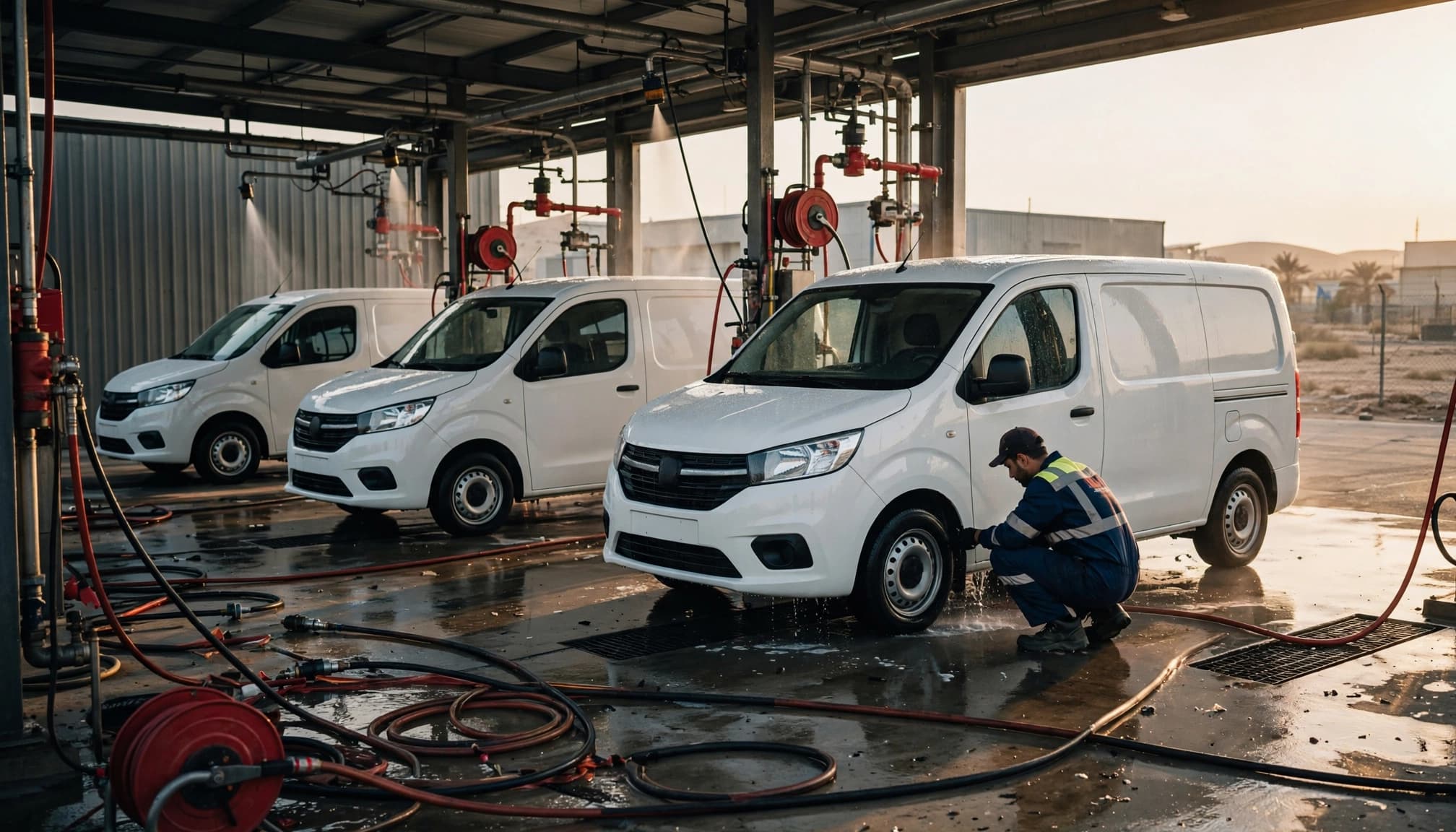
For covered, light-use vehicles, try an exterior wash every 10 to 14 days. For vehicles used daily around town, start with a wash every 5 to 7 days. High-mileage vehicles on dusty routes may need a careful rinse or wash every 2 to 4 days, depending on how much grit has collected.
These are trial intervals, not official standards. Inspect vehicles between washes, especially after long shifts, construction-area routes, or visible dust events. A quick inspection helps you clean when needed rather than washing every vehicle on the same day by habit.
Set a separate cabin routine
Passenger vehicles need regular attention inside as well as outside. Remove rubbish and check touchpoints after busy shifts. For vehicles with lighter use, a cabin check at the end of each day and a scheduled vacuum once or twice a week may be enough.
Adjust the routine for taxis, rental vehicles, chauffeur cars, and any fleet that carries customers throughout the day. Spills, sand, and heavy passenger turnover are reasons to clean sooner rather than wait for the next planned detail.
Account for Dubai’s weather and routes
Conditions can change quickly, so make the cleaning plan responsive. A vehicle parked outdoors or driven through dusty areas may need attention sooner than one kept under cover.
Check current conditions
Use the UAE National Center of Meteorology forecast when planning wash days around dust or unsettled weather. A forecast won’t tell you how dirty each vehicle is, but it can help you avoid scheduling a large fleet wash just before conditions are likely to change.
Dust is also a wider regional issue. Kuwait University’s overview of dust and dust storms describes the scale of airborne dust worldwide. For fleet managers, the practical point is simple: use actual vehicle condition, not the calendar alone, to decide when a wash is needed.
Check the vehicle, not just the forecast
Look at the windshield, mirrors, lights, wheels, and lower body after a dusty shift. If the vehicle has a visible layer of grit, remove it carefully before wiping or washing by hand. Dust that stays on the surface can be dragged across the paint during cleaning.
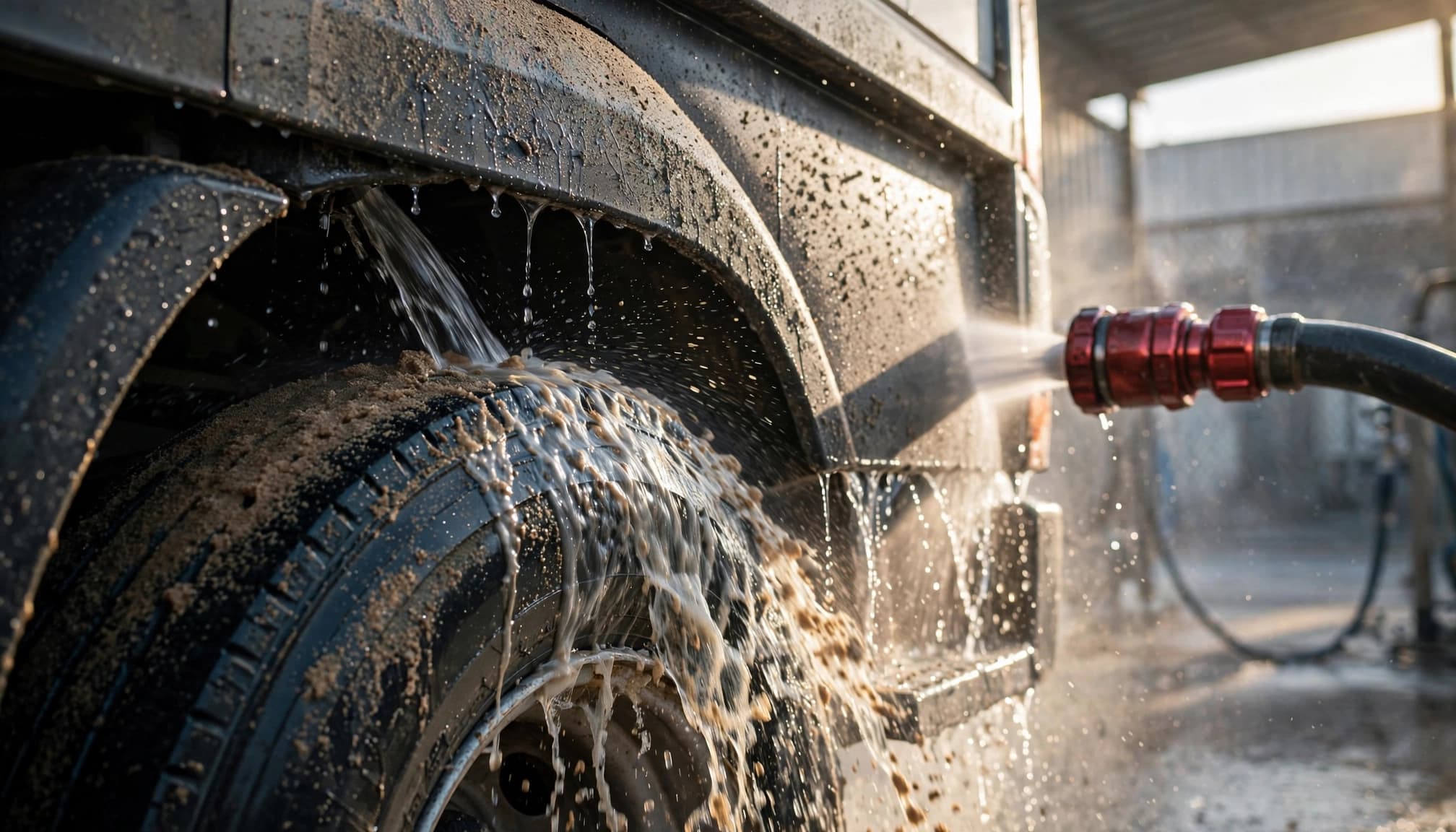
Hot panels can also dry water and cleaning products quickly. Choose a shaded wash area when possible, and avoid leaving soap or rinse water on the vehicle while attending to another task.
Make the wash routine easy to maintain
A schedule only helps when drivers and wash teams can follow it during normal operations. Keep the steps clear, assign responsibility, and allow some flexibility for vehicles that return in poor condition.
Assign wash days and responsibilities
Set regular wash windows around the fleet’s working hours. For example, a business can group vehicles by route and clean them as they return, while keeping one or two slots open for vehicles that need extra attention. Choose an approach that suits shift changes and vehicle availability.
Make it clear who reports a dirty vehicle and who confirms that it has been cleaned. If your team uses an external wash provider, agree on collection times, vehicle access, and how staff will flag urgent cleaning needs.
Record completion and condition
Use a simple vehicle log or shared schedule. Record the wash date, whether the exterior or cabin was cleaned, and any visible issues such as stains, sand buildup, or damaged trim. A short note is enough to show whether one route creates more cleaning work than another.
The log also helps prevent missed vehicles and unnecessary repeat washes. Keep it easy for drivers and supervisors to update, especially when vehicles move between teams or shifts.
Protect paint and cabin materials during cleaning
Frequent washing can keep vehicles presentable, but the method matters. Start by removing loose grit, then use the right products and tools for the surface being cleaned.
Remove grit before contact washing
Rinse dusty panels, wheels, and lower bodywork before touching them with a wash mitt or cloth. Work with clean equipment and change water or cloths when they become visibly dirty. This reduces the chance of moving grit across the paint.
Follow a trusted paint-safe washing guide when setting cleaning steps for staff. Keep the process consistent across the fleet so that each vehicle receives the same careful treatment.
Use products suited to each surface
Paint, glass, wheels, interior trim, and upholstery may need different cleaning products. Follow product directions, use suitable tools, and avoid letting cleaning agents dry on hot surfaces. For vehicles with ceramic coating, paint protection film, or vinyl wraps, confirm that the selected wash method is suitable for the finish.
A clean cabin also depends on small details. Use products intended for interior materials, and avoid leaving wet areas or strong cleaner residue on seats and controls.
Review the schedule and make adjustments
After a few weeks, compare the wash log with the condition of each vehicle group. Check whether the exterior remains presentable between washes and whether the cabin routine is working for passengers and drivers.
If vehicles on one route repeatedly return with heavy dirt, adjust that group’s interval rather than washing the whole fleet more often. If vehicles stay clean longer under covered parking, a longer interval may be practical. Review the plan again when routes, seasons, or fleet size change.
A schedule should support the way the vehicles are used. Keep the baseline simple, inspect vehicles often, and make changes when the log shows a clear need.
Frequently Asked Questions
How often should a fleet be washed in Dubai?
It depends on mileage, route, parking, and passenger use. A light-use vehicle may need an exterior wash every 10 to 14 days, while a dusty, high-mileage vehicle may need cleaning every 2 to 4 days. Treat these as trial ranges and adjust them after inspections.
Should fleet vehicles be washed after every dust event?
Check each vehicle first. If dust is light and the vehicle remains safe to operate, schedule cleaning according to its condition and normal use. If grit is visible on glass or paint, rinse it carefully before wiping or contact washing.
What’s the easiest way to track the schedule?
Keep a shared log with the vehicle, wash date, cleaning type, and any condition notes. Assign someone to review it weekly so missed washes and repeat dirt patterns are easy to catch.
Keep the plan practical
A dependable fleet cleaning schedule is based on vehicle use and condition, not one fixed rule. Set a starting frequency, inspect vehicles regularly, and adjust each group as route and weather patterns become clear.
For wash support, Bud Car Wash is open 24/7 in Ras Al Khor, Dubai. A practical routine helps each vehicle stay clean, presentable, and ready for its next trip.

Sammie O is the owner of Bud Car Wash, a 24 hour hand car wash and detailing shop at Shop #7, 44, 22nd Street, Ras Al Khor Industrial Area 2, Dubai. He writes the car care guides on this site based on work done in his own bay.
View All Articles