
Last updated 19 August 2026 by Sammie O, owner of Bud Car Wash in Ras Al Khor Industrial Area 2, Dubai.
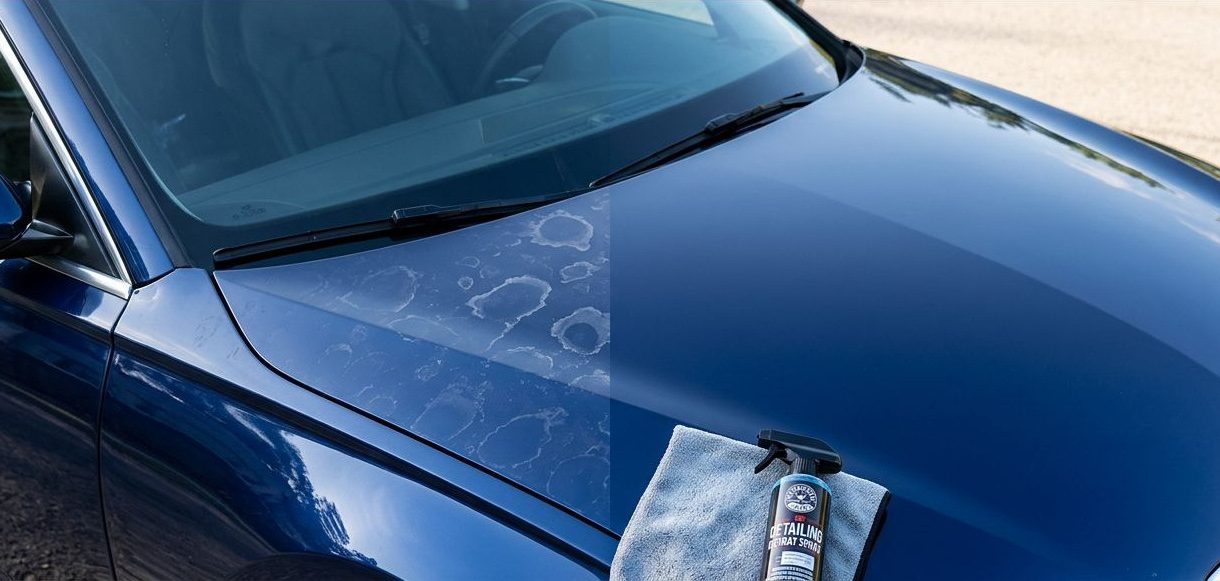
Those white rings on a freshly washed car are usually mineral deposits left behind when water evaporates. Hot weather, hard water, sprinklers, and direct sunlight can make them appear quickly.
Learning to remove water spots car owners notice after a wash starts with one simple rule: never scrub a dry, dusty panel. The safest results come from cleaning the surface first, using the right product, and applying light pressure.
Paint and glass need different care. Start by identifying the type of mark, then use the correct process for each surface.
Want us to do it instead?
We do detailing and surface protection at our Ras Al Khor bay, 24 hours a day. Fill this in and we reply with a price and a time. The message writes itself, so you only tap send.
Would rather talk? Call +971 55 168 5050. Someone answers 24 hours.
What Causes Water Spots on a Car?
Water spots form when droplets dry and leave behind minerals such as calcium and magnesium. The longer those minerals remain on the vehicle, the harder they can become to remove.
Fresh mineral deposits
Fresh spots sit on top of the paint or glass. They often look like white dots, cloudy rings, or light splashes. You may feel a slightly rough texture when you run a clean fingertip across the washed surface.
These marks usually respond to a proper wash, a paint-safe water-spot remover, or a mild vinegar solution. Work in the shade and keep the surface cool. Heat can cause cleaning products to dry before they have time to loosen the deposits.
Etched spots need more care
Older spots can etch into the clear coat or glass. In this case, the mineral residue may be gone, but the outline remains as a dull ring or faint stain.
If a mark remains after the panel is wet, treat it as possible etching, not as a deposit that needs more scrubbing.
Etching may need light polishing on paint or a product made for automotive glass. Aggressive rubbing can thin the clear coat, create scratches, or leave uneven gloss. The Gtechniq water-spot guide also separates surface deposits from more serious water-spot damage.
Tools and Materials for Safe Removal
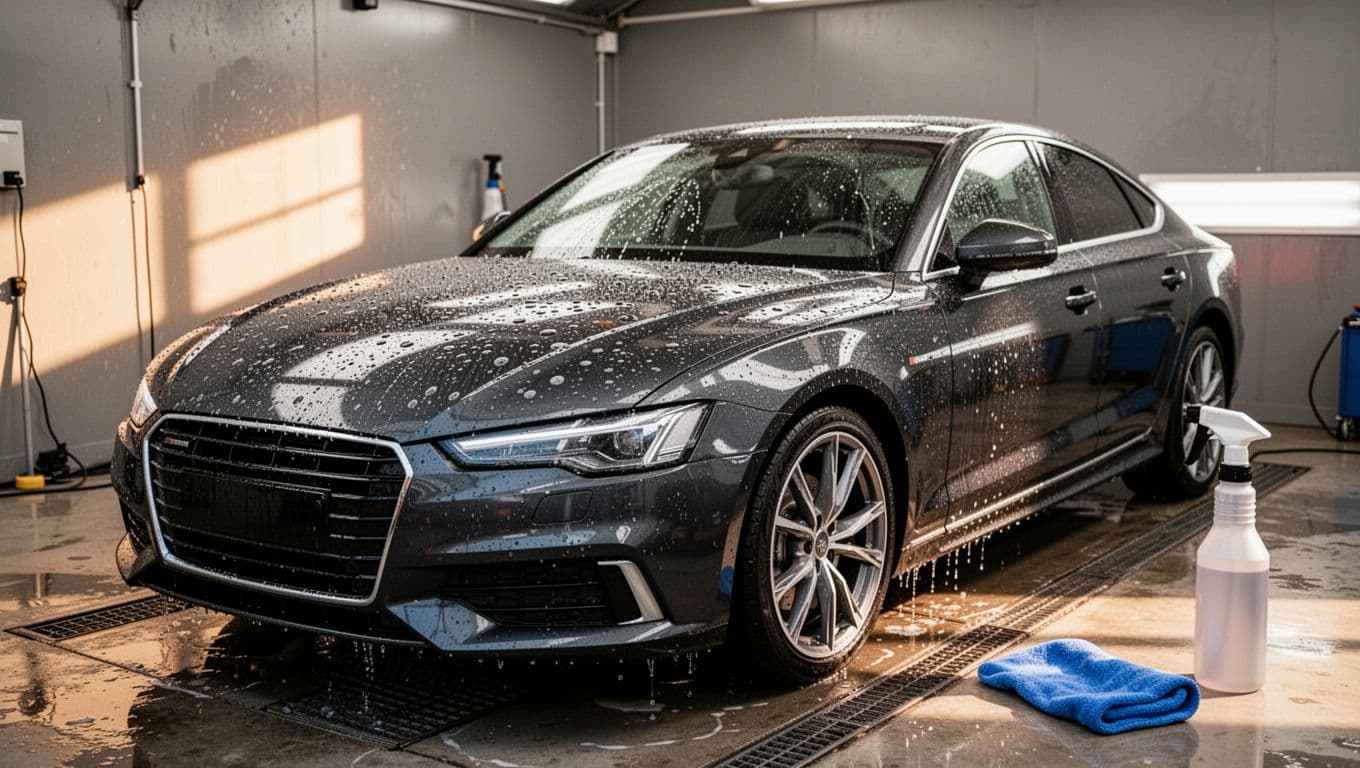
Prepare everything before you begin. A clean tool is less likely to drag grit across the surface.
- Use a pH-neutral car shampoo and plenty of clean water.
- Keep a quality wash mitt and a plush microfiber drying towel ready.
- Use separate microfiber towels for paint and glass.
- Choose a water-spot remover labeled safe for automotive paint or glass.
- Keep white distilled vinegar available for light, uncoated mineral deposits.
- Have nitrile gloves and a soft glass towel for controlled application.
- Finish with a compatible wax, sealant, or coating maintenance product.
Never use a kitchen sponge, scouring pad, rough cloth, or dry paper towel. Avoid steel wool and razor blades unless a product manufacturer gives clear instructions for that exact glass surface.
Work in a shaded area with good ventilation. Don’t mix vinegar with other cleaners, and don’t let acidic products dry on paint, trim, rubber, or glass. Test every product on a small hidden area first.
How to remove water spots car owners see on paint and glass
The safest process to remove water spots car owners can repeat starts with a clean surface and low pressure. Follow these steps for painted panels.
- Park in the shade. Make sure the hood, roof, and other panels are cool to the touch. Avoid working under direct Dubai sun or on warm paint.
- Rinse the car thoroughly. Remove loose sand and dust before touching the paint. This step helps prevent fine scratches during washing.
- Wash with car shampoo. Use a clean mitt and work one panel at a time. Rinse the mitt often so mineral grit doesn’t move across the clear coat.
- Dry without rubbing hard. Use a plush microfiber towel. Lay it flat, pull it gently across the panel, or blot the remaining water. Don’t chase a spot with a dry towel.
- Apply a paint-safe remover. Spray the product onto a microfiber towel or the small working area, based on the label directions. Let it dwell only for the stated time, then wipe gently with a clean side of the towel.
- Rinse and inspect. If the spots improve, wash away product residue and dry the panel again. If the outline remains, repeat the treatment once. More pressure isn’t a safer solution.
For light deposits, a diluted white vinegar solution can help. Use it only on a small area, keep it wet for a short period, and rinse the panel afterward. The Turtle Wax Pro water-spot guidance explains why mild acidic solutions can loosen mineral residue without relying on heavy abrasion.
If the mark remains after chemical treatment, the clear coat may be etched. A light hand polish can sometimes improve the appearance, but polishing removes a small amount of clear coat. Use the least aggressive product possible, and stop if the finish becomes hazy or uneven. Ceramic-coated paint should only be polished with the coating manufacturer’s approval.
How to Remove Water Spots From Car Glass
Glass can tolerate different products than paint, but it still scratches easily when grit is present. Windshield spots can also reduce clarity, especially at night or in strong sunlight.

Use this process to remove water spots car owners find on windshields, side windows, and mirrors:
- Rinse and wash the glass first. Remove dust, sand, and loose minerals before wiping. Clean the rubber wiper blades as well.
- Dry with a dedicated microfiber towel. Glass towels with a short, clean pile reduce streaks and keep debris away from the surface.
- Use an automotive glass cleaner. Choose a formula compatible with window tint and any glass coating. Spray the towel or a small area instead of soaking door seals and trim.
- Treat mineral deposits carefully. Apply a glass water-spot remover to a small section. Keep the product wet and follow the recommended dwell time.
- Wipe with light, straight passes. Use overlapping vertical or horizontal strokes. Turn the towel to a clean side as residue builds.
- Buff and inspect from different angles. Remove all product residue before checking the glass in direct light. If the spot outline remains, don’t increase pressure.
Glass coatings need extra attention. A coating may repel water, but it doesn’t make the surface scratch-proof. Avoid vinegar, abrasive glass polishes, clay, steel wool, and blades unless the coating maker approves them. When spots affect windshield visibility or cover the entire vehicle, professional glass treatment is the safer option.
Vinegar, Water-Spot Remover, or Polish?
The correct product depends on whether you’re dealing with fresh minerals or permanent etching. Use the least aggressive option that matches the condition.
When vinegar is appropriate
White distilled vinegar mixed with water can help with light, mineral-based spots. A common starting mixture is equal parts vinegar and water, as described in the Gtechniq instructions.
Apply the solution to a microfiber towel, not directly over large areas. Treat a small section, wipe gently, and rinse. Never use it on hot surfaces or allow it to dry. Keep it away from unprotected metal, rubber, and plastic trim.
Vinegar isn’t the first choice for coated glass or protected paint. It may affect some waxes, sealants, and glass coatings. Check the care instructions before using it.
When to choose a dedicated product
A dedicated water-spot remover is more controlled for stubborn or repeated deposits. These products are made for specific surfaces and often provide clearer instructions than household acids. The Chemical Guys removal guide recommends products designed to break down deposits without depending on aggressive abrasion.
If a paint mark is etched, a polish may be required. Use a small test area first. The Adam’s Polishes paint instructions also recommend careful application with a plush microfiber towel for mineral-based spots.
Troubleshooting and Prevention
A few simple checks can prevent the most common mistakes when you remove water spots car owners see after washing.
If the spots won’t disappear
If the surface feels rough after washing, bonded minerals may still be present. Apply a suitable remover to a small area and repeat the treatment once. Keep the towel clean and replace it when it becomes loaded with residue.
If the surface is smooth but the ring remains, the clear coat or glass may be etched. Don’t keep adding product or pressure. Paint may need machine polishing, while glass may need a dedicated restoration product. Severe marks are best assessed by a professional detailer.
Cloudy glass after treatment usually means product residue remains. Wash the glass again with a compatible cleaner, then buff it with a dry microfiber towel. Streaks can also come from a saturated towel, so use a fresh one for the final pass.
Stop spots before they return
Dry the car soon after washing. Don’t allow rinse water to evaporate on the hood, roof, or windows. A spot-free rinse can reduce mineral residue, especially in areas with hard water.
Wash in the shade and keep sprinklers away from parked vehicles. Rainwater and irrigation water can leave deposits when they dry on a warm surface.
Apply a suitable wax or paint sealant after removing the spots. Keep coated vehicles on the manufacturer’s maintenance schedule, and use only approved products. Regular washing and careful drying are more effective than waiting until heavy deposits build up.
When the finish needs polishing or the glass has widespread etching, Bud Car Wash can inspect the surface and recommend the correct detailing treatment. Professional cleaning, polishing, and protection can restore a cleaner appearance without unnecessary abrasion.
Conclusion
Water spots are easier to remove when you treat them early. Wash and dry the vehicle properly, use a paint-safe product on painted panels, and choose a coating-safe glass treatment for windows.
Light mineral deposits may respond to diluted vinegar, while older etching needs controlled polishing or professional care. The most reliable way to remove water spots car owners deal with is simple: clean first, apply light pressure, and stop before the surface is damaged.
Get a price on detailing and surface protection
Shop #7, 44, 22nd Street, Ras Al Khor Industrial Area 2, open 24 hours. Tell us the car and we reply with a price and a time.
Would rather talk? Call +971 55 168 5050. Someone answers 24 hours.
See us first on Google
Google lets you choose the sites you want to see more of. Add Bud Car Wash as a preferred source and our car care guides show up more often in Top Stories and in Google’s AI answers.
Opens Google in a new tab. You can remove us again at any time.

Sammie O is the owner of Bud Car Wash, a 24 hour hand car wash and detailing shop at Shop #7, 44, 22nd Street, Ras Al Khor Industrial Area 2, Dubai. He writes the car care guides on this site based on work done in his own bay.
View All Articles