Why Rain Leaves Mud Spots on Cars in Dubai
Posted in :

Last updated 19 August 2026 by Sammie O, owner of Bud Car Wash in Ras Al Khor Industrial Area 2, Dubai.
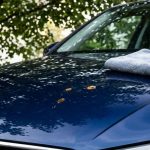
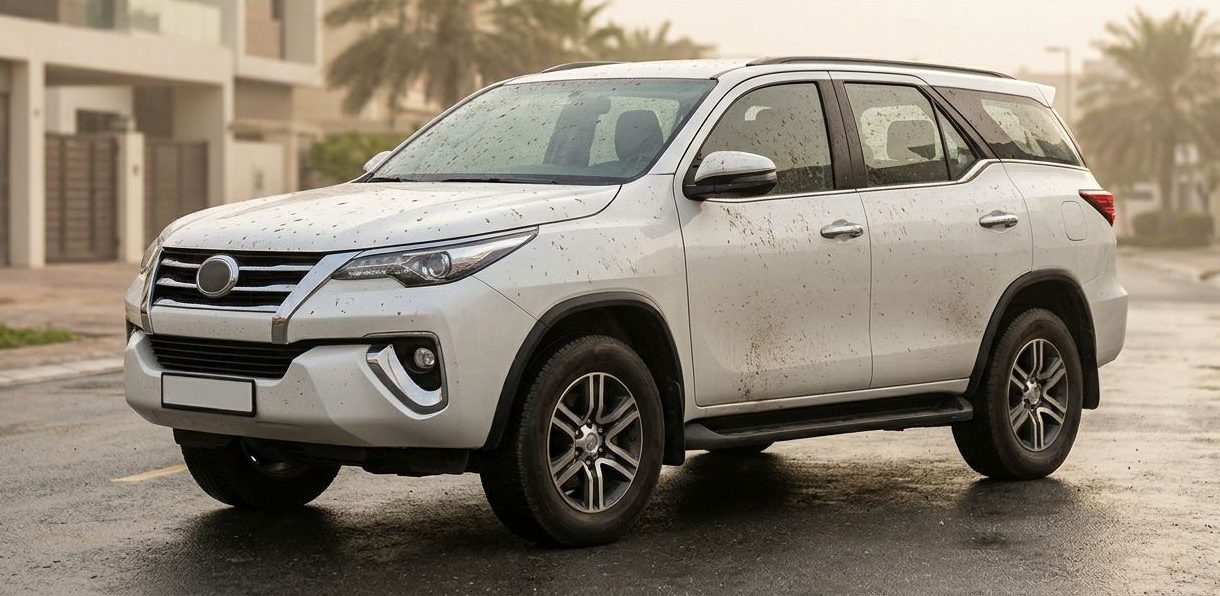
A short Dubai shower can make a freshly washed car look dirty within minutes. The reason is simple: mud spots on cars form when rain mixes with fine dust already resting on paint, glass, tyres, and nearby roads.
Dubai’s dry conditions allow dust to build up between washes. When wind and rain arrive together, that material becomes a thin brown or grey film. Knowing the difference between ordinary residue and paint damage helps you clean it safely.
Want us to do it instead?
We do detailing and surface protection at our Ras Al Khor bay, 24 hours a day. Fill this in and we reply with a price and a time. The message writes itself, so you only tap send.
Would rather talk? Call +971 55 168 5050. Someone answers 24 hours.
Why mud spots on cars appear after Dubai rain
Rain doesn’t need to be heavy to leave marks. A light shower can wet a dusty surface, then stop before enough water carries the residue away. As the moisture dries, it leaves dust behind in uneven patches.
Weather reports often mention rain and blowing dust together. Dubai Municipality also publishes visibility information for conditions involving dust and heavy rain. UAE weather reporting can help you decide whether washing your vehicle after a storm is worthwhile.
Dust turns into a muddy film
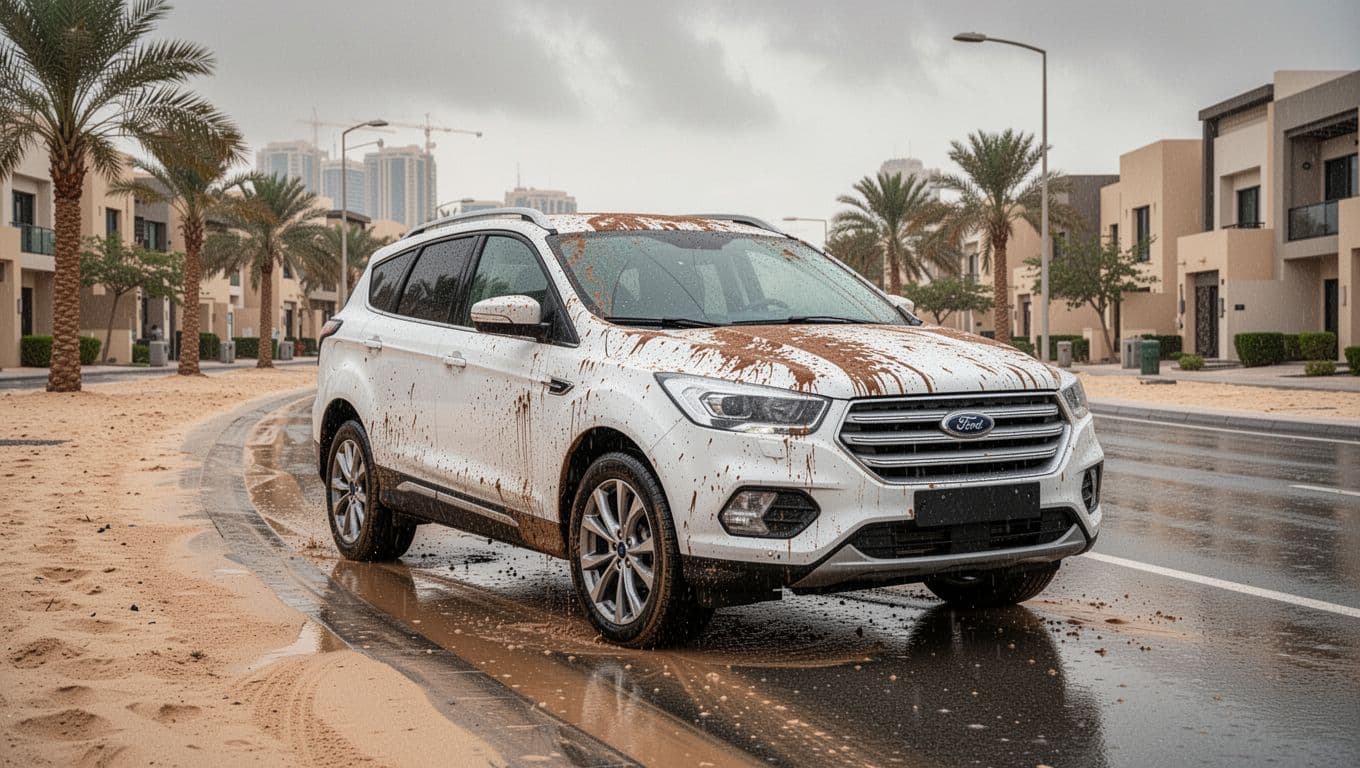
Fine desert dust settles on horizontal panels first. The bonnet, roof, boot lid, and windscreen collect more residue because they face the open air. Rain wets these particles and creates the familiar muddy appearance.
Many marks are only surface residue and normally wash away with a proper rinse and gentle contact wash. Darker colours show the contrast more clearly, while white and silver cars can develop yellow-brown staining around panel edges and gaps.
Road spray adds darker marks
Cars driven during or after rain can collect more than airborne dust. Water splashes from wet roads and carries sand, tyre residue, and general road grime onto lower doors, wheel arches, mirrors, and bumpers.
This is why a parked car may have light spots across the roof but darker stains along the sides. Lower panels receive direct spray from other vehicles and the road surface.
Are rain marks only dirt, or can they damage paint?
Most rain-related marks are ordinary dirt and don’t harm a healthy clear coat when removed correctly. Problems start when residue stays for days, dries under strong sun, or is rubbed across the paint with a dry cloth.
Mineral deposits can remain after water evaporates. They appear as pale rings or cloudy spots, rather than soft brown mud. On glass, they may affect clarity. Stubborn deposits on paint can require a specialist wash, light polishing, or paint-safe decontamination.
Treat a muddy mark as loose grit until the surface has been rinsed. Wiping first can turn a simple wash into avoidable scratches.
When a normal wash is enough
Use a normal exterior wash when the marks are fresh, feel dusty rather than rough, and disappear after rinsing. A microfiber wash mitt and pH-balanced car shampoo are usually enough for routine residue.
Don’t use household dish soap or kitchen cleaners. They aren’t made for automotive paint and may remove existing wax or leave an uneven finish. The main concern isn’t a serious chemical risk from ordinary rain residue. It is the chance of dragging grit across the paint during cleaning.
Signs you need professional detailing
Professional cleaning is useful when stains remain after a careful wash, the surface feels rough, or the paint has a dull, patchy finish. Brown marks around badges, trim, door handles, and panel gaps may also need controlled cleaning tools.
Ask for an inspection before polishing. A detailer can separate removable dirt from water spots, oxidation, tar, or older contamination. Wax-and-polish work may restore gloss, while deeper paint correction should only be recommended when the finish needs it.
How to safely remove mud spots after rain
The safest approach is to remove loose material before touching the paint. Work in the shade when the panels are cool, and clean from the top down.
- Rinse the full vehicle first. Use clean water to loosen dust and carry it away. Pay attention to the roof, bonnet, wheel arches, and lower doors. Vehicle washing guidance also recommends a low-pressure pre-rinse for fine dust, including on vehicles with paint protection film or ceramic coating.
- Wash with automotive shampoo. Use a clean microfiber mitt and plenty of lubrication. Move in straight, light passes instead of scrubbing in circles.
- Rinse the mitt often. A dirty mitt can return sand to the panel. Use separate tools for wheels and painted surfaces.
- Rinse again and dry gently. A clean drying towel should blot or glide lightly over the surface. Avoid letting water sit in the hot sun.
- Check before repeating. If a mark remains, don’t add pressure. It may be a mineral spot or embedded contamination rather than ordinary mud.
If muddy water has dried across several panels, a professional exterior wash from Bud Car Wash can remove it with paint-safe products. Wax and polish can then refresh the finish when the vehicle needs more than routine washing.
How to prevent muddy marks between washes
You can’t stop rain from falling, but you can reduce the residue it leaves behind. Regular washing removes the dust layer that rain needs to create muddy spots. During dusty periods, a maintenance wash every one to two weeks may help, depending on where you park and how often you drive.
Covered parking protects the roof and bonnet from direct dust. Avoid parking beneath trees when rain is expected, since leaves and organic residue can add more marks. After a shower, rinse the car when practical instead of allowing dirty water to dry repeatedly.
Protective coatings make cleaning easier
Wax, sealants, and ceramic coatings don’t make a vehicle dirt-proof. They create a smoother, more water-repellent surface, which can help muddy water release more easily during washing. Protection also supports a brighter finish between professional details.
Coated cars still need suitable maintenance products. Follow the provider’s curing and wash instructions, especially after a new application. PPF and ceramic coating care guidance explains why new protection may need time before its first wash.
For vehicles exposed to frequent dust, a professional wax-and-polish service can refresh the finish. Choose a detailer that uses paint-safe, eco-friendly products and checks the surface before applying any treatment.
Keep Dubai rain marks under control
Rain can leave mud spots on cars because it activates dust already sitting on the vehicle and adds road spray during driving. In most cases, the marks are a routine cleaning issue, not permanent damage.
Rinse before wiping, use products made for automotive surfaces, and stop if stains remain after a gentle wash. When the finish feels rough or looks dull, professional detailing can restore a clean appearance and add protection without unnecessary polishing.
A clean car before the next shower is easier to maintain than a neglected one after several dusty rain cycles. With regular exterior washing and suitable protection, Dubai’s short rain showers don’t have to leave a lasting mark.
Get a price on detailing and surface protection
Shop #7, 44, 22nd Street, Ras Al Khor Industrial Area 2, open 24 hours. Tell us the car and we reply with a price and a time.
Would rather talk? Call +971 55 168 5050. Someone answers 24 hours.
See us first on Google
Google lets you choose the sites you want to see more of. Add Bud Car Wash as a preferred source and our car care guides show up more often in Top Stories and in Google’s AI answers.
Opens Google in a new tab. You can remove us again at any time.

Sammie O is the owner of Bud Car Wash, a 24 hour hand car wash and detailing shop at Shop #7, 44, 22nd Street, Ras Al Khor Industrial Area 2, Dubai. He writes the car care guides on this site based on work done in his own bay.
View All Articles