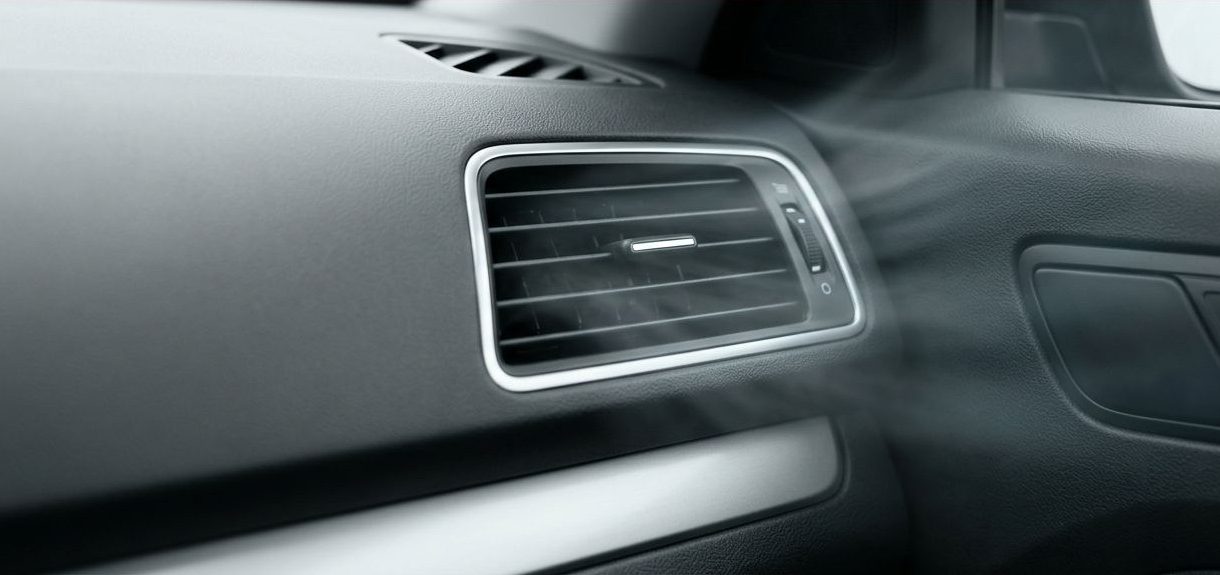

Your car can look spotless and still smell unpleasant when the air conditioning starts. Car vent odors often come from moisture, a dirty cabin filter, trapped debris, or contamination inside the HVAC system.
Musty, sour, or stale air is common after humid weather, spilled drinks, wet carpets, or long periods without cleaning. A fragrance may cover the smell briefly, but it won’t remove the source. Start by identifying the odor, then clean the areas that hold moisture and replace parts that can no longer be refreshed.
What Causes Car Vent Odors?
The air vents are usually not the original source of a bad smell. They carry air from the HVAC housing, cabin filter, floor area, and outside-air intake into the vehicle.
Moisture inside the air conditioning system
Your air conditioner’s evaporator becomes cold as it removes heat and humidity from cabin air. Condensation collects around it and should drain under the vehicle.
When moisture remains inside the HVAC case, it can support mildew and create a damp, musty smell. The odor may be strongest when you first switch on the A/C, then become less noticeable after several minutes.
A blocked drain, restricted airflow, or repeated short trips can make the problem worse. Leaves and dirt around the outside-air intake can also hold moisture near the ventilation system.
Dirty filters, debris, and interior contamination
The cabin air filter catches dust, pollen, and other particles before air reaches the passenger compartment. If the filter becomes damp or heavily soiled, it can send stale odors through the vents. A practical explanation of musty A/C smells also points to dirty or damp filters as a common cause.
Food, smoke, wet clothing, and spilled drinks create another source. Odors can settle into floor mats, carpet, seat fabric, and the area beneath the seats. Cleaning the vents alone won’t solve the problem if the cabin itself still contains the smell.
Other odors need faster attention. A sweet smell may indicate a coolant leak. A burning plastic or electrical smell may point to a mechanical fault. Exhaust fumes inside the cabin are a safety concern and require immediate inspection.
Diagnose the Source Before Cleaning
A short inspection can prevent wasted time and avoid spraying products into the wrong area. Notice when the odor appears and whether it changes with the fan, A/C, heat, or outside-air setting.
Test the fan, air conditioning, and heater
Park the vehicle outdoors and open the doors or windows. Start the fan at a low setting without the A/C. Check whether the odor appears through the vents.
Turn on the A/C and compare the smell. Then test the heater briefly. If the odor appears only with cooling, moisture around the evaporator or a damp cabin filter is more likely. If it appears with every setting, inspect the filter, intake, carpets, and upholstery.
Switch between recirculation and fresh-air mode. A smell that becomes stronger in fresh-air mode may come from leaves, standing water, or contamination near the outside-air intake.
Check the cabin and filter area
Remove floor mats and inspect the carpet, especially beneath the front seats and around the center console. Press a clean paper towel against damp areas. Look for water marks, wet insulation, or a smell that becomes stronger near the passenger footwell.
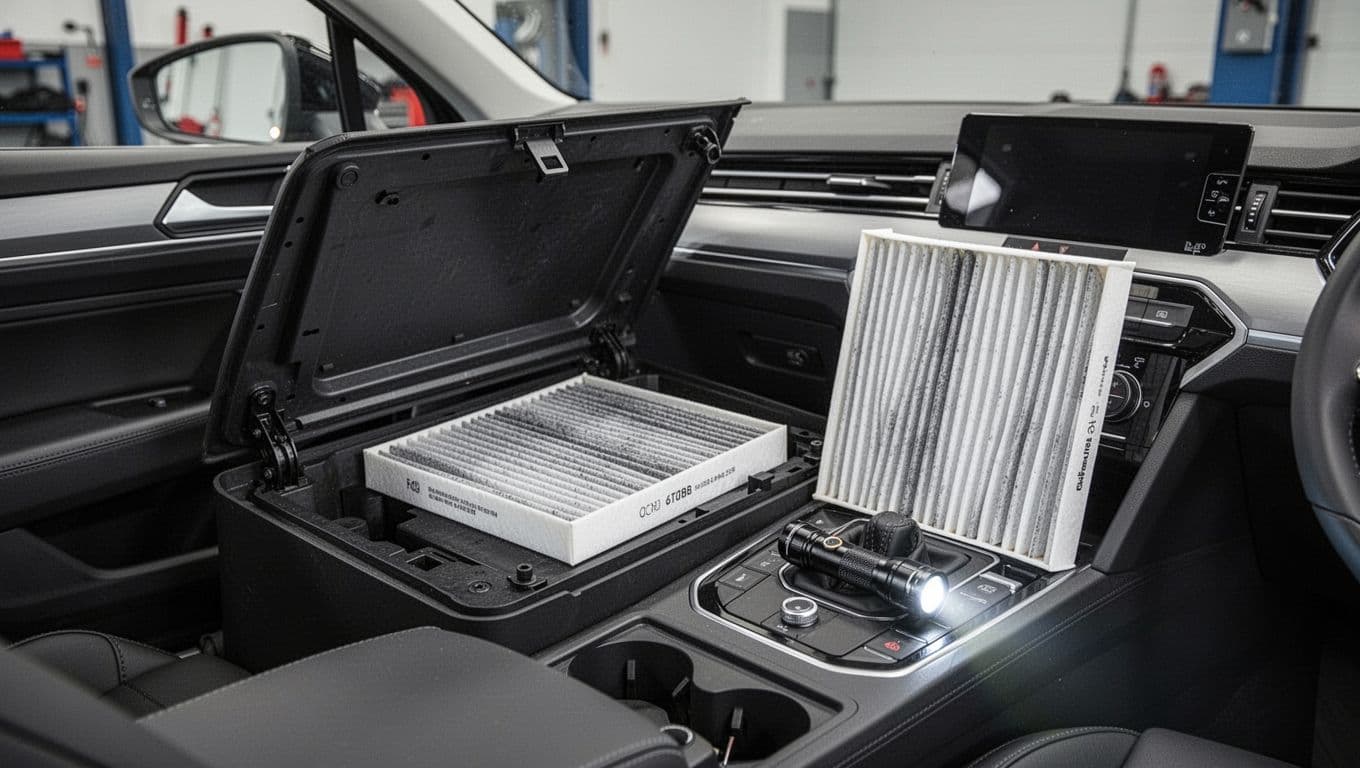
If your vehicle has a cabin air filter, check its location in the owner’s manual. It may sit behind the glovebox, below the dashboard, or near the windshield cowl. Read the manual before removing HVAC covers or accessing the blower and filter housing. Some panels use fragile clips, and some vehicles require a particular installation direction.
Do not assume the first smell you notice is the only source. A damp cabin combined with a contaminated filter can keep car vent odors returning after each cleaning.
A fragrance can hide a musty smell for a few hours, but it can’t dry an evaporator or clean a contaminated filter.
How to Remove Car Vent Odors Safely
Use simple supplies and work in a well-ventilated area. You’ll need a vacuum with a soft brush attachment, microfiber cloths, a soft detailing brush, and a mild automotive interior cleaner.

Follow these cleaning steps
- Remove rubbish and dry the cabin. Take out food containers, bottles, damp mats, and other items that may hold odors. Leave the doors open in a shaded, ventilated area until carpets and mats are completely dry.
- Vacuum the interior carefully. Use the soft brush attachment around the vents, dashboard seams, center console, seat rails, and floor edges. Remove loose dust before using any cleaner.
- Clean the vent surfaces. Lightly dampen a microfiber cloth with an automotive interior cleaner. Wipe the vent slats and surrounding plastic. Use a soft brush or cotton swab for narrow spaces, but don’t push dirt farther into the duct.
- Clean the outside-air intake. Check the area near the base of the windshield for leaves and debris. Remove loose material by hand or with a soft brush. Never pour water or cleaner into the intake opening.
- Replace a dirty cabin filter. If the filter is gray, damp, damaged, or packed with debris, replace it with the correct part. Install it in the airflow direction shown in the manual. A new filter can improve airflow and reduce recurring smells, but it won’t fix mold inside the HVAC case.
- Dry the HVAC system. After driving with the A/C, switch the cooling off while leaving the fan running for a few minutes before parking, if your vehicle’s manual allows it. This can help reduce leftover moisture. Don’t use extreme heat or make changes that conflict with the manufacturer’s instructions.
Avoid excessive liquid around the dashboard and vents. Water can reach electrical components, the blower motor, or airbag wiring. Don’t spray bleach, concentrated disinfectant, solvent, perfume, or harsh household chemicals directly into the vents. These products may damage plastics, seals, wiring, or interior surfaces.
A vent-safe HVAC cleaner can help in some vehicles, but follow the product label and vehicle instructions. More product isn’t better. Controlled application matters.
When Cleaning Is Not Enough
Some smells return because the source sits deeper inside the vehicle. Repeating surface cleaning won’t solve a wet HVAC case, blocked drain, or active leak.
Persistent musty odors may indicate mold
If a damp smell returns within a day or two, the evaporator housing may need professional cleaning. Mold or mildew may be present inside areas you can’t reach with a cloth or brush.
A cabin filter replacement can reduce the smell when the filter is the problem. It won’t remove growth on the evaporator or inside the ductwork. Professional technicians can inspect the HVAC case, drain, blower area, and air intake without forcing liquid into sensitive components.
Water leaks need proper repair
Wet carpet is often a warning, not a cleaning inconvenience. Water may enter through a door seal, windshield seal, sunroof drain, blocked cowl drain, or air conditioning drain.
Drying the carpet removes current moisture, but the odor will return if water keeps entering. Check for dampness after rain and inspect the passenger footwell. A workshop can perform a leak test and confirm whether the A/C drain is working correctly.
Some smells point to mechanical problems
A sweet odor with fogging windows or a damp passenger footwell may relate to a heater-core coolant leak. Burning smells can come from wiring, the blower motor, a belt, or another hot component.
Stop using the vehicle if you notice exhaust fumes, strong fuel smells, smoke, or a sharp electrical odor. Arrange an inspection rather than trying to mask the problem with a deodorizer.
Why Ozone Treatment Needs Caution
Ozone machines are often promoted for vehicle odor removal, but they aren’t a simple DIY solution. Ozone can irritate the lungs, and a vehicle must be unoccupied during treatment. The U.S. Environmental Protection Agency’s ozone guidance explains that a lack of ozone smell doesn’t prove the concentration is safe.
Never sit inside a vehicle while an ozone generator is running. Don’t use one in a garage, around children or pets, or without following professional safety procedures. Ozone may also affect rubber, plastics, adhesives, and other interior materials.
Ozone doesn’t repair a leaking seal, dry wet carpet, unblock an A/C drain, or remove contamination from a neglected HVAC case. If a professional recommends treatment, the source should still be identified and corrected first.
How to Prevent Odors From Returning
Regular care keeps moisture and debris from building up. Small habits are more effective than repeated fragrance treatments.
Keep the cabin dry and clean
Remove wet mats, towels, gym clothing, and food waste promptly. Clean drink spills as soon as possible, then dry the carpet and upholstery thoroughly. Wash rubber mats and dry them before placing them back inside.
Vacuum under the seats and around the center console during regular interior cleaning. These hidden areas often collect crumbs, leaves, and damp material.
Maintain the filter and air conditioning system
Replace the cabin filter at the interval listed in your owner’s manual, or sooner if you drive through heavy dust or polluted conditions. A blocked filter reduces airflow and places extra load on the blower system.
Keep the windshield cowl clear of leaves. If water pools beneath the vehicle after rain or the A/C stops producing its usual condensation, have the drains checked.
A clean interior detail can remove surface odors and refresh fabric, mats, and plastic surfaces. For recurring smells, professional HVAC inspection is the better choice because it addresses the source instead of covering it.
Conclusion
Car vent odors usually come from moisture, a dirty cabin filter, trapped debris, or contamination inside the HVAC system. Start with a dry cabin, clean vent surfaces, a clear outside-air intake, and a filter inspection.
Avoid excessive liquid and harsh chemicals near the dashboard. Skip unsafe ozone use, and take persistent musty smells, leaks, exhaust odors, and burning smells seriously. A fresh scent lasts when the underlying cause is removed, not when a stronger fragrance is added.

Sammie O is the owner of Bud Car Wash, a 24 hour hand car wash and detailing shop at Shop #7, 44, 22nd Street, Ras Al Khor Industrial Area 2, Dubai. He writes the car care guides on this site based on work done in his own bay.
View All Articles