Last updated 19 August 2026 by Sammie O, owner of Bud Car Wash in Ras Al Khor Industrial Area 2, Dubai.
Tree sap can turn a clean car into a sticky, marked-up surface within hours. Safe tree sap removal depends on using the right product, gentle pressure, and a cool paint surface.
Scraping hardened sap can damage the clear coat, while harsh household solvents may dull the finish. The safest process starts with washing away loose grit, softening the residue, and protecting the paint after cleaning. Here is how to remove tree sap without creating a bigger repair.
Why Tree Sap Shouldn’t Stay on the Paint
Sap is more than a cosmetic problem when it remains on automotive paint. Fresh residue can collect dust, while dried sap becomes harder and more bonded to the clear coat.
Fresh Sap Is Easier to Treat
Fresh sap usually has a soft, sticky texture. A regular car wash may remove some of it, but stubborn spots often need a dedicated spot treatment and a clean microfiber towel.
Acting early reduces the amount of rubbing required. That matters because unnecessary rubbing can move dust across the panel and create fine marks.
Hardened Sap Can Affect the Clear Coat
Heat and sunlight can make sap dry firmly against the paint. If it stays in place, the residue may stain or etch the upper surface of the finish.
The clear coat protects the colored paint underneath, but it still needs careful treatment. A useful guide to removing tree sap from car paint also recommends patience instead of scraping or aggressive cleaning.
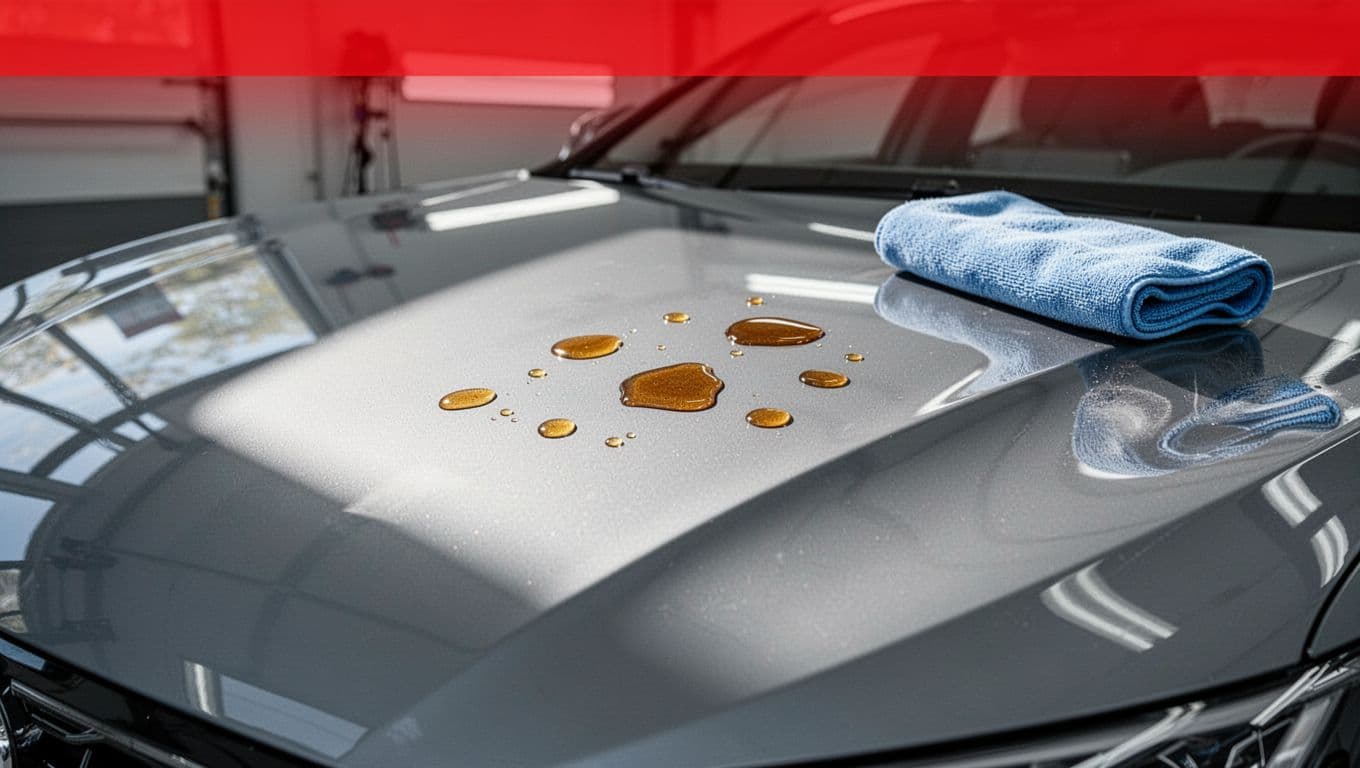
Prepare for Safe Tree Sap Removal
Good preparation protects the finish before the sap treatment begins. Never start rubbing a dirty panel, even when the sap spot looks small.
Gather the Right Materials
Keep the process simple and use products designed for automotive surfaces. You will need:
- A pH-balanced car shampoo and clean water.
- Two or more clean, soft microfiber towels.
- A dedicated bug, tar, and sap remover labelled as safe for automotive paint.
- A clay bar and proper clay lubricant for bonded residue.
- Wax or paint sealant for aftercare, if compatible with your vehicle’s finish.
Use separate towels for washing, removing residue, and drying. A towel that has touched the ground or collected grit should not return to the paint.
Work in Shade on a Cool Surface
Park the vehicle in a shaded area and allow the panel to cool before applying any product. The paint should be dry unless the product label gives different instructions.
Avoid working under direct sunlight. Heat can make a remover evaporate too quickly or dry on the surface. If the panel feels hot, wait before starting.
Read the product directions before use. Follow the stated application method, dwell time, and rinsing instructions. A small test area in an inconspicuous location is sensible, especially on older, repainted, or delicate finishes.
The safest tree sap removal method is controlled and patient. If the residue doesn’t loosen, change the product or process, not the amount of force.
How to Remove Fresh Tree Sap
Fresh sap often needs less treatment than dried residue. Begin with the least aggressive method and increase the treatment only when necessary.
Wash and Dry the Panel First
Rinse the affected area to remove loose dust and sand. Wash the panel with car shampoo and a clean wash mitt, then rinse thoroughly.
Dry the surface with a soft microfiber towel. Do not drag a dry towel across visible grit. The goal is to leave a clean, cool panel before treating the sap.
Soften and Wipe the Spot
Apply a small amount of automotive sap remover to the affected area or to a microfiber towel, depending on the product directions. Allow it to work for the stated time, then wipe gently with light, straight passes.
Don’t scrub in circles or press hard. Refold the towel to expose a clean section as residue transfers. If the sap remains, repeat the application rather than forcing it away.
Never allow the remover to dry on the paint. Rinse the area thoroughly once the residue loosens, then dry it with a clean towel. The Chemical Guys tree sap removal guide also stresses working on a clean, dry surface and keeping treatment products from drying.
How to Remove Dried or Bonded Sap
Dried sap needs more time, not more pressure. Start with a dedicated bug, tar, and sap remover made for painted automotive surfaces.
Use a Dedicated Sap Remover
Apply the product to a small section and follow its label. Some products need a short dwell time before the residue softens. Keep checking the area and don’t leave the product in place longer than directed.
Wipe with a clean microfiber towel once the sap begins to loosen. Rinse the panel thoroughly with water to remove both the sap and product residue.
For heavy or baked-on spots, repeat the process if the product instructions allow it. Avoid treating a large area at once. Small sections are easier to monitor and rinse properly.
Use a Lubricated Clay Bar When Needed
A clay bar can help remove residue that remains bonded after chemical treatment. Wash and dry the panel first, then apply plenty of clay lubricant.
Move the clay in straight, overlapping passes with light pressure. Don’t use circular motions, and don’t continue when the surface is dry. Fold the clay regularly so a clean section contacts the paint.
If the clay falls on the ground, discard it. Contamination trapped in the clay can scratch the finish. A visual demonstration of safe sap removal on car paint can also help you understand the light pressure and controlled movement required.
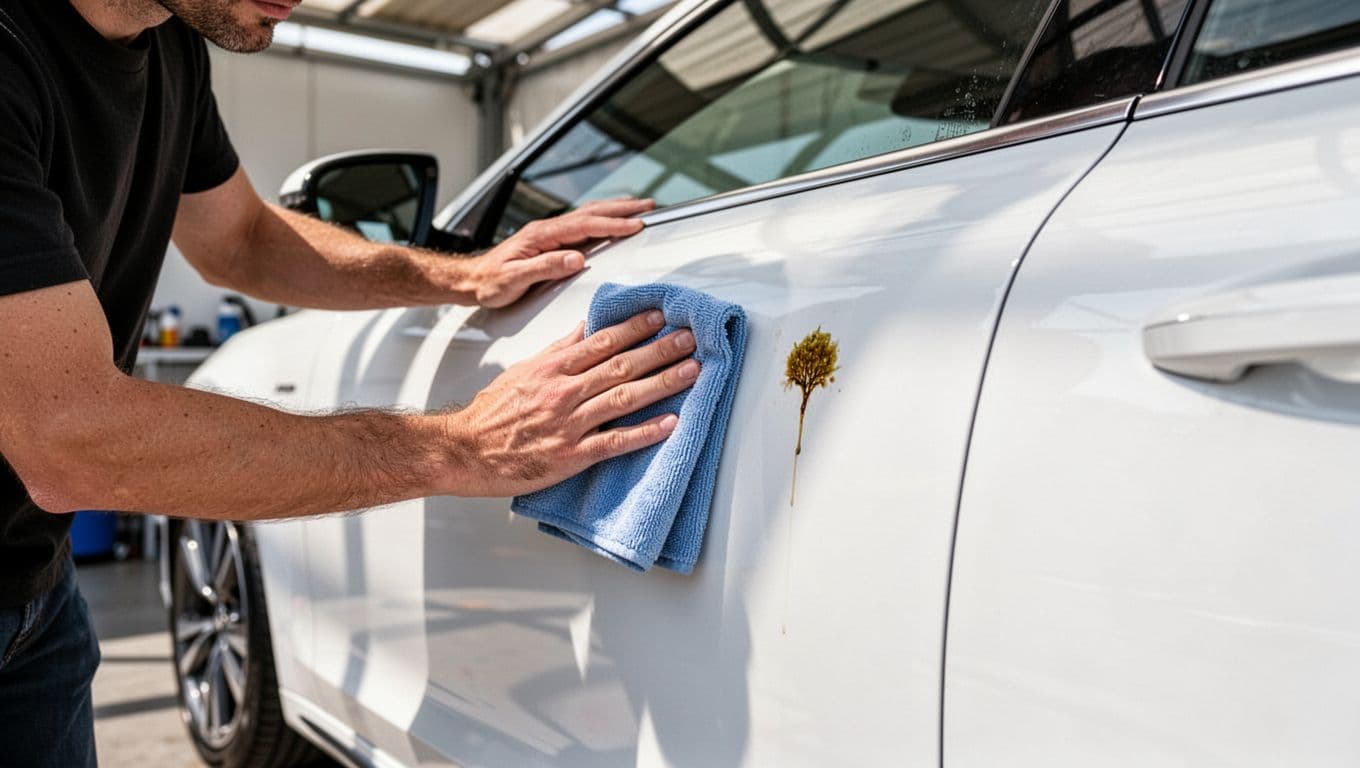
What Not to Use on Car Paint
The wrong tool can leave marks that are more difficult to correct than the original sap. Safe cleaning depends as much on avoiding damage as it does on choosing a remover.
Avoid Razors and Abrasive Scrubbing
Never use a razor blade, knife, metal scraper, or sharp edge on automotive paint. These tools can cut into the clear coat and leave permanent scratches.
Avoid scouring pads, rough sponges, stiff brushes, and abrasive powders. Even plastic tools can create damage when used with force. If sap is hard, soften it and repeat the treatment.
Do not grind at a spot with a dry towel. Lubrication and clean microfiber are important parts of the process.
Be Careful With Household Solvents
Acetone, nail polish remover, paint thinner, lacquer thinner, gasoline, and brake cleaner aren’t safe general-purpose choices for car paint. They may affect clear coat, plastic trim, rubber seals, or nearby coatings.
Products such as Goo Gone or Goof Off are not automatically suitable for every painted surface. Only use a household product when its label clearly confirms compatibility with automotive paint, and test it first in a hidden area.
The answer to whether sap can damage paint depends on exposure, heat, paint condition, and the amount of residue. This overview of sap and automotive paint damage explains why early removal is preferable to leaving deposits in place.
Rinse, Dry, and Protect the Finish
Cleaning doesn’t finish when the sap disappears. Remover residue can remain on the panel, so rinse the treated area thoroughly with clean water.
Wash the panel again if the product instructions recommend it. Dry with a clean microfiber towel, then inspect the paint under good light. Look for remaining sap, dull patches, or scratches before applying protection.
Reapply Wax or Sealant When Appropriate
Sap treatment can remove some of the protection previously applied to the paint. Once the surface is clean and dry, apply a compatible wax or paint sealant according to its directions.
Use extra care if the vehicle has ceramic coating, paint protection film, or a recently repaired panel. Choose products approved for that surface, or ask the installer before applying a remover or clay bar.
Wax and sealant won’t repair etching or scratches, but they add a fresh protective layer after cleaning. Regular protection also makes future contamination easier to remove.
Know When Professional Detailing Is Better
Call a professional detailer if sap covers multiple panels, has baked into the finish, or remains after careful treatment. Professional equipment can help identify whether the issue is residue, staining, clear-coat damage, or marring.
A trained team can also manage delicate finishes and reduce the risk of unnecessary polishing. Bud Car Wash provides exterior washing, wax and polish services, and detailed care for vehicle owners who want a clean result without taking risks with the paint.
Keep the Clear Coat Protected
Tree sap removal is safest when you wash first, work in shade, use a paint-safe product, and keep the surface cool. Gentle wiping and proper lubrication remove residue more reliably than scraping or harsh chemicals.
Once the sap is gone, rinse, dry, inspect, and reapply wax or sealant when appropriate. A little patience protects the clear coat and keeps your vehicle looking clean, glossy, and well maintained.