Last updated 25 July 2026 by Sammie O, owner of Bud Car Wash in Ras Al Khor Industrial Area 2, Dubai.
One coffee spill, muddy shoe, or oil mark can make a clean vehicle feel neglected. The good news is that learning how to clean car mats properly doesn’t require expensive equipment or harsh chemicals.
The right method depends on the mat material and the stain itself. Remove loose dirt first, use a suitable cleaner, and dry every mat fully before returning it to the vehicle. Start by checking what you’re working with.
Want us to do it instead?
We do interior detailing at our Ras Al Khor bay, 24 hours a day. Fill this in and we reply with a price and a time. The message writes itself, so you only tap send.
Would rather talk? Call +971 55 168 5050. Someone answers 24 hours.
Key Takeaways
- Remove carpeted and rubber mats from the vehicle before cleaning.
- Vacuum or shake out loose dirt before adding water or cleaner.
- Use carpet cleaner for fabric mats, degreaser for oily marks, and enzyme cleaner for organic stains and odors.
- Use diluted vinegar carefully, and never mix it with bleach or other cleaners.
- Dry mats completely to prevent damp smells, mildew, and trapped moisture.
Check the Mat Before You Clean It
Car mats are usually made from carpet, rubber, or a flexible vinyl-like material. Each type needs a different cleaning method. Using too much water on a carpet mat can leave moisture trapped in the backing. Strong chemicals can discolor fabric or make rubber brittle.
Remove the mats from the vehicle before cleaning. This keeps dirty water away from the carpet, pedals, seat rails, and electrical components under the seats. Never clean a mat while it’s still inside the car.
Carpeted Mats
Carpeted mats hold dust, sand, food particles, and liquid stains inside their fibers. They need vacuuming, controlled moisture, and thorough drying.
Check the care label if one is attached. Some mats have a rubber backing that can separate when soaked or scrubbed too aggressively. A soft or medium-bristle brush is usually suitable, but test it on a hidden corner first.
Rubber and Vinyl Mats
Rubber mats are easier to rinse and usually handle more water. Their raised grooves can still hold mud, grease, and sticky residue.
Avoid using solvent-based products unless the manufacturer approves them. They can leave a slippery surface or damage the finish. Mild dish soap, an automotive interior cleaner, or a properly diluted degreaser is usually enough for most rubber mats.
Identify the Stain
A fresh drink spill needs a different treatment from old grease or pet waste. Oil-based stains need a product that breaks down grease. Organic stains and odors respond better to an enzyme cleaner. General dirt usually needs only soap, water, and brushing.
A stain often looks worse after the first wash because dirt spreads through wet fibers. Blot and lift the residue instead of rubbing it across the mat.
Gather the Right Cleaning Supplies
You don’t need a full professional detailing setup to clean car mats at home. Prepare the products before you begin:
- A vacuum cleaner or stiff brush
- Two buckets of clean water
- Microfiber towels
- A soft or medium-bristle scrub brush
- Mild dish soap or automotive interior cleaner
- Carpet cleaner for fabric mats
- Enzyme cleaner for food, milk, vomit, or pet-related stains
- Diluted degreaser for oil and greasy marks
- White vinegar for selected odors and light mineral residue
Use gloves when working with degreasers, enzyme products, or heavily soiled mats. Open doors or windows when using any cleaner with a strong smell.
Always read the product label. Test the solution on a hidden section before treating the full mat. This is especially important with dark carpet, printed mats, rubber, and older materials.
How to Clean Car Mats With Bad Stains
The cleaning process is simple, but the order matters. Rushing straight to water can push dirt deeper into the fibers and make an old stain harder to remove.
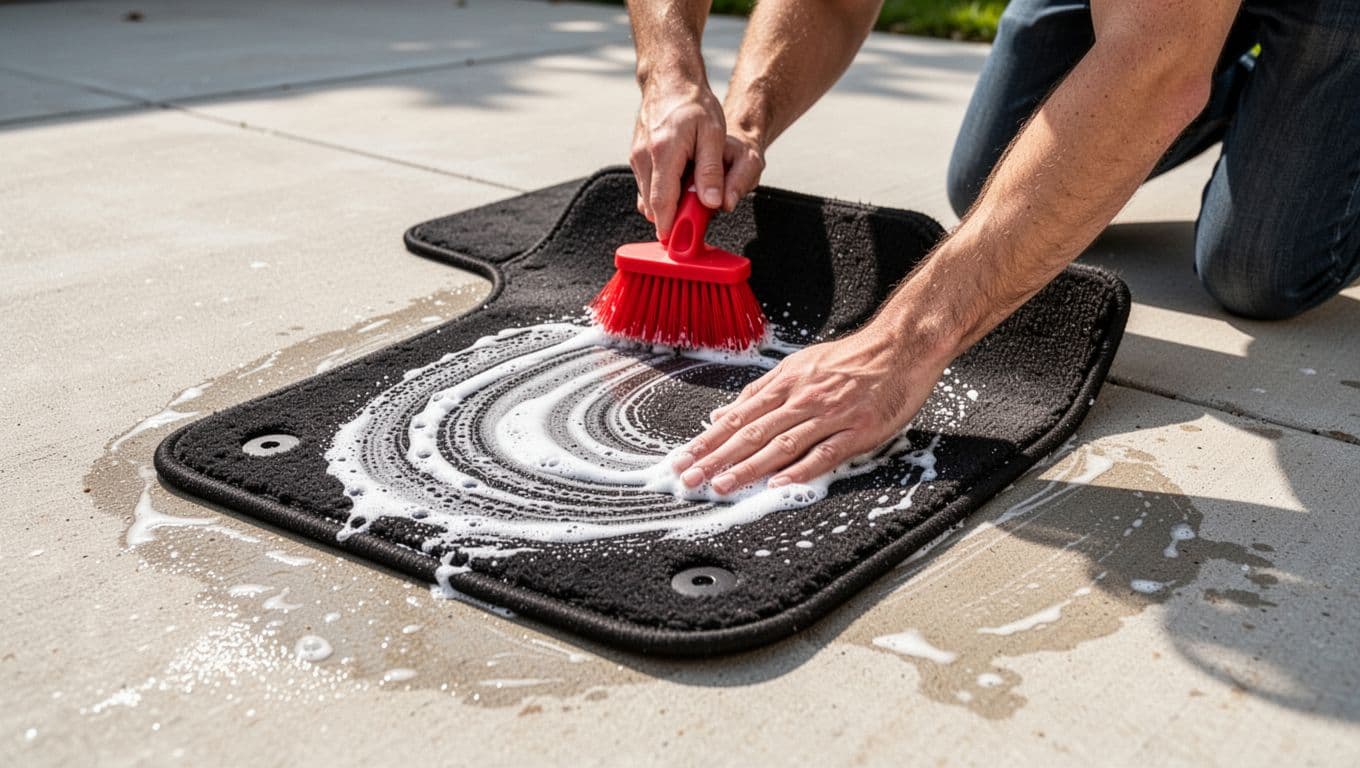
Remove the mats and clean them on a suitable outdoor surface before putting them back in the car.
1. Remove Loose Dirt
Take every mat out of the vehicle. Shake each one outdoors, then vacuum both sides. Pay close attention to the edges, corners, and grooves.
For rubber mats, tap them against a solid surface to release dried mud. A brush can loosen sand caught in the tread. Do this before wet cleaning, because water turns loose dirt into sludge.
2. Rinse Rubber Mats
Place rubber mats on a clean concrete surface or hang them over a suitable railing. Rinse them with a hose using moderate water pressure.
Don’t use a pressure washer at close range. High pressure can damage the mat surface, force dirt deeper into grooves, and splash contaminated water into nearby areas. It can also remove protective coatings from some rubber mats.
Apply a small amount of dish soap or diluted automotive cleaner. Scrub the grooves with a brush, then rinse until the water runs clear. Use a microfiber towel to remove excess water.
3. Treat Carpet Mats Carefully
Lay carpeted mats flat. Spray carpet cleaner onto the stained area rather than flooding the entire mat. Allow the product to sit for the time shown on the label.
Work the stain with a brush using short, controlled strokes. Start at the outside and move toward the center. This reduces the chance of spreading the mark.
Blot the loosened dirt with a clean microfiber towel. For a large or heavily soiled mat, use a carpet extractor or wet-dry vacuum after scrubbing. Extraction removes dirty water more effectively than repeated soaking.
4. Use an Enzyme Cleaner on Organic Stains
Choose an enzyme cleaner for stains caused by milk, food, vomit, urine, or other organic material. These products also help with odors left behind by organic spills.
Apply the cleaner according to its instructions. Give it enough contact time to work, then blot or extract the area. Avoid covering the mat with another product before the enzyme cleaner has finished working.
Don’t use enzyme cleaner together with bleach, vinegar, or a strong degreaser. Mixing cleaning products can reduce their effectiveness and create unwanted fumes.
5. Remove Oil and Grease
For motor oil, cooking oil, makeup, or greasy food, use a diluted degreaser approved for automotive interiors. Apply a small amount to a cloth or brush instead of soaking the carpet.
Work slowly and blot as the grease lifts. Repeat with a fresh section of towel when the old section becomes dirty. Follow with a light rinse using a damp cloth, then extract or blot away the moisture.
Degreaser can strip color from some carpet fibers. A test patch is essential. Never use gasoline, paint thinner, brake cleaner, or other workshop solvents on car mats.
6. Try Diluted Vinegar for Light Odors
A diluted white vinegar solution can help with mild odors and some light residue. Mix one part white vinegar with three parts water in a spray bottle.
Mist the solution lightly over the affected area. Don’t saturate the mat. Blot it with a clean towel, then allow it to dry in fresh air.
Vinegar isn’t a replacement for an enzyme cleaner on strong organic odors. It also shouldn’t be used with bleach or other cleaning chemicals. The smell fades as the mat dries, but stop using it if the material reacts poorly.
7. Rinse, Blot, and Dry Fully
Cleaner residue can make carpet feel stiff and attract more dirt. Use a clean, damp cloth to remove leftover product from fabric mats. Avoid pouring water over carpeted mats unless the care instructions allow full rinsing.
Press towels into the mat to remove moisture. Stand the mat upright or hang it in a shaded, well-ventilated area. Direct sunlight can help drying, but prolonged heat may fade carpet or warp some rubber materials.
The mat must be completely dry before it returns to the car. Damp carpet can create musty odors and may transfer moisture to the vehicle’s floor.
Avoid These Common Cleaning Mistakes
Bleach is not a safe general-purpose solution for car mats. It can fade carpet, weaken fibers, discolor rubber, and leave residue that irritates skin. It may also react dangerously with other products.
Harsh kitchen, bathroom, or workshop cleaners can cause similar problems. A product that works on tile or metal isn’t automatically suitable for automotive carpet or rubber.
Don’t scrub aggressively at an old stain. Heavy pressure can roughen the fibers, spread the mark, or damage the mat backing. Several light treatments are safer than one forceful cleaning session.
Avoid putting carpeted mats in a washing machine unless the manufacturer clearly approves it. The backing can crack, separate, or shed material. Rubber mats may also damage the machine during the spin cycle.
Don’t reinstall mats while they are wet or place them over a wet vehicle floor. Check underneath each mat before fitting it back into position. The driver’s mat must sit securely in its original clips or retainers so it can’t slide under the pedals.
Keep Car Mats Cleaner for Longer
Regular maintenance reduces the need for strong stain treatments. Vacuum the mats weekly if you drive daily, carry children, eat in the vehicle, or park in dusty areas. A quick five-minute clean prevents dirt from becoming embedded.
Treat spills as soon as possible. Blot liquid with paper towels or a clean cloth, then use the appropriate cleaner. Don’t rub a fresh coffee or juice spill deep into the carpet.
Use separate brushes for carpeted and rubber mats. This prevents grease and mud from transferring between materials. Keep a small towel and soft brush in the trunk for fresh spills and sandy footwear.
Rotate between two sets of mats when possible. One set can dry while the other is in use, which is helpful during humid weather or after a full wash.
A professional interior detail is useful when stains cover a large area, odors remain after enzyme treatment, or the mat backing has absorbed dirty water. Professional extraction equipment can remove more moisture and residue than hand cleaning. Bud Car Wash provides deep interior detailing for vehicle owners who want a thorough, carefully finished result.
Conclusion
Bad stains don’t always mean your car mats need replacing. Remove loose dirt, choose the cleaner for the stain, use controlled moisture, and allow every mat to dry completely.
The safest way to clean car mats is to treat carpet and rubber differently. With regular vacuuming and quick attention to spills, your mats can stay fresh, presentable, and easier to maintain.
Get a price on interior detailing
Shop #7, 44, 22nd Street, Ras Al Khor Industrial Area 2, open 24 hours. Tell us the car and we reply with a price and a time.
Would rather talk? Call +971 55 168 5050. Someone answers 24 hours.
See us first on Google
Google lets you choose the sites you want to see more of. Add Bud Car Wash as a preferred source and our car care guides show up more often in Top Stories and in Google’s AI answers.
Opens Google in a new tab. You can remove us again at any time.

Sammie O is the owner of Bud Car Wash, a 24 hour hand car wash and detailing shop at Shop #7, 44, 22nd Street, Ras Al Khor Industrial Area 2, Dubai. He writes the car care guides on this site based on work done in his own bay.
View All Articles